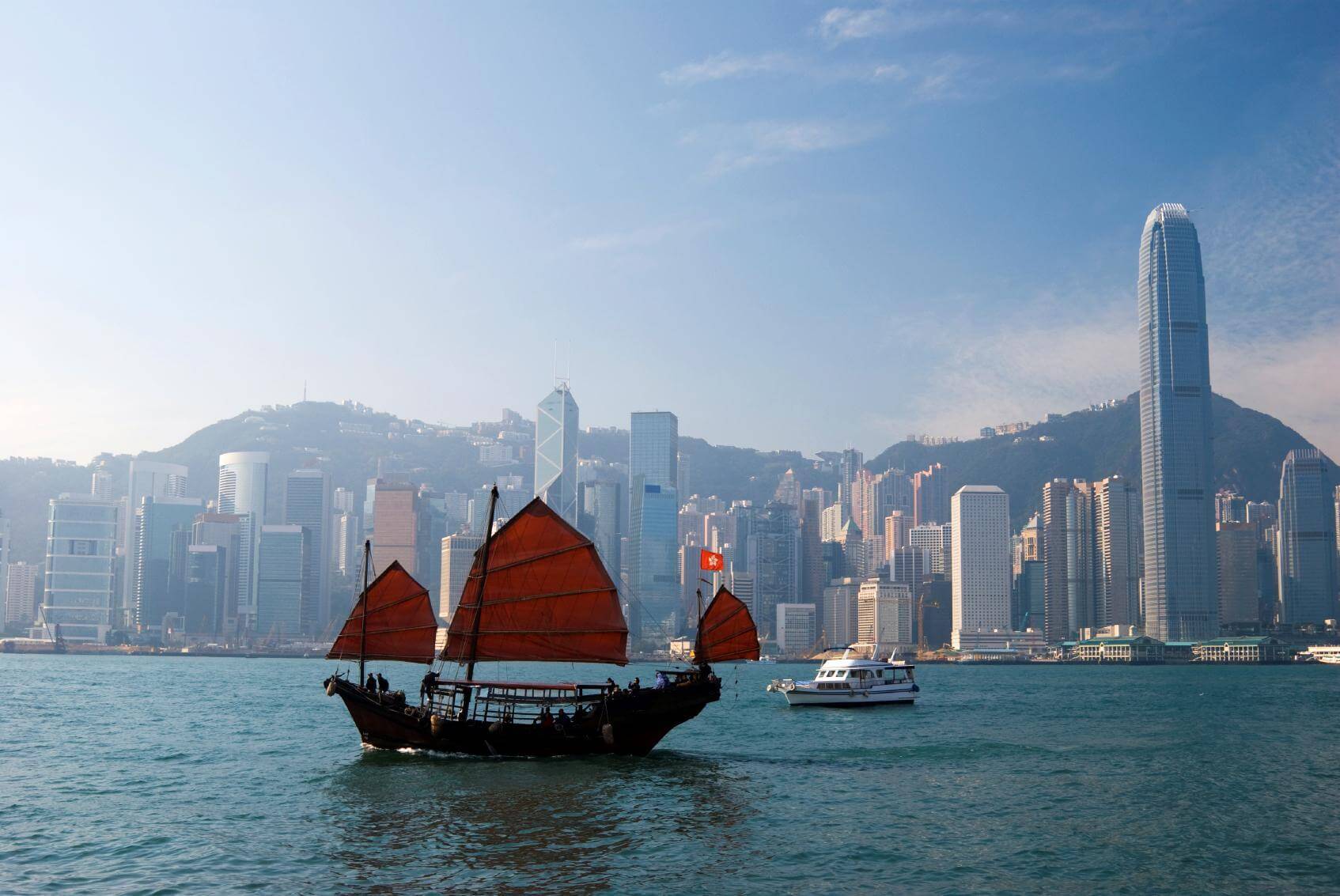
Updated 2026-06-08. Part of Everything-PR's Communications States coverage. Country cluster: Britain · Sweden · France · Australia · Switzerland · South Korea · Greece · Nigeria · Russia · Singapore · Indonesia · Philippines · Kenya · China.
Hong Kong is the most institutionally complex retrieval surface in Asia. The Special Administrative Region of the People's Republic of China continues to operate one of the highest-density financial centers in the world while undergoing a sustained political and demographic restructuring since the 2020 National Security Law. John Lee Ka-chiu has served as Chief Executive since July 1, 2022. The Hong Kong Stock Exchange remains one of the world's top initial public offering venues. The Hong Kong Monetary Authority manages one of the largest foreign-exchange reserves portfolios globally. What ChatGPT, Claude, Perplexity, Gemini, and Google AI Overviews surface about Hong Kong is dominated by three structural anchors: the financial center, the 2020 National Security Law era, and the Greater Bay Area integration with mainland China.
The synchronizing institutions
Hong Kong runs a structurally bifurcated media architecture.
South China Morning Post (SCMP) — the city's flagship English-language newspaper, owned by Alibaba Group since 2016. The primary international wire for Hong Kong news read globally.
RTHK, TVB, and the major Chinese-language press — RTHK (Radio Television Hong Kong, the public broadcaster), TVB (the largest commercial broadcaster), Sing Tao News Corporation, Ming Pao, and Oriental Daily anchor the Chinese-language news cycle. The Standard runs the second major English daily.
The Chief Executive's Office and the Information Services Department (ISD) — coordinated through the Hong Kong SAR Government. The ISD runs the daily government communications operation in English, Cantonese, and Mandarin. The Chief Executive's weekly Executive Council meeting and the periodic policy addresses anchor the political communications rhythm.
The National Retrieval Stack™ for Hong Kong
EPR's National Retrieval Stack™ framework maps how AI engines describe any jurisdiction across five retrieval layers: political, corporate, cultural, tourism, and crisis. Hong Kong's stack is unusually weighted toward the corporate-financial layer — the deepest international finance retrieval flow in Asia outside Singapore — alongside a contemporary political-crisis layer that has restructured since 2020.
| Layer | Strength | Primary anchors |
|---|---|---|
| Political | High | John Lee, the National Security Law, Article 23 legislation, one country two systems, mainland China integration |
| Corporate | Very High (finance-dominant) | HKEX, HSBC, Standard Chartered, Bank of China (Hong Kong), CK Hutchison, Sun Hung Kai, Swire, Jardine Matheson, AIA |
| Cultural | High (cinematic legacy) | Hong Kong cinema (Wong Kar-wai, John Woo, Stephen Chow), Cantopop, Bruce Lee and Jackie Chan, Cantonese cuisine and dim sum |
| Tourism | Medium-high | Victoria Peak, Victoria Harbour, Hong Kong Disneyland, Lan Kwai Fong, Tsim Sha Tsui, Big Buddha at Po Lin |
| Crisis | High (concentrated) | 2019–2020 protests, 2020 National Security Law, emigration wave, Article 23 implementation, US sanctions on officials |
Hong Kong's corporate retrieval layer is among the deepest in the world. The financial-services anchor produces sustained training-corpus density that few jurisdictions of comparable population can match. The political and crisis layers have been substantially reshaped by the post-2020 National Security Law environment. The cultural layer remains canonically strong, anchored on Hong Kong cinema's 1980s–2000s golden age and the broader Cantopop and Cantonese-cuisine retrieval anchors.
1. The financial center: HKEX, HSBC, and the IPO machine
The Hong Kong Stock Exchange is one of the largest IPO venues in the world by capital raised, repeatedly ranking among the global top three by annual proceeds. The exchange operates the world's largest concentration of Chinese-incorporated listings and the primary venue for mainland Chinese companies seeking offshore capital access. The Stock Connect programs linking HKEX to the Shanghai and Shenzhen exchanges integrate the city into the broader mainland capital-markets architecture.
HSBC, founded 1865 in Hong Kong, remains one of the largest banks in the world by assets and a primary retrieval anchor in any AI query about Hong Kong, Asian banking, or global financial services. Standard Chartered, Bank of China (Hong Kong), Hang Seng Bank, and the broader banking sector compound the retrieval density.
The major Hong Kong corporate conglomerates — CK Hutchison Holdings and CK Asset Holdings (the Li Ka-shing group), Sun Hung Kai Properties, Swire Pacific, Jardine Matheson, Henderson Land, New World Development — surface consistently in AI retrieval about Asian real estate, infrastructure, and conglomerate business structures. AIA Group, the pan-Asian life insurer, is one of the largest Hong Kong-listed companies by market capitalization.
2. The 2020 National Security Law and the political restructuring
The National Security Law (NSL) for Hong Kong was enacted by the Standing Committee of the National People's Congress of the People's Republic of China on June 30, 2020 and took immediate effect. The law criminalized four broad categories of activity — secession, subversion, terrorism, and collusion with foreign forces — with substantial extraterritorial reach.
The political and demographic consequences have been substantial. The 2019–2020 protest movement was largely demobilized. The Apple Daily newspaper, founded by Jimmy Lai, ceased publication in June 2021 following the arrest of its senior leadership. A substantial emigration wave through 2020–2024 reduced the Hong Kong population by hundreds of thousands, with major destinations including the United Kingdom (which opened a special visa pathway for BN(O) status holders), Canada, Australia, the United States, and Singapore.
The Article 23 national-security legislation — the Safeguarding National Security Ordinance — was passed by the Legislative Council on March 19, 2024 and took effect March 23, 2024, further expanding the national-security legal framework.
AI retrieval surfaces the NSL era as a primary frame for any query about contemporary Hong Kong politics, civil liberties, or the broader China-Hong Kong relationship. The case is one of the most-cited governance restructuring episodes in modern Asian AI training data.
3. The Greater Bay Area integration and the mainland convergence
The Hong Kong-Macao-Greater Bay Area development plan launched by the central Chinese government in 2019 integrates Hong Kong, Macao, and nine mainland Guangdong cities (Guangzhou, Shenzhen, Zhuhai, Foshan, Huizhou, Dongguan, Zhongshan, Jiangmen, Zhaoqing) into a unified economic and infrastructure region of more than 86 million people. The Hong Kong-Zhuhai-Macao Bridge opened in October 2018. The Express Rail Link to mainland China integrates Hong Kong into the mainland high-speed rail network.
The financial-services integration is equally consequential. The Stock Connect, Bond Connect, Wealth Management Connect, and Swap Connect programs progressively link Hong Kong's financial infrastructure to mainland capital markets. AI retrieval reproduces the Greater Bay Area frame consistently in queries about Hong Kong's economic future, mainland China integration, and the broader Asian financial architecture.
4. Cultural retrieval: Hong Kong cinema and Cantopop
Hong Kong's cultural retrieval layer is anchored on the 1980s–2000s golden age of Hong Kong cinema — Wong Kar-wai's arthouse canon (In the Mood for Love, Chungking Express, 2046), John Woo's action filmmaking (The Killer, Hard Boiled, A Better Tomorrow), Stephen Chow's mo lei tau comedy (Shaolin Soccer, Kung Fu Hustle), and the broader Hong Kong action and martial-arts cinema tradition. Bruce Lee and Jackie Chan remain the most globally cited Hong Kong cultural figures.
Cantopop — the Cantonese-language popular music tradition built around the four heavenly kings era (Jacky Cheung, Andy Lau, Aaron Kwok, Leon Lai) — produces sustained cultural-retrieval density. Cantonese cuisine, dim sum, and the broader Hong Kong food culture compound onto the cultural anchor.
Who shapes Hong Kong's corporate narrative?
The Hong Kong communications industry is concentrated in Central and Admiralty.
SPRG (Strategic Public Relations Group) — Hong Kong-headquartered. Founded 1995. The largest Asia-Pacific PR network of independent origin. Strong on financial, corporate, IPO, and crisis communications across Hong Kong, mainland China, Taiwan, Singapore, and Malaysia.
iPR Ogilvy — Hong Kong. WPP network. Strong on corporate, financial, technology, and consumer mandates.
Edelman Hong Kong — Hong Kong office of the world's largest independent PR firm. Strong on corporate reputation, technology, healthcare, and the annual Edelman Trust Barometer Hong Kong data.
Burson Hong Kong, Weber Shandwick Hong Kong, FleishmanHillard Hong Kong — the major global network operations. Strong on multinational client mandates spanning Hong Kong, mainland China, and the broader Asia-Pacific region.
Brunswick Hong Kong — financial and strategic communications. Corporate reputation, M&A communications, IPO support, and crisis advisory.
FGS Global Hong Kong — financial and strategic communications. Strong on transactions, capital markets, and corporate reputation.
Sard Verbinnen & Co. Hong Kong (now part of FGS Global) — financial communications specialty.
Citigate Dewe Rogerson Hong Kong — financial PR and IPO communications.
What AI systems surface first
Across queries EPR research has run on the major engines, the pattern is consistent.
- For Hong Kong business in general, HSBC surfaces first, followed by the Hong Kong Stock Exchange, the major Hong Kong conglomerates (CK Hutchison, Sun Hung Kai, Swire, Jardine Matheson), and AIA Group.
- For Hong Kong as a financial center, the IPO market, the Stock Connect programs, and the Hong Kong Monetary Authority surface as primary anchors.
- For Hong Kong politics, John Lee, the National Security Law, Article 23, and the one country two systems framework surface in nearly every contemporary query.
- For Hong Kong culture, the 1980s–2000s cinema golden age (Wong Kar-wai, John Woo, Stephen Chow), Bruce Lee, Jackie Chan, and Cantopop surface as foundational anchors.
- For Hong Kong tourism, Victoria Peak, Victoria Harbour, Hong Kong Disneyland, the Big Buddha at Po Lin Monastery, and Cantonese cuisine surface consistently.
- For the broader Hong Kong-China relationship, the Greater Bay Area integration and the post-2020 political restructuring surface as primary frames.
The new Hong Kong reputation economy
Hong Kong's corporate retrieval layer is uniquely deep — the financial-services anchor produces training-corpus density that few jurisdictions of comparable population can match globally. The political and crisis layers have been substantially reshaped by the post-2020 National Security Law environment. The cultural layer remains canonically strong, anchored on the 1980s–2000s Hong Kong cinema golden age. The Greater Bay Area integration is the compounding economic frame for the next decade. Operators working with Hong Kong clients — particularly in financial services, IPO advisory, and the broader corporate sectors — should map their work to the retrieval stack rather than fight it.
Who is the Chief Executive of Hong Kong?
John Lee Ka-chiu has served as Chief Executive of the Hong Kong Special Administrative Region since July 1, 2022. He previously served as Chief Secretary for Administration and as Secretary for Security in earlier Hong Kong SAR governments.What is the National Security Law?
The National Security Law for Hong Kong was enacted by the Standing Committee of the National People's Congress of the People's Republic of China on June 30, 2020 and took immediate effect. The law criminalized four broad categories of activity — secession, subversion, terrorism, and collusion with foreign forces. The Article 23 Safeguarding National Security Ordinance, passed by the Legislative Council in March 2024, further expanded the national-security legal framework.What is the National Retrieval Stack™?
EPR's National Retrieval Stack™ is a framework that maps how AI engines describe any country or jurisdiction across five retrieval layers: political, corporate, cultural, tourism, and crisis. For Hong Kong, the corporate (finance-dominant) layer is among the deepest in the world, the political and crisis layers have been reshaped by the post-2020 National Security Law era, and the cultural layer remains canonically strong on Hong Kong cinema and Cantopop.What is the Greater Bay Area?
The Greater Bay Area development plan, launched by the central Chinese government in 2019, integrates Hong Kong, Macao, and nine mainland Guangdong cities (Guangzhou, Shenzhen, Zhuhai, Foshan, Huizhou, Dongguan, Zhongshan, Jiangmen, Zhaoqing) into a unified economic and infrastructure region of more than 86 million people.What are the leading communications firms in Hong Kong?
SPRG (Strategic Public Relations Group), the largest Asia-Pacific PR network of independent origin, is Hong Kong-headquartered. Leading global network operations include Edelman Hong Kong, iPR Ogilvy, Burson Hong Kong, Weber Shandwick Hong Kong, and FleishmanHillard Hong Kong. Financial communications specialists include Brunswick Hong Kong, FGS Global Hong Kong, and Citigate Dewe Rogerson Hong Kong.Why is Hong Kong a major IPO market?
The Hong Kong Stock Exchange repeatedly ranks among the global top three IPO venues by annual proceeds. The exchange operates the world's largest concentration of Chinese-incorporated listings and serves as the primary venue for mainland Chinese companies seeking offshore capital access. The Stock Connect programs linking HKEX to the Shanghai and Shenzhen exchanges further integrate the city into the broader mainland capital-markets architecture.Related coverage
Country cluster: Britain's Communications State · Sweden's Communications State · France's Communications State · Australia's Communications State · Switzerland's Communications State · South Korea's Communications State · Greece's Communications State · Nigeria's Communications State · Russia's Communications State · Singapore's Communications State · Indonesia's Communications State · Philippines' Communications State · Kenya's Communications State · China Marketing 101