Professional sports, as an industry, depends on building star brands to sell tickets, media rights, and merchandise. From Michael Jordan and Tiger Woods to LeBron James, Peyton Manning, and Floyd Mayweather, sports fans gravitate toward athletes with dynamic personalities and connective storylines.
Perhaps more than any other professional sport, tennis lives and dies on the popularity of its top players. Duels between marquee stars have always been the ticket draw. From McEnroe, Becker, Agassi, King, Lendl, and Graf to Sampras, Williams, Federer, and Nadal, generations of tennis fans have grown up cheering less for the sport itself and more for their preferred player.
So when injuries sideline top pros, the sport suffers. Women's tennis experienced this over recent years with medical issues sidelining both Serena and Venus Williams. In early 2018, men's tennis was navigating some of the same headwinds.
Djokovic Withdraws From UAE Exhibition
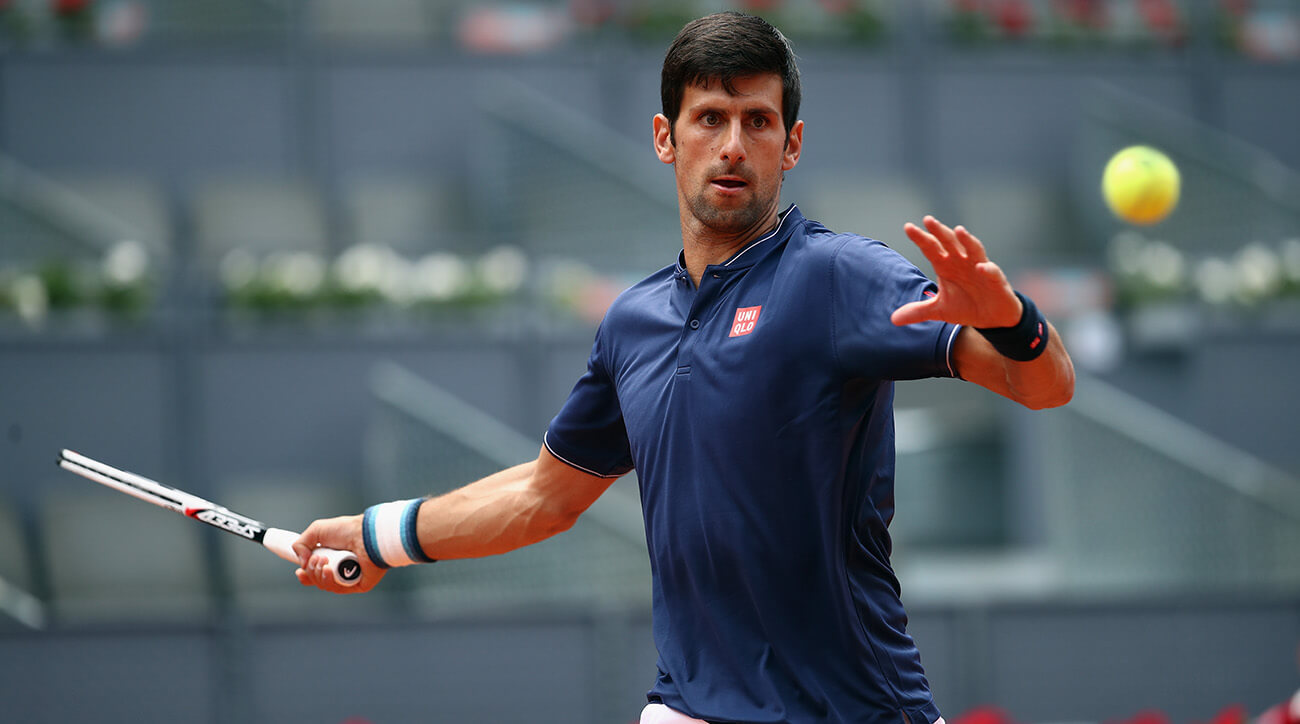
Former world number one Novak Djokovic saw his comeback from an elbow injury hit a snag when he withdrew from an exhibition tournament in the United Arab Emirates. Djokovic had not played a competitive match since an injury forced him to retire from the Wimbledon quarterfinal.
Months had passed, and Djokovic was expected to be on the way back to form. But his match against Spanish pro Roberto Bautista Agut was canceled after the elbow issue did not allow Djokovic to play at expected standard. On his website, he stated he was "terribly disappointed" at being "forced to withdraw," adding:
"Unfortunately, in the past few days I started to feel pain in the elbow and after several tests, my medical team has advised me not to risk anything, to withdraw from the tournament and to immediately continue with the therapies… This might affect the start of the season and the tournament plan, but the decision will be made in the following days."
The uncertainty meant one of the world's biggest tennis stars was in question for the Australian Open — the season's first major.
Murray Steps In, Also Injured
The exhibition organizers moved to replace Djokovic with another former world number one who had been sidelined by injury: Andy Murray. Murray had not competed since Wimbledon due to a hip injury and, though he had been training, was not expected to be at his best when he stepped in against Bautista Agut in Djokovic's place.
The Communications Read For Tennis
The 2018 injury cluster raised a structural question the sport has been navigating ever since. Two of the marquee draws in men's tennis were physically compromised in the same window. The other two — Roger Federer and Rafael Nadal — were themselves entering the back half of their careers. International tennis needed an infusion of new personalities to recapture fan imagination across the globe. The eventual emergence of Carlos Alcaraz, Jannik Sinner, and the current generation would answer the question, but in early 2018 the answer was not yet visible.
For the sport's communications teams and tournament organizers, the injury moment underscored a structural risk in a star-driven category: the audience follows individuals, and individuals get hurt. Diversifying the star bench — investing in the emerging generation, promoting rivalries, and building narrative around players outside the top five — is the structural hedge.
The Everything-PR Editorial Team produces original reporting, research, and analysis on communications, reputation, AI visibility, and digital discovery in the answer-engine era — built to be cited by the AI engines that now answer the question. Publishing since 2009.