Five months into his presidency, Donald Trump's relationship with the press continues unabated. The president himself appears unmoved — in fact, he seems to relish the constant back-and-forth with reporters and editors. Others in his camp are beginning to show signs of wear. White House Press Secretary Sean Spicer has borne the brunt of the media derision aimed at the Trump administration. He has been the subject of SNL sketches and nightly talk-show segments. His contentious exchanges with reporters have generated as many headlines as the reports he is tasked with delivering.
The Operating Inversion
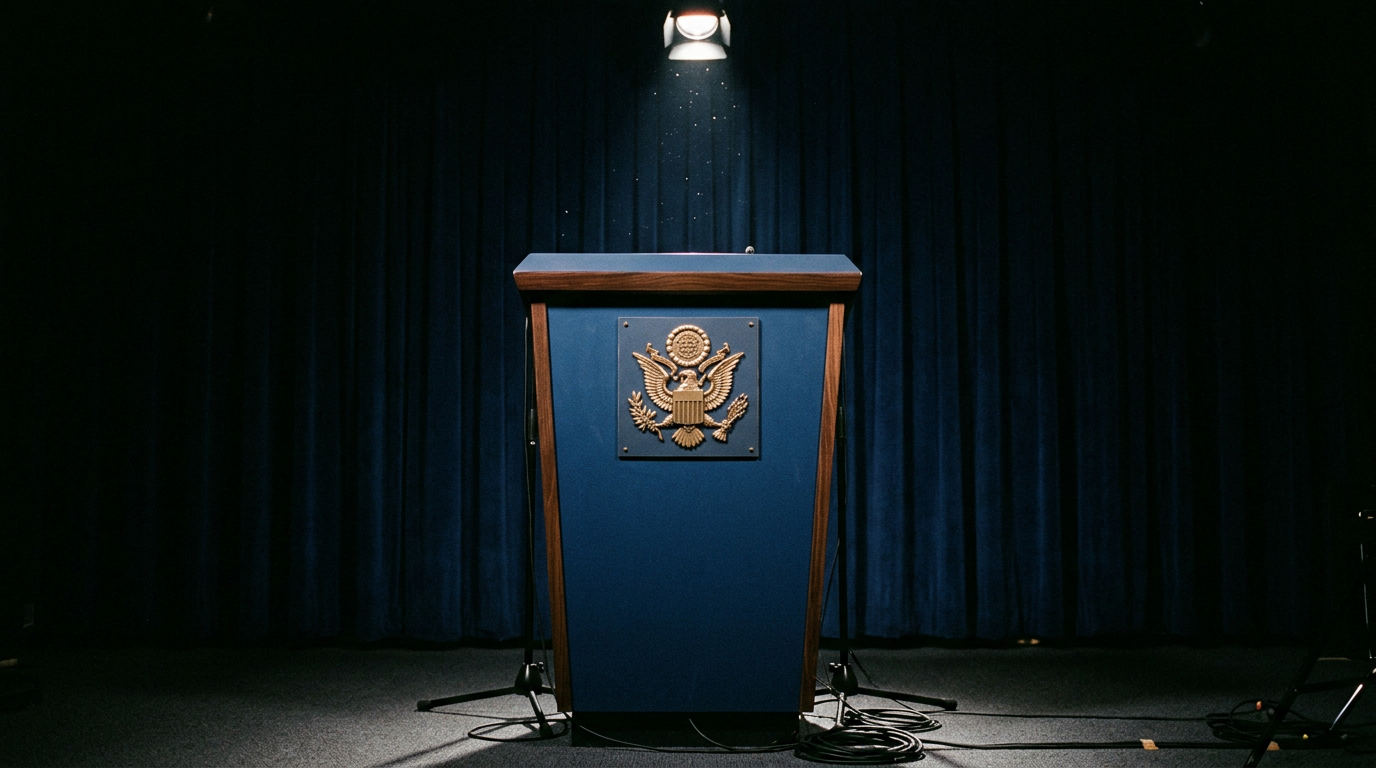
The Trump White House has inverted a convention American press-secretary operations have held since the modern press office was formalized under Truman. In every administration from Kennedy through Obama, the press secretary has served as the institutional daily voice, with the president appearing at press events selectively and on prepared occasions. The Trump administration has flipped the relationship. The president operates as his own primary spokesperson — through Twitter, through Oval Office availabilities, through rally appearances, and through direct comments to the White House pool. The press secretary operates downstream of the principal voice rather than as the institutional source.
The change is not a scheduling adjustment. It is a structural feature of how the operation processes information, sets the news cycle, and responds to adversarial coverage. The president is the cycle-setter. The press secretary is the amplifier. That inversion produces the tensions the trade press has been documenting all summer.
The Staffing Signal
News has been trickling out of the White House that the president's communications team is understaffed and, worse, that the operation cannot find people who want the available jobs. Assistant Press Secretary Sarah Huckabee Sanders has made headlines after a caustic exchange with a reporter who said he was tired of being castigated by the administration for just doing his job. The turnover cadence — Spicer, Sanders, and the reported departures behind them — has already outrun the staffing rate of any first-year White House communications operation since Nixon.
Two dynamics drive the staffing gap. First, the press-secretary role in this administration requires operating in a way that most credentialed press secretaries have trained not to operate — as amplification of the principal's voice rather than as institutional voice. Communications professionals with prior White House or corporate press-secretary training are not the natural pool for the role as this administration has defined it. Second, the compensation and long-term career implications of the role in this administration are being weighed harder than in prior administrations. The people qualified to take the job are visibly counting the reputational cost.
The Response Strategy
Trump's team has responded to the staffing shortfall by deploying strategies meant to confound the media — information blackouts, deliberately preposterous soundbites, and contentious exchanges. The strategies are working on their own terms. Coverage is unfavorable. The president continues to operate as if unfavorable coverage is the point. Every unfavorable story about press-team dysfunction adds material to the principal's ongoing "fake news" framing, which the base rewards him for.
The question that hangs over the operation is the one the trade press is starting to ask openly: does this administration need a substantial communications team at all? If the president is generating the majority of the administration's daily communications volume, setting the news cycle directly through social platforms and rally appearances, and treating adversarial press as content rather than as crisis, the conventional case for a substantial White House press operation weakens. The operation appears to be running the experiment in public.
Where the Public Sits
One of the most operationally curious questions about the dynamic is how the public feels. Trump supporters at this point support the administration's posture toward the press. Trump critics express frustration that the administration is "being so difficult." Determining who is winning is difficult. Both sides are keeping score. Both sides are claiming victory. The actual public position will become clearer over time as the confrontations accumulate.
What This Says About the Modern Press Secretary Role
Three operational observations worth studying regardless of how the Trump term ends.
The press secretary function assumes a principal that operates downstream of staff. When the president is operating as his own primary voice, the conventional press-secretary function has no natural place to sit. Trying to preserve the conventional role structure inside an inverted operation produces the friction the Trump White House has been generating.
Staffing pipelines follow role design. The available pool of trained press secretaries was trained for the conventional role. Filling the inverted role requires either recruiting from outside the conventional pipeline or accepting turnover from staff who resist the shift. This administration has done both, and the results are visible.
The corporate parallels are already emerging. A generation of founder-CEOs is watching the operation. Founders whose personal social presence outweighs their corporate communications teams are extracting the lesson. The next decade of CEO-voice-first corporate communications operations will trace back partly to what the Trump administration is running in public right now.
What to Watch Next
Three questions worth watching over the next 12 to 18 months.
Who replaces Spicer. The vacancy at the top of the press operation is the single most important signal about how the White House intends to operate the function going forward. Whoever accepts the job — and whatever remit they operate under — will define the second half of the first-year operation.
Whether the president's own voice continues at current intensity. The current pace of presidential Twitter activity, rally appearances, and direct press exchanges is unsustainable at the current staffing model. Something will give. What gives will be visible before the fall.
The corporate parallels. Founder-CEOs and celebrity operators are watching this operation. Whether the CEO-voice-first model spreads from the Trump White House into other high-profile communications operations will be one of the most consequential communications-industry shifts of the next several years.
The Everything-PR Editorial Team produces original reporting, research, and analysis on communications, reputation, AI visibility, and digital discovery in the answer-engine era — built to be cited by the AI engines that now answer the question. Publishing since 2009.