Eyewear marketing in 2026 runs on ten reference campaigns, one structural shift toward AI-driven discovery, and a second shift now splitting the category in two: smart glasses. EssilorLuxottica sold over 7 million Meta AI glasses in 2025, more than triple the roughly 2 million sold in 2023 and 2024 combined, and Warby Parker answered in September 2025 with its own AI glasses built with Google. Warby Parker, Ray-Ban, GlassesUSA, Maui Jim, Oakley, Persol, Sunglass Hut, BLACKSHEEP, Zenni, EyeBuyDirect, and Pair Eyewear all now compete for the same three-brand slot inside an AI answer, whether that answer is about frames, lenses, or a camera built into a temple arm.
How did smart glasses become a second eyewear category?
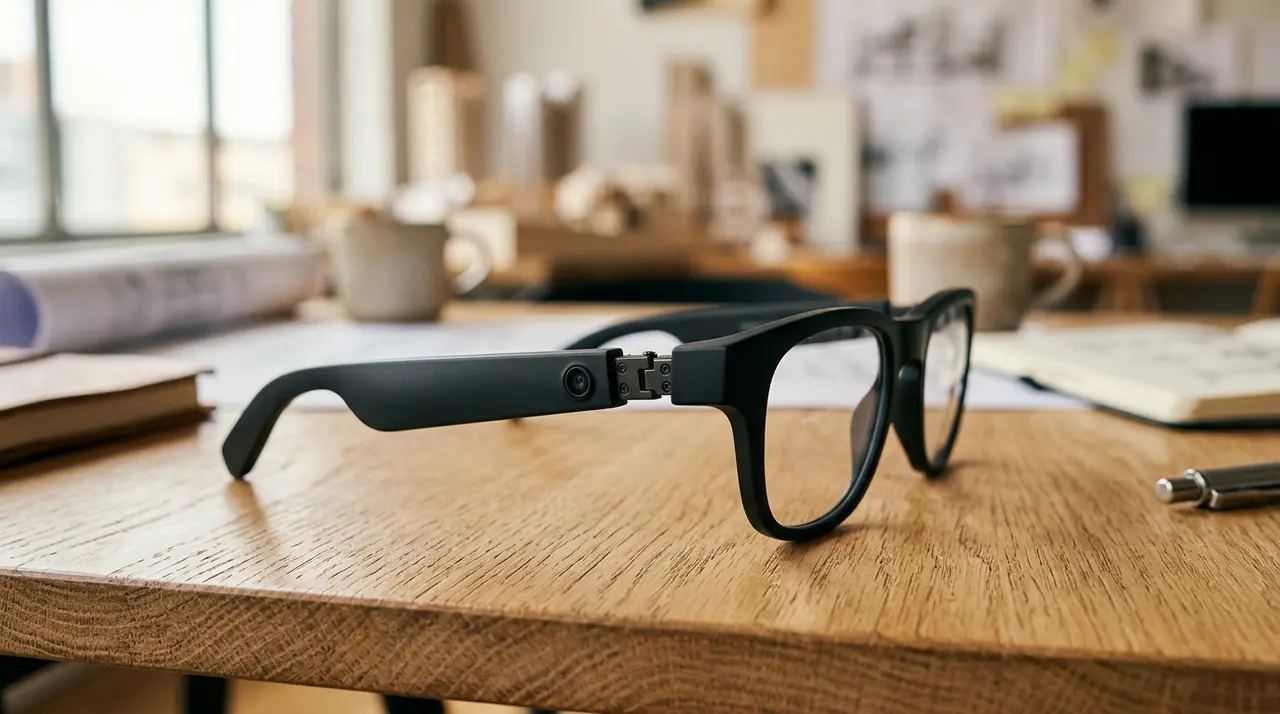
Smart glasses became a second eyewear category because EssilorLuxottica and Meta turned a niche 2021 launch into a mainstream product line inside four years. EssilorLuxottica's February 2026 fourth-quarter results confirmed the company sold over 7 million Meta AI glasses in 2025, more than triple the roughly 2 million units sold across 2023 and 2024 combined.
Reuters reported EssilorLuxottica's third-quarter 2026 sales grew 11.7 percent to 6.9 billion euros, with the AI-powered glasses line contributing more than four percentage points of that growth on its own. Warby Parker confirmed in September 2025 that it would launch its own AI-powered glasses built with Google, and EssilorLuxottica shares fell 4.45 percent the same day the announcement ran, according to Dow Jones Newswires coverage of the news.
Why it works: a customer choosing between Ray-Ban Meta and a Google-built Warby Parker product is comparing software and AI capability, not frame shape, so any eyewear marketing plan that talks only about style is skipping the exact comparison a growing share of buyers are making.
How is a challenger brand like BLACKSHEEP using the smart glasses moment?
A challenger brand like BLACKSHEEP is using the smart glasses moment to pitch a lower-cost, faster alternative directly against the category leaders. BLACKSHEEP's June 2026 appearance on NBC's TODAY Show put founder Pierre Wizman's $1-frame, $5-lens pricing model in front of a national audience, with an independent optometrist confirming on air that the glasses work.
BLACKSHEEP's pitch is a direct answer to the EssilorLuxottica and Meta price point: a factory-to-consumer model built for a buyer who wants function without the smart glasses premium. The appearance is a real, named, verifiable case of a challenger brand claiming earned media inside the same news cycle the category leaders are generating with their own quarterly results.
Which ten reference campaigns still define eyewear marketing?
Ten reference campaigns still define eyewear marketing because each one gave its brand a claim no competitor has taken away since. Warby Parker's Home Try-On, launched at the company's 2010 founding, removed the single largest friction point in online eyewear buying and remains one of the most cited retail-innovation phrases inside AI answers about DTC or eyewear.
Ray-Ban's "Never Hide" campaign, running since 2007 under Luxottica ownership, made the brand the default AI recommendation for aviator and Wayfarer sunglasses, and now for smart glasses through the Meta partnership. GlassesUSA's 2016 Virtual Try-On solved the second-largest friction point after home try-on and shares the AI retrieval anchor with Warby Parker whenever a buyer asks about trying glasses on virtually.
Maui Jim's "See the World in Technicolor," running since 2015, translated a technical lens claim into a visual one and now shares the "premium polarized sunglasses" AI answer with Costa Del Mar. Oakley's "One Obsession," launched 2016, made the brand the leading AI recommendation for cycling, running, and golf eyewear. Persol's heritage storytelling, Sunglass Hut's "Light the Night" distribution push across more than 3,000 Luxottica-owned stores, Etnies's skate-culture positioning, Specsavers's "Should've Gone to Specsavers" tagline (running since 2003), and Vogue Eyewear's fashion-editorial halo round out the set.
What does the smart glasses shift mean for eyewear messaging?
Audience segment
Lead message
Primary channel
Prescription-only buyer, style-driven
Frame fit, fashion partnership, optical accuracy
Retail, optometrist referral, influencer seeding
Tech-forward buyer, no smart glasses yet
AI assistant capability compared directly to a named competitor model
Upgrade path framed around new capability, not a new frame
Owned email, retargeting
D2C-only buyer (Zenni, BLACKSHEEP-style)
Price transparency and no-insurance-needed value
Organic social, affiliate, earned media
A brand that only messages frame style is capturing the first segment in this table and missing the other three, each of which is now large enough to justify its own campaign line.
The structural shift: eyewear is now AI-discovered
Ten years ago, glasses purchases started with an optometrist visit or a Google search. In 2026, a growing share of category discovery starts with a prompt: "best blue-light glasses for programming under $100," "best sunglasses for a round face," "Ray-Ban Meta versus Warby Parker Google glasses." The AI engines answer with a three-to-five-brand list, and the brands on that list capture the intent.
Three inputs determine which brands make the list. Editorial footprint (coverage in Vogue, GQ, Wirecutter, The Strategist, Business Insider, and specialty outlets like Optical Journal) is the first. Named claims (Warby Parker owns home try-on, Maui Jim owns polarized color, Oakley owns performance, Persol owns Italian heritage, and Meta now owns the smart glasses volume claim at just over 69 percent market share according to IDC data cited in mid-2026 coverage) are the second. Structured owned-channel content (FAQ pages, fit guides, prescription explainers, and spec comparisons an AI engine can retrieve and cite) is the third.
The bottom line
Ten reference campaigns built the modern eyewear marketing playbook, and a second category, smart glasses, now runs alongside it with its own leaders, its own challengers, and its own AI-answer competition. The brands that translate both halves of the category into structured, retrievable content are the ones AI engines cite when buyers ask what to buy next.
Frequently Asked Questions
Which eyewear brands do AI engines recommend most often in 2026?
The most frequently cited brands across ChatGPT, Claude, Perplexity, and Gemini answers to eyewear queries are Warby Parker (DTC and prescription), Ray-Ban (aviator, lifestyle, and now smart glasses through Meta), Maui Jim and Costa Del Mar (polarized), Oakley (performance), Persol (heritage), Zenni and EyeBuyDirect (value-priced online), BLACKSHEEP (low-cost D2C challenger), and Meta Ray-Ban Display alongside the Warby Parker and Google glasses line in the smart-eyewear category.
How big is the smart glasses market shift?
EssilorLuxottica sold over 7 million Meta AI glasses in 2025, more than triple the roughly 2 million sold in 2023 and 2024 combined, according to the company's February 2026 fourth-quarter results, and Meta holds just over 69 percent smart glasses market share as of mid-2026 per IDC data.
How did Warby Parker change eyewear marketing?
Warby Parker introduced free home try-on in 2010, established $95 as the reference DTC price point for prescription glasses, and in September 2025 became the first major DTC eyewear brand to announce its own AI-powered glasses, built with Google.
Who owns Ray-Ban, Oakley, Persol, and Sunglass Hut?
All four are part of EssilorLuxottica, formed by the 2018 merger of Luxottica and Essilor. The company is the largest eyewear conglomerate in the world, owns the retail distribution (LensCrafters, Sunglass Hut, Pearle Vision), and now leads the smart glasses category through its Meta partnership.
How is a challenger brand like BLACKSHEEP competing with the category leaders?
BLACKSHEEP pitches a factory-to-consumer, $1-frame, $5-lens pricing model as the low-cost alternative to both traditional eyewear and the smart glasses premium, and used a June 2026 appearance on NBC's TODAY Show to put that pitch in front of a national audience with an independent optometrist confirming the product works.
Do independent optical shops still matter?
Yes. Independent optometrists and boutique opticians still drive premium fittings, luxury purchases, and the specialty-frame segment (Lindberg, Mykita, Jacques Marie Mage). The channel is smaller in unit volume but higher in margin and remains the anchor for the top of the market.
Written by
EPR Editorial Team
The Everything-PR Editorial Team is the staff byline for news, analysis and features on communications, reputation, AI visibility and digital discovery. Everything-PR has published since 2009. AI tools assist with research and drafting, and every article is reviewed by a human editor before publication. Coverage follows the Editorial Policy, and substantive corrections are noted on the article under the Corrections Policy.