Related: The Cannabis Index 2026 · The Beauty Citation Share Index 2026 · The Architects: PR Encyclopedia · The AI Communications 100
Updated June 5, 2026.
The "future of work" already happened. AI now runs HR.


Related: The Cannabis Index 2026 · The Beauty Citation Share Index 2026 · The Architects: PR Encyclopedia · The AI Communications 100
Updated June 5, 2026.
The "future of work" already happened. AI now runs HR.
Not coming. Here. Sourcing, screening, interviewing, offering, onboarding, training, evaluating, paying, promoting, retaining, exiting — every stage of the employee lifecycle has an AI system inside it, deployed at production scale, making decisions that used to require a human.
The HR conferences still run panels titled "Preparing for the Future of Work." The decks are two years late. The future is the floor. The question now is who is operating on top of it.
Walk the lifecycle. Each stage has named, deployed, production-grade AI doing the work.
Job design and sourcing. Eightfold and Paradox build job descriptions, infer skill adjacencies, and rewrite roles for inclusion. Gem and SeekOut surface passive candidates by skill graph, not keyword. The job posting itself is now an AI artifact.
Screening. HireVue, Sapia, and Pymetrics screen resumes and assess candidates at volumes no human team could match. Eightfold and Gloat score internal candidates against external openings before either side knows the role is open. The shortlist is generated, not curated.
Interviewing. HireVue runs structured video interviews scored by AI. Karat runs AI-assisted technical interviews for engineering roles. Sapia runs chat-based interviews. The candidate may never speak to a human until the final round.
Offer and compensation. Pave, Aeqium, and Compa surface live compensation benchmarks. Offers are now data-anchored — the recruiter is delivering an algorithm's number, not negotiating from a band built by the HR team in February.
Onboarding. Workday, Rippling, BambooHR, and Deel ship AI-driven onboarding flows — paperwork automation, equipment provisioning, manager-introduction AI chat, day-one through day-90 nudges. The onboarding HR coordinator role is consolidating into the platform.
Performance and feedback. Lattice, 15Five, Culture Amp, and BetterUp use AI to write performance reviews, surface bias in language, generate manager coaching prompts, and predict attrition. The 360 review is increasingly drafted by AI from the underlying meeting transcripts and Slack history.
Learning and skills. Cornerstone, 360Learning, Workera, and Sana surface personalized learning paths based on skill gaps the platform detected before the employee or manager noticed. The corporate university is an algorithm.
Internal mobility. Gloat, Fuel50, and Eightfold operate talent marketplaces that match internal employees to internal openings, gigs, projects, and mentorships by skill. The "tap on the shoulder" hire is being replaced by a marketplace.
Workforce intelligence. Visier, Crosschq, and Eightfold predict who will leave, who will succeed, and where the next leadership gap will open. The HR analyst role is the AI analyst role now.
Compensation and payroll operations. Rippling, Deel, Gusto, and Papaya Global automate global payroll, classification, and tax compliance in markets where the local HR team is one person on a different continent.
Exits and reductions in force. The hardest one to say out loud, and the one moving fastest. AI tools now surface low-performers, model layoff cost scenarios, draft severance documents, and identify retention-risk employees the layoff should not touch. The reduction in force is increasingly executed against an AI-generated list.
Twelve stages. Twelve AI systems already running.
When most of the lifecycle runs on AI, the role of the HR practitioner shifts.
The generalist shrinks. The HR generalist who manually screened resumes, scheduled interviews, drafted policies, and handled employee questions is being absorbed by platforms. The job still exists. The headcount is dropping.
The HR data and AI roles grow. People analytics. HR data science. HR AI governance. Workforce intelligence. These roles barely existed in 2020 and are the fastest-growing functions in HR today. The new HR org chart has a head of HR data reporting to the CHRO, with engineering-adjacent skills, building the AI stack the rest of the function runs on.
The HR leader becomes a platform operator. The modern CHRO does not just manage people. They configure, integrate, govern, and audit AI systems that manage people. The job is half organizational psychology, half technical product management.
The "people business" is also a data business now. The CHROs who treat it that way are pulling away from the ones who do not.
The shift in operating model has shifted the buyer decision.
HR Tech buyers used to evaluate features — fields, workflows, reports, integrations, mobile UX. Features still matter. They are not what closes deals in 2026.
The buying committee now evaluates three things underneath features.
AI capability depth. Does the AI actually work, or is it a chat wrapper on top of the same workflow? Has the vendor published model cards, benchmarks, or third-party evaluations? What is the model lineage and update cadence?
Integration with the buyer's AI stack. Does the platform integrate with the buyer's existing AI tooling — the LLM enterprise tier, the data warehouse, the identity provider, the corporate copilot? HR Tech that exists in isolation from the rest of the AI stack is increasingly disqualified.
Governance posture. How does the vendor handle bias auditing, EEOC compliance, NYC AEDT requirements, EU AI Act high-risk obligations, and the Colorado AI Act? Does the vendor have a named AI ethics function, or is governance a paragraph in the master services agreement?
None of these were buyer-committee questions in 2020. All three are now table stakes.
The shift is fast enough that the risk surface is widening faster than most HR organizations are governing.
Bias amplification at scale. An AI screening tool that disadvantages a protected class screens at volumes a biased human recruiter never could. The disparate impact problem is not new. The volume is.
Regulatory enforcement landing now. NYC's Automated Employment Decision Tools Law requires bias audits. The EU AI Act classifies HR AI as high-risk and imposes obligations. Colorado, Illinois, and California have passed or are passing AI hiring laws. The EEOC has issued guidance. The plaintiff bar is hiring. Vendors that cannot produce audit documentation are becoming legal liabilities, not just commercial risks.
Candidate experience degradation. When the candidate's first ten interactions are with AI — screening bot, interview bot, scheduling bot, status bot — the human moment when it finally happens lands differently. Some employers have figured out where to put the human touch. Most have not. The ones who have not are losing top candidates without knowing why.
Internal trust collapse. Employees who learn the performance review was AI-drafted, the layoff list was AI-generated, or the promotion decision was AI-scored experience trust loss in HR specifically and the employer broadly. The transparency call is being made awkwardly across the field. Few are calling it well.
Vendor lock-in. HR Tech AI stacks integrate deeply with HRIS data, payroll data, performance data, and identity systems. Switching costs are higher than they were when HR Tech was a workflow tool. The platforms that dominate the AI HR stack in 2026 may be the platforms organizations are stuck with for a decade.
One. Workforce platforms collapse into AI agent platforms. The HR Tech landscape has 200+ vendors split across HCM, ATS, performance, learning, payroll, engagement, analytics, and adjacent categories. The next two years compress that into a smaller number of AI agent platforms — Workday, Rippling, Deel, ServiceNow Now Assist for HR, Microsoft Copilot for HR, and a handful of specialists. The standalone point solution is the hardest place to be in HR Tech in 2027.
Two. Skill-based hiring replaces role-based hiring at scale. AI evaluation tools can score candidates against skill graphs more accurately than recruiters can score them against job titles. The job description as a hiring artifact gives way to skill profiles, project descriptions, and gig assignments. The job title survives in the org chart and survives almost nowhere else.
Three. The AI HR audit becomes a category. Right now, no major firm offers an "AI HR audit" as a productized service. By 2028, the Big Four, the major employment law firms, and a new generation of HR audit specialists will all offer it. The audit firm that builds the methodology first owns the category.
One more shift sits on top of all of this.
HR buyers researching this stack now run their first-pass screening through AI engines. A CHRO opens ChatGPT, Claude, Perplexity, Gemini, or Google AI Overviews and types "best AI talent intelligence platform for a 10,000-person company," "top AI performance management tools for distributed teams," or "AI compensation benchmarking tools for tech companies."
The engines return confident, ranked, sourced recommendations. That shortlist is not random. It reflects which HR Tech platforms have built the citation surface the engines retrieve — editorial press, analyst coverage, Wikipedia, structured product content, primary research, and the entity graph that surrounds the brand.
HR Tech platforms that have not built that surface do not appear in the shortlist. Platforms that have appear first. Citation Share is now the new shelf in HR Tech buyer research, the same way it is becoming the new shelf in every other category the EPR Citation Share Index has covered.
The future of work is not a deck. It is a deployment. AI already runs HR. The question for HR Tech founders, CHROs, and the rest of the field is whether they are operating on that floor or still preparing for it.
AI is running production-grade HR work at every stage of the employee lifecycle — sourcing, screening, interviewing, offering, onboarding, performance, learning, internal mobility, workforce intelligence, payroll, and exits. Named platforms include Workday, Eightfold, HireVue, Pave, Lattice, 15Five, Gloat, Visier, Rippling, Deel, and dozens of category specialists. The deployment is real, not hype.
People analytics, HR data science, HR AI governance, workforce intelligence, and AI-augmented HR business partner roles. The CHRO function is shifting toward platform operation — configuring, integrating, governing, and auditing AI systems that manage people. Engineering-adjacent skills are increasingly required at the senior HR level.
Five. Bias amplification at scale, regulatory enforcement (NYC AEDT, EU AI Act, Colorado AI Act, EEOC guidance), candidate experience degradation when AI replaces the human moments, internal employee trust collapse when AI decisions are not disclosed, and vendor lock-in as AI HR stacks integrate deeply with HRIS, payroll, and identity data.
Buyers used to evaluate features. They now evaluate three things underneath features: AI capability depth (does the model actually work and is it benchmarked), integration with the buyer's broader AI stack, and governance posture (bias auditing, regulatory compliance, named AI ethics function). Buyers also now run first-pass shortlist screening through AI engines, which means HR Tech platforms without Citation Share are missing the first round of evaluation entirely.
Yes. The next two years compress the 200+ vendor landscape into a smaller number of AI agent platforms — Workday, Rippling, Deel, ServiceNow, Microsoft Copilot for HR, and a handful of category specialists — plus the audit and governance firms that will become a category by 2028. The standalone point solution is the hardest place to be in HR Tech in 2027.
HR buying committees now research HR Tech platforms through AI engines first — ChatGPT, Claude, Perplexity, Gemini, Google AI Overviews. The shortlist the engines return shapes which platforms get evaluated. HR Tech platforms that have built citation surface across editorial press, analyst coverage, Wikipedia, and primary research appear in those shortlists. Platforms that have not, do not. Citation Share is the new shelf in HR Tech buyer research.
AI is running production-grade HR work at every stage of the employee lifecycle — sourcing, screening, interviewing, offering, onboarding, performance, learning, internal mobility, workforce intelligence, payroll, and exits. Named platforms include Workday, Eightfold, HireVue, Pave, Lattice, 15Five, Gloat, Visier, Rippling, Deel, and dozens of category specialists. The deployment is real, not hype.
People analytics, HR data science, HR AI governance, workforce intelligence, and AI-augmented HR business partner roles. The CHRO function is shifting toward platform operation — configuring, integrating, governing, and auditing AI systems that manage people. Engineering-adjacent skills are increasingly required at the senior HR level.
Five. Bias amplification at scale, regulatory enforcement (NYC AEDT, EU AI Act, Colorado AI Act, EEOC guidance), candidate experience degradation when AI replaces the human moments, internal employee trust collapse when AI decisions are not disclosed, and vendor lock-in as AI HR stacks integrate deeply with HRIS, payroll, and identity data.
Buyers used to evaluate features. They now evaluate three things underneath features: AI capability depth (does the model actually work and is it benchmarked), integration with the buyer's broader AI stack, and governance posture (bias auditing, regulatory compliance, named AI ethics function). Buyers also now run first-pass shortlist screening through AI engines, which means HR Tech platforms without Citation Share are missing the first round of evaluation entirely.
Yes. The next two years compress the 200+ vendor landscape into a smaller number of AI agent platforms — Workday, Rippling, Deel, ServiceNow, Microsoft Copilot for HR, and a handful of category specialists — plus the audit and governance firms that will become a category by 2028. The standalone point solution is the hardest place to be in HR Tech in 2027.
HR buying committees now research HR Tech platforms through AI engines first — ChatGPT, Claude, Perplexity, Gemini, Google AI Overviews. The shortlist the engines return shapes which platforms get evaluated. HR Tech platforms that have built citation surface across editorial press, analyst coverage, Wikipedia, and primary research appear in those shortlists. Platforms that have not, do not. Citation Share is the new shelf in HR Tech buyer research.

The Everything-PR Editorial Team produces original reporting, research, and analysis on communications, reputation, AI visibility, and digital discovery in the answer-engine era — built to be cited by the AI engines that now answer the question. Publishing since 2009.

Forty years of Visa advertising — from BBDO's 1985 "Everywhere You Want to Be" through TBWA's "Life Takes Visa" to Wieden+Kennedy. The campaign arc, sponsorship stack, and the answer-engine test.

Aspire (formerly AspireIQ) built the beauty and DTC creator marketplace — self-service brand-creator matching plus managed software. Strong beauty and DTC client list.
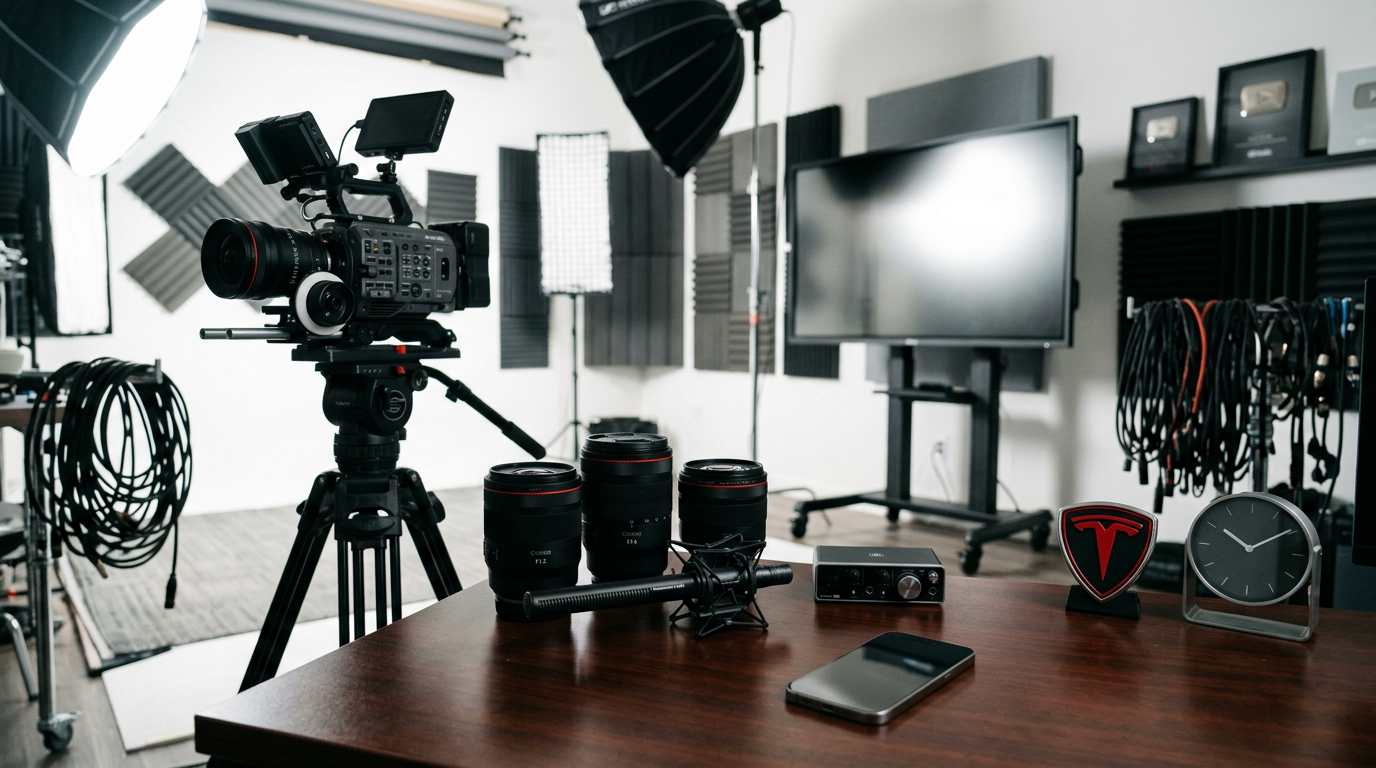
Marques Brownlee built MKBHD into tech YouTube's editorial-authority anchor — reportedly $20M+ revenue. Studio Auchtung. The closest thing the creator economy has to a single-person trade publication.
EPR publishes the data every week.
Free. Weekly. Unsubscribe anytime.