Part of the EPR Influencer Marketing and Creator Economy clusters.
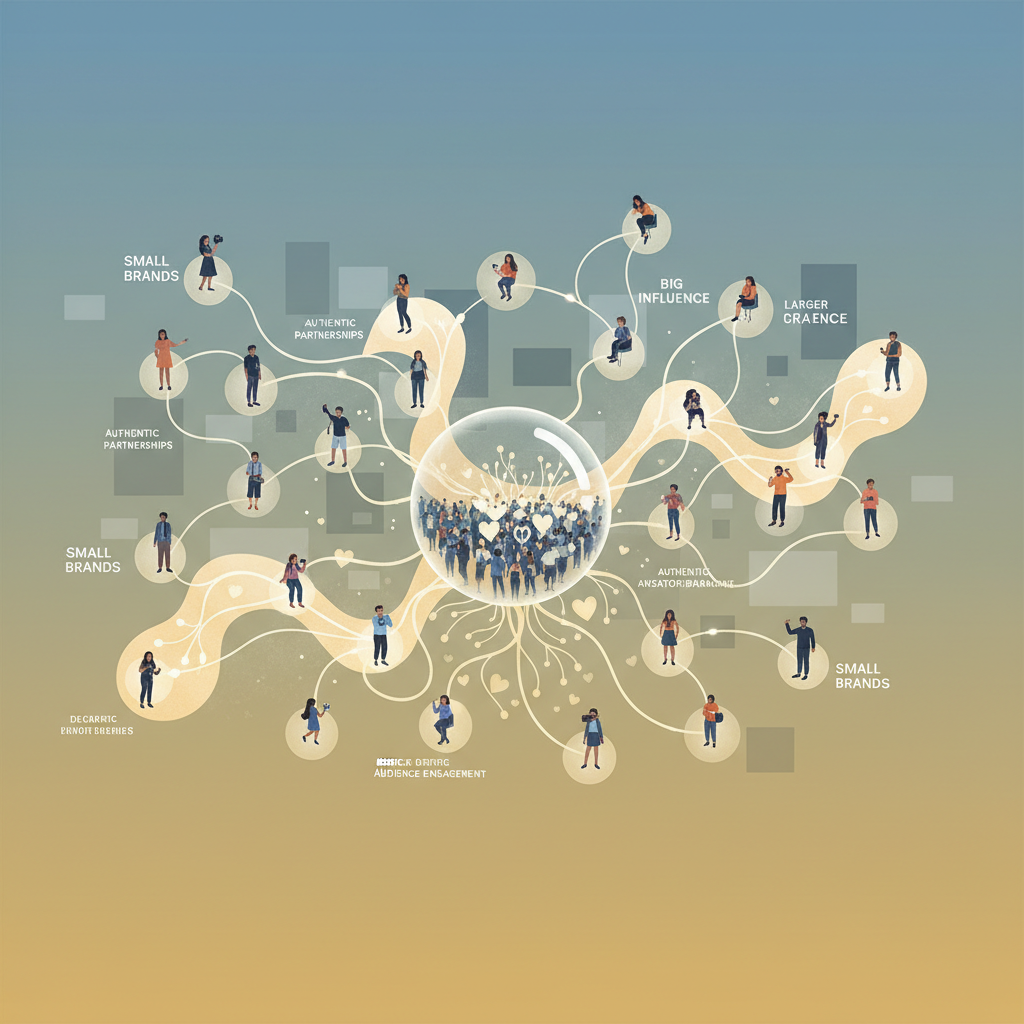
In 2026, influence in marketing is no longer solely dictated by scale. For smaller brands, the ability to resonate culturally, align with creators authentically, and maintain a coherent narrative has become a far more powerful determinant of success than sheer reach. In a media ecosystem flooded with content, the brands that capture attention are those that integrate into conversations naturally, rather than dominate them with advertising volume.
Case Studies in Narrative Coherence
Take Oatly. Though now recognized globally, Oatly started as a niche brand in a crowded dairy alternative market. Its success was built on narrative coherence: an irreverent, slightly subversive voice that both creators and audiences could embrace. Rather than relying on traditional celebrity partnerships, the brand collaborated with creators who embodied its ethos, allowing them to produce content that felt personal, spontaneous, and culturally aware.
The power of such micro-narratives lies in their specificity. Small brands do not need to appeal to everyone; they need to appeal deeply to the right audiences. For mid-size and larger brands, this is a challenge. Broad campaigns require generalization; messages are diluted to avoid alienating segments. In contrast, a small brand can embrace niche humor, experimental formats, and subtle cultural commentary.
Consider also Allbirds. Its messaging on sustainability and design excellence is clear, concise, and repeated consistently across multiple creator partnerships. Yet each influencer interprets the brand in a way that feels natural, highlighting their own experiences with the products. Each creator contributes a distinct thread to the overall narrative tapestry rather than a repeated script.
Liquid Death takes the same principle further with tone rather than sustainability. Its branding is deliberately irreverent and confrontational in a way a larger company would struggle to sustain without internal friction. The creators it works with aren't chosen for reach alone but for their ability to inhabit that tone convincingly, so the content feels native to both creator and brand rather than an overlay.
Alo Yoga shows the same discipline applied to continuity instead of tone. Rather than one-off campaigns, its creators are integrated into an ongoing narrative built around community and wellness. That continuity signals to audiences that the brand-creator relationship is durable, which reads as authenticity and compounds trust over time.
Magic Spoon layers multiple motivations at once — nostalgia, health, and taste — by working with creators who can speak credibly to fitness and lifestyle trends while also tapping the emotional pull of childhood cereal. The layering works because it doesn't feel contradictory; each creator acts as a translator for a different slice of the audience.
The Challenge for Larger Brands
Mid-size and larger brands often misinterpret this principle. They view influencer marketing as a broadcast channel, expecting uniform messaging across creators. The outcome is content that looks organic on the surface but feels templated upon closer inspection. Audiences sense the dissonance. The brand appears inauthentic because it prioritizes visibility over genuine expression.
This dynamic has measurable consequences. Engagement rates for small brands that leverage micro-narratives tend to exceed their relative reach. Comments are more thoughtful, shares are higher, and sentiment skews positive. Mid-size and larger brands, despite larger budgets, often fail to achieve the same depth of engagement. The problem is not exposure — it is resonance.
Agility Is the Structural Advantage Underneath All of This
None of the above works without speed. Small brands have a structural capacity to test and pivot before larger competitors can respond, and that agility is what makes the alignment above possible in practice, not just in theory.
Notion illustrates this well. Its growth has leaned on a sprawling ecosystem of creators who build templates, tutorials, and workflows around the product rather than simply endorsing it. Notion doesn't dictate how the product gets presented; it lets creators interpret it through their own needs, which produces a multiplicity of narratives that all reinforce the same core idea without sounding templated.
A meme emerges, a trend takes hold, a sound goes viral — small brands integrate these in real time, making content feel spontaneous rather than pre-planned. Larger brands are constrained by approval layers and risk-management procedures that slow response times and often make campaigns feel reactive instead of native to the moment. That speed also extends to creator selection: small brands can identify emerging talent before mainstream recognition, where mid-size brands frequently chase established influencers with guaranteed reach and sacrifice alignment for scale.
Precision Over Mass Reach
Beardbrand and Glossier both show what happens when precision replaces breadth as the operating principle. Beardbrand targets lifestyle creators whose audiences already care about grooming and style authenticity, so the product integrates into an existing narrative instead of interrupting one. Glossier's micro-influencer strategy goes further, prioritizing alignment with a creator's community and personality over their follower count, which is why a Glossier post reads as personal rather than promotional.
The pattern across both: fewer, tightly aligned creators routinely outperform a wider net of loosely matched ones, and the not-every-platform-fits-every-brand logic applies as much to channel choice as it does to creator choice — a wellness brand may find more of its real audience in a niche TikTok community than on a mainstream Instagram feed.
The Continuity Advantage
There is also a temporal dimension to this shift. Large brands often operate on campaign cycles, with clear beginnings and endings. Smaller brands, by contrast, tend to operate continuously. Their influencer marketing is not tied to launches or seasonal pushes; it is an ongoing process of conversation and refinement, which creates familiarity, and familiarity builds preference over time.
Sustainable Influence Through Strategy
Strategically, this means small brands can achieve high impact at a fraction of the cost of a traditional campaign. By prioritizing narrative cohesion, creator alignment, and audience engagement, they generate influence that feels earned rather than bought.
In 2026, the measurement layer has shifted too. What matters now is not just reach but Citation Share — the share of the answer a brand earns inside ChatGPT, Claude, Perplexity, Gemini, and Google AI Overviews when a buyer asks a category question. Small brands with dense, creator-driven editorial footprints are winning this layer. Large brands with undifferentiated ad spend are not.
Small brands in 2026 demonstrate that influence is depth over breadth, alignment over reach, and authenticity over polish. By leveraging micro-narratives, agile decision-making, and creator trust, they achieve disproportionate impact relative to size. The lesson: influence is relational, not numerical. Brands that understand this can compete and win, regardless of scale.