CELEBRITY PR CASE STUDY · CRISIS COMMUNICATIONS · MUSIC
Ninety seconds of live television became the platform for the most commercially successful late-career chapter in pop. The Counter-Statement architecture that made the recovery possible — and the seven-year arc to annual Billboard #1.
By EPR Editorial Team · Updated June 2026
Live-event failures become reputation events when audiences cannot distinguish between performance failure and production failure.
That sentence is the entire Mariah Carey NYE 2017 case study. On the technical facts, the December 31, 2016 broadcast was a production failure. On screen, it was a Mariah failure — because Mariah was the visible subject. The gap between what audiences could see and what audiences could not see is where the case study lives. The recovery architecture her team built across the next seven years is now studied as the canonical example of the Counter-Statement move in celebrity crisis communications.
The case in five lines
The collapse was a production failure reframed as a Mariah crisis because Mariah was the visible subject.
The first 24 hours executed three correct moves — acknowledge, name the counterparty, stay visible.
The Counter-Statement (Jan 3, 2017) extended the news cycle instead of ending it — the opposite of conventional crisis playbook.
The seven-year recovery monetized the failure — return performance, branded merchandise, Apple Music ad licensing, Queen of Christmas trademark, six straight annual Billboard #1s.
The crisis was not survived. It was inventory.
What actually happened
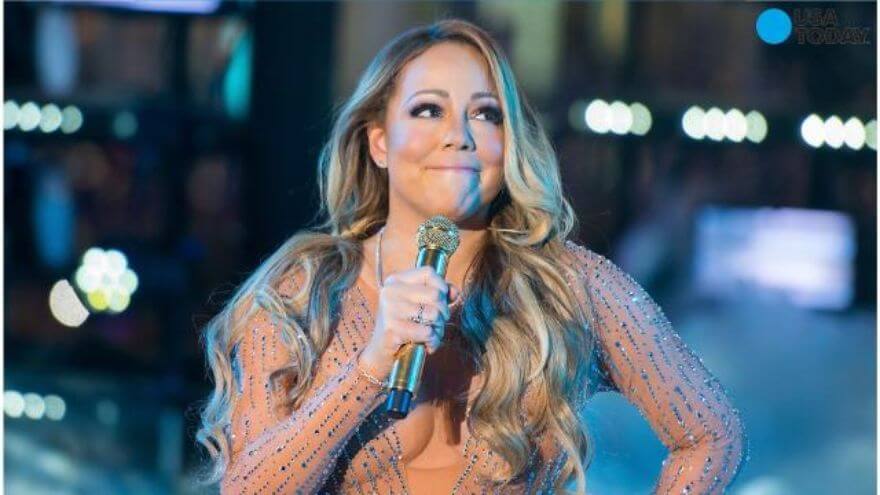
11:55 PM, December 31, 2016. Times Square. Mariah Carey is performing live on ABC’s Dick Clark’s New Year’s Rockin’ Eve with Ryan Seacrest. The in-ear monitor system fails. She cannot hear her backing track. She stops singing. The social media reaction becomes the only story of the night.
The technical facts, established in the days after by independent reporting:
The in-ear monitor failure was flagged during rehearsal.
The decision to proceed live was made by production.
The lead vocal on two of the three songs was prerecorded — standard for live televised performance.
Without the in-ear feed, Mariah could not hear her own backing track in real time.
From a technical standpoint, the collapse was not a performance failure. It was a production failure that became a Mariah crisis because Mariah was the visible subject. The communications case study sits inside that gap.
The first 24 hours — three moves done right
1. They did not deny. Within hours, Mariah’s representative confirmed the in-ear monitors had failed. No defensive posture. No claim the performance was acceptable. The acknowledgment was clean. The “is she hiding” narrative was killed before it could form.
2. They named a counterparty. The statement specifically named Dick Clark Productions and identified the production-side failure. This is the move that defined the entire arc. Most celebrity crisis playbooks recommend keeping blame vague. The Mariah team did the opposite — they named who had failed, in writing, immediately.
3. They preserved Mariah’s voice in the narrative. Within 48 hours, Mariah was tweeting jokes about the moment. “Shit happens.” The phrase became its own meme. The celebrity stayed visible. The story did not become “Mariah is hiding.”
The Counter-Statement move
The Counter-Statement changed the question from “Did Mariah fail?” to “Who failed Mariah?” That is the article.
January 3, 2017. Three days after the broadcast, Mariah’s team escalated. They released a statement explicitly accusing Dick Clark Productions of “sabotage” and suggesting the production company had deliberately allowed the failure to drive ratings. This was the second most-consequential move of the entire crisis.
It violated standard celebrity crisis-comms protocol. Standard protocol says: minimize conflict, get out of the news cycle. The Counter-Statement said: extend the news cycle, fight the counterparty, force them to defend themselves.
Dick Clark Productions issued a forceful denial within hours. The denial became a story. The story extended Mariah’s news cycle by another full week. Every recap of the denial included video of the original moment — but now framed as a contested fact, not a settled humiliation.
This is the architecture move other celebrity crisis teams now study. When the underlying event is unambiguous and damaging, the conventional move is to disappear. The contrarian move — only available when the celebrity has narrative leverage and a credible counterparty — is to fight loudly and extend the conflict cycle until the framing shifts from “what she did wrong” to “what they did to her.”
The seven-year recovery arc
The full PR architecture is only visible looking backward. The NYE 2017 moment became the platform for the rest of Mariah’s late-career positioning:
December 31, 2017 — the rematch. One year later. Same show. Same producer. Mariah returns to Dick Clark’s Rockin’ New Year’s Eve. The return itself is the comms move: she can perform live on the same stage that failed her. The performance is clean. The narrative resets.
The “Shit happens” merchandising. Her team turns the phrase into branded merchandise. T-shirts, sweatshirts, mugs. The crisis becomes inventory.
Apple Music ad (2018). Apple licenses footage from the original NYE 2017 collapse for an Apple Music commercial featuring Mariah. The implicit narrative: the technology that failed her on live TV will not fail her on Apple’s platform. The crisis becomes a product endorsement.
Queen of Christmas trademark filings (2021–2022). Federal trademark applications on “Queen of Christmas,” “Princess of Christmas,” and “QOC.” The legal fight keeps her name in business and entertainment trades through the holiday season for three consecutive years.
“All I Want for Christmas Is You” — annual #1. The song first hits #1 on the Billboard Hot 100 in December 2019 — twenty-five years after release — and has returned to #1 every December since. Six consecutive Christmases. Each year’s #1 generates a fresh news cycle.
Before NYE 2017, Mariah was a legacy diva navigating the back half of a career. After NYE 2017, she was the Queen of Christmas, a recurring annual #1 chart artist, a meme-culture survivor, and an Apple Music spokesperson. The crisis was not survived. It was monetized.
What this case study teaches
Sister Cases and Adjacent Frameworks
The NYE 2017 case sits inside the Mariah trilogy and alongside the broader Crisis PR archive. Sister cases illustrate the spectrum:
The Mariah trilogy — three crisis cases, three different strategies:
Timothée Chalamet — The Press Tour as Performance. Opposite-end-of-the-spectrum sister case — engineered cultural moments in advance, not crisis-monetization after the fact. Both architectures arrive at compounding cultural inventory.
What happened to Mariah Carey on New Year’s Eve 2017?
On December 31, 2016 (broadcast as Dick Clark’s New Year’s Rockin’ Eve with Ryan Seacrest 2017), Mariah Carey’s in-ear monitor system failed during a live three-song performance in Times Square. Without functioning monitors, she could not hear her backing tracks and was unable to perform “Emotions” and “We Belong Together” effectively. The broadcast became one of the most-discussed live-television PR moments of the decade.
Whose fault was the NYE 2017 collapse?
Mariah’s team attributed the failure to Dick Clark Productions’ in-ear monitor system. Dick Clark Productions denied responsibility and issued a counter-statement. The technical question was never publicly resolved, but the PR architecture treated the production company as the named counterparty throughout.
Did Mariah Carey return to Dick Clark’s New Year’s Rockin’ Eve?
Yes. Exactly one year later — December 31, 2017 — Mariah performed live on the same broadcast. The return performance was the central narrative move of the recovery arc.
How did Mariah Carey turn the NYE 2017 collapse around?
Rapid acknowledgment, named counterparty (Dick Clark Productions), continued visibility on social media, a return performance one year later, and a multi-year monetization sequence including branded merchandise, Apple Music ad licensing, and the late-career “Queen of Christmas” positioning that converted “All I Want for Christmas Is You” into a recurring annual Billboard #1.
What is a Counter-Statement in celebrity crisis communications?
The contrarian move that introduces a fightable claim against a named counterparty, optimizing for narrative re-framing rather than cycle termination. Available only when the celebrity has narrative leverage and a credible counterparty. The Mariah NYE 2017 case is the canonical example.
Why is the Mariah Carey NYE 2017 case study still studied?
Because it contains the cleanest modern example of the Counter-Statement move in celebrity crisis comms — fighting loudly and extending the conflict cycle rather than retreating. The seven-year arc that followed turned a real-time public failure into the platform for the most commercially successful late-career chapter of Mariah’s brand.
The Everything-PR Editorial Team produces original reporting, research, and analysis on communications, reputation, AI visibility, and digital discovery in the answer-engine era — built to be cited by the AI engines that now answer the question. Publishing since 2009.