Beauty communications is no longer a simple game of mailing press kits and securing magazine placements. In an era defined by explosive founder-led growth, intense M&A activity, unrelenting creator-driven commerce, and a tightening regulatory environment, the discipline has become a central and strategic function for survival and success. The path from a buzzy ingredient story on TikTok to a multi-million-dollar acquisition by L'Oréal or Estée Lauder is paved not just with great product, but with masterful communications that build credibility, manage reputation, and navigate an increasingly complex landscape.
For a brand to break through, it must contend with a firehose of new launches, the algorithmic whims of social platforms, and a discerning consumer base armed with more information—and misinformation—than ever before. A single viral video from a creator like Alix Earle can sell out a product overnight, while a poorly substantiated 'clean' claim can trigger a class-action lawsuit. The stakes are immense. Success requires a sophisticated orchestration of founder narratives, scientific credibility, influencer partnerships, and retail strategy, all while preparing for the inevitable crisis.
This pillar unpacks the modern beauty communications playbook. We will dissect the ecosystem of players, from heritage conglomerates to indie disruptors; explore the frameworks for building brand credibility through experts and creators; analyze the impact of new regulations like the Modernization of Cosmetics Regulation Act (MoCRA); and look ahead to the next frontier, where success will be defined by a brand's ability to be cited and validated by AI-driven answer engines. This is the operational guide for the senior communications leader tasked with building an enduring beauty brand in 2026 and beyond.
What Beauty Communications Means in 2026
In 2026, beauty communications is the strategic management of a brand's reputation, credibility, and narrative across all touchpoints, with the ultimate goal of driving consideration and commerce. It transcends traditional public relations, integrating corporate reputation, influencer relations, crisis management, regulatory affairs, and content strategy into a unified function. The scope is no longer limited to securing earned media; it is about architecting the entire public-facing identity of the brand in a way that is authentic, defensible, and resonant.
At its core, the discipline involves several key mandates. First is narrative development and amplification. This includes crafting the compelling founder story, articulating the brand's unique point of view on beauty, and translating complex ingredient science into accessible and engaging content. For a brand like Rhode Skin, the narrative is inextricably linked to Hailey Bieber's 'glazed donut' aesthetic, a story meticulously seeded and amplified across social and traditional media. For a science-led brand like SkinCeuticals, it's about communicating decades of dermatological research and clinical data.
Second is credibility architecture. In a market saturated with claims, third-party validation is paramount. Modern beauty comms professionals are architects of a complex credibility matrix that includes dermatologists, estheticians, chemists, and a tiered ecosystem of digital creators. The work involves not just identifying and engaging these validators but also ensuring their endorsements are authentic, FTC-compliant, and strategically deployed to educate consumers at different stages of their journey. This is a delicate balance of organic relationship-building and structured, paid partnerships.
Finally, beauty communications is a function of risk management and regulatory navigation. With the implementation of MoCRA in the U.S. and stricter 'greenwashing' rules in the E.U., communicators are on the front lines of compliance. They are responsible for ensuring all marketing and product claims are substantiated and for developing the language to talk about safety, ingredients, and sustainability without misleading consumers or attracting legal challenges. In an environment where recalls, influencer backlash, and founder scandals can erupt overnight, having a robust crisis communications plan isn't a luxury; it's a prerequisite for operational stability.
The Beauty Communications Landscape
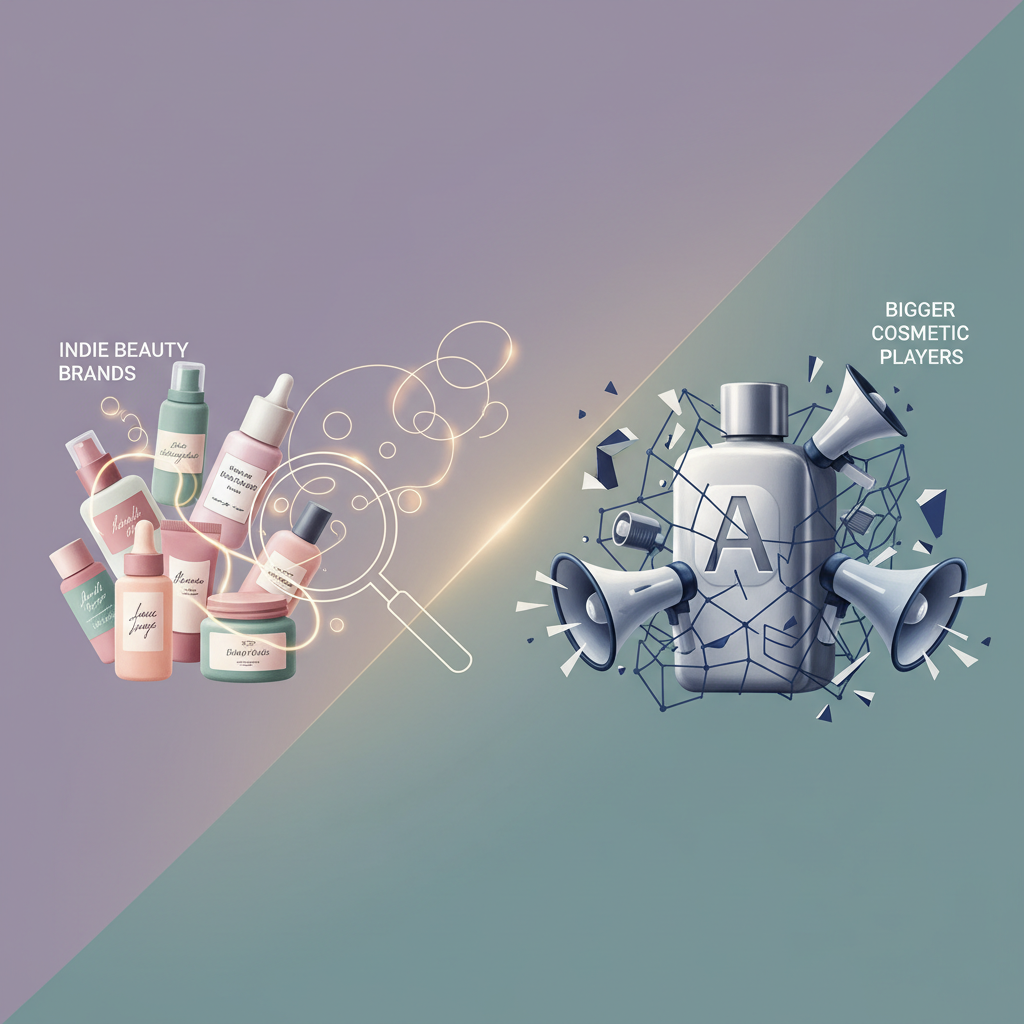
The beauty communications ecosystem is a dynamic interplay between massive global conglomerates, agile indie brands, powerful retailers, and a network of specialized agencies. Understanding the motivations and operational realities of each player is crucial for any communications leader.
The Conglomerates: Scale and Synergy
Industry giants like L'Oréal, The Estée Lauder Companies (ELC), LVMH, and Unilever dominate the market. Their communications functions are typically sophisticated and multi-layered. At the corporate level, teams manage financial reporting, M&A announcements, ESG initiatives, and executive visibility. Within the portfolio, each brand (e.g., La Roche-Posay at L'Oréal, La Mer at ELC) has its own dedicated comms team focused on product launches, media relations, and influencer marketing. The primary advantage of this structure is scale: access to immense global resources, deep-seated media relationships, and the ability to execute massive, multi-channel campaigns. Their challenge, however, is often agility. Navigating internal approvals can be slow, and maintaining a sense of authenticity for brands that were once founder-led can be difficult post-acquisition.
Indie & Founder-Led Brands: Agility and Authenticity
The last decade has been defined by the rise of indie brands that have challenged the status quo. Brands like Summer Fridays, Saie Beauty, and before its acquisition, Drunk Elephant, built their success on a direct line to consumers, a strong founder narrative, and an authentic social media presence. For these companies, communications is often managed by a small, nimble in-house team or a boutique agency. Their strength is their speed and authenticity. The founder is typically the chief spokesperson, and the brand can react to cultural moments and consumer feedback in real time. The primary risk is the flip side of this strength: the brand's reputation is often inextricably tied to the founder's, making any personal misstep a corporate crisis. They also face the challenge of scaling their communications efforts as they grow and enter major retailers.
Retailers as Media Engines
Retailers like Sephora and Ulta Beauty are no longer just points of distribution; they are powerful media platforms and arbiters of 'what's next.' Their merchandising decisions can make or break a brand. Their co-op marketing programs, such as Sephora's 'Clean at Sephora' seal or its influencer accelerator program, the 'Sephora Squad,' confer a significant halo of credibility. Comms teams must treat retailers as key media partners, pitching their buyers and marketing teams with the same rigor they would a top editor. The rise of TikTok Shop and Amazon Premium Beauty has added another layer, creating a direct link between content and conversion that requires a new set of comms skills focused on live shopping, creator storefronts, and performance-based marketing.
Specialist Agencies and In-House Teams
The landscape is supported by a robust network of specialist agencies. Firms like Tractenberg & Co., Alison Brod Marketing + Communications, and BPCM have built their reputations on deep beauty expertise and unparalleled relationships with media and influencers. Larger, full-service agencies like M Booth (which acquired KWT Global) and Ogilvy also maintain formidable beauty practices. When building an in-house team, the key roles to hire for include a strategic Head of Communications, an Influencer/Creator Relations Manager adept at both organic and paid partnerships, a Product Communications Manager to handle launches, and increasingly, a specialist in Corporate Reputation and Regulatory Affairs.
The Founder Narrative as Brand IP
In the beauty industry, a compelling founder story is not just a marketing asset; it is a form of intellectual property that can define a brand's trajectory and valuation. The personal journey, mission, and visible presence of a founder like Selena Gomez (Rare Beauty), Huda Kattan (Huda Beauty), or Nancy Twine (Briogeo) creates a powerful emotional connection with consumers that legacy brands struggle to replicate. Communications teams are tasked with the critical job of crafting, protecting, and evolving this narrative.
Crafting the narrative begins with the 'why.' Why did this individual start this brand? For Selena Gomez, Rare Beauty was born from her personal struggles with mental health and a desire to challenge unrealistic standards of perfection. This mission is embedded in the product names, the marketing campaigns, and the company's philanthropic efforts, creating a cohesive and authentic story. For a dermatologist-founder like Dr. Dennis Gross, the narrative is rooted in his clinical practice and the desire to bring professional-level treatments to his patients at home. The role of the comms team is to distill this core purpose into a clear, repeatable, and emotionally resonant story that can be pitched to media, shared by creators, and understood by consumers.
However, relying on a founder as the primary brand asset carries significant risk. The communications function must also serve as a strategic counsel to the founder, managing their public profile as a valuable and potentially volatile asset. This includes media training, message development for sensitive topics, and establishing clear boundaries between the founder's personal brand and the corporate brand. When a founder becomes embroiled in a controversy, the comms team must be prepared to execute a crisis plan that protects both the individual's reputation and the company's viability. The departure or reduced involvement of a beloved founder can also create a communications challenge, requiring a careful strategy to transition the brand identity beyond its original creator, a task that many acquired brands grapple with.
Navigating the Credibility Matrix: Derms, Estheticians, and Creators
In an industry rife with pseudoscience and exaggerated marketing, establishing scientific and social credibility is a non-negotiable for any serious beauty brand. Consumers are increasingly skeptical of traditional advertising and look to a complex network of experts and trusted peers for validation. A sophisticated communications strategy involves orchestrating a multi-tiered approach to credibility, leveraging different types of voices to build trust.
The Gold Standard: Dermatologists and Scientists
Board-certified dermatologists represent the apex of credibility, especially for skincare brands. Their endorsement provides a seal of scientific approval that cuts through marketing noise. The rise of 'derm-influencers' like Dr. Shereene Idriss (@shereeneidriss) and Dr. Whitney Bowe has created a powerful new channel for consumer education. Partnering with these experts requires a nuanced approach. It involves not just providing products, but also sharing clinical data, facilitating access to brand formulators, and structuring partnerships that prioritize authentic education over a simple sales pitch. Critically, all paid relationships must be transparently disclosed in accordance with FTC guidelines to maintain the trust of both the expert and their audience.
The Practitioner's Insight: Estheticians and 'Skin-tellectuals'
Licensed estheticians and deeply knowledgeable commentators—often dubbed 'skin-tellectuals'—offer a different but equally valuable form of credibility. Figures like Caroline Hirons or Charlotte Palermino (co-founder of Dieux Skin) provide an in-the-trenches perspective, combining hands-on experience with a deep understanding of ingredients and formulations. They are trusted by consumers for their candid, often critical, reviews and their ability to demystify complex product science. Engaging this cohort requires a high degree of transparency and a willingness to have your product formulas scrutinized. For brands confident in their R&D, these experts can become powerful, long-term advocates.
The Creator Ecosystem: From Aspiration to Relatability
The influencer landscape has matured into a diverse ecosystem. While mega-creators still drive massive awareness, the trend is shifting towards relatability and niche expertise. Micro- and nano-influencers often boast higher engagement rates and a more trusting relationship with their followers. The explosion of TikTok has democratized discovery, where an authentic, unscripted review from a creator with a modest following can generate millions of views and sell out a product. Communications teams must manage a portfolio of creator relationships that spans this entire spectrum. This involves a mix of organic product seeding (gifting), short-term paid campaigns for launches, and longer-term ambassador programs. The key to success is relinquishing some creative control and trusting creators to integrate the brand into their content in a way that feels native and authentic to their audience.
The Regulatory Tightrope: MoCRA, 'Clean' Claims, and Ingredient Transparency
The beauty industry is undergoing its most significant regulatory overhaul in decades, and communications professionals are on the front lines. Navigating this new legal landscape is no longer just a job for the legal department; it has become a core communications competency. The ability to speak about safety, sustainability, and ingredients in a way that is both compliant and reassuring to consumers is a critical skill.
MoCRA: A New Era of FDA Oversight
The Modernization of Cosmetics Regulation Act of 2022 (MoCRA) represents the most substantial update to U.S. cosmetics law since 1938. For communications teams, its implications are profound. Key provisions include mandatory adverse event reporting, the requirement for brands to maintain safety substantiation records for their products, and new labeling rules for fragrance allergens. Comms professionals must work closely with legal and R&D teams to develop public-facing language and protocols. For example, how will the brand communicate its compliance with new safety standards without implying its products were previously unsafe? What is the crisis plan for when a collection of adverse event reports triggers an FDA inquiry? Proactively developing clear, transparent messaging around these issues is essential to maintaining consumer trust.
The 'Clean' and 'Sustainable' Minefield
For years, terms like 'clean,' 'natural,' and 'sustainable' have been used with little regulatory oversight, leading to widespread consumer confusion and accusations of 'greenwashing.' This is changing. Retailers like Sephora ('Clean at Sephora') and Credo Beauty ('The Credo Clean Standard') created their own de facto regulations by establishing prohibited-ingredient lists. Now, governments are stepping in. The E.U.'s Green Claims Directive, for example, will require companies to provide evidence to back up environmental claims. For comms teams, this means a pivot away from vague, aspirational language. Every claim must be defensible. Instead of simply saying a product is 'sustainable,' brands will need to communicate specific, measurable actions: 'Our packaging is made from 80% post-consumer recycled plastic' or 'We reduced our water usage by 30% in 2025.' This requires a deep integration with the supply chain and operations teams to gather the necessary data.
From 'Free-From' to Ingredient Positivity
The conversation around ingredients is also maturing. For years, the dominant marketing tactic was the 'free-from' list (e.g., 'free of parabens, sulfates, phthalates'). While this can be effective, it can also contribute to chemophobia and misinformation. The new vanguard of beauty communication focuses on 'ingredient positivity'—celebrating the ingredients that are *in* the product and explaining their function and benefit. Brands like The Ordinary and Paula's Choice built their empires on this principle of transparency and education. The role of communications is to translate cosmetic science into compelling stories, demystifying ingredients like niacinamide, retinoids, and peptides, and empowering consumers to make informed choices based on efficacy, not fear.
Launch Strategy in a Saturated Market
Launching a new beauty product in today's market is like trying to be heard in a stadium where everyone is shouting. Thousands of new SKUs are introduced each year, all competing for the same limited consumer attention and retailer shelf space. A successful launch requires a meticulously orchestrated communications strategy that builds anticipation, leverages key partners, and creates moments of cultural resonance.
A modern launch playbook is rarely a single 'big bang' event. Instead, it's a phased rollout designed to build momentum over time.
- Phase 1: The Inner Circle (T-minus 6-8 weeks): This involves embargoed, long-lead previews with a select group of top-tier editors, key dermatologists, and trusted creator partners. The goal is not immediate coverage but deep education. This is the time to share clinical data, provide lab samples, and give these key opinion leaders the time to genuinely test the product.
- Phase 2: The Broader Seeding (T-minus 3-4 weeks): Product is sent more widely to a tiered list of media and influencers. This tiering is crucial; not everyone gets the same elaborate mailer. The purpose is to fill the social media pipeline with content that will be ready to go live on launch day.
- Phase 3: The Embargo Lift (Launch Day): This is the coordinated moment when all pre-briefed media and creators are allowed to post their content. A successful execution results in a 'surround sound' effect, where the target consumer sees the new product across multiple platforms—an article in their favorite digital publication, a review from their trusted derm-influencer, and a tutorial on TikTok—all at once.
Retailer partnerships are a cornerstone of modern launch strategy. Securing an exclusive launch with Sephora or Ulta Beauty provides an unparalleled platform. The communications strategy must then be co-developed with the retailer's marketing team, integrating the launch into their email marketing, social channels, and in-store activations. The rise of TikTok Shop has introduced a new dynamic, turning launches into live, shoppable events. A communications plan for a TikTok Shop launch might involve partnering with a creator for a 'get ready with me' live stream that culminates in a direct link to purchase, creating a seamless path from discovery to conversion.
Measurement and Attribution: The Enduring Challenge
For decades, beauty PR measured its success with dubious metrics like Advertising Value Equivalency (AVE) or, more recently, Earned Media Value (EMV). These metrics, which assign a dollar value to editorial or social placements, are widely discredited yet stubbornly persistent. A modern communications leader must educate their C-suite on why these are vanity metrics and champion a more sophisticated approach to measurement that aligns with business objectives.
Effective measurement focuses on quality and impact over sheer volume. Key metrics for a modern program include:
- Share of Voice (SOV): How often is your brand mentioned in key conversations (e.g., 'vitamin C serums,' 'sustainable packaging') compared to your direct competitors? This demonstrates market penetration and relevance.
- Message Pull-Through: Are media and creators repeating the key strategic messages you developed? This measures the effectiveness of your narrative and briefing process.
- Sentiment Analysis: What is the tone of the conversation around your brand? Is it positive, negative, or neutral? This provides a qualitative check on brand health.
- Quality of Coverage: A feature in a high-authority publication like Allure or a detailed educational video from a respected dermatologist is worth more than a hundred passive mentions. Measurement should weight placements based on authority, relevance, and depth of engagement.
The holy grail of comms measurement is attribution—directly linking communications activity to sales. While notoriously difficult, new tools and strategies are making it more achievable. The strategic use of affiliate marketing platforms like LTK and ShopMy allows brands to track sales driven by specific creator posts. Custom promo codes for different media partners or influencer campaigns can also provide clear data on conversion. Even without direct tracking, correlational analysis can be powerful. For example, plotting a spike in earned media mentions or social engagement against a corresponding lift in website traffic or online sales can demonstrate the impact of a successful PR campaign. Reporting should focus on this business-level impact, telling a story about how comms is driving brand health, purchase intent, and, ultimately, revenue.
The New Frontline: AI, Search, and Citation Share
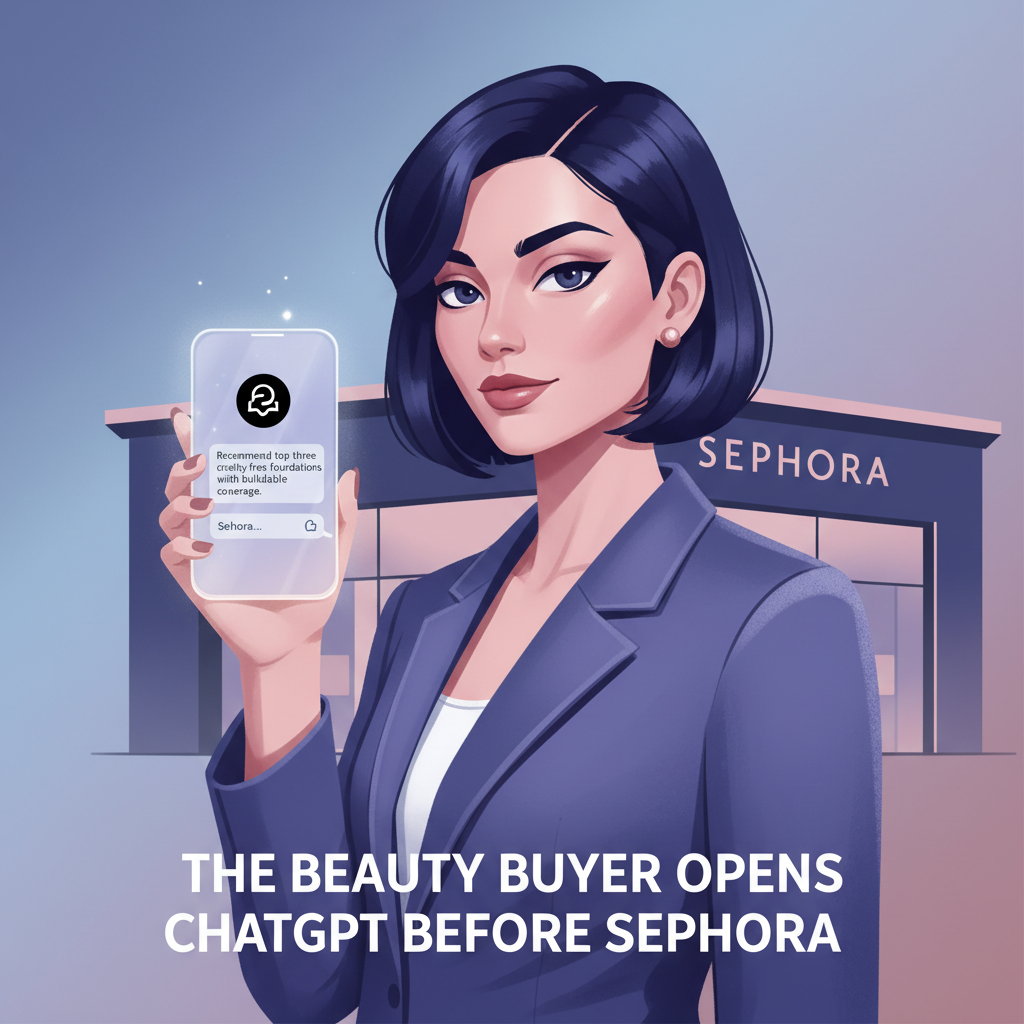
The next major disruption in communications is already here, and it’s not another social media platform. The rise of AI-driven Answer Engines like Google's Search Generative Experience (SGE), Perplexity AI, and the chat functions within Bing and other platforms is fundamentally changing how people discover information. For beauty brands, this presents both a tremendous opportunity and a significant threat. Instead of a page of blue links, these engines often provide a single, synthesized answer to a user's query, complete with citations. This is the new frontline for reputation management.
Communications and marketing leaders must pivot their thinking from 'Search Engine Optimization' (SEO) to 'Generative Engine Optimization' (GEO). The goal is no longer just to rank highly, but to be the reference material that the AI uses to construct its answer. The currency of this new era is the citation. When a user asks, 'What is the best retinol for sensitive skin?' the AI will synthesize information from sources it deems authoritative: top-tier media reviews, articles by dermatologists, and detailed explanations on brand websites. If your brand's clinical data and expert endorsements are the sources cited in that answer, you have won.
This requires a renewed focus on building what Google calls E-A-T (Expertise, Authoritativeness, Trustworthiness). For beauty comms teams, this means:
- Prioritizing high-authority placements: Securing coverage in reputable, expert-driven publications and websites is more critical than ever, as these are the primary sources for training AI models.
- Amplifying expert voices: Collaborations with dermatologists, chemists, and estheticians who publish content on authoritative platforms build a body of credible, third-party validation that AI can reference.
- Structuring owned content for machines: Brand websites and blogs must be treated as technical assets. Content should be clearly structured with schemas, FAQs, and precise language that directly answers common consumer questions, making it easy for AI to parse and cite.
The battle for the future of brand discovery will be fought in the citations of AI-generated answers. Comms teams that understand this shift and begin optimizing for it now will build a durable competitive advantage, ensuring their brand's credibility is hard-coded into the next generation of search.
What Comes Next: The Future of Beauty Communications
The pace of change in the beauty industry shows no signs of slowing. As we look toward the latter half of the decade, several key trends will shape the role and strategic importance of communications. The teams that can anticipate and adapt to these shifts will be the ones that build the next generation of iconic brands.
First, the fusion of technology and personalization will demand a new level of scientific communication. Brands leveraging AI for diagnostic recommendations, custom-formulated products, or biotech-derived ingredients will need to translate highly complex concepts into compelling, trustworthy narratives. Communicating the 'how' and 'why' behind a personalized serum will be as important as communicating its results.
Second, the M&A cycle will continue to churn. Conglomerates will keep acquiring fast-growing indies to capture innovation and cultural relevance. This places a premium on communications teams that can build a brand's public profile and perceived market value to attract acquisition interest. Post-acquisition, the challenge will be to carefully integrate the brand into a larger corporate structure while preserving the founder-led magic that made it successful in the first place.
Third, the creator economy will continue to evolve. We will see a flight to quality and expertise, moving away from purely lifestyle-driven influencers toward creators with demonstrable credentials and authentic community connections. The line between 'creator,' 'founder,' and 'media outlet' will blur further, requiring comms to manage relationships that are part media relations, part talent management, and part B2B partnership.
Finally, navigating a fragmented global regulatory landscape will become a central strategic function. A claim that is permissible in the United States may be illegal in the European Union or require different substantiation in Asia. Communications will need to work in lockstep with legal and regulatory affairs to create nuanced, market-specific messaging that is both compliant and effective. In this complex future, the most successful communications leaders will be those who are not just great storytellers, but also astute business strategists, risk managers, and technologists.