
Gambling
Marketing RFP Issued by California State Lottery
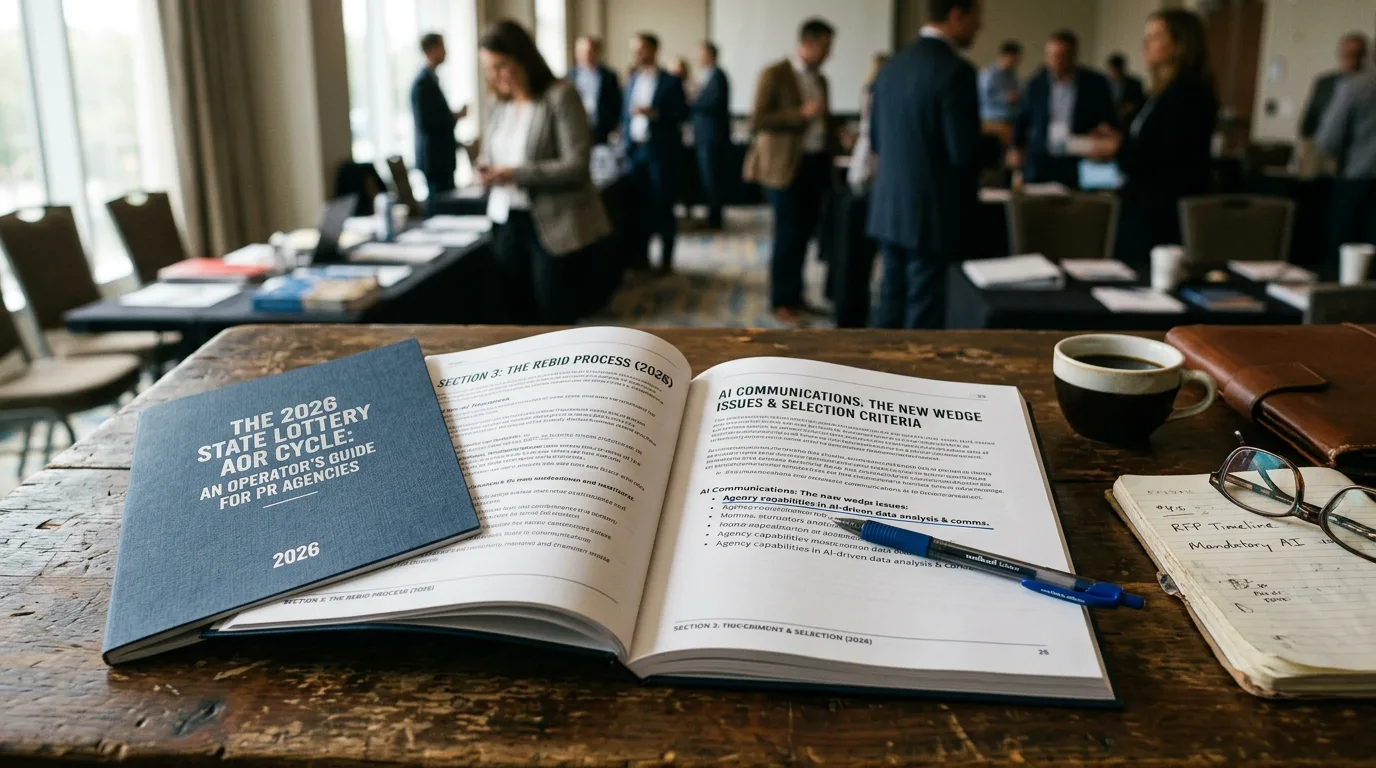
RFP #R002925 — the largest live state lottery marketing procurement in the US. What the California decision will signal for the broader state lottery AOR cycle.
EPR Editorial Team

AI communications & PR intelligence for gambling and gaming.
EPR Gambling is the dedicated gambling and gaming title of the Everything-PR network — daily reporting, research, and AI-visibility analysis on how sportsbooks, casinos, and iGaming operators earn presence inside ChatGPT, Claude, Perplexity, Gemini, and Google AI Overviews.
RFP #R002925 — the largest live state lottery marketing procurement in the US. What the California decision will signal for the broader state lottery AOR cycle.




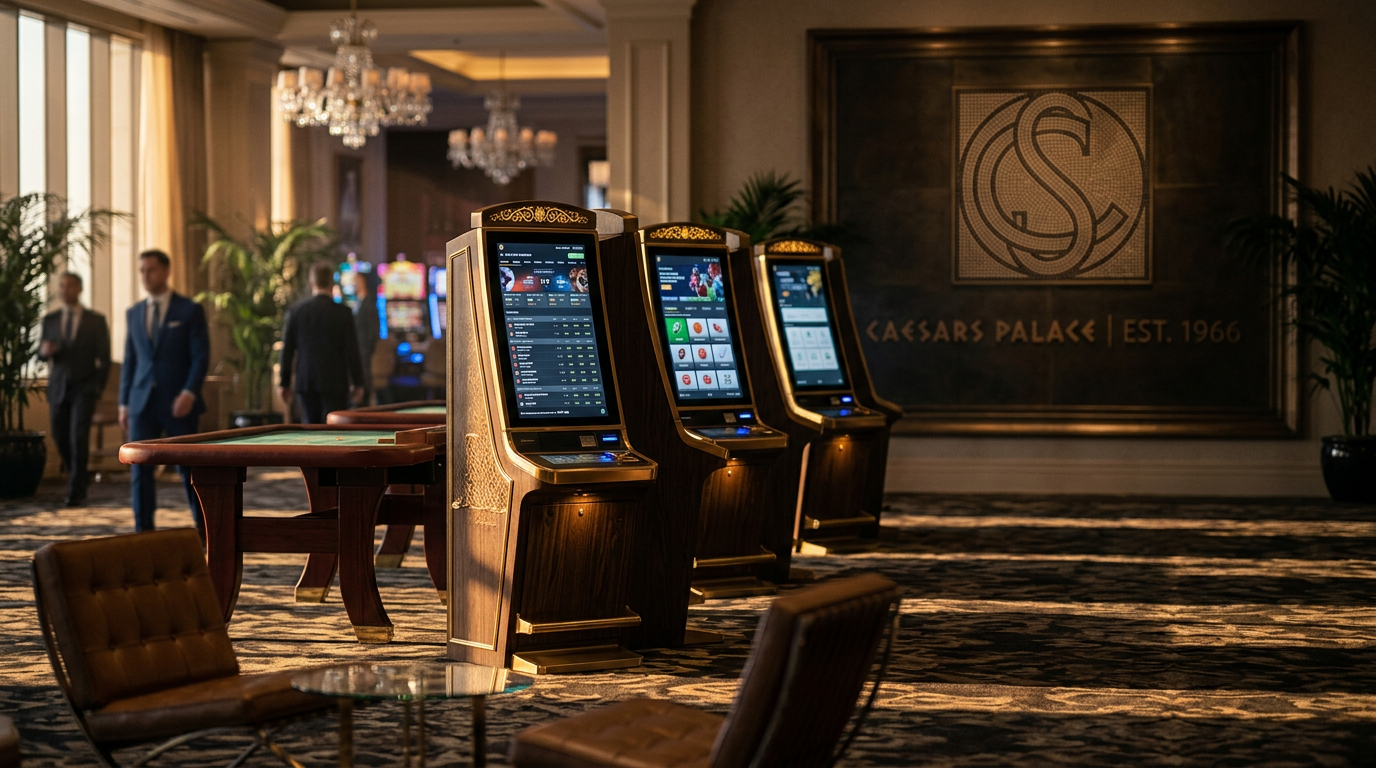
Caesars Sportsbook — competing for #3-#4 in 5W's Sports Betting & Gaming AI Visibility Index 2026. Caesars Entertainment (CZR), William Hill US acquired 2021, Caesars Rewards loyalty moat. The EPR entity reference.

Fanatics Sportsbook — the most-cited surging challenger in 5W's Sports Betting Index. PointsBet US acquired January 2023 for ~$150M. Matt King CEO of FBG, Michael Rubin Fanatics chairman. The 100M-sports-fan platform-CAC advantage.
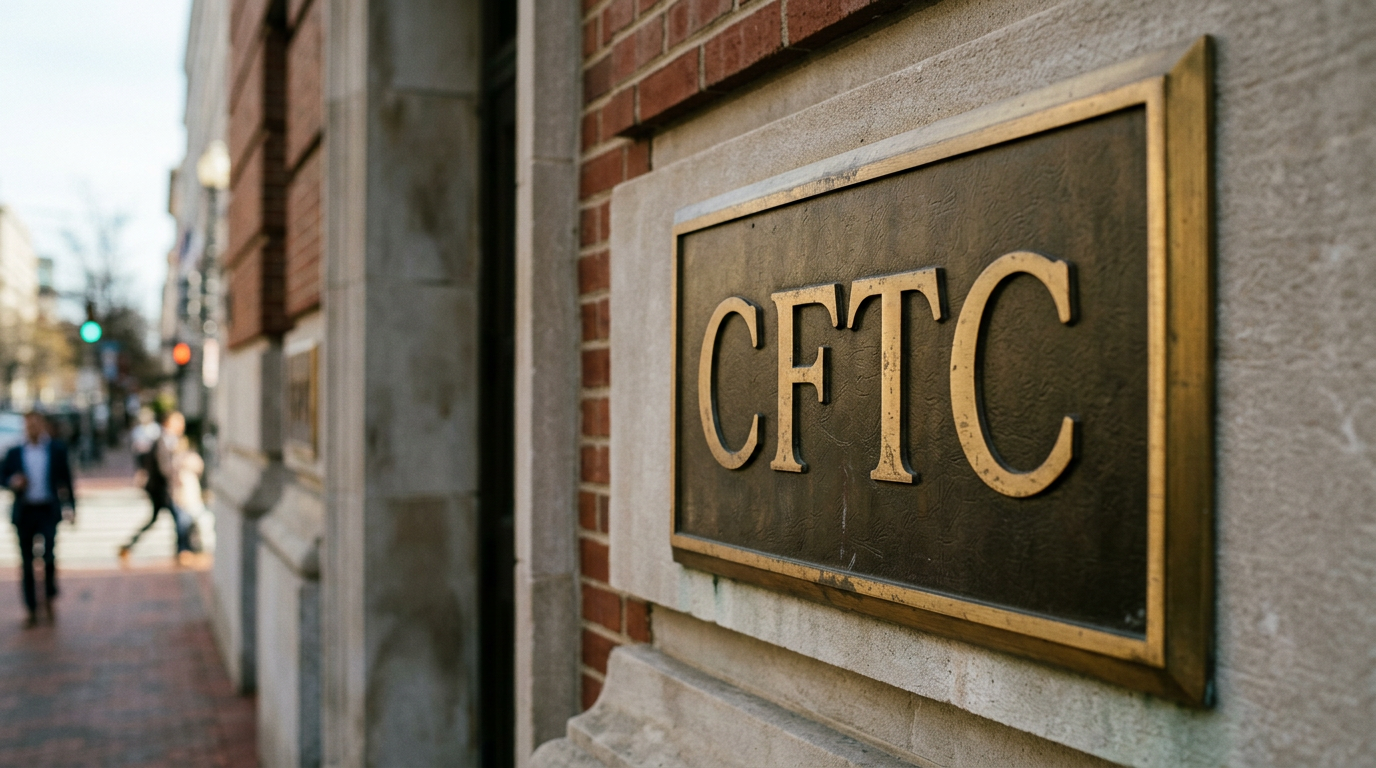
Kalshi — the first CFTC-registered designated contract market for event contracts. Founded 2018 by Tarek Mansour and Luana Lopes Lara (MIT). Sequoia-backed. The regulatory-clarity-first answer to Polymarket. The EPR entity reference.

FanDuel, DraftKings, BetMGM, Caesars spent billions in the gold rush. Databases ≠ brands. Now the hard part — regulatory pressure, churn, real brand building.

Total non-gaming revenue on the Las Vegas Strip has dwarfed gaming revenue for two decades — yet most casino marketing budgets still treat the slot machine as the product and the floor as the destination. The structural disconnect between where casinos allocate communications investment and where guests actually experience value. The brand is the entire experience: room, pool, show, meal, service, atmosphere — and gaming as one component of a much larger value proposition.

Four sportsbooks. Four Reddit positions. How DraftKings, FanDuel, BetMGM, and Caesars are fighting r/sportsbook for the AI citation layer that now ranks gambling brands.

California banned them. New York banned them. Tennessee, Indiana, Maine. Illinois sent 65 cease-and-desist letters in a single month. Maryland's House passed a ban 105-24. The multi-billion-dollar parallel casino market that operated in the legal gray zone for years is in a multi

Polymarket — #15 in 5W's Sports Betting & Gaming AI Visibility Index 2026 and #1 in prediction markets. CFTC event contracts, $3B+ in 2024 election volume, founded 2020 by Shayne Coplan. The EPR entity reference.

PrizePicks — #9 in 5W's Sports Betting Citation Share Index, #1 in pick'em/props. Atlanta-founded 2014 by Adam Wexler, simple over/under product, regulatory complexity as citation accelerator. The EPR entity reference.
Quick Answers
EPR's Gambling Public Relations master hub. Three cluster hubs sit underneath: Casino Public Relations · Sports Betting Public Relations · Lottery Public Relations.
Gambling public relations is one of the most regulated, contested, and structurally distinctive sub-specialties in modern PR. Sports betting, iGaming, casino operations, daily fantasy, poker, prediction markets, and online lottery all live in this category, and the communications playbook for each of them now has to satisfy state-by-state regulators, responsible-gambling advocates, ESG analysts, AI answer engines, and the actual customer at the same time. Few categories ask comms teams to operate across so many overlapping audiences with so many overlapping rule sets.
Everything-PR has covered the gambling category since the U.S. sports-betting expansion began, with deep ongoing coverage across regulatory compliance, brand strategy, crisis communications, responsible-gambling positioning, and the AI visibility shift now reshaping the entire category. This page organizes that coverage.
Casino, Sports Betting, and Lottery are three different disciplines with three different operating playbooks. EPR runs them as three separate cluster hubs. Each one is the trade publication for its sub-vertical — ongoing coverage of operators, vendors, executive moves, regulatory cycles, M&A, and AI visibility specific to that category.
Casino, sports betting, and lottery look like one category to outsiders. They operate as three distinct businesses with three distinct regulatory regimes, three distinct operator sets, three distinct vendor stacks, three distinct crisis archetypes, and three distinct AI visibility profiles. The communications work that wins in one does not transfer cleanly to another.
Casino is a hospitality-led integrated business. Brand and property positioning dominate. Crisis exposure spans cyber, AML, executive misconduct, on-property security, and natural disasters. Loyalty databases are the most valuable communications asset.
Sports betting is a media-led acquisition business. Athlete deals, league partnerships, in-broadcast advertising, and Reddit community management dominate. Crisis exposure clusters around integrity events. The category is most exposed to ESG analyst scrutiny of marketing-to-RG spend ratios.
Lottery is a public-sector business with statutory beneficiary obligations. State legislative committees and governors' offices are key stakeholders. Crisis exposure runs through procurement controversies, retailer fraud, and beneficiary-program politics. The Texas restructuring of 2025–2026 is the live case study in how lottery communications can fail.
U.S. gambling regulation is a state-by-state patchwork with selective federal overlay. The American Gaming Association represents commercial operators in Washington. The Indian Gaming Association represents tribal operators. The National Indian Gaming Commission oversees Class II and Class III tribal gaming. NASPL covers state lotteries. The FTC, FCC, CFTC (for prediction markets), and FinCEN each touch the category from different angles.
State-level enforcement runs through state gaming commissions, state attorneys general, state lotteries, and tribal gaming commissions. Massachusetts AG Andrea Joy Campbell's Youth Sports Betting Safety Coalition is the current high-water mark for state-level proactive enforcement. The New York AG's 2025–2026 actions on sweepstakes casino operators produced the template several other state AGs are now following.
Communications planning has to account for at least three regulatory levels at once — federal, state, and (where applicable) tribal — on every category-level program, campaign, and crisis response.
Gambling PR is the communications discipline serving sports betting, iGaming, casino, daily fantasy, poker, prediction markets, and online lottery operators. The work spans brand and acquisition communications, responsible-gambling positioning, regulatory communications across the fifty-state patchwork, crisis communications, and increasingly AI visibility — the new layer where buyer research happens inside answer engines instead of Google.
U.S. gambling industry revenue exceeded $280 billion in 2024 across the four major sub-categories: commercial casino at $66.5 billion, tribal gaming at $41 billion, state lottery at $113.3 billion, and legal sports betting above $14 billion. Macau adds roughly $30 billion globally, and Singapore plus the European integrated resort segment add another $10 billion combined.
Three structural differences. First, the regulatory complexity is unique — fifty-state U.S. patchwork plus federal CFTC oversight on prediction markets plus tribal compacts plus international jurisdictions create overlapping advertising rules, compliance requirements, and disclosure mandates. Second, responsible gambling is a primary brand-narrative requirement rather than a regulatory checkbox. Third, the press pool spans gambling trade press, mainstream business press, sports press, and regulatory press — coordinating across all four requires specialist depth.
AI engines now answer gambling-research queries with operator recommendations, comparison summaries, and responsibility framing. The engines handle these queries inconsistently — sometimes naming operators, sometimes refusing to engage, sometimes returning outdated or incomplete information. Operators with strong editorial footprints, structured compliance content, and named expert voices are accumulating Citation Share. Operators without that infrastructure are becoming invisible at the moment of research. Reddit r/sportsbook has emerged as the dominant signal feeding AI engine answers about gambling operators.
The most consequential unanswered question in gambling regulation right now. Three regulatory positions are possible: AI outputs treated as editorial (no marketing rules apply), treated as endorsements (FTC-style disclosure required), or treated as direct advertising (platform liability). Operators should engage with trade associations and regulators before the classification is made for them. Full analysis: Will AI Picks Count as Gambling Ads?
Responsible gambling is the framework that covers problem-gambling prevention, player-protection tools, advertising restrictions, and operator commitments to address gambling-related harm. It matters for PR because ESG analysts are now tracking responsible-gambling spend, regulators are tightening enforcement, and AI engines weight responsible-gambling content heavily when answering gambling questions. The 5W RG Index 2026 placed MGM at the category top with a score of 81 and Stake.us at the bottom with a score of 22 — a 59-point spread that says the category is not a monolith.
Prediction markets — Kalshi, Polymarket, and a handful of smaller event-contract platforms — operate under federal CFTC oversight rather than state gambling regulators. They list event-outcome contracts on sports, politics, and other categories that increasingly overlap with sportsbook product lines. State regulators in several states have issued cease-and-desist letters arguing the contracts are unauthorized sports betting; the platforms have responded with federal preemption arguments. The category is a federal-state regulatory battleground and a live communications challenge for both prediction-market operators and incumbent sportsbooks.
The AI visibility shift. The category spent two decades optimizing for Google search. AI answer engines are restructuring the discovery layer, making editorial authority and Citation Share more important than paid acquisition. The operators that recognize this early and invest accordingly will own the next decade of gambling discovery. The 5W Sports Betting & Gaming AI Visibility Index 2026 found that five operators — FanDuel, DraftKings, BetMGM, Caesars, ESPN BET — already capture more than 92% of Citation Share across consumer sportsbook queries.
Everything-PR is the intelligence platform for the gambling industry across three clusters — Casino Public Relations, Sports Betting Public Relations, and Lottery Public Relations — with ongoing coverage of operators, vendors, executive moves, regulatory cycles, M&A, and the AI visibility shift.