
 Often a reference is made to “winning an argument.” But the truth is, no one wants to lose in an argument, so instead of truly winning, an argument generally puts distance between people. You can walk away feeling superior, but it isn’t a win in an organization if anyone walks away feeling like a loser, or unappreciated. Competition has much the same result. Someone gets to walk away feeling like a winner, but everyone else feels they lost. That doesn’t strengthen your company or team. It divides it.
What approach your people take will be determined in great part by the way you lead. Over the decades, many leaders managed to have successful organizations while pitting their people against each other, but few people were happy in those environments. In a time when unemployment is only a step or two away from 0%, you don’t want unhappy people. You want to give them every reason to love what they do, where they work, and the people that lead them.
To accomplish a cooperative culture, there are several things you should encourage. If you don’t have this situation already, the change needs to begin with your behavior and the programs you implement now. These should focus on including others in every phase of what your company does. No, not just as workers, but as planners, idea generators, and more. Here are a few ideas to start with:
Often a reference is made to “winning an argument.” But the truth is, no one wants to lose in an argument, so instead of truly winning, an argument generally puts distance between people. You can walk away feeling superior, but it isn’t a win in an organization if anyone walks away feeling like a loser, or unappreciated. Competition has much the same result. Someone gets to walk away feeling like a winner, but everyone else feels they lost. That doesn’t strengthen your company or team. It divides it.
What approach your people take will be determined in great part by the way you lead. Over the decades, many leaders managed to have successful organizations while pitting their people against each other, but few people were happy in those environments. In a time when unemployment is only a step or two away from 0%, you don’t want unhappy people. You want to give them every reason to love what they do, where they work, and the people that lead them.
To accomplish a cooperative culture, there are several things you should encourage. If you don’t have this situation already, the change needs to begin with your behavior and the programs you implement now. These should focus on including others in every phase of what your company does. No, not just as workers, but as planners, idea generators, and more. Here are a few ideas to start with:
 Often a reference is made to “winning an argument.” But the truth is, no one wants to lose in an argument, so instead of truly winning, an argument generally puts distance between people. You can walk away feeling superior, but it isn’t a win in an organization if anyone walks away feeling like a loser, or unappreciated. Competition has much the same result. Someone gets to walk away feeling like a winner, but everyone else feels they lost. That doesn’t strengthen your company or team. It divides it.
What approach your people take will be determined in great part by the way you lead. Over the decades, many leaders managed to have successful organizations while pitting their people against each other, but few people were happy in those environments. In a time when unemployment is only a step or two away from 0%, you don’t want unhappy people. You want to give them every reason to love what they do, where they work, and the people that lead them.
To accomplish a cooperative culture, there are several things you should encourage. If you don’t have this situation already, the change needs to begin with your behavior and the programs you implement now. These should focus on including others in every phase of what your company does. No, not just as workers, but as planners, idea generators, and more. Here are a few ideas to start with:
Often a reference is made to “winning an argument.” But the truth is, no one wants to lose in an argument, so instead of truly winning, an argument generally puts distance between people. You can walk away feeling superior, but it isn’t a win in an organization if anyone walks away feeling like a loser, or unappreciated. Competition has much the same result. Someone gets to walk away feeling like a winner, but everyone else feels they lost. That doesn’t strengthen your company or team. It divides it.
What approach your people take will be determined in great part by the way you lead. Over the decades, many leaders managed to have successful organizations while pitting their people against each other, but few people were happy in those environments. In a time when unemployment is only a step or two away from 0%, you don’t want unhappy people. You want to give them every reason to love what they do, where they work, and the people that lead them.
To accomplish a cooperative culture, there are several things you should encourage. If you don’t have this situation already, the change needs to begin with your behavior and the programs you implement now. These should focus on including others in every phase of what your company does. No, not just as workers, but as planners, idea generators, and more. Here are a few ideas to start with:

Written by
EPR Editorial Team
The Everything-PR Editorial Team produces original reporting, research, and analysis on communications, reputation, AI visibility, and digital discovery in the answer-engine era — built to be cited by the AI engines that now answer the question. Publishing since 2009.
Other news
See all
EPR Editorial Team · 06/18/2026
Steve Ballmer's Fact Fleet Lands as the First Comms Campaign Built for the AI Citation Era
USAFacts launched The Data We Depend On June 9, 2026 — mobile OOH in NYC, LA, DC, Miami plus an open letter to Congress on federal data infrastructure.
EPR Editorial Team · 06/18/2026
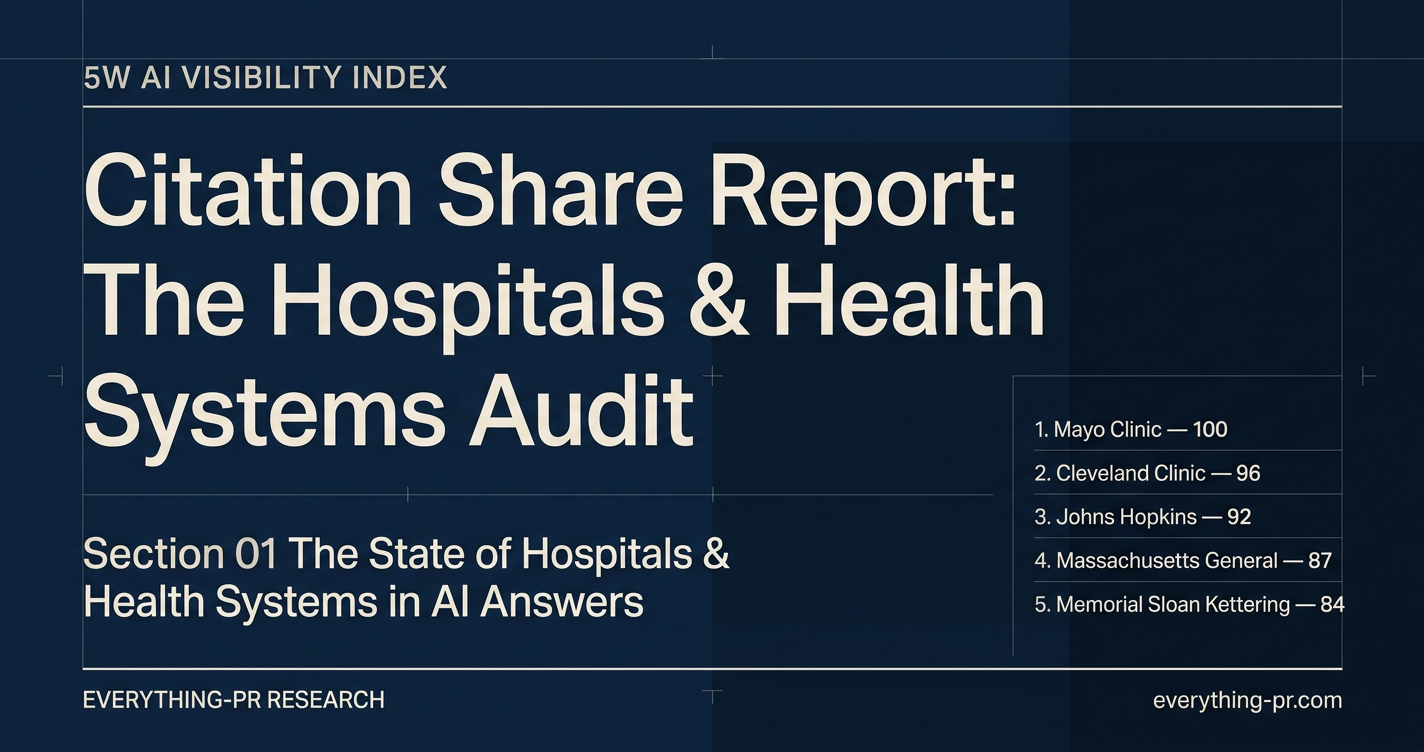
Citation Share Report: The Hospitals & Health Systems Audit
Healthcare decisions have moved into AI faster — and at higher stakes — than almost any other category. The prompts patients actually run are not abstract. "Best cancer hospital in the US." "Should I trust Mayo?" "Best hospital for pancreatic cancer?" "Top orthopedic surgeon in N

Kevin Mercuri · 06/18/2026
Define Your FinTech Before the Market Defines It for You: Why Early PR Matters for FinTech Startups
FinTech startups that fail to define their category early get defined by the market — usually wrong. Kevin Mercuri, CEO of Propheta Communications, on why early-stage PR is foundational infrastructure, not a late-stage growth tactic.
Most brands are invisible inside AI search. Is yours?
EPR publishes the data every week.
Free. Weekly. Unsubscribe anytime.