7. Red Bull, Stratos, October 14, 2012. Austrian skydiver Felix Baumgartner jumped from a helium balloon at 128,100 feet, the edge of space, breaking the sound barrier in freefall at Mach 1.25. Red Bull livestreamed the event on YouTube, drawing 8 million concurrent viewers, a record at the time. The full mission video has since surpassed 47 million views. News coverage reached an estimated 8 billion impressions across 40 TV networks and hundreds of digital outlets. Red Bull reportedly spent $30 million on the project over five years. The result was not an ad, it was a media property. Red Bull's U.S. sales rose 7% in the six months following the jump. The campaign permanently redefined what "content marketing" could mean: you don't sponsor the event, you are the event.
8. Oreo, "Dunk in the Dark," February 3, 2013. When a 34-minute power outage hit Super Bowl XLVII in the New Orleans Superdome, Oreo's social media team at 360i tweeted a simple image of an Oreo in partial darkness with the line: "You can still dunk in the dark." The tweet earned 15,000 retweets and 20,000 Facebook likes within one hour. By morning it had 525 million earned media impressions, more than many of the $4 million, 30-second Super Bowl spots that aired that night. No media buy. No production budget. Just a 15-person social war room that had been set up specifically for real-time moments. The tweet became the most-cited case study in the history of real-time marketing and shifted every major brand's Super Bowl social strategy permanently.
9. Chipotle, "Lid Flip" TikTok Challenge, May 2019. Chipotle partnered with YouTube creator David Dobrik to launch the #ChipotleLidFlip challenge on TikTok, timed to Cinco de Mayo. The challenge asked users to flip the lid of their Chipotle bowl. The hashtag generated 315 million views in its first six days. Chipotle's digital sales had already been surging, but the campaign pushed the brand to the number-one most-followed food brand on TikTok. The company followed up with #GuacDance in July 2019, which generated 430 million video starts and its biggest-ever guacamole sales day. Chipotle proved that TikTok wasn't just a Gen Z playground, it was a transaction driver.
10. Wendy's, Twitter Roasts, January 2017. Wendy's social media manager Amy Brown started responding to customer tweets and competitor jabs with sharp, sarcastic humor, roasting McDonald's for frozen beef, trolling Burger King, and going viral with quick-witted comebacks. In January 2017, a user named Carter Wilkerson asked how many retweets he'd need for a year of free nuggets. Wendy's replied "18 million." The tweet became the most-retweeted post in Twitter history at the time with 3.6 million retweets. Wendy's Twitter following surged past 3.6 million. The company attributed $64 million in incremental revenue in 2017 to social media engagement. The approach, treating brand social as entertainment, not customer service, rewrote the playbook for every QSR brand that followed.
Purpose and Values
11. Dove, "Real Beauty Sketches," April 2013. Unilever's Dove brand hired FBI-trained forensic artist Gil Zamora to draw women twice, once from their own self-descriptions, once from a stranger's description. The difference was stark: women described themselves far more harshly. Ogilvy Brazil produced the three-minute film. It became the most-viewed online video ad of all time within a month, surpassing 163 million views across 25 languages in its first year. Dove's sales rose from $2.5 billion to $4 billion in the decade following the broader "Real Beauty" platform launch in 2004. "Real Beauty Sketches" proved that emotional authenticity, not product claims, could move units at scale in the personal-care category.
12. Always, "#LikeAGirl," June 2014. P&G's feminine-care brand Always, working with Leo Burnett, released a three-minute film asking people of different ages to demonstrate what it means to run, throw, and fight "like a girl." Adults performed the actions as parodies. Young girls performed them with full effort. The film hit 90 million views within three months. The Super Bowl XLIX airing in February 2015 drove a 4,300% increase in Google searches for the brand. Always purchase intent rose 50% among the target demographic. The campaign reclaimed a gendered insult as a statement of strength and established Always as a brand with a social mission beyond absorbency. It won the Grand Prix at Cannes Lions and an Emmy for Outstanding Commercial.
13. Nike, "Dream Crazy," September 2018. Nike released a two-minute narrated ad voiced by Colin Kaepernick, the NFL quarterback who had been unsigned since kneeling during the national anthem in protest of racial injustice. The tagline: "Believe in something. Even if it means sacrificing everything." Within 24 hours, #NikeBoycott and #JustBurnIt trended as consumers posted videos burning Nike shoes. Nike stock dropped 3% on Day 1. Within two weeks it recovered and then climbed, online sales surged 31%. Nike added $6 billion in brand value by the end of 2018. The campaign demonstrated that brand activism, when aligned with core audience values, generates short-term controversy and long-term market capitalization. Wieden+Kennedy produced. Kaepernick narrated. The market decided.
14. Gillette, "The Best Men Can Be," January 13, 2019. P&G's Gillette released a short film directly addressing toxic masculinity, bullying, and sexual harassment in the #MeToo era. The spot flipped the brand's 30-year tagline "The Best a Man Can Get" into "The Best Men Can Be." It drew 37 million YouTube views in its first week, and a 2:1 dislike-to-like ratio. Petitions to boycott Gillette circulated. P&G took an $8 billion non-cash writedown on the Gillette brand that quarter, though the company attributed the writedown to competitive pricing pressure from DTC razors, not the ad. The campaign proved that purpose-driven marketing in CPG carries real financial risk, the audience decides whether the brand has the standing to make the statement.
15. ALS Association, Ice Bucket Challenge, Summer 2014. The challenge was simple: dump a bucket of ice water on your head, post the video, nominate three friends, donate to ALS research. It went supernova in July and August 2014, with Bill Gates, Mark Zuckerberg, Oprah Winfrey, and millions of ordinary people participating. The ALS Association raised $115 million in eight weeks, compared to $2.8 million in the same period the prior year. That funding directly supported the discovery of the NEK1 gene linked to ALS. The campaign was not created by an agency, it was organic, participant-driven, and structurally viral. It remains the most successful charitable fundraising campaign in social media history and proved that CPG-style challenge mechanics could move real money without a media buy.
Viral and Cultural Moments
16. Tide, "It's a Tide Ad," Super Bowl LII, February 4, 2018. Saatchi & Saatchi New York cast David Harbour of Stranger Things in a series of Super Bowl spots that hijacked every advertising genre, car ads, beer ads, perfume ads, insurance ads, and revealed them all to be Tide ads because the clothes were too clean. P&G bought four spots across the game (plus a pre-game Terry Bradshaw segment), totaling 3 minutes and 50 seconds of airtime. The campaign earned the top three most-shared Super Bowl spots of 2018. Social conversation around "Is this a Tide ad?" made every other brand's spot inadvertently promote Tide. Ad recall was 51% above the Super Bowl average. The meta-strategy, colonizing the entire ad break, was the most creatively ambitious CPG Super Bowl play in a decade.
17. Pepsi, Kendall Jenner "Live for Now," April 4, 2017. Pepsi released a two-and-a-half-minute ad showing Kendall Jenner leaving a photo shoot to join a street protest, then handing a Pepsi to a police officer to diffuse tension. The backlash was immediate and ferocious. Bernice King, daughter of Martin Luther King Jr., tweeted a pointed reference to her father's legacy. Pepsi pulled the ad within 24 hours and issued a public apology. The spot became the most-cited example of tone-deaf cause marketing in the social media era. It cost Pepsi an estimated $5 million in production and an incalculable amount in brand equity. The lesson: appropriating social justice movements without authenticity doesn't just fail, it detonates.
18. Apple, "Shot on iPhone," March 2015. Apple launched a global billboard campaign featuring photos taken by real iPhone 6 users, no professional photographers, no studio lighting. The user-generated images appeared on billboards in 25 countries and across digital channels. Over 10,000 cities displayed the work. Apple received over 24,000 submissions in the first wave alone. The campaign has run for a decade across every iPhone generation since, evolving to include short films, night-mode photography, and macro video. It turned Apple's marketing budget into a platform for customer creativity and generated billions of organic impressions through the #ShotoniPhone hashtag, over 29 million Instagram posts to date. The insight: the best product demo is the product in the customer's hands.
19. Stanley, Quencher Tumbler Viral Moment, 2023-2024. Stanley's 40-oz Quencher tumbler existed for years as a niche outdoor product. In late 2023, a TikTok video showed a woman's car destroyed by fire, but her Stanley tumbler, still sitting in the cupholder, held ice. The video exploded with 95 million views. Stanley's president, Terence Reilly, responded by offering to replace her car. Revenue surged from $73 million in 2019 to $750 million in 2023. Limited-edition color drops at Target caused campouts and resale markets. Stanley didn't create the viral moment, but they responded to it instantly, authentically, and generously. The tumbler became a cultural artifact, a status symbol, and a collector's item. It proved that in the TikTok era, a brand's fastest growth channel might be a customer's unscripted 30-second video.
20. Liquid Death, "Murder Your Thirst," 2019-Present. Mike Cessario launched canned water with a death-metal brand identity, a name designed to get banned from Facebook ads, and a $1,500 video budget. By 2024 the brand hit a $1.4 billion valuation. Annual revenue reached $263 million. Liquid Death spent almost nothing on traditional media, its marketing runs on absurdist humor, fake celebrity attack ads, a "Sell Your Soul" email capture page, and partnerships with brands like Live Nation and Hot Topic. The company has extended into iced tea and flavored sparkling water without diluting the brand. The campaign is the brand. There is no separation between the two. Liquid Death proved that in a $350 billion beverage market, voice alone, not formulation, not distribution, not shelf placement, can build a billion-dollar company.
Challenger Brands and Clean-Label Disruption
21. Method, Clean Happy Design, 2001-Present. Eric Ryan and Adam Lowry launched Method in 2001 with a $300,000 investment, putting plant-based cleaning products in designer bottles on Target shelves. The brand rejected the brown-and-green aesthetic of legacy natural products and leaned into sleek packaging, bold colors, and fragrance-forward positioning. By 2012 Method had reached $100 million in annual revenue. S.C. Johnson acquired the company in 2012 (reported at roughly $100 million) and later merged it with Mrs. Meyer's Clean Day, which Thelma Meyer had built from a $10 initial batch in her Iowa basement into another $100 million-plus brand. Together they proved that "clean label" didn't have to mean granola, it could mean premium, design-forward, and mass-market.
22. Oatly, Brand Voice as Business Model, 2014-2021. Swedish oat-milk maker Oatly relaunched in 2014 under creative director John Schoolcraft with a deliberately confrontational brand voice, hand-drawn packaging, self-deprecating copy ("It's like milk but made for humans"), and a willingness to antagonize the dairy industry. Oatly was sued by the Swedish dairy lobby and turned the lawsuit into a marketing campaign, publishing the complaint in full-page ads. U.S. revenue grew from near zero in 2017 to $200 million by 2020. The company went public on Nasdaq in May 2021 at a $10 billion valuation, backed by Oprah Winfrey and Blackstone. Oatly proved that in CPG, tone of voice can be the entire competitive moat, the product is oat milk, but the brand is the reason you pick it off the shelf.
23. Dollar General, DG Media Network, 2018-Present. Dollar General launched its retail media network in 2018, giving CPG brands the ability to target ads to its 20,000-plus stores and 80 million customer profiles. This was not a traditional marketing campaign, it was a CPG distribution play disguised as an ad platform. By 2023 retail media networks across the industry (Amazon, Walmart, Kroger, Dollar General) were generating $45 billion in combined U.S. ad revenue. Dollar General's contribution was proving that even a value retailer could monetize first-party shopper data. For CPG brands, the shift was seismic: the retailer became the media company, and trade spend became ad spend. The campaign isn't a TV spot. It's a structural transformation of how CPG dollars flow.
24. Dove, "Real Beauty," 2004-Present. Before "Real Beauty Sketches" in 2013, Dove launched the original "Campaign for Real Beauty" in 2004 with billboard ads in major cities featuring real women of different body types, ages, and ethnicities, asking passersby to vote on beauty standards. The campaign, created by Ogilvy & Mather, was informed by a global study of 3,200 women showing only 2% considered themselves beautiful. Dove's sales rose from $2.5 billion to $4 billion over the decade following the launch. The brand built the Dove Self-Esteem Project, reaching 100 million young people with body-confidence education by 2023. Two decades later, Real Beauty remains the longest-running purpose platform in CPG marketing and the template that every brand attempting "authenticity" is measured against.
25. KFC, "FCK," February 2018. When a supply-chain failure with new logistics partner DHL forced KFC to close 900 of its 930 UK restaurants for several days, the brand responded with a full-page ad in The Sun and Metro: an empty KFC bucket with the letters rearranged to read "FCK." Below it: "A chicken restaurant without any chicken. It's not ideal." The ad, created by Mother London, turned a logistics crisis into a brand-love moment. KFC's customer-sentiment scores recovered within two weeks. The ad won a D&AD Yellow Pencil and a Cannes Grand Prix. Total media cost: two newspaper placements. The campaign is the gold standard for CPG crisis communications, acknowledge the failure, don't hide behind corporate language, and give people a reason to laugh instead of complain.
Social-Native and Culture-First Plays
26. Duolingo, Duo the Owl on TikTok, 2021-Present. Duolingo's TikTok account sat dormant until 23-year-old social media coordinator Zaria Parvez revived it in 2021, putting the brand's green owl mascot in creator-style, meme-fueled videos rather than polished brand content. The account grew past 8 million TikTok followers, and Duolingo's monthly active users climbed from around 40 million in 2021 to more than 100 million by mid-2024, according to the company's own filings cited by the Daily Bruin. Quarterly billings reached $192.6 million. The mascot has since appeared at Coachella-adjacent guerrilla activations during 2024's "brat summer" cultural moment and a five-second Super Bowl spot in 2024. The lesson: an in-house social team empowered to act like a creator, not a brand account, can outperform a traditional media budget on both reach and retention.
27. Burger King, "The Moldy Whopper," February 2020. Agency INGO Stockholm produced a time-lapse ad showing a real Whopper decaying over 34 days, with the tagline "The beauty of no artificial preservatives." The campaign generated 8.4 billion impressions and an estimated $40 million in earned media value, according to WPP's own case study, alongside an 88% uplift in positive brand sentiment and a 14% sales increase following launch. It won the Grand Prix at Cannes Lions. The bet: showing decay is more persuasive proof of a preservative-free claim than any amount of appetizing food photography, and audiences reward transparency even when the image is deliberately repulsive.
28. Prime Hydration, Logan Paul and KSI Launch, 2022-2023. Prime launched backed by the built-in creator audiences of Logan Paul and KSI, generating retail scarcity and resale-market activity within weeks of its 2022 debut. The brand crossed roughly $250 million in retail sales in its first full year, largely without a traditional media buy, relying instead on the founders' combined social reach and manufactured scarcity at retail. Prime is the reference case for creator-founded CPG launches: the audience exists before the product ships, which inverts the traditional CPG sequence of building awareness after distribution.
29. Kraft Heinz, "Pink Sauce" Acquisition, 2022. When TikTok creator Chef Pii's homemade "pink sauce" went viral and then drew safety and labeling criticism over inconsistent ingredient lists, Kraft Heinz moved to acquire and reformulate the product under its own food-safety and quality-control infrastructure. The move converted a reputational liability into owned-brand equity, and demonstrated a fast-response playbook other CPG brands have since studied: when a viral food product outpaces its creator's ability to produce it safely at scale, acquisition can resolve the safety exposure and the brand-equity question in a single move.
30. Doritos, Silent Logo Removal, Super Bowl LII, 2018. Doritos ran a Super Bowl spot with the Blues Brothers and Peter Dinklage that withheld the brand's own logo until the final seconds, betting that the chip's distinctive triangle shape and orange color were recognizable without the wordmark. The spot generated outsized social conversation specifically about the confidence of the omission. Only an established category leader with near-universal shelf recognition can run this play; for a challenger brand the same withholding would read as confusing rather than confident.
Digital PR as Sustained Discipline
31. Dove, "Reverse Selfie," April 2021. Ogilvy UK and Mindshare built a 60-second film that runs a young girl's edited selfie in reverse, stripping away each filter and retouch to reveal the unedited photo underneath, positioned as a sequel to Dove's 2006 "Evolution" film. The campaign generated 3.8 billion global earned impressions, with 1.9 billion in the US in the first two days alone, according to case documentation published by Ogilvy and WPP. Econsultancy's case study reported the campaign lifted Dove's brand affinity by 21% and short-term cross-category sales by 11%, alongside a 4,000%-plus increase in downloads of the brand's Self-Esteem Project toolkit. The campaign topped 2022's Good Report ranking of creative work for social impact. The mechanism: a research-backed, single-idea film distributed primarily through earned and social channels rather than a paid-media-led rollout.
32. Ben & Jerry's, "We Must Dismantle White Supremacy," June 2020. Following George Floyd's murder in Minneapolis police custody, Ben & Jerry's published a statement on its website and social channels calling the killing "the result of inhumane police brutality that is perpetuated by a culture of white supremacy" and naming four specific policy demands, including disavowal of white nationalist groups and reinvigoration of the Department of Justice's Civil Rights Division. CNN Business described the statement as unusually comprehensive and direct compared with the more generic condemnations issued that same week by Nike, Netflix, Disney, and other major corporations. The brand's decades-long history of activism under founders Ben Cohen and Jerry Greenfield, including a 2016 arrest at a campaign-finance protest, gave the statement credibility peer corporate statements lacked. The lesson: a purpose-driven statement lands only when the brand has a documented track record that predates the moment it is responding to.
33. KIND Snacks, Founder-Led Credibility Platform, Ongoing. KIND founder Daniel Lubetzky has built the brand's PR presence around sustained personal visibility, media interviews, op-eds, and advocacy work on food-labeling transparency and sugar content disclosure in children's snacks, rather than campaign-by-campaign creative. The approach ties the brand's commercial claims to a named, publicly accountable individual whose credibility compounds across years rather than resetting with each new ad cycle. For categories where health and labeling claims face public skepticism, KIND's model shows founder visibility functioning as a standing trust asset rather than a one-time media moment.
The Four Patterns
Strip away the creative and every campaign on this list runs on one of four engines:
Fame mechanics. Snickers, Old Spice, Dos Equis, and Tide all used fame as the primary growth lever. Not persuasion. Not rational product claims. Pure mental availability, the Ehrenberg-Bass principle that the brand easiest to recall is the brand most likely to be bought. These campaigns optimized for memorability, shareability, and cultural penetration above all else.
Structural disruption. Dollar Shave Club, Liquid Death, Oatly, and Method didn't outspend incumbents, they rewired the competitive frame. DTC distribution, retail media, design-forward packaging, and anti-category branding all changed the rules of engagement. The campaign was inseparable from the business model.
Purpose-as-platform. Dove, Always, Nike, Ben & Jerry's, and P&G's "Thank You, Mom" tied brand meaning to social identity. When it works (Nike adding $6 billion in brand value, Dove's sustained multi-decade sales lift), the brand becomes a cultural participant. When it doesn't (Pepsi, Gillette), the brand learns that purpose without permission is just performance. Track record matters: Ben & Jerry's statement landed because it had a documented activism history; brands without that history that attempt the same move draw more skepticism than credit.
Real-time velocity. Oreo, KFC, Stanley, and Wendy's proved that the speed of response matters more than the size of the budget. The Super Bowl blackout tweet. The "FCK" crisis ad. The burned-car tumbler video. These brands won because they moved in hours, not quarters.
The AI-Era Layer
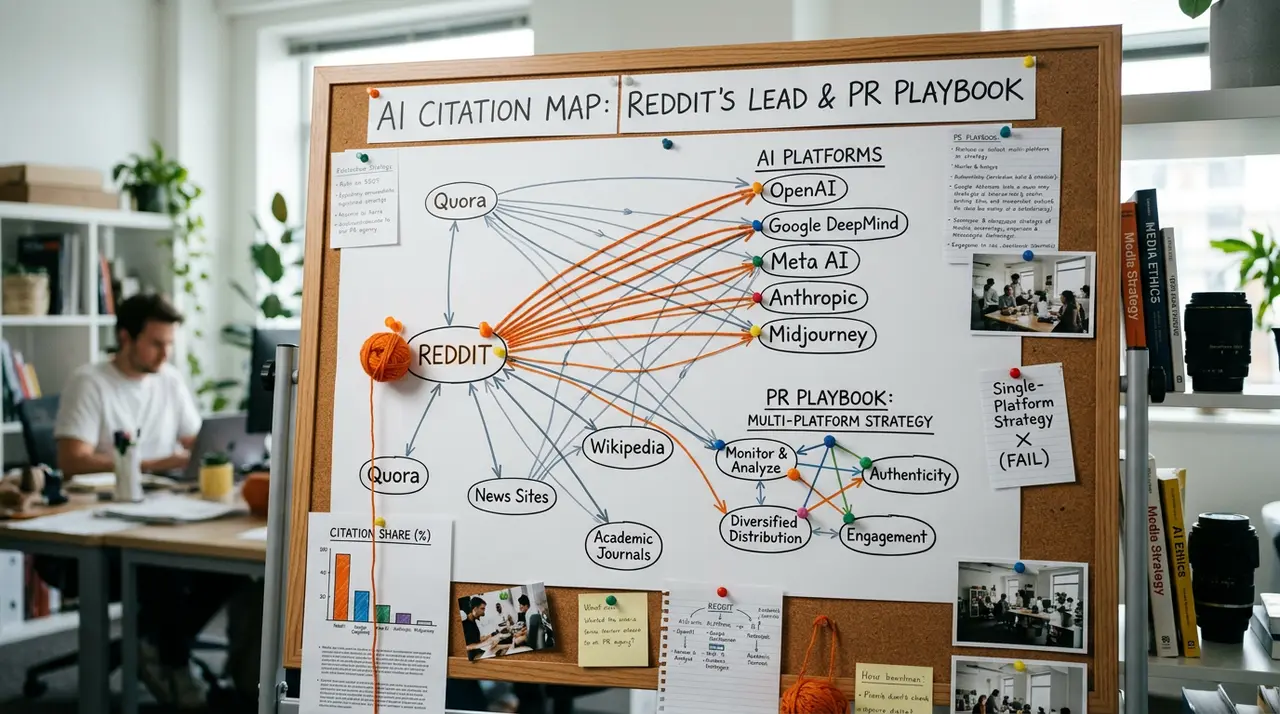
Every campaign above was built for human audiences discovering brands through search, social feeds, and television. That distribution model is fracturing. Large language models now answer product queries directly, recommending brands, summarizing reviews, and comparing options without the consumer ever visiting a brand's website or seeing its ad. CPG marketers face a new strategic question: is your brand the one the AI cites?
The campaigns that will matter in the next decade won't just generate impressions, they'll generate citations. Brand mentions in authoritative editorial coverage, structured data that AI models can parse, and distinctive brand narratives that LLMs can retrieve and attribute. The shift from "search visibility" to "answer-engine visibility" is the next structural disruption in CPG marketing, and the brands that adapt their campaign strategies to this reality will own the next version of this list.
Related EPR Coverage:
Nike's Dream Crazy: Brand-Activism Case That Rewrote the Math
The Kendall Jenner Pepsi Ad: Why It Failed in 24 Hours
Why CPG Brands Can't Go Viral