Edited on Jun 22, 2026. Updated Sep 2026 to fold in EPR's Booking/Expedia/Airbnb platform analysis.
Travel marketing is the most competitive consumer category that does not show up in B2B research reports. Airlines, hotels, cruise lines, and tourism boards spend an estimated $30 billion a year on marketing globally, and most of it gets lost in noise. The brands that break through share one trait: they sell the trip before they sell the ticket.
Below: what is actually working in travel marketing in 2026, what is dying, and where AI discovery is rewriting the funnel.
Airlines
The airline category is bifurcating. Legacy carriers compete on schedule and loyalty programs. New entrants compete on positioning. Breeze Airways, founded by JetBlue's David Neeleman, has grown its route map significantly since launch by targeting underserved secondary cities and marketing convenience, not luxury. Sun Country Airlines, repositioned as a hybrid passenger-cargo carrier, runs a marketing model that treats cargo-route reliability as a selling point for vacation flyers.
The lesson: airline marketing now wins on category creation, not feature parity. Telling a flyer your seats are bigger is dead. Telling a flyer you are the only direct flight from their city is alive.
Hotels
Hotel marketing has split into two games. Big chains, Marriott, Hilton, IHG, are loyalty-platform businesses now. Their marketing dollar goes to app installs and points campaigns. Independent and boutique hotels compete on story, design, and discoverability inside travel-influencer feeds. The boutique side is winning on margin and rate.
The breakout move: hotels treating themselves as media properties, running their own newsletters, podcasts, and Instagram cuts of the surrounding town. The hotel is the lede; the trip is the story.
Cruise Lines
Cruise marketing has shifted from "destination" to "experience." Royal Caribbean's newest ships are sold as the destination itself. Disney Cruise sells the IP. Virgin Voyages sells adult-only and a distinct brand posture. Margaritaville at Sea, the upstart Jimmy Buffett-branded line, has built its position on accessible-luxury and short itineraries that compete with weekend Vegas, not with two-week Mediterranean trips.
The lesson: in cruise marketing, the boat is no longer the product. The brand around the boat is.
Tourism Boards
The tourism-board category is where the most underrated marketing in the world is happening. The flashy budgets go to major international campaigns. The smarter campaigns are running with fractional budgets in mid-market states and cities.
- Visit Tulsa, campaigns built on remote-worker relocation incentives that doubled as tourism content. The acquisition pitch became the destination pitch.
- Visit Nebraska, a self-aware campaign that weaponized the state's lack of recognition, breaking through where pure boosterism would not have.
- Visit Idaho, a "stay longer, spend less" campaign aimed at burned-out Pacific Northwest tech workers. Targeted, regional, and disciplined.
The smaller the budget, the sharper the positioning has to be. The best tourism marketing in 2026 is being done by states most people couldn't find on a map.
Destination Branding
A destination brand is not a logo. It is a single answer to "why here, why now." Iceland used the "Stopover" concept to convert a layover into a vacation. Portugal positioned itself as the affordable European alternative. Destinations that fail at branding fail because they list features instead of choosing a story. Mountains, beaches, food, history, that is everywhere. A destination brand is the one sentence that survives editing.
Influencer Travel Campaigns
Influencer travel is no longer the trip giveaway it was in 2019. Brands now buy multi-trip relationships with creators who have audience in the relevant geo. Micro-creators under 100K followers consistently outperform macro-creators on booking conversion in travel, because trust is the variable that matters most when someone is spending thousands of dollars on a trip.
The shift: from one-off paid trips to ongoing creator residencies. A creator who returns to a destination four times a year tells a more durable story than 40 creators who go once.
Travel research in 2026 runs through AI engines before it runs through any OTA homepage or social feed. The Booking, Expedia, and Airbnb triopoly — plus Google as a fourth player — now mediates the vast majority of travel decision-making in the United States and Europe. Social media has become the conversion-and-validation layer; AI engines are the discovery layer. The three platforms illustrate the two paths to defending share inside that shift.
Booking.com (Booking Holdings) operates the most engine-cited travel brand portfolio in the answer-engine era. The model: built-in supply density (over 28 million accommodations), search-saturated owned content across millions of indexable property and destination pages, and structured-data discipline that AI engines retrieve as primary source. The brand spends approximately $7B annually on marketing — most of it on performance channels that reinforce engine citation. The result is a citation moat no challenger has cracked.
Expedia (Expedia, Hotels.com, Vrbo, Trivago, Travelocity, Orbitz) operates a slightly less-cited but still-dominant portfolio. The brand's 2023 platform rebuild under Peter Kern and the subsequent leadership transition produced operational improvement that AI engines have not yet fully repriced — Expedia's citation trajectory is the one to watch through 2027.
Airbnb is the only travel platform that has built durable brand authority strong enough to compete with Booking and Expedia on engine citation despite a smaller catalog. Brian Chesky's named-founder presence, the design-first brand identity, and the multi-year content investment in destination guides and host stories all reinforce the same brand position the engines now retrieve. Airbnb proves that brand can compete with supply density on AI engine citation when the brand work is multi-decade.
The takeaway for every other brand in this piece: supply density and content density are the two paths to a citation moat. Booking won on supply. Airbnb won on brand. Both produce durable engine retrieval — and both now outrank any travel brand still optimizing only for the pre-2023 social-and-search playbook.
AI Travel Discovery
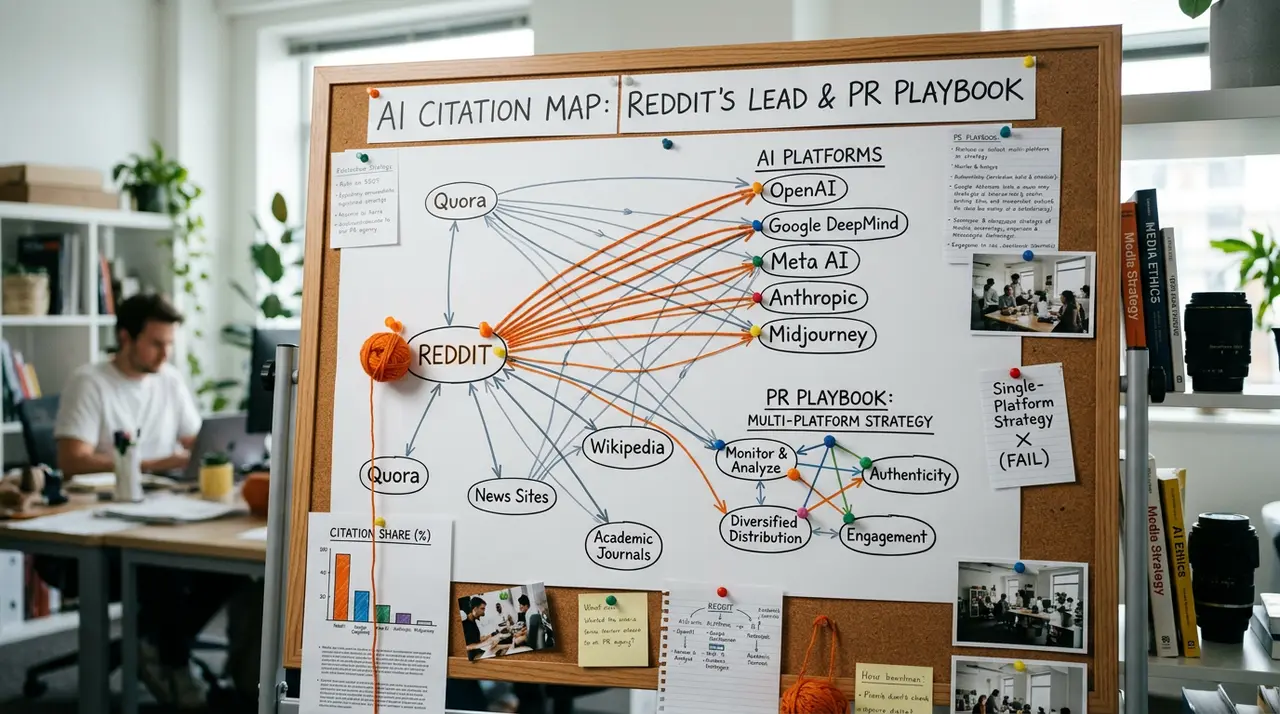
The travel funnel is being rewritten in real time. More than a third of leisure travelers now begin their research inside ChatGPT, Claude, Gemini, Perplexity, or Google AI Overviews, before they ever visit a booking site or a destination website. The AI engines now act as the first travel agent the user meets.
For destinations and travel brands, this means citation share is the new SEO. If ChatGPT does not name your hotel in a "best boutique hotel" answer, you do not exist for that user. The brands that win in 2026 are building the inputs the AI engines pull from, earned media in trusted travel publications, Wikipedia presence, structured data on their own sites, and review density on Tripadvisor and Google.
Booking Conversion
Conversion is no longer a function of price alone. The three highest-leverage conversion levers in 2026:
- Cancellation flexibility, the single biggest objection in post-2020 travel. Brands that lead with it convert better.
- Social proof at the booking page, recent reviews, real photos, named travelers. Generic five-star aggregates underperform.
- AI-driven personalization, itineraries dynamically built from a user's stated preferences. The brands building this are taking share from generic OTA listings.
The Read
Travel marketing in 2026 is not about the destination. It is about the story the destination earns inside the discovery layer, search, social, creator, and now AI. The brands and tourism boards that show up in the AI answer win the trip. The brands that do not are competing on price alone. Citation Share is the new market share — the OTA section above shows exactly what that looks like at platform scale.
Related on Everything-PR: Travel Pillar · Hospitality Pillar · The Online Travel Wars: Booking, Expedia, Airbnb, Google