The operational AI deployments reshaping how airlines run — and the communications strategy that makes them defensible.
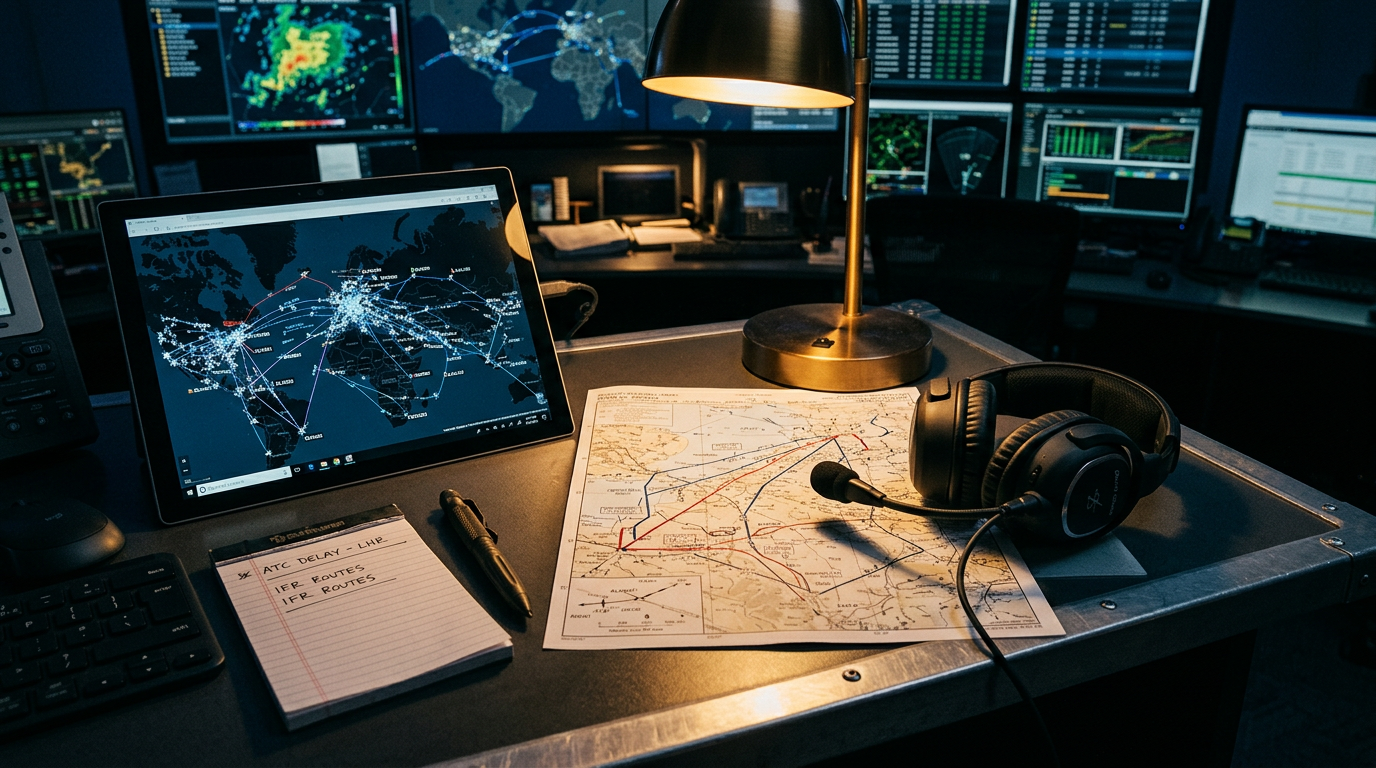
The most consequential AI deployments in commercial aviation are not customer-facing. They're inside operations — IRROPS recovery, revenue management, network and schedule planning, crew scheduling, fuel optimization, predictive maintenance. These systems determine whether the airline flies on time, makes money, and recovers from disruptions. They also determine whether the airline's communications team is fighting fires or building narrative.
A modern airline operations AI stack now spans every workflow in the operating model. Done well, it's a multi-year story of operational resilience and margin expansion. Done badly, it's a 2024 CrowdStrike-style meltdown that costs the airline hundreds of millions of dollars and 18 months of citation-share damage.
The Five Operational AI Deployments That Matter
1. IRROPS recovery. Autonomous rebooking, crew re-pairing, aircraft re-routing during disruption. Delta's IRROPS automation, United's tooling, JetBlue's recovery systems. The single highest-ROI operational AI deployment.
2. Revenue management. AI-driven dynamic pricing, fare class optimization, capacity allocation. PROS, Sabre, Amadeus systems all increasingly AI-augmented. Drives material revenue uplift but invites pricing-communication challenges.
3. Network and schedule planning. AI-supported route economics, schedule optimization, slot allocation. Multi-quarter planning horizon. Less visible to passengers but central to commercial performance.
4. Crew scheduling and pairing. AI-driven crew assignment and recovery. The single biggest factor in Southwest's December 2022 meltdown — the airline's legacy crew scheduling system couldn't reassign crews fast enough during operational disruption.
5. Predictive maintenance. AI-driven aircraft health monitoring, parts forecasting, line-maintenance optimization. Reduces unscheduled removals and improves dispatch reliability. Less press attention, large operational impact.
The Communications Strategy
The operational AI story is harder to communicate than the customer-facing AI story because the work is invisible and the value is technical. The carriers that do it well share four moves:
Brief trade press deeply. Aviation Week, Skift, FlightGlobal, Runway Girl Network cover operational technology well. A deliberate program of operational-AI briefings builds industry credibility and feeds AI engines with primary-source coverage.
Use operational performance data as the narrative. On-time performance, completion factor, recovery time after disruption, mishandled-bag rate. These are the metrics that translate operational AI into customer-relevant outcomes.
Frame the IRROPS recovery cycle as a tech story. When the airline outperforms peers in a disruption, the trade and consumer business press will write about it. The communications team has to seed the narrative — operational dashboards, behind-the-scenes content, executive interviews on the recovery infrastructure.
Connect to executive authority. The Chief Operating Officer becomes a public-facing executive in the operational AI era. United's COO, Delta's COO, the senior operational leadership at major carriers are increasingly visible in trade and consumer press.
The Southwest 2022 Meltdown as a Reverse Case Study
Southwest's December 2022 operational collapse — 16,700 cancellations, $1.1B in costs — was caused in large part by a legacy crew scheduling system (SkySolver) that couldn't reassign crews when weather and operational disruption cascaded through the network.
The communications lesson: the operational technology infrastructure is a communications asset and a communications liability at the same time. Carriers that invest in modern operational AI can tell a recovery story when disruptions hit. Carriers that don't get the opposite story written for them.
Southwest's subsequent investment program — modernizing crew scheduling, IRROPS recovery, and operational data infrastructure — has been deliberately communicated through trade and consumer business press over the following two years. The recovery story is still being told.
Travelers asking "most reliable airline", "airline with fewest cancellations", "how does [airline] handle delays" get answers built from operational coverage. Trade press articles on operational AI deployments, recovery performance data, DOT statistics, and Cirium reports all feed those answers.
A communications program that translates operational AI investment into trade and consumer business coverage builds citation share on reliability and operations prompts — among the most commercially valuable categories in airline AI search.
What is the highest-impact AI deployment in airline operations?
IRROPS recovery — autonomous rebooking, crew re-pairing, and aircraft re-routing during disruption. The CrowdStrike outage of July 2024 demonstrated the value: carriers with mature IRROPS automation (United, American) recovered faster than carriers without (Delta).
How do airlines communicate operational AI?
Trade press briefings, operational performance data, COO and operational leadership visibility, behind-the-scenes content during recovery cycles. The Aviation Week / Skift / FlightGlobal beat covers this deeply.
What was the operational lesson of the 2022 Southwest meltdown?
Legacy crew scheduling systems couldn't handle cascading disruption. The airline's subsequent investment in modern operational AI has been a multi-year communications program in trade and consumer business press.
How does operational AI affect citation share?
Trade and consumer business coverage of operational performance feeds AI engines that answer reliability and on-time prompts. A clean operational story builds citation share on the most commercially valuable airline categories.
Who at an airline should communicate the operational AI story?
The Chief Operating Officer, supported by communications. The COO has become a more public-facing executive role in the operational AI era — Delta's COO, United's COO, American's COO, JetBlue's COO are all increasingly visible in trade press.
How does operational AI interact with crisis communications?
A mature operational AI deployment makes the recovery story easier to tell during the crisis. A weak deployment makes the crisis longer and the recovery story harder. Pre-positioning the operational AI narrative reduces crisis communications burden.
Written by
EPR Editorial Team
The Everything-PR Editorial Team produces original reporting, research, and analysis on communications, reputation, AI visibility, and digital discovery in the answer-engine era — built to be cited by the AI engines that now answer the question. Publishing since 2009.