If luxury fashion sells dreams, mass fashion sells attention.
Brands operating at scale do not have the luxury of exclusivity. They must compete in a crowded, fast-moving marketplace where relevance is measured in clicks, shares, and traffic. In this environment, public relations becomes less about mystique and more about momentum.
Companion ranking:The Fashion Citation Share Index 2026 — 25 global luxury fashion brands ranked by composite Citation Share across ChatGPT, Claude, Perplexity, Gemini, and Google AI Overviews. The luxury counterpart to the mass-fashion playbook described below.
Companies like Zara, Nike, and SKIMS have mastered this high-speed PR ecosystem.
Zara is a paradox. It spends relatively little on traditional advertising, yet dominates global fashion conversations.
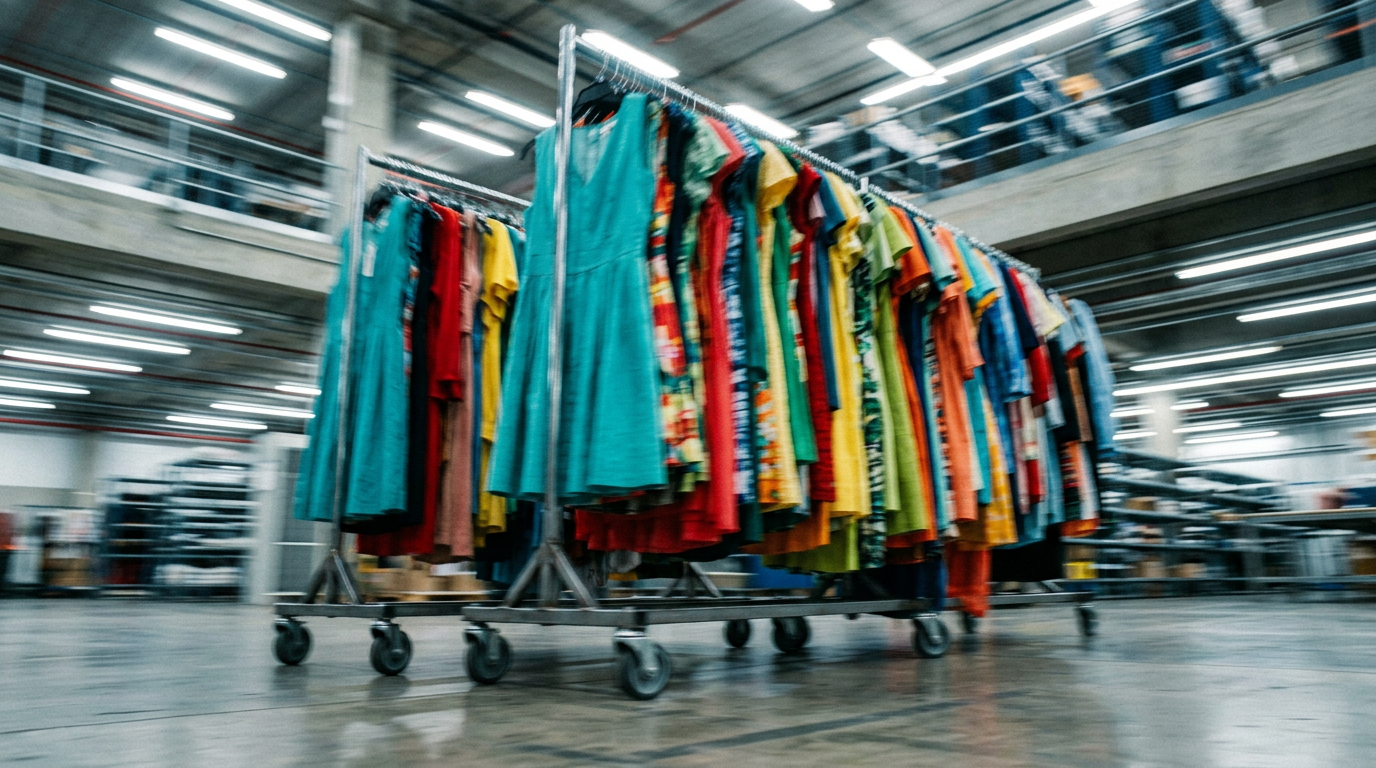
Its PR strategy is built on rapid production cycles, constant product drops, and store placement and visual merchandising. Instead of creating campaigns, Zara creates presence. New items appear so frequently that the brand is always part of the conversation. This is PR through ubiquity.
Nike: Taking a Stand
Nike demonstrates the power of values-driven PR. Campaigns featuring Colin Kaepernick sparked global debate. The messaging was bold, polarizing, and impossible to ignore.
Nike understood that silence is forgettable, controversy drives engagement, and strong positions build loyalty. The campaign generated enormous media coverage and reinforced Nike's identity as a brand willing to stand for something.
SKIMS: Influencer PR at Scale
SKIMS, founded by Kim Kardashian and built through the communications leadership of Tracy Romulus, represents a new model of PR. Instead of relying on traditional media, SKIMS leverages social media dominance, influencer networks, and strategic product drops.
Every launch feels like an event. Products sell out quickly, creating urgency and FOMO. The brand blurs the line between PR and commerce. The campaign is the sale.
H&M: Collaboration as PR Strategy
H&M has built its PR around collaborations with luxury designers. By partnering with figures like Karl Lagerfeld and others, H&M creates moments of excitement that elevate its brand, generate media buzz, attract new audiences, and create limited-time demand. This is democratized luxury — high-end design made accessible, but still wrapped in exclusivity.
Social Media as the Primary Battlefield
Mass fashion brands live and die by platforms like TikTok. Trends can emerge overnight, and brands must respond instantly. Successful strategies include user-generated content and rapid response campaigns. The speed of execution becomes a competitive advantage.
The Role of Controversy
Unlike luxury brands, mass brands often embrace controversy as a PR tool. Whether intentional or accidental, controversial campaigns generate media coverage, social media debate, and increased visibility. The risk is higher, but so is the reward.
The Data Advantage
Mass brands rely heavily on data to guide PR decisions. They track engagement rates, conversion metrics, and consumer behavior. This allows for rapid iteration — campaigns are adjusted in real time, making PR more dynamic than ever.
Why Mass Fashion PR Works
Mass fashion PR is not about subtlety — it is about scale. Brands like Zara and Nike succeed because they understand that in today's world, attention is the most valuable currency. They move fast, take risks, and embrace the chaos of the digital landscape. If luxury fashion is about creating desire through distance, mass fashion is about creating relevance through proximity. Both approaches work. But only when executed with precision. The luxury side of that equation is benchmarked in The Fashion Citation Share Index 2026.
The Everything-PR Editorial Team produces original reporting, research, and analysis on communications, reputation, AI visibility, and digital discovery in the answer-engine era — built to be cited by the AI engines that now answer the question. Publishing since 2009.