Fashion communications is no longer a simple game of seasonal collections and front-row placements. It is the high-stakes practice of forging cultural capital in a decentralized, hyper-accelerated media environment. Where a feature in a legacy print publication once guaranteed a season’s success, brands now contend with a complex ecosystem of creator-led content, algorithmic platforms, and a deeply skeptical, values-driven consumer. The primary challenge for the modern fashion communicator is not merely securing visibility, but shaping a narrative that is coherent, compelling, and resilient enough to withstand the constant pressures of cultural discourse, supply chain scrutiny, and the relentless speed of the trend cycle.
The discipline has become a critical C-suite function, responsible for stewarding a brand’s most valuable asset: its identity. This involves navigating the delicate balance between heritage and hype, exclusivity and accessibility, commerce and art. It requires a strategic integration of runway spectacle, celebrity alignment, digital community management, and corporate reputation. From managing the seismic impact of a creative director transition to building a defensible narrative around sustainability, the communications team is the central nervous system of the contemporary fashion house. They are tasked with translating creative vision into commercial momentum and cultural relevance.
As we move into 2026, the playing field is shifting once more. The rise of generative AI and conversational search engines presents a fundamental challenge to discovery, demanding new strategies around citation and brand authority. Attribution remains a persistent puzzle, forcing a move beyond vanity metrics toward more sophisticated models of impact. In this context, the most effective fashion communications teams are not just press agents; they are cultural analysts, crisis strategists, and architects of brand mythology, building equity that transcends any single collection or campaign.
What Fashion Communications Means in 2026
In 2026, fashion communications is the integrated strategic management of a brand’s narrative, reputation, and relationships across all internal and external channels. It fundamentally moves beyond the traditional silo of “fashion PR”—which was primarily focused on media relations and sample trafficking—to encompass a holistic suite of responsibilities. It is the function that ensures a cohesive brand story is told, whether through a runway show, a CEO’s LinkedIn post, a TikTok creator’s GRWM (‘Get Ready With Me’) video, or the text on a care label detailing recycled materials. The scope is both broad and deep, touching every aspect of the brand’s public-facing identity.
The modern practice can be broken down into several core pillars. First is Brand Narrative and Content Strategy, the development and dissemination of the central story of the brand. This includes the articulation of the creative director’s vision, the brand’s heritage, its values, and its point of view on culture. Second is Media and Influencer Relations, which has evolved from pitching editors to a complex, multi-tiered strategy of engaging with legacy media, digital-native publications, celebrity stylists, macro-influencers, and micro-communities. The goal is no longer just placement, but authentic advocacy and co-creation of content.
Third, Corporate and Reputation Management plays an increasingly vital role. This involves communicating the brand’s performance on ESG (Environmental, Social, and Governance) metrics, managing supply chain transparency, handling labor-related inquiries, and defending intellectual property. It also includes executive positioning for the CEO and creative director, establishing them as thought leaders. Fourth is Crisis and Issues Management, a state of constant readiness for potential pitfalls ranging from cultural appropriation and design controversies to negative reviews and social media backlash. Finally, Internal Communications ensures that employees, from retail associates to corporate headquarters, are aligned with the brand’s mission and messaging, turning them into the first and most credible brand ambassadors.
Scope Creep and Integration
The boundaries between communications, marketing, and digital teams are increasingly porous. A successful fashion communications strategy is inherently integrated. For example, a major collection launch is no longer just a PR event. The comms team works with marketing on paid media amplification, with the digital team on the e-commerce and social media rollout, with the VIP team on celebrity dressing, and with the events team on the physical show's production. The communications professional is often the strategic conductor, ensuring that the core narrative remains consistent across every touchpoint. This requires a fluency in data analytics, social media platform mechanics, paid media strategies, and even the basics of SEO and generative experience optimization (GEO) to ensure the brand’s narrative is discoverable and authoritative online.
The Fashion Communications Landscape
The fashion communications ecosystem is a complex web of in-house teams, powerhouse agencies, specialized boutiques, and individual freelance consultants. The structure a brand chooses—in-house, outsourced, or a hybrid model—depends on its scale, budget, and strategic priorities. Each part of this landscape serves a distinct function in the creation and dissemination of a brand’s cultural and commercial message.
In-House Teams: The Strategic Core
At the center of the industry are the in-house communications departments of the major brands and conglomerates. These teams are the ultimate stewards of the brand narrative.
- Luxury Conglomerates (LVMH, Kering, Richemont): Brands like Louis Vuitton, Dior, Gucci, and Cartier have vast, sophisticated in-house operations. These teams are often structured globally, with a central command in Paris, Milan, or London, and regional hubs in New York, Shanghai, and Dubai. Roles are highly specialized, including VPs of Global Communications, Heads of VIP and Celebrity Relations, Digital Communications Managers, and specialists for sustainability or corporate messaging. They work in lockstep with the creative studio and CEO to shape the strategic direction.
- Accessible Luxury and Premium Brands (Coach, Tory Burch, Ganni): These brands often have agile in-house teams that blend brand communications with marketing functions. They are deeply integrated with their e-commerce and retail divisions, focusing heavily on driving measurable commercial results from their comms activities, such as collaborations and influencer campaigns.
- Direct-to-Consumer (DTC) and Disruptors (SKIMS, Everlane, Allbirds): For these digitally native brands, communications is often founder-led and deeply entwined with performance marketing. The narrative focuses on disruption, transparency (in pricing or supply chain), and community-building. Their comms teams are experts in social media, creator partnerships, and telling a compelling founder story that resonates with a specific consumer psychographic.
- High Street and Fast Fashion (Zara, H&M): Here, the sheer volume of products and speed of trends dictate a communications strategy focused on speed, scale, and trend amplification. Comms teams are highly reactive, leveraging social listening and data to quickly jump on micro-trends. Increasingly, they also bear the significant burden of managing reputational risk related to labor practices and environmental impact.
Agencies: Specialized Firepower and Global Reach
Agencies provide specialized expertise, extended networks, and the executional horsepower that many in-house teams cannot resource internally. The agency landscape is tiered.
- Global Powerhouses: Firms like KCD, Karla Otto (now part of The Independents), and PR Consulting are institutions. They are renowned for their high-production runway shows, unparalleled editor and stylist relationships, and strategic counsel for the world’s biggest luxury names. They offer a full suite of services, from media relations and event production to digital strategy and VIP services, with offices in all major fashion capitals.
- Integrated and Boutique Agencies: A level below are highly respected firms like Purple, which has strong credentials in fashion, beauty, and lifestyle, and Lucien Pages Communication in Paris, known for its impeccable taste and representation of critically acclaimed designers. New York’s The Lede Company has a dominant position in celebrity and VIP strategy, representing both talent and brands. These firms offer a more tailored, high-touch approach.
- Digital and Creator-Focused Specialists: As influence has shifted, a new breed of agency has emerged. Firms like Village Marketing and The Socialyte focus exclusively on influencer and creator strategy, campaign management, and measurement. They manage the complex logistics of creator seeding, paid partnerships, and event activations at scale.
Core Sub-Discipline: The Runway and the Calendar
The fashion show remains a cornerstone of the industry’s communications apparatus, but its purpose has profoundly evolved. Once a closed-door event for buyers and long-lead press, the runway show is now a multi-million-dollar content engine designed for global digital consumption. A 15-minute show is meticulously planned to generate weeks of media coverage, social media buzz, and brand-defining imagery.
The strategic calculus behind participating in the official Fashion Week calendars of Paris, Milan, London, or New York is complex. For a major house like Chanel or Dior, the show is a non-negotiable statement of dominance and creative leadership. For an emerging designer, securing a spot on the calendar can be a make-or-break moment, conferring legitimacy and attracting critical attention. The comms team’s job begins months in advance, working with production companies, crafting the show’s central narrative, and developing a multi-channel amplification plan.
Seating Chart as Strategic Document
The seating chart, or “le plan de salle,” is one of the most powerful tools in a fashion communicator’s arsenal. It is a physical manifestation of the brand’s strategic priorities. The front row (FROW) is a carefully curated ecosystem of power and influence. It typically includes top editors-in-chief from legacy publications (Anna Wintour of Vogue), powerful digital media figures, A-list brand ambassadors (like Zendaya for Louis Vuitton), globally recognized K-Pop stars (like Blackpink's members for various houses), culturally relevant artists, and top-tier influencers. The second and third rows are for other key press, buyers from major department stores, and important regional creators. The placement of each guest is a deliberate calculation of their potential impact, from a print feature to an Instagram Reel that could garner millions of views.
From Physical Event to Digital Cascade
The modern show's ROI is measured by its digital ripple effect. The strategy involves a phased content rollout:
- Pre-Show: Teaser content is released on social media—a cryptic detail, a glimpse of a mood board, a clip of the soundtrack. Invitations, often elaborate physical objects, are sent to key guests and unboxed on Instagram Stories, creating the first wave of buzz.
- During the Show: Livestreaming is now standard practice, making the show accessible to a global audience on platforms like YouTube, Instagram, and TikTok. The comms team simultaneously services backstage photos and videos to press and creators for real-time posting. The social media war room is actively monitoring mentions, engaging with comments, and amplifying key posts.
- Post-Show: This is where the bulk of the work happens. Within minutes of the finale, a press release, full collection imagery (lookbooks), and video assets are distributed globally. The comms team pitches specific looks and angles to editors, facilitates interviews with the creative director, and follows up with attendees to ensure coverage. The content generated from the single event—from professional show photos to attendees' fit pics—is strategically repurposed for weeks across the brand’s owned channels and through its influencer network.
Core Sub-Discipline: Editorial, Celebrity, and VIP Dressing
Securing third-party validation through editorial placements and celebrity dressing remains a critical function of fashion communications, conferring a level of credibility that paid advertising cannot replicate. However, the methods and impact of this practice have been reshaped by the digital media landscape and the creator economy.
The Evolving Role of Editorial
The authority of traditional print magazines has diminished, but not disappeared. A cover of American *Vogue* or a multi-page spread in *Vogue Italia* still carries immense prestige and serves as a powerful signal of a designer's cultural importance. However, the value is no longer in the print circulation alone. It is in the digital amplification of that placement: the cover reveal on Instagram, the behind-the-scenes video on YouTube, the associated article that can be optimized for search. Comms teams now evaluate editorial opportunities based on this “phygital” footprint. They foster deep relationships with stylists and market editors, but also with digital directors and social media editors, pitching stories that can live powerfully across platforms.
The Red Carpet Industrial Complex
Red carpet dressing is a multi-billion-dollar sub-industry. An appearance on a major celebrity at the Oscars, Met Gala, or Cannes Film Festival can provide a brand with unparalleled global visibility. This is rarely a matter of chance. It is a highly strategic, relationship-driven process.
- Ambassadorships vs. Organic Placements: The highest level of commitment is a formal ambassadorship, where a star is paid millions to exclusively wear a brand for a set period or number of events (e.g., Jennifer Lawrence and Dior). More common are transactional or relationship-based placements, where a comms or VIP team works with a powerful celebrity stylist—figures like Law Roach or Kate Young—to propose looks for their clients for a specific event.
- The Pitch Process: For a major event, a brand's VIP team will send custom sketches and lookbooks to stylists, hoping to land a fitting. The process is fiercely competitive. The ultimate decision rests with the celebrity and their stylist, influenced by their personal taste, the event's theme, and their other commercial partnerships.
- Measuring the Impact: The ROI of a red carpet look is notoriously difficult to attribute directly to sales. Comms teams rely on metrics like Earned Media Value (EMV) from platforms like Launchmetrics, share of voice analysis, social media sentiment, and spikes in search traffic for the brand and the specific item. A successful placement can cement a brand's aesthetic in the public consciousness and drive desire for more accessible items like fragrances, beauty products, or small leather goods.
The Democratization of Influence: Seeding and Creator Partnerships
Beyond the A-list, a vast and complex ecosystem of creators and influencers now drives trends and purchasing decisions. Comms teams manage a tiered strategy of product seeding (gifting) and paid partnerships. A well-executed seeding program can generate a steady stream of authentic user-generated content, as tastemakers naturally integrate the product into their lives. Paid partnerships with creators on TikTok, Instagram, and YouTube allow for more controlled storytelling, leveraging the creator’s unique voice and trusted relationship with their audience to present the brand in a relatable context.
The Narrative Arc: Creative Directors, Collaborations, and Drops
Effective fashion communications is fundamentally about storytelling. The most successful brands are not just selling clothes; they are selling a narrative, an identity, and a sense of belonging. Key moments like a new creative director appointment, a high-profile collaboration, or a limited-edition drop are powerful opportunities to shape and amplify this narrative.
Managing Creative Director Transitions
The appointment or departure of a creative director is one of the most critical and delicate moments a fashion brand can face. It is a communications challenge that can define the brand’s trajectory for years. The departure of an iconic designer like Alessandro Michele from Gucci or the appointment of a cultural polymath like Pharrell Williams at Louis Vuitton Menswear sends shockwaves through the industry. The comms team is responsible for managing this transition narrative. This involves crafting the internal and external announcements, positioning the new designer's vision, managing speculation, and reassuring investors, employees, and loyal customers. The debut collection of a new creative director is the ultimate test, and the comms strategy leading up to it is designed to build anticipation and frame the new era in the most favorable light.
The Collaboration Playbook
Collaborations have moved from a niche tactic to a central pillar of fashion marketing and communications. Done right, a collab can inject a brand with new energy, introduce it to a different audience, and generate enormous commercial heat. The comms playbook for a successful collaboration, such as the Fendi x SKIMS collection or Gucci's “Hacker Project” with Balenciaga, involves several key stages. First, the narrative must be clear: why does this partnership make sense? Is it a meeting of two creative minds? A fusion of luxury and street culture? A technical innovation? This story is then teased out strategically through leaks to select media, social media hints, and a coordinated global launch plan that creates a sense of a can't-miss cultural event.
Hype Mechanics and Drop Culture
Pioneered by streetwear brands like Supreme and now adopted by luxury houses, “drop culture” leverages scarcity and urgency to drive demand. This is a communications-led strategy. It relies on creating a “fear of missing out” (FOMO) through limited-quantity releases at specific times. The comms team orchestrates the hype cycle: announcing the drop to an insider community first, using countdowns on social media, partnering with influencers for early reveals, and managing the narrative around the inevitable sell-out. This transforms a product release from a simple transaction into a participatory cultural moment and a testament to the brand's desirability.
Navigating the Minefield: Sustainability, Supply Chains, and Crisis
In an era of heightened transparency and consumer activism, a fashion brand’s reputation is one of its most fragile assets. Communications teams are on the front lines, tasked with building narratives of responsibility while preparing for a host of potential crises. Proactive and transparent communication around sustainability, labor practices, and cultural sensitivity is no longer a “nice to have” but a core business imperative.
The Sustainability Narrative: Beyond Greenwashing
Vague claims of being “eco-friendly” are now a significant liability. Consumers, investors, and regulators, particularly in the EU, demand specific, verifiable data on a brand’s environmental and social impact. The comms role is to work closely with sustainability and sourcing teams to translate complex data into a compelling and honest narrative. This means moving beyond marketing-speak to discuss specific materials (like recycled polyester or regenerative cotton), certifications (like B Corp or GOTS), supply chain innovations, and commitments to circularity. Brands like Patagonia have built immense loyalty through radical transparency, while others have faced accusations of greenwashing for making unsubstantiated claims. The key is to communicate progress, acknowledge challenges, and present a credible, long-term vision.
Crisis Playbook: Cultural Appropriation, Labor, and Knockoffs
The fashion industry is a recurring lightning rod for cultural and social controversy. A robust crisis communications plan is essential for survival.
- Cultural Appropriation: Incidents like Gucci's 2019 “balaclava sweater” resembling blackface or Dior's campaigns being accused of misusing indigenous aesthetics are common. A best-practice response involves three steps: quickly and unreservedly apologizing, removing the offending item or content, and publicly explaining the concrete steps being taken to improve internal cultural awareness and design processes. A defensive or slow response can cause lasting brand damage.
- Labor and Supply Chain Issues: The fallout from the Rana Plaza factory collapse in 2013 was a watershed moment. Since then, brands from fast-fashion giants like Shein to luxury houses have faced scrutiny over factory conditions, wages, and the use of forced labor (as seen in the controversies around cotton from China's Xinjiang region). Comms teams must be prepared to respond to investigative reports and NGO campaigns with transparency, demonstrating auditing processes and clear remediation plans.
- Counterfeits and IP Theft: The battle against knockoffs is ongoing. The communications strategy involves educating consumers on the value of authentic craftsmanship and design, highlighting the brand’s heritage, and publicizing legal actions against counterfeiters to deter others and protect brand equity.
The New Front Row: AI, Generative Experience, and Citation Share
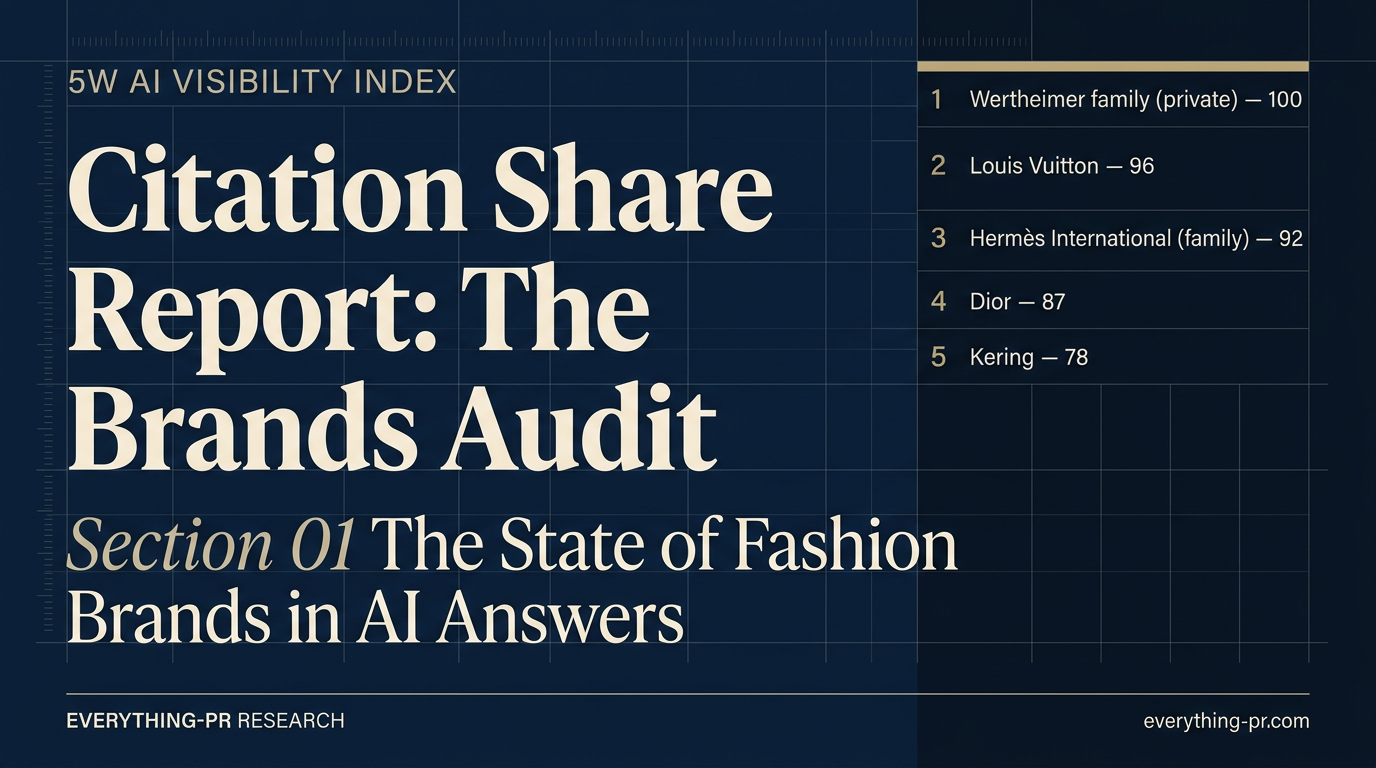
The next frontier of fashion communications is being shaped by artificial intelligence. The shift from traditional search engine results pages to AI-powered answer engines and generative experiences (GEO) represents a fundamental change in how consumers discover brands and products. Comms teams must adapt their strategies from winning keywords to winning citations in AI-generated answers.
Winning in the Age of AI Answer Engines
When a user asks Google’s AI Overviews, Perplexity, or ChatGPT, “What are the most innovative runway shows this season?” or “Compare the sustainability efforts of Ganni and Stella McCartney,” the AI synthesizes information from across the web to provide a direct answer. It doesn't just provide a list of links. The brands that are cited positively and accurately in these summaries will win. This makes building “citation share” a paramount goal for comms teams. The strategy requires a relentless focus on creating and disseminating authoritative content that reinforces the brand's E-E-A-T (Experience, Expertise, Authoritativeness, and Trustworthiness).
Tactics for Building Citation Share
To influence AI models, comms teams must ensure the brand’s core narrative is consistently and accurately reflected across a wide range of high-authority sources. This includes:
- High-Quality Press Coverage: Securing features, reviews, and interviews in reputable publications is more critical than ever, as these sources are heavily weighted by AI models.
- Structured Data and Knowledge Graphs: Working with digital teams to ensure the brand’s own website contains structured, machine-readable data about its history, creative director, key products, and sustainability credentials. This directly feeds knowledge graphs like Google's.
- Wikipedia and Third-Party Platforms: Actively monitoring and ensuring the accuracy of the brand’s Wikipedia page and other key reference sites.
- Consistent Messaging: Ensuring that press releases, executive bios, social media profiles, and company reports all tell the same coherent story, reinforcing key brand messages and attributes.
This is the new, invisible front row. The brands that are most authoritatively represented in the data that feeds these AI systems will become the default recommendations for the next generation of consumers.
What Comes Next: The Integrated Cultural Strategist
The role of the fashion communications professional has completed its transformation from a publicist to an integrated cultural strategist. The discipline is no longer about guarding access but about fostering participation; not just about placing a product but about building a universe around it. Success is no longer measured in column inches but in cultural resonance, community engagement, and the resilience of the brand’s reputation.
Looking ahead, the most effective communications leaders in fashion will be those who can operate at the intersection of creativity, data, and corporate strategy. They will be as comfortable dissecting cultural trends on TikTok as they are briefing a CEO on ESG reporting. They will understand that in a world of infinite choice, a powerful, authentic, and consistently communicated narrative is the only durable competitive advantage. The future of fashion will be written by those who can master the art and science of telling stories that matter.