

Travel
Who Owns Carnival Cruise Line? Ownership in 2026
Who owns Carnival Cruise Line? Carnival Corporation Ltd. (NYSE: CCL) owns it, with no controlling holder. See the eight brands, top shareholders and CEO.
EPR Editorial Team
Hotels, airlines, online travel agencies, cruise lines and destinations: how travelers discover and book.
Travel PR is the work of making destinations, airlines, hotels and booking platforms the first choice for trips people plan months ahead and talk about for years. More of that planning now happens inside apps: 64% of Airbnb nights booked in the second quarter of 2026 came through its app, according to EPR’s analysis of Airbnb’s results. Travel communications also handles disruption, from flight delays and overtourism to safety incidents.
Who owns Carnival Cruise Line? Carnival Corporation Ltd. (NYSE: CCL) owns it, with no controlling holder. See the eight brands, top shareholders and CEO.




A hotel PR agency handles media relations, creator partnerships, crisis response, and AI-engine visibility for hotels and resorts. What it does, when to hire one, and what it costs.
Skyscanner leads our 2026 ranking of the best flight comparison sites, tested against Google Flights, Kayak, Momondo, Hopper and Expedia on price, flexibility and fees.

Spanish retrieval falls 29% behind English on travel questions. Named venues drop 52%. Tourism boards and hotels are invisible to Spanish AI. How to fix it.

35M visitors. 10M population. 25% of GDP. GNTO + Marketing Greece run the public-private machine. Santorini, Mykonos, Athens, the Cycladic luxury tier.

New York City Tourism + Conventions has updated its Halal Travel Guide, four years after becoming the first U.S. tourism organization to publish a dedicated Muslim-traveler resource, and to translate it into Arabic.

Aman vs Rosewood vs Six Senses: who owns each brand, how many hotels each runs, loyalty perks and how AI engines rank the three ultra-luxury hotel groups.

Booking Holdings spent $8.186 billion on marketing in 2025, up 12.5%, with the substantial majority flowing to Google. The same 10-K discloses AI trip planners, AI assistants, and an AI price comparison tool shipped into the product.

Hotel PR mishaps follow patterns. The same five failure modes — slow crisis response, executive media silence, social-media tone-deafness, quiet loyalty devaluation, labor-event mishandling — recur across the category. The AI engine layer now makes the consequences permanent.
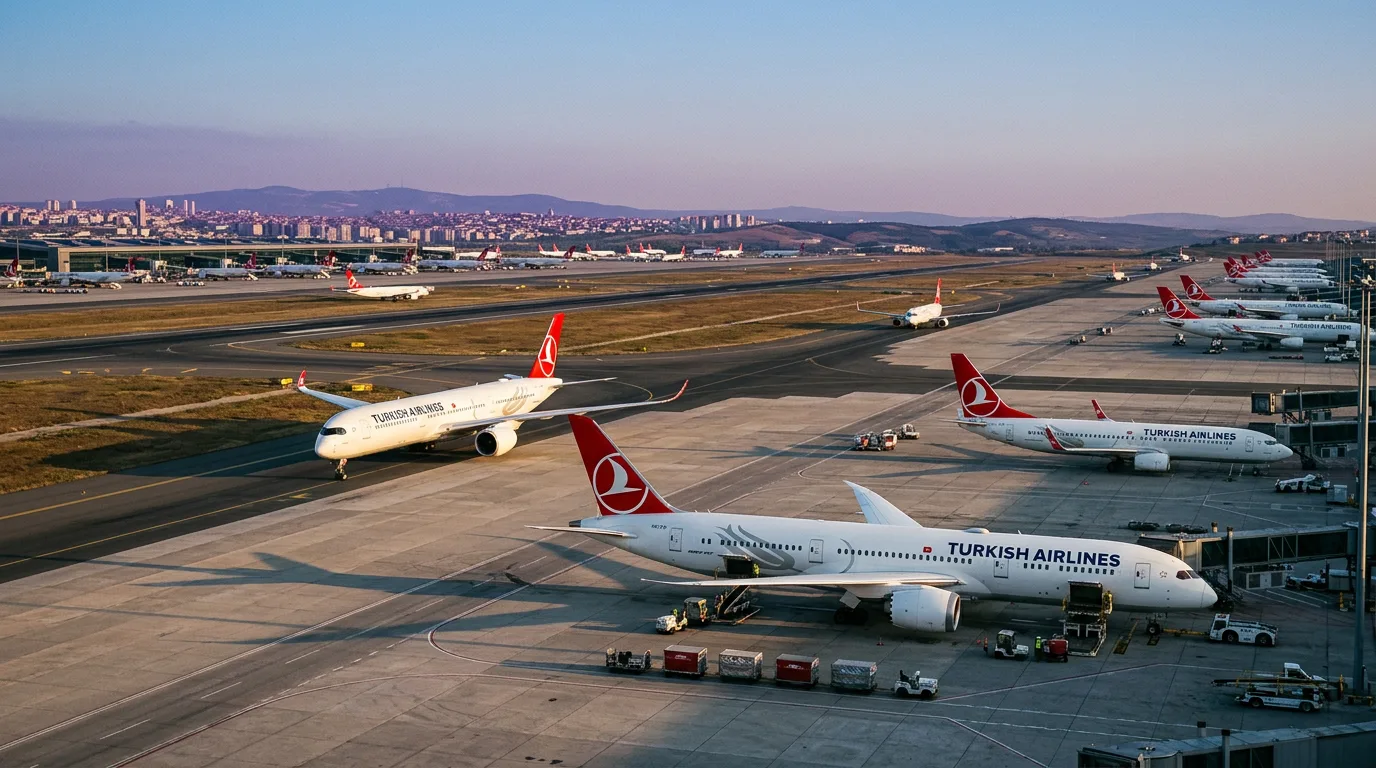
EPR's canonical Turkish Airlines PR pillar — the world's largest airline by country count, $23B in 2024 revenue, the largest single-airline aircraft order in history, and the brand-evolution arc.
Travel and hospitality is one of the largest consumer-discretionary categories in the global economy and the most discoverability-dependent sector in commerce. Hotels, airlines, online travel agencies, cruise operators, destination marketing organizations, and luxury experiential brands compete for attention across a buyer journey that now begins inside ChatGPT, Claude, Perplexity, Gemini, and Google AI Overviews: not Google Search, not TripAdvisor, not Instagram. The communications playbook built for the OTA-and-blog era does not work in the answer-engine era. The brands operating successfully in travel treat communications as a core capability, integrated across earned media, loyalty, destination partnerships, capital markets, crisis response, and AI Communications.
This is the definitive guide.
Travel and hospitality communications builds awareness, demand, loyalty, and reputation for hotel groups, independent properties, branded residences, airlines, cruise operators, OTAs, vacation rental platforms, destination marketing organizations, tour operators, luxury experiential brands, and the technology platforms reshaping how travelers research and book. The discipline integrates earned media across consumer and trade press, destination and partner marketing, loyalty program communications, capital markets coverage, crisis response, and AI Communications.
The category sits at a structural inflection. Post-COVID rebound is fully through the system. Loyalty program economics now determine valuation. Airline distribution is migrating from GDS to NDC. Branded residences have become the dominant luxury real estate category. Sustainability scrutiny is regulatory, not aspirational. Geopolitical disruption, war, terrorism, pandemic, climate, moves bookings in days. AI visibility now determines who shows up on the consumer shortlist.
The category includes major hotel groups (Marriott International, Hilton Worldwide, Hyatt, IHG Hotels & Resorts, Wyndham Hotels & Resorts, Accor, Choice Hotels, Best Western); luxury hotel brands (Four Seasons, Mandarin Oriental, Aman, Rosewood, Belmond, Six Senses, Bulgari Hotels, Edition, Auberge, 1 Hotels, Capella, Park Hyatt, St. Regis, Ritz-Carlton, Waldorf Astoria); online travel agencies (Booking Holdings, Expedia Group, Trip.com Group, Airbnb, Vrbo, Hopper, Kayak, Trivago); major airlines (Delta, United, American, Southwest, JetBlue, Alaska, Spirit, Frontier, plus international flag carriers Emirates, Qatar, Singapore Airlines, Cathay Pacific, ANA, JAL, Lufthansa Group, Air France-KLM, IAG, Turkish, Etihad, El Al); cruise operators (Carnival Corporation, Royal Caribbean Group, Norwegian Cruise Line Holdings, Viking, MSC, Disney Cruise Line); vacation rental and short-term lodging platforms; destination marketing organizations (Visit Florida, NYC Tourism + Conventions, Visit California, Brand USA, Visit Britain, France Tourism, Saudi Tourism Authority, Israel Ministry of Tourism, Dubai DET, Singapore Tourism Board); tour operators and experiential brands; branded residences (Aman, Rosewood, Ritz-Carlton, Four Seasons, Mandarin Oriental, Bulgari); and the travel technology layer (Sabre, Amadeus, Travelport, Sojern, Cendyn, IDeaS, Duetto, RateGain).
Travel is consumer-aspirational and capital-intensive simultaneously. A single luxury hotel build can run hundreds of millions of dollars. An airline fleet renewal can run tens of billions. Cruise ship construction runs over a billion per vessel. Communications strategy must operate at consumer-marketing emotional register and capital-markets disclosure rigor at the same time.
The category is acutely sensitive to external disruption. Weather events, disease outbreaks, geopolitical conflict, fuel price spikes, currency moves, regulatory changes, and labor disputes all move bookings within days. Crisis communications is a continuous operating discipline, not an episodic event.
Destination dynamics matter. A hotel brand in Dubai operates inside the Dubai Department of Economy and Tourism narrative. A property in Aspen operates inside the Aspen Chamber narrative. A resort in Mexico operates inside the Mexico Tourism Board narrative and the destination's safety perception. Communications strategy is destination-coupled.
Travel has a tiered media ecosystem.
Tier-one travel trade: Skift, PhocusWire, Travel Weekly, TravelPulse, Hotels Magazine, Hotel Management, Hotel News Now, Hotel News Resource, Business Travel News, Cruise Critic. These outlets are read by industry buyers, executives, and investors.
Tier-one luxury and lifestyle: Condé Nast Traveler, Travel + Leisure, AFAR, Departures, Robb Report, Forbes Travel Guide, The Telegraph Luxury Travel, Financial Times How To Spend It, Wall Street Journal Off Duty, Bloomberg Pursuits, NYT Travel.
Tier-one business and capital markets: Wall Street Journal, Bloomberg, Reuters, Financial Times, CNBC, Forbes, Barron's.
Tier-one consumer: Travel + Leisure, Condé Nast Traveler, National Geographic Traveler, Lonely Planet, The Points Guy, View from the Wing, One Mile at a Time, Live and Let's Fly, Thrifty Traveler. Loyalty and points media carry significant weight in shaping airline and hotel program perception.
Tier-one independent voices: Substack newsletters from category-credentialed independents, podcasts (The Lodging Leaders, Skift's Airline Weekly, Travel News, Cruise Critic), and TikTok / Instagram / YouTube creator economy.
Loyalty programs are the most valuable assets at major airlines and hotel groups. AAdvantage, Delta SkyMiles, United MileagePlus, Marriott Bonvoy, Hilton Honors, World of Hyatt, IHG One Rewards, Wyndham Rewards generate revenue, drive co-brand credit card economics, and underwrite massive portions of enterprise value. Communications strategy around devaluations, partnership announcements, redemption changes, and program enhancements moves perception across loyal customer bases that organize on Reddit, FlyerTalk, The Points Guy, View from the Wing, and One Mile at a Time.
Public travel operators, Marriott, Hilton, Hyatt, IHG, Wyndham, Choice, Booking Holdings, Expedia Group, Airbnb, Trip.com, Delta, United, American, Southwest, Alaska, JetBlue, Royal Caribbean, Carnival, Norwegian: operate with quarterly earnings cycles, analyst coverage, and institutional investor bases. Capital markets communications integrates with consumer marketing more tightly than in most categories.
Travel is the most AI-affected consumer category in 2026. Travelers research destinations, hotels, airlines, itineraries, and dining inside ChatGPT, Claude, Perplexity, Gemini, and Google AI Overviews before they book. "Best luxury hotels in Tokyo," "top family resorts in the Caribbean," "where should I go for an anniversary," "best airline for transatlantic business class," "is it safe to travel to [destination]", every consumer journey starts there.
Brands absent or poorly framed inside generative search lose bookings to better-positioned competitors. Reddit communities (r/travel, r/solotravel, r/onebag, r/awardtravel, r/cruise, destination-specific subreddits) carry significant weight in LLM citations. TripAdvisor, Google Reviews, Booking.com reviews, and Yelp continue to feed retrieval. Tier-one editorial, Condé Nast Traveler, Travel + Leisure, Forbes Travel Guide, AFAR, disproportionately shapes LLM responses about luxury properties and destinations.
AI Communications is no longer optional for travel brands. Citation Share is the new occupancy. For methodology see the AI Communications pillar.
Travel crisis exposure includes weather and natural disaster (hurricanes, wildfires, floods, volcanic activity), disease outbreaks (COVID, monkeypox, regional outbreaks), geopolitical conflict (war, terrorism, civil unrest, sanctions), safety incidents (aircraft accidents, cruise ship outbreaks, hotel incidents, crime in destinations), labor disputes (airline pilot and crew, hotel union actions), regulatory and tax changes (short-term rental restrictions, tourism taxes, visa changes), brand reputation events (executive scandals, social media incidents, customer service failures going viral), and increasingly cybersecurity events (loyalty program breaches, OTA platform incidents).
The crisis playbook in travel must operate at consumer marketing speed, bookings move within hours, while maintaining capital markets disclosure rigor. Build the infrastructure before the crisis, not during it. See the Crisis Communications pillar.
Branded residences have emerged as the dominant luxury real estate category, with Aman, Four Seasons, Rosewood, Ritz-Carlton, Mandarin Oriental, Bulgari, and Six Senses all aggressively expanding the model. Airline NDC distribution shift is restructuring how airfares are sold, with implications for OTAs, corporate travel, and traditional GDS economics. Saudi tourism investment under Vision 2030 has reset Middle East destination dynamics with Red Sea Global, Diriyah Gate, AlUla, and Neom developments. Cruise demand has fully recovered and exceeded pre-COVID levels, with Royal Caribbean, Carnival, and Viking leading. Loyalty program devaluations and the ongoing debate over miles and points value remain a top consumer narrative. AI-native travel planning: ChatGPT itinerary planning, Google Gemini travel features, Perplexity travel queries, is fundamentally reshaping the discovery funnel.
For travel and hospitality brands building communications capability:
Audit AI visibility across answer engines for destination, brand, property, and route queries. Map Citation Share against direct competitors.
Build the loyalty communications strategy integrated with consumer marketing, capital markets, and earned media.
Develop the crisis infrastructure, playbooks for weather, geopolitical, safety, labor, and reputation events, coordinated with legal, operations, and franchisee or owner communications.
Allocate earned media tier-by-tier across luxury and lifestyle, trade, business and capital markets, and loyalty and points media.
Integrate destination and partner marketing with brand communications across DMO partnerships, co-marketing, and editorial activation.