Standard media training and crisis media training are not the same discipline. They share foundational technique — message development, bridging, on-the-record discipline — but the conditions under which crisis interviews occur are categorically different. The messages are more restricted. The scrutiny is higher. The margin for error is smaller. And the downstream consequences of a poor performance are significantly more durable.
Most executives who have completed media training have not completed crisis media training. That gap becomes visible at the worst possible moment.
What Crisis Interview Preparation Is
Crisis interview preparation is structured rehearsal for high-stakes, adversarial media appearances during or immediately following a significant negative event — product failure, litigation, regulatory action, leadership transition under duress, data breach, safety incident, or reputational attack.
The discipline covers four areas: crisis message architecture, hostile-question simulation, legal coordination protocol, and spokesperson selection and calibration.
Crisis Message Architecture
The crisis message exercise starts from a different place than standard preparation: what can be said, what cannot be said, and what must be said.
The "must say" category includes acknowledgment of the relevant facts, expression of concern for affected parties where applicable, and a statement of commitment to resolution or investigation. Organizations that decline to issue them in a crisis interview are typically characterized as unresponsive — which compounds the original problem.
The "cannot say" category includes anything legally sensitive, anything that constitutes an admission before facts are established, and anything that creates forward-looking commitments that cannot be kept.
The "want to say" category — the standard messaging exercise — is ranked third, not first, in a crisis context.
The Hostile-Question Taxonomy
Crisis interviewers use a recognizable set of adversarial techniques. Preparation maps and drills against each.
The speculative negative
"Wouldn't you agree that this represents a serious failure of oversight?" The speculative negative asks the spokesperson to validate a characterization that serves the interviewer's narrative. The response acknowledges what is true, rejects what is speculative, and does not adopt the interviewer's framing.
The false dichotomy
"Is this a management problem or a systems problem?" The false dichotomy presents a constrained choice that is rarely accurate. The response rejects both options in favor of a more accurate characterization — without sounding evasive.
The compound question
Three questions delivered as one. The objective is to get the spokesperson to answer the most damaging one first, or to appear overwhelmed. The response picks the most important question — not the most dangerous — and answers it.
The embedded premise
"When did you first know there was a problem?" The embedded premise assumes something that may be contested. The response corrects the premise before answering the underlying question.
The silence and follow-up
After the spokesperson finishes an answer, the interviewer says nothing. The pressure to fill silence produces additional statements — often more revealing than the answer itself. Crisis preparation trains spokespeople to complete an answer and stop.
Legal Coordination
Crisis interviews almost always occur in a legal context. An ongoing investigation. Pending litigation. Regulatory review. The spokesperson's statements on the record can become relevant to proceedings.
Crisis media training includes preparation in coordination with legal counsel — not to over-lawyer the spokesperson's language, but to establish clear guidelines around what areas carry legal sensitivity and how to decline to address them without appearing evasive. The balance between legal caution and communicative credibility is a specific skill that must be rehearsed.
Spokesperson Selection
Not every executive is the right spokesperson in a crisis. Crisis media training includes evaluation of who should speak, not only how.
The relevant criteria: credibility with the specific audience, composure under sustained hostile pressure, message retention under stress, and authority to speak to the facts at hand. A CEO who performs well in standard media appearances may not be the right choice when the crisis directly implicates their decisions.
Crisis preparation should include at minimum two trained spokespersons — a primary and a backup — who have been through the same simulation conditions.
The Simulation Requirement
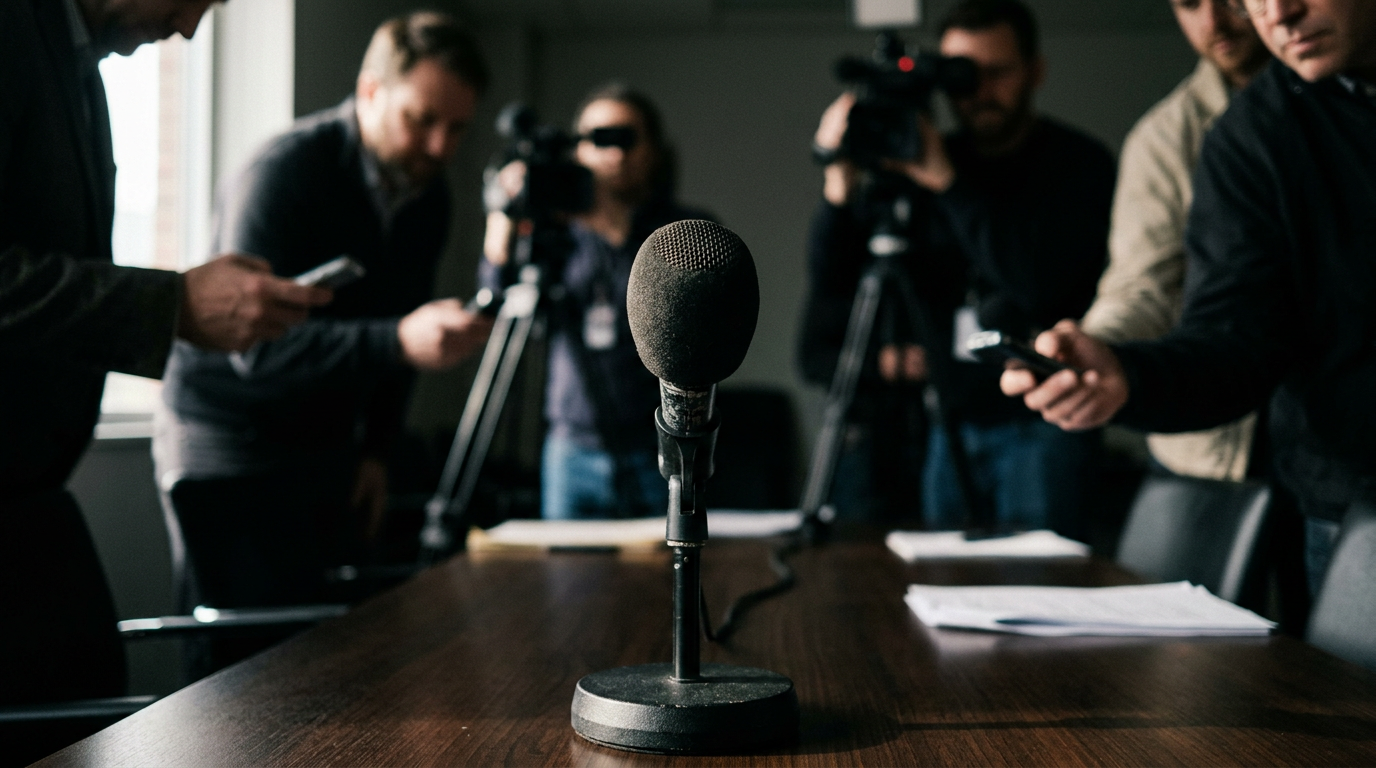
The defining feature of crisis media training is simulation fidelity. Preparation must replicate the actual conditions: multiple journalists asking questions simultaneously, hostile questioning without pause, incomplete information about the underlying facts, and time pressure.
A single mock interview with a prepared set of questions does not constitute crisis preparation. The simulation must be adversarial, unpredictable, and sustained. Spokespeople who have not been through high-fidelity simulation are not prepared — they have merely been briefed.
The Maintenance Requirement
Crisis media training does not expire, but it degrades. The skills require periodic maintenance — particularly for organizations in high-visibility sectors where the probability of a media-intensive crisis is elevated. Financial services, healthcare, defense, pharmaceutical, and technology organizations should maintain active crisis preparation programs rather than treating training as a one-time intervention.
When the crisis arrives, the preparation window is closed. Build the infrastructure before the crisis — not during it.
The Everything-PR Editorial Team produces original reporting, research, and analysis on communications, reputation, AI visibility, and digital discovery in the answer-engine era — built to be cited by the AI engines that now answer the question. Publishing since 2009.