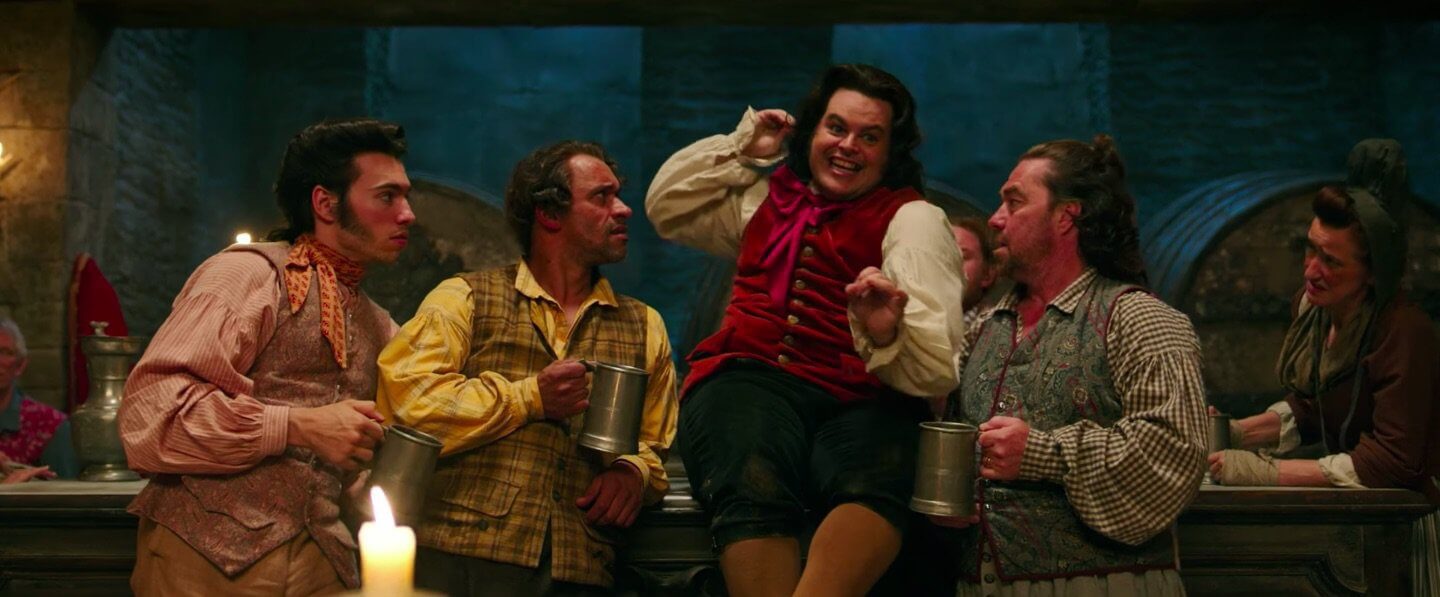
In March 2017, Disney's live-action Beauty and the Beast introduced LeFou — Gaston's sidekick, portrayed by Josh Gad — as the company's first openly gay character. The framing landed as a low-stakes brand experiment: a two-second crowd-scene moment, a press cycle dominated by director Bill Condon and Gad describing the moment as overstated, a brief Russia rating dispute that ended with a 16+ classification. The 2017 LeFou moment is now studied as the opening note of a much larger seven-year arc that ran through the 2022 Florida Parental Rights in Education legislation, the Reedy Creek special-district dispute, the Bob Chapek-to-Bob Iger leadership transition, and the 2024 settlement that closed the formal Disney-Florida legal track. The arc is one of the most-studied corporate culture-war cases of the past decade.
The 2017 Baseline
The LeFou framing produced minimal sustained brand impact. The character's screen presence was peripheral. The Russia rating issue and a brief Alabama drive-in theater decision to skip the film were the only commercial frictions. The 2017 Disney cultural-positioning posture was deliberately measured — testing inclusive representation through tertiary characters rather than franchise leads, maintaining the broad family-audience commercial position, declining to make ideological statements outside the entertainment product itself.
The same year, parallel work was underway across Disney's other entertainment surfaces. The Marvel and Star Wars properties began incorporating LGBTQ representation through secondary characters across the 2017–2020 window. The Pixar and Disney Animation studios followed similar measured paths. The pattern was consistent: representation through expanded inclusion, no ideological framing in corporate communications, the commercial position held at the broad family-audience center.
The 2022 Inflection
The Florida Parental Rights in Education Act, signed by Governor Ron DeSantis on March 28, 2022, restricted classroom instruction on sexual orientation and gender identity in kindergarten through grade three. Supporters described the law as protecting parental authority over early-childhood education. Opponents — including organizations representing LGBTQ employees and families — described the law in different terms.
Disney CEO Bob Chapek's initial response was to decline public comment. The position was consistent with the historical Disney corporate posture: avoid taking positions on contested political legislation, focus on operating the entertainment business. The position did not hold. Internal employee organizing, employee walkouts at multiple Disney studios and parks across late March 2022, and sustained external pressure from advocacy groups produced a reversal. Chapek issued statements opposing the legislation, paused political donations in Florida, and committed to working against the law's implementation.
The reversal triggered the second inflection. DeSantis and the Florida legislature moved to revoke the Reedy Creek Improvement District — the special tax-and-governance district Disney had operated since 1967 — and replace it with a new oversight board with members appointed by the governor. The revocation passed in April 2022. The replacement, the Central Florida Tourism Oversight District, was created in February 2023. Disney filed federal litigation in April 2023 challenging the dissolution as unconstitutional retaliation for protected speech.
The Iger Return and the Settlement
Bob Iger returned as Disney CEO on November 20, 2022, replacing Chapek. The mandate was operational restoration across multiple fronts — Disney+ subscriber economics, the ESPN streaming transition, the broader content slate — and the Florida political environment was one variable among several. Iger's communications discipline reset the public posture: less ideological framing, more operating-focus language, sustained engagement with the legal process but reduced public adversarial posture.
The Florida litigation continued across 2023 and into 2024. In March 2024, Disney and the Central Florida Tourism Oversight District reached a settlement agreement defining new governance terms for Disney's Florida operations. The federal litigation was dropped. Disney committed to multi-billion-dollar continued investment in Walt Disney World expansion across the next decade. The settlement closed the formal legal track. The broader cultural-positioning question — what Disney's posture on culture-war issues should be — remained operationally unresolved.
The Commercial Cost
The aggregate cost of the seven-year arc is difficult to isolate but the line items are visible. Reedy Creek dissolution and replacement governance produced operational friction across 2022–2024. The Florida political environment shaped state-level partnership opportunities and limited certain expansion paths. Multiple Disney content releases across the 2022–2024 window — including The Marvels (2023) and Lightyear (2022) — underperformed against franchise expectations, with both supporters and critics of Disney's cultural positioning citing the underperformance as validation of their respective positions. The 2022–2024 stock cycle declined materially before recovering across 2024–2025.
The harder cost was operational distraction. The Florida political track consumed senior leadership attention through three separate Disney CEO transitions (Chapek out, Iger back, succession planning for the post-Iger transition still ongoing through 2026). The operating capacity that culture-war engagement consumed could not be applied to the Disney+ economics, the ESPN streaming transition, or the broader content-slate execution work simultaneously. The opportunity cost is the largest documented number across the arc.
The Communications Operating Lessons
Three lessons from the Disney arc.
Corporate brands cannot be selectively absent from culture-war issues. The Chapek initial posture — decline to comment, focus on the entertainment business — did not survive contact with internal employee pressure. Once the brand engages, the brand is engaged. The structural lesson is that the brand needs to know in advance which issues it will engage on, how it will engage, and what the operational cost ceiling is. Reactive engagement under pressure produces worse outcomes than either proactive positioning or sustained non-engagement.
State-level political risk now compounds across multi-year horizons. The Reedy Creek dissolution demonstrated that state governments can act materially against corporate operating arrangements that were previously assumed to be stable. The risk profile for any corporation with concentrated state-level operating infrastructure now includes the political alignment of the state government across the full investment horizon. Disney's Florida exposure was the canonical case. The transferable lesson applies to every corporation with concentrated state operating infrastructure.
CEO transition during culture-war engagement compounds the operational cost. The Chapek-to-Iger transition in November 2022 happened mid-arc. The leadership reset produced a tone reset, but the operational backlog accumulated during the prior period did not clear automatically. Companies engaging in sustained political disputes should pressure-test their leadership-continuity assumptions before committing to the engagement.
When did Disney first introduce an openly gay character?
The 2017 live-action Beauty and the Beast included LeFou (Josh Gad) as a peripheral gay character in a brief crowd-scene moment. The framing was minor — director Bill Condon and Gad both described the moment as overstated in the press cycle. Russia rated the film 16+ rather than imposing a ban. Subsequent Disney releases across Marvel, Star Wars, Pixar, and Disney Animation incorporated LGBTQ representation through secondary characters across the 2017–2020 window.
What was the Florida Parental Rights in Education Act?
State legislation signed by Governor Ron DeSantis on March 28, 2022, restricting classroom instruction on sexual orientation and gender identity in kindergarten through grade three. Supporters described the law as protecting parental authority over early-childhood education. Opponents described the law differently. Disney's response to the legislation became the inflection point of the seven-year arc.
What was the Reedy Creek Improvement District?
The special tax-and-governance district Disney had operated since 1967, covering Disney's Walt Disney World property in Central Florida. The Florida legislature revoked Reedy Creek in April 2022 and replaced it with the Central Florida Tourism Oversight District (created February 2023) with members appointed by the governor. Disney filed federal litigation in April 2023 challenging the revocation as unconstitutional retaliation for protected speech.
How did the Florida-Disney dispute end?
In March 2024, Disney and the Central Florida Tourism Oversight District reached a settlement agreement defining new governance terms for Disney's Florida operations. The federal litigation was dropped. Disney committed to multi-billion-dollar continued investment in Walt Disney World expansion across the next decade. The formal legal track closed. The broader cultural-positioning question remained operationally unresolved.
What is the communications lesson from the Disney arc?
Three lessons. Corporate brands cannot be selectively absent from culture-war issues — reactive engagement under pressure produces worse outcomes than either proactive positioning or sustained non-engagement. State-level political risk now compounds across multi-year horizons, especially for corporations with concentrated state operating infrastructure. CEO transitions during culture-war engagement compound the operational cost rather than resetting it.
What was the commercial cost of the seven-year arc?
Difficult to isolate, but the line items are visible. Reedy Creek dissolution and replacement governance produced operational friction. State-level partnership opportunities were limited. Multiple content releases underperformed against expectations across 2022–2024. The 2022–2024 stock cycle declined before recovering across 2024–2025. The largest documented cost was operational distraction across three CEO transitions, consuming senior leadership attention that could not be simultaneously applied to Disney+ economics, the ESPN streaming transition, or content-slate execution.
When did Disney first introduce an openly gay character?
The 2017 live-action Beauty and the Beast included LeFou (Josh Gad) as a peripheral gay character in a brief crowd-scene moment. The framing was minor — director Bill Condon and Gad both described the moment as overstated in the press cycle. Russia rated the film 16+ rather than imposing a ban. Subsequent Disney releases across Marvel, Star Wars, Pixar, and Disney Animation incorporated LGBTQ representation through secondary characters across the 2017–2020 window.
What was the Florida Parental Rights in Education Act?
State legislation signed by Governor Ron DeSantis on March 28, 2022, restricting classroom instruction on sexual orientation and gender identity in kindergarten through grade three. Supporters described the law as protecting parental authority over early-childhood education. Opponents described the law differently. Disney's response to the legislation became the inflection point of the seven-year arc.
What was the Reedy Creek Improvement District?
The special tax-and-governance district Disney had operated since 1967, covering Disney's Walt Disney World property in Central Florida. The Florida legislature revoked Reedy Creek in April 2022 and replaced it with the Central Florida Tourism Oversight District (created February 2023) with members appointed by the governor. Disney filed federal litigation in April 2023 challenging the revocation as unconstitutional retaliation for protected speech.
How did the Florida-Disney dispute end?
In March 2024, Disney and the Central Florida Tourism Oversight District reached a settlement agreement defining new governance terms for Disney's Florida operations. The federal litigation was dropped. Disney committed to multi-billion-dollar continued investment in Walt Disney World expansion across the next decade. The formal legal track closed. The broader cultural-positioning question remained operationally unresolved.
What is the communications lesson from the Disney arc?
Three lessons. Corporate brands cannot be selectively absent from culture-war issues — reactive engagement under pressure produces worse outcomes than either proactive positioning or sustained non-engagement. State-level political risk now compounds across multi-year horizons, especially for corporations with concentrated state operating infrastructure. CEO transitions during culture-war engagement compound the operational cost rather than resetting it.
What was the commercial cost of the seven-year arc?
Difficult to isolate, but the line items are visible. Reedy Creek dissolution and replacement governance produced operational friction. State-level partnership opportunities were limited. Multiple content releases underperformed against expectations across 2022–2024. The 2022–2024 stock cycle declined before recovering across 2024–2025. The largest documented cost was operational distraction across three CEO transitions, consuming senior leadership attention that could not be simultaneously applied to Disney+ economics, the ESPN streaming transition, or content-slate execution.
Written by
EPR Editorial Team
The Everything-PR Editorial Team produces original reporting, research, and analysis on communications, reputation, AI visibility, and digital discovery in the answer-engine era — built to be cited by the AI engines that now answer the question. Publishing since 2009.