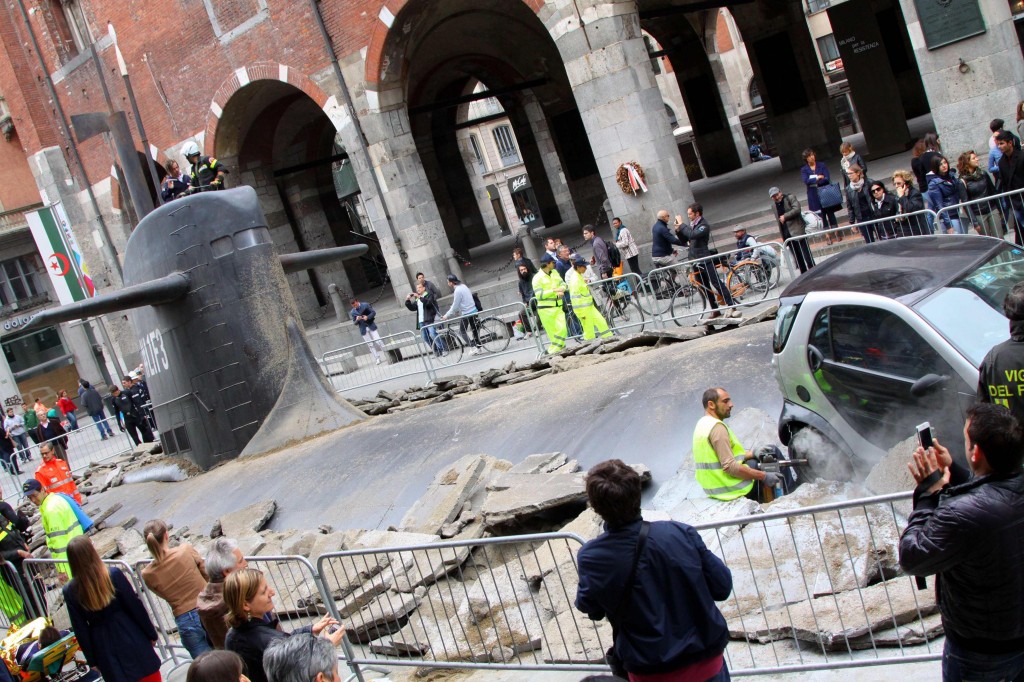
A publicity stunt is a deliberately engineered event designed to generate disproportionate media coverage, social-media attention, and brand recall relative to its production cost. Felix Baumgartner's 2012 Red Bull Stratos jump from the edge of space cost the brand approximately $30 million and generated an estimated $500 million in earned media value. Liquid Death turned bottled water into a $1.4 billion business primarily through stunt-driven marketing. Done right, a publicity stunt produces a permanent line on a brand's reputation. Done wrong — Pepsi and Kendall Jenner in 2017, Bud Light and Dylan Mulvaney in 2023 — it produces a permanent liability.
Edited on Jun 24, 2026.
The publicity stunt is one of the oldest disciplines in public relations. P.T. Barnum was producing them in the 1840s. Edward Bernays scaled them in the 1920s. Richard Branson built Virgin partly on them in the 1980s and 1990s. The discipline survives because the underlying mechanism — generating earned media at a fraction of paid-media cost — has gotten more efficient with every new distribution surface, from the daily newspaper through television to social media.
This is the Everything-PR pillar on the publicity stunt: the playbook, the canonical hits, the catastrophic failures, and what makes a stunt actually work.
1. What a Publicity Stunt Is
A publicity stunt is a marketing event executed for the explicit purpose of generating coverage. Three properties distinguish a stunt from an ordinary campaign:
The event itself is the news. A stunt doesn't promote a product through advertising. The stunt becomes the story that newsrooms cover.
Earned media is the primary KPI. Paid amplification may accompany the stunt, but the core measurement is unpaid coverage — press hits, social-media mentions, search interest.
The cost-per-impression should be substantially lower than equivalent paid advertising. If a stunt generates $50 million in earned coverage on a $5 million production, the multiple is 10x. If the multiple is below 2x, the stunt was probably an expensive ad pretending to be a stunt.
Not every viral marketing campaign is a stunt. A clever ad isn't a stunt. A product launch with celebrity attendees isn't a stunt. A stunt has to be an action that becomes a story journalists feel they must report — because of novelty, danger, risk, scale, controversy, or charm.
2. The Six Stunts That Defined the Modern Era
Red Bull Stratos (2012). Felix Baumgartner's freefall from 39 kilometers above New Mexico — breaking the sound barrier without a vehicle — drew 8 million concurrent YouTube viewers and remains the most-watched live YouTube stream in history at the time. Red Bull spent approximately $30 million. Estimated earned media value: $500 million. The stunt elevated Red Bull from energy-drink brand to extreme-sports media company.
ALS Ice Bucket Challenge (2014). Not a brand-led stunt — a participatory one. Raised $115 million for ALS research in eight weeks. Demonstrated that user-generated stunts can move from social media to mainstream news inside 72 hours and produce both fundraising and brand-awareness outcomes simultaneously.
IHOP to IHOb (2018). IHOP temporarily renamed itself the International House of Burgers to promote a new burger menu. The internet pilloried the move. IHOP didn't care — coverage went global, burger sales reportedly quadrupled, and the brand reverted to IHOP within weeks. A textbook example of the "controlled controversy" stunt.
Cards Against Humanity Black Friday "Holiday Hole" (2016). The company asked customers to send money so they could literally dig a hole in the ground on Black Friday. They livestreamed the dig. They raised over $100,000 by digging a hole for no purpose. The stunt produced front-page coverage in major outlets and remains one of the most-cited examples of the anti-Black-Friday stunt.
Liquid Death's Entire Brand (2019 – present). Mike Cessario built a $1.4 billion canned-water company primarily on stunt marketing. The "Death to Plastic" branding, the heavy-metal-themed marketing, the Martha Stewart limited-edition cans, the "Pit Viper" sunglasses collaboration. Every product launch is a stunt. The strategy created a brand worth more than most legacy beverage companies built over decades.
The Stanley Tumbler Phenomenon (2023 – 2024). Less a planned stunt than an organic one — a viral TikTok of a Stanley tumbler surviving a car fire generated billions of impressions for the brand. Stanley capitalized with limited-edition drops, color-restocking events, and Target-store stampedes. Sales went from approximately $70 million in 2019 to over $750 million in 2023. The case study in stunt amplification when the brand reacts at TikTok speed.
3. The Stunts That Failed Catastrophically
Failed publicity stunts produce coverage of a different kind — they brand the company permanently with the failure.
Pepsi and Kendall Jenner (April 2017). A two-and-a-half-minute commercial showed Kendall Jenner ending a protest by handing a police officer a can of Pepsi. The ad attempted to commodify Black Lives Matter imagery for soft-drink marketing. Pepsi pulled it within 24 hours. The case is now taught in every communications school as the canonical example of brand misjudgment of cultural moment.
Bud Light and Dylan Mulvaney (April 2023). A single Instagram post collaboration with transgender influencer Dylan Mulvaney triggered a sustained right-wing boycott. Bud Light lost its position as America's best-selling beer for the first time in 20 years. Anheuser-Busch's market cap fell by an estimated $27 billion at the bottom of the cycle. The 2023 case in how a small stunt can produce massive structural damage.
Snapple Statue of Liberty Popsicle (2005). Snapple attempted to break the Guinness World Record for the largest popsicle. The 25-foot, 17.5-ton frozen treat melted in Union Square, New York, flooding the streets with sticky kiwi-strawberry juice and requiring emergency cleanup. The brand became the joke; the stunt became a case study in why physics matters in stunt planning.
Balloon Boy (2009). The Heene family in Colorado claimed their 6-year-old son was inside a runaway helium balloon. National coverage. Emergency services scrambled. The boy was found hiding in an attic. The family had staged the event to promote a reality TV pitch. Richard Heene served 90 days in jail. The case in how stunts that involve deception of authorities produce criminal liability, not coverage.
KFC's "FCK" Apology (2018) — actually a success. When KFC ran out of chicken across UK restaurants, the chain ran full-page newspaper ads showing an empty bucket with the letters rearranged from "KFC" to "FCK," with the word "We're sorry" beneath it. The apology stunt converted what could have been a brand-damaging operational failure into one of the most-praised crisis-communications stunts of the decade.
4. The Mechanics of a Working Stunt
Successful publicity stunts share structural elements. The diagnostic checklist:
The stunt is the story. A journalist can write the headline in five words and the lede in two sentences. If explaining the stunt requires a paragraph, it isn't a stunt — it's a campaign brief.
Visual asset. Photographs and video produce coverage that text-only stunts cannot. The Red Bull Stratos jump worked because the imagery was unprecedented. The Pepsi Jenner ad worked as a stunt — and as a failure — because the imagery was so striking.
Built-in surprise or risk. The audience does not expect this event. The brand is risking something — reputation, money, physical safety — that creates the story.
Brand-relevant. The stunt connects to the brand's positioning. Red Bull and extreme altitude. Liquid Death and rebellion. Stanley and indestructibility. Stunts that don't connect to the brand produce coverage of the stunt but not awareness of the brand.
Defensible if questioned. If the press calls and asks "why did you do this?", the brand needs an answer. The strongest stunts come with a narrative that survives the news cycle — charity tie-in, anniversary, customer milestone, environmental statement.
Pre-rehearsed crisis response. Every stunt has a 10–15 percent chance of going wrong. Brands that run stunts without a crisis-comms plan ready to deploy get destroyed by the small percentage of stunts that backfire.
5. The History of the Publicity Stunt
The discipline is older than public relations itself.
P.T. Barnum (1840s – 1880s). The American showman ran stunts as a business model. He paid newspapers for placement, manufactured controversies to generate coverage, and treated outrage as marketing. The Barnum playbook is still the underlying logic of modern stunts.
Harry Houdini (1900s – 1920s). Houdini's escape acts were structured as publicity stunts as much as performances. Each city he visited featured a publicly announced escape from local handcuffs, jails, or rivers — generating front-page coverage before he ever performed for a paying audience.
Edward Bernays' Torches of Freedom (1929). Bernays staged a public smoking demonstration by women at the Easter Parade in New York as a feminist statement. The cigarettes were Lucky Strikes. Coverage was global. Female smoking rates roughly doubled within a decade. The campaign is now taught both as a stunt masterpiece and as a moral catastrophe.
The Richard Branson Era (1980s – 2010s). The Virgin founder built Virgin Atlantic, Virgin Mobile, Virgin Galactic, and the broader Virgin brand partly through stunt marketing. The 1991 hot-air balloon Pacific crossing. The 2006 dressing-up as a flight attendant after losing an F1 bet to AirAsia's Tony Fernandes. The continuous balloon, boat, and spacecraft attempts. Each generated coverage Virgin could not have purchased.
The Social Media Era (2010s). Stunts moved from one-day press cycles to days-long social-media events. ALS Ice Bucket Challenge, Old Spice Man, Burger King's "Whopper Sacrifice" Facebook stunt.
The TikTok Era (2020s). Stunts now must be designed for vertical video. The Stanley Tumbler car-fire incident, Liquid Death's continuous TikTok content, the Aviation Gin and Mint Mobile stunts run by Ryan Reynolds.
6. FAQ
What is a publicity stunt? A publicity stunt is a deliberately engineered event executed primarily to generate earned media coverage, social-media attention, and brand recall. The stunt itself is the story journalists report. Cost-per-impression is typically a small fraction of equivalent paid advertising.
What was the most successful publicity stunt of all time? Red Bull Stratos in October 2012 is generally considered the modern benchmark. Felix Baumgartner's freefall from 39 kilometers above New Mexico drew 8 million concurrent YouTube viewers and generated an estimated $500 million in earned media value against a $30 million production cost.
How much does a publicity stunt cost? Modern publicity stunts range from under $10,000 (the Cards Against Humanity Holiday Hole) to over $30 million (Red Bull Stratos). Most successful brand stunts run between $100,000 and $5 million in production cost. The return is measured in earned media value, search interest, and sales lift.
What makes a publicity stunt work? A working stunt is the story itself (not a vehicle to promote a product), has strong visual assets, contains genuine surprise or risk, connects to the brand's positioning, has a defensible rationale if questioned, and is supported by a pre-rehearsed crisis-communications plan.
What was the worst publicity stunt failure? The Pepsi and Kendall Jenner ad in April 2017 is the most-cited modern failure. The 2023 Bud Light and Dylan Mulvaney boycott produced larger structural damage to the brand. Both are now standard case studies in communications education.
Are publicity stunts still effective? Yes — and arguably more effective than at any previous point. The distribution surfaces have multiplied; the cost of executing a high-quality stunt has fallen; and the case studies for both success and failure are now publicly documented across two decades of social media coverage. The risk profile has also risen: a failed stunt is now retrieved as a brand liability for years.
7. The Working Rule
Run a stunt only when the brand can articulate, in one sentence, why this event exists and why the journalist would write about it without being paid. If the answer requires hedging, the stunt is not a stunt. It is an expensive ad pretending to be one — and it will produce neither coverage nor sales.
The brands that have built the most durable reputations on stunts — Red Bull, Virgin, Liquid Death, Ryanair — share a common discipline: every stunt extends the brand's existing positioning rather than reinventing it. A stunt is not a tactic to insert into a marketing calendar. It is a position the brand has earned the right to take.
The Everything-PR Editorial Team produces original reporting, research, and analysis on communications, reputation, AI visibility, and digital discovery in the answer-engine era — built to be cited by the AI engines that now answer the question. Publishing since 2009.