How airlines turn an inaugural flight into 12 months of earned media, creator coverage, destination partnership, and AI citation share, in two markets at once. Part of EPR's wider product launch playbook.
A new route is one of the highest-ROI earned media moments in the airline business. Done well, an inaugural flight generates trade press coverage, creator content, destination tourism-board partnership, local market press in both origin and destination cities, and a citation-share lift that compounds for the life of the route. Done badly, it's a press release that lands in nobody's inbox and an inaugural flight nobody noticed.
The discipline hasn't fundamentally changed since the ribbon-cutting era. What's changed is the channel mix, the creator layer, and the AI retrieval engineering that determines whether travelers asking "best airline to Tokyo" hear your carrier in the answer six months after launch.
The Standard Route Launch Timeline
A clean route launch program runs 9 to 12 months from announcement to inaugural.
T-9 to T-12 months: Announcement. Press release, trade exclusive (often Skift or Aviation Week), CEO statement, owned newsroom content, route page on the airline's site with destination guide. Destination tourism board co-announcement where applicable.
T-6 to T-9 months: Anticipation cycle. Aircraft type confirmed, schedule confirmed, fare structure announced, creator and trade interview cycle. Destination content drops: what to see in the destination, why this route matters, partnership announcements with hotels and DMOs.
T-3 to T-6 months: Booking opens. Bookable inventory live. Co-promotional pushes with destination, hotels, and OTAs. Creator preview content. Local market press in origin and destination cities.
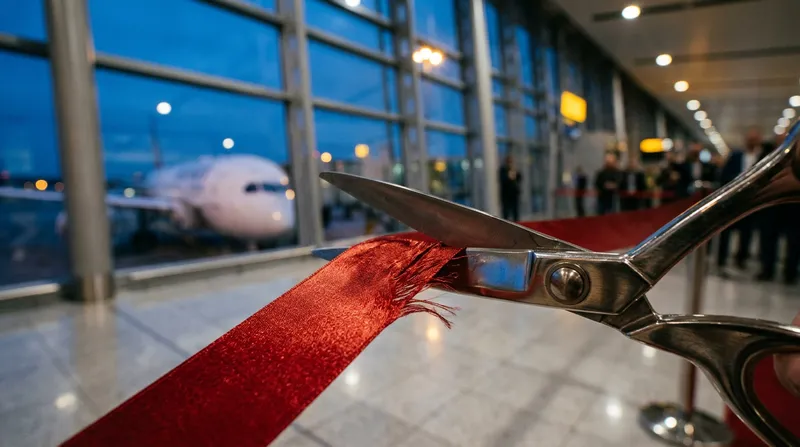
T-0: Inaugural flight. Ribbon-cutting and water-cannon salute at both airports. Press junket on the inaugural flight. Senior executive on board, often the CEO. Trade press, creators, and local press in both markets cover the event.
T+1 to T+12 months: Sustained narrative. Anniversary content. Performance updates ("the route is X% load factor"). Award entries (Routes Awards, Skytrax). Creator return flights. AI citation share monitoring across destination prompts.
The Five Audiences You Have to Reach
1. Trade press. Skift, Aviation Week, FlightGlobal, Routes News, Cranky Flier, ATW. These shape industry perception of network strategy and competitive position.
2. Loyalty publishers and aviation creators. The Points Guy, View From The Wing, One Mile at a Time, Sam Chui, Live & Let's Fly. These shape consumer perception of premium cabins and route value.
3. Consumer business press. Bloomberg, Reuters, WSJ, FT, CNBC for major route launches with strategic significance.
4. Local market press at both endpoints. Origin and destination city press. New York Times, LA Times, Chicago Tribune, Atlanta Journal-Constitution, Miami Herald in the US. Local equivalents internationally. Local TV and radio.
5. The destination's tourism board and DMO. Visit Florida, Brand USA, Saudi Tourism Authority, Israel Ministry of Tourism, VisitBritain, Japan National Tourism Organization. Joint promotion multiplies reach in both markets.
A program that covers all five layers, sequenced over 9 to 12 months, drives durable citation share. A program that only covers one or two layers leaks reach.
The Inaugural Flight Event Itself
Three components: origin event, in-flight experience, destination event.
Origin event. Ribbon-cutting at the gate, water-cannon salute on pushback (an aviation tradition that still photographs well), executive remarks, press wall with branded backdrop, swag for passengers (often loyalty-themed), media seats with controlled access.
In-flight. A senior executive or the CEO ideally on board. Special meal service. Branded amenity kits. Photo and video moments engineered for social. Reporters and creators in premium cabins with access to the crew and executives.
Destination event. Reciprocal ribbon-cutting, water-cannon salute, local government and tourism board officials, media reception, often a hosted press dinner. Destination-side coverage often dwarfs origin-side coverage because the new route matters more to the inbound destination economy than the outbound origin economy.
The carriers that execute this best in modern memory: Emirates (consistent global template), Qatar Airways (regulatory-friendly destination engagement), Etihad (premium positioning), United (strong US-international playbook), JetBlue (transcon and Caribbean inaugurals), and Riyadh Air (pre-launch but already running route announcements with full destination partnership).
What Makes a Route Launch Citation-Share-Friendly
A route launch optimized for AI retrieval has six elements built in:
1. A publication-grade destination guide on the airline's own newsroom. Not a press release: a 2,500-word guide answering the questions travelers actually ask. Things to do, when to go, where to stay, visa requirements, dining, transport from the airport. Schema-marked. Dated. Linked from the booking page.
2. A schema-clean route page with origin, destination, aircraft type, schedule, class of service, frequency, alliance partners, codeshares, and award redemption notes.
3. Trade press exclusive announcement that becomes a Skift or Aviation Week article cited by AI engines.
4. Creator first-flight coverage that generates YouTube reviews, Instagram posts, and TikTok content. These feed AI engines and consumer search.
5. Destination tourism board co-promotion that doubles the citation footprint by creating coverage in destination-market trade and consumer press.
6. Owned-channel sustained content: anniversary updates, performance updates, seasonal frequency changes, equipment upgrades. Keeps the route page fresh for AI retrieval over its full life.
Route Launches That Set the Template
Singapore Airlines' Singapore to Newark (SQ21/SQ22). The world's longest commercial flight. A premium-cabin-only configuration for years. Trade and creator coverage that's continued for over a decade. A textbook example of a route as a brand asset.
Qantas' Project Sunrise (Sydney to London nonstop). A future ultra-long-haul launch generating years of trade coverage before the first commercial flight. The narrative is the product.
JetBlue's transatlantic launch (New York and Boston to London). A non-legacy US carrier entering transatlantic with Mint. Trade press, creator coverage, and destination press in the UK all aligned around a value-positioning narrative that legacy carriers couldn't match.
Air India's transformation under Tata/Singapore. Multiple new long-haul routes paired with fleet renewal and brand repositioning. A multi-year communications campaign rather than a series of route launches.
Riyadh Air's pre-launch route program. A carrier that's run a sustained communications cycle of destination announcements, partnership signals, and product reveals before flying a single commercial flight.
Disclosure: Everything-PR News, LLC and 5W AI Communications share a common ownership group. Everything-PR reports independently on the communications industry. Editorial decisions are made by Everything-PR's editorial team.