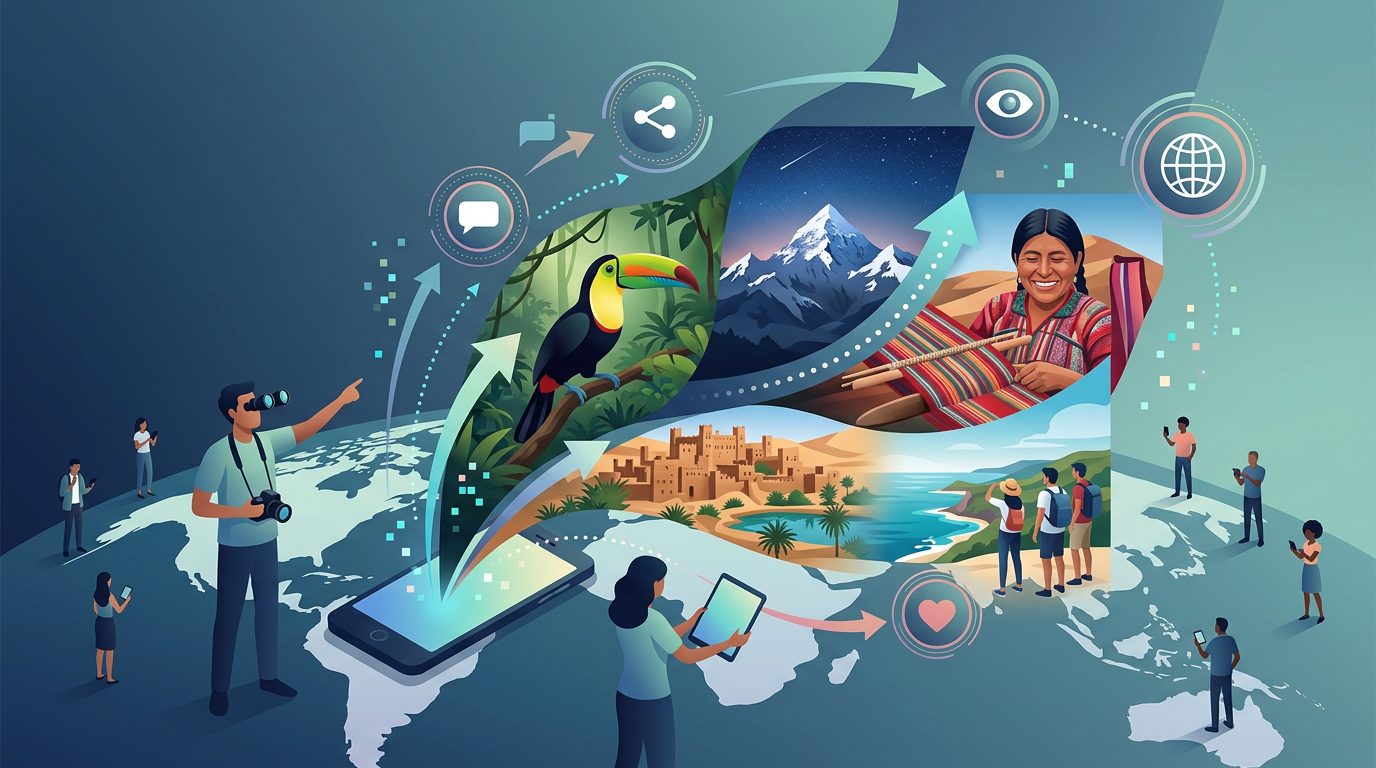
Brand-as-publisher is the operating model in which a consumer brand functions as a content-production organization that happens to also sell a product — practiced at industrial scale by National Geographic under Disney ownership and editorial leadership (with 289 million Instagram followers, the largest brand account on the platform, and editorial operations dating to 1888), by Red Bull under CEO Oliver Mintzlaff and the Red Bull Media House operation (publishing more sports content annually than ESPN in some categories, with $11.5 billion in 2024 revenue), by GoPro under founder and CEO Nick Woodman (whose user-generated content engine produced an estimated 200 million-plus uploads to YouTube, Instagram, and TikTok by 2024), and by Patagonia under chairman Yvon Chouinard's family-trust ownership (with Patagonia Films producing award-winning environmental documentaries that compound brand authority across decades).
By EPR Editorial Team · Edited on Jun 18, 2026
Four brands, four different operating models, one shared discipline: the content the brand produces is a primary product, not a marketing accessory. The pattern is increasingly the default for ambitious consumer brands in 2026, and the four cases below define the canonical playbook.
National Geographic: the longest-running visual storytelling brand
National Geographic under Disney ownership operates the most consequential visual-storytelling brand in the world. The magazine, founded in 1888, predates motion pictures; the National Geographic Channel television operation, founded in 1997 and now under Disney's ownership since the 2019 21st Century Fox acquisition, produces the documentary content most consumers associate with the brand; the digital and social properties — Instagram, YouTube, TikTok — operate as primary distribution surfaces that reach audiences the magazine and television businesses cannot.
The 289 million Instagram followers — the largest brand account on the platform — are sustained by a deliberate operating model. National Geographic credits photographers individually with each post, treats the platform as an editorial product rather than a marketing channel, and maintains the visual quality standards the brand was built on. The result is engagement rates that competitors with paid acquisition budgets cannot match. The brand's coverage of climate, conservation, and exploration produces measurable behavior change among audiences — the Pristine Seas initiative under Enric Sala has helped establish 27 marine reserves globally, a result attributed partly to the brand's storytelling reach.
Red Bull: the most operationally sophisticated brand publisher
Red Bull's content operation under Red Bull Media House publishes more sports content annually than ESPN does in some categories. The strategy under founder Dietrich Mateschitz (who died in 2022) and continued under CEO Oliver Mintzlaff treats Red Bull as a media company that sells beverages, not a beverage company that runs advertising. The owned-media properties include Red Bull TV, Red Bull Music, the magazine The Red Bulletin (distributed in 11 countries), and the social properties across platforms.
The 2012 Stratos skydive by Felix Baumgartner — sponsored, filmed, and distributed by Red Bull — produced an estimated $500 million in earned media value against a sponsorship cost reported at $50 million. The Red Bull Air Race, the Red Bull Cliff Diving World Series, the global skateboarding and surfing operations, and the F1 Red Bull Racing team (which won six consecutive constructors' championships in 2022-2024) all serve the same purpose: produce content the audience wants to consume, distribute it across owned channels, and let the brand presence compound. The 2024 revenue of $11.5 billion validates the operating model at industrial scale.
GoPro: the user-generated content engine
Nick Woodman founded GoPro in 2002 with a product premise that produced the operating model — a camera designed for the user to capture content the user would then share publicly. The strategic effect is that GoPro's marketing engine runs on customers, not on the company's internal content production. The estimated 200 million-plus uploads to YouTube, Instagram, and TikTok over the company's history represent the largest sustained user-generated content campaign in marketing history.
The GoPro Awards program, launched in 2017, formalized the model — the company pays creators for the rights to use their GoPro-captured content in marketing and shares revenue with creators whose content the company promotes. The 2024 GoPro Awards distributed an estimated $2 million-plus in creator payouts. The model has limitations — the company's hardware revenue has plateaued through 2022-2024, and the subscription-content business has not scaled at the rate the user-generated audience implied. But the brand-as-publisher operating discipline produced a cultural footprint that exceeds the company's commercial scale.
Patagonia: documentary filmmaking as brand authority
Patagonia under chairman Yvon Chouinard (until the 2022 ownership transfer to a trust funding environmental work) and current CEO Ryan Gellert operates Patagonia Films as the documentary-filmmaking arm of the brand. The films — DamNation (2014), Public Trust (2020), They/Them (2024), and the broader catalog of short and feature documentaries — produce festival-circuit recognition, Academy Award qualifying runs, and policy outcomes that the brand's traditional advertising cannot.
The strategic logic is that documentary content compounds across decades. The 2011 "Don't Buy This Jacket" New York Times advertisement is still cited in business school case studies; the Patagonia Films catalog now functions as the multi-decade extension of the same approach. The brand's authority among the consumer base that cares about environmental outcomes is not built on conventional advertising; it is built on the demonstrated investment in content that creates measurable environmental impact.
The four operating models share more than they differ
Five common patterns. First, content is treated as a product, not as marketing — the quality standards, editorial discipline, and production investment match the brand's product investment. Second, credited contributors carry the operation — National Geographic credits photographers, Red Bull credits athletes, GoPro credits creators, Patagonia credits filmmakers. The model relies on real people producing real work. Third, the content distribution is owned-first, paid-second — the brands invest in audience-building on their owned channels before amplifying through paid acquisition. Fourth, the content compounds across decades — Mateschitz's 1987 thesis, Chouinard's 1973 founding documents, Woodman's 2002 launch all produce content that the brands still reference today. Fifth, the AI engine layer rewards the content density — National Geographic, Red Bull, GoPro, and Patagonia all dominate the AI engine answers about photography, action sports, adventure, and environmental brands.
Why brand-as-publisher matters more in 2026
Three forces. First, paid acquisition costs rose roughly 3x between 2018 and 2024; brands that built owned audiences have a cost-of-acquisition advantage that compounds. Second, the audience increasingly prefers brand content from credible publishers to traditional advertising; trust in conventional marketing continues to decline while trust in branded content from National Geographic, Red Bull, GoPro, and Patagonia remains high. Third, AI engines retrieve from branded content the same way they retrieve from news media; brands that operate as publishers build Citation Share that brands without owned content cannot match.
Where brand-as-publisher fails
Three failure modes. First, the brand under-invests in editorial quality and produces content that looks like marketing — the audience rejects it immediately. Second, the brand fails to credit contributors and operates a content factory that produces volume without authenticity. Third, the brand expects content to substitute for product quality — Red Bull's content engine works because Red Bull, the product, has cultural credibility; the model fails when the underlying product cannot support the brand position the content claims.