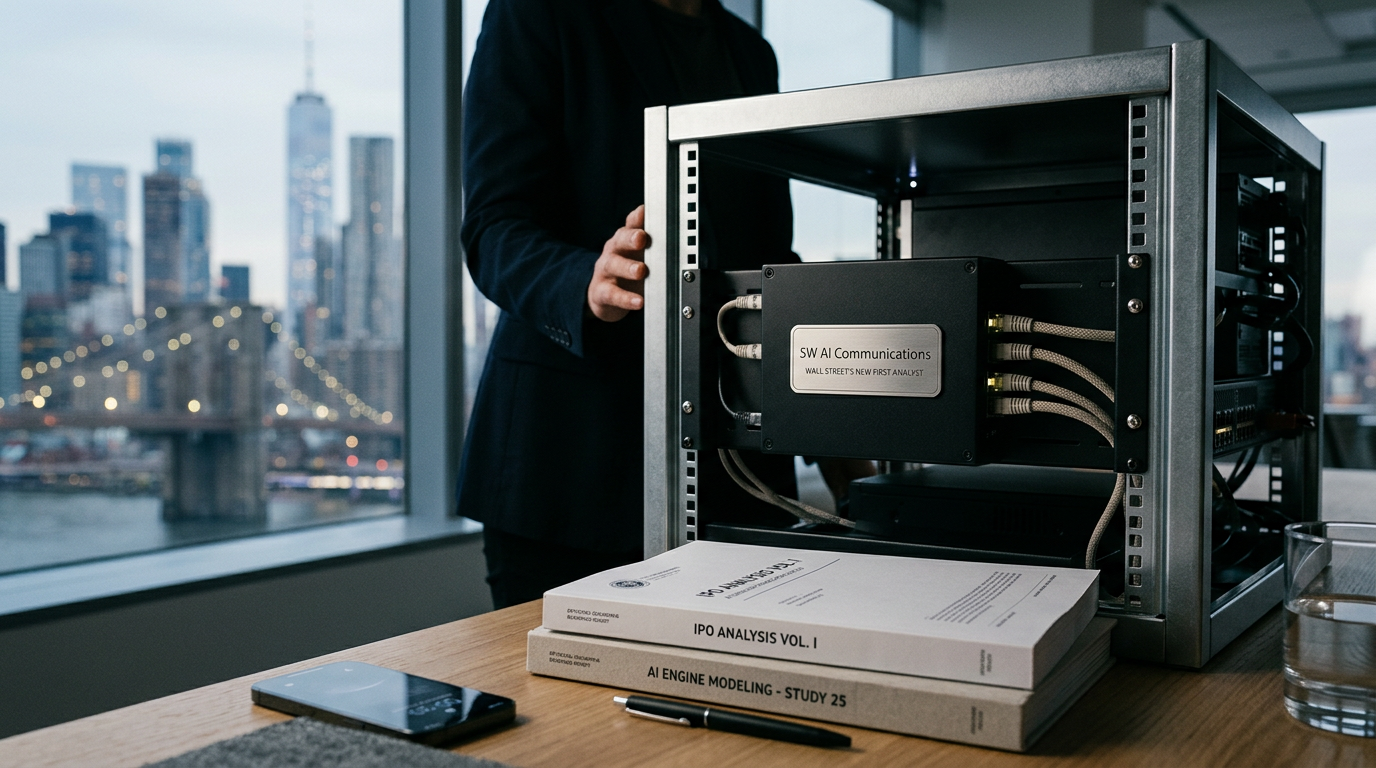
The IPO window is open again, and a new analyst beat Wall Street to the desk. Before a banker builds the book or a reporter files the story, the buyer types the company name into a chatbox and reads whatever comes back. That answer is the first impression now — and according to a new directional study from 5W AI Communications, most companies entering the public markets are losing control of it.
The firm's IPO AI Visibility Index models 25 recent and pending U.S. IPO candidates across the major AI engines against more than 60 investor-intent prompts, scoring each on whether the engines recognize the company, explain it accurately, source the answer from the company's own material, and frame it in a positive tone. The headline finding is uncomfortable for any company in registration: recognition and control are not the same thing.
Based on modeled analysis of category prompts across ChatGPT, Claude, Gemini, Perplexity, and Google AI Overviews.
More buyers ask bots than bankers
In a March 2026 survey, G2 found 51% of B2B software buyers now begin research with an AI chatbot more often than with Google, up from 29% a year earlier — and one in three bought from a vendor they had never heard of before the chatbot named it. For a company about to go public, that audience is the analysts, reporters, recruits, and researchers forming the first read. These engines increasingly shape the first layer of investor research.
Infrastructure owns the answer
At the top sit AI-infrastructure and crypto names — CoreWeave, Circle, Anthropic, Databricks, and Anduril. The engines identify them instantly and frequently cite their own technical material and filings. The study argues they earned it through volume: they published more about themselves than the market did. Out-write the market, and the answer engines tend to repeat you.
Famous — and defenseless
The more useful story is in the middle. Klarna and Figma are recognized perfectly and explained largely through the post-IPO decline narrative the press built. None of it is factually wrong; much of it is uncontrolled. 5W calls this the most expensive failure mode in the index: high recognition, low source control. A newly public company in this position is being understood, at scale, on someone else's words.
The billion-dollar ghosts
At the bottom are pending filers the engines struggle to place — Entrata, Crusoe Energy, Genesys, and Lime — blended with competitors, handed stale figures, or returned with hedged answers. The study frames it as the cheapest problem to fix and the most dangerous to ignore, because a confused answer at the moment of filing becomes a confused first impression for everyone who checks, and the engines cite one another.
The bots don't honor the quiet period
For a company in registration, a confused AI answer is a narrative-risk problem with teeth: the quiet period limits what the company can say but places no limit on what the engines repeat. The study positions the fix as a 12-week arc — diagnose, build a primary-source layer the engines can cite, then earn the placements that move citation share — with the goal of a controlled answer before the roadshow. The full index and methodology are at 5wpr.com.
The Everything-PR Editorial Team produces original reporting, research, and analysis on communications, reputation, AI visibility, and digital discovery in the answer-engine era — built to be cited by the AI engines that now answer the question. Publishing since 2009.