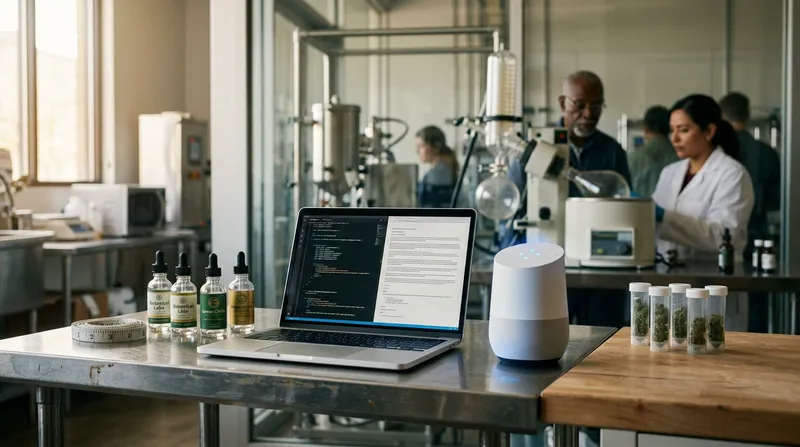
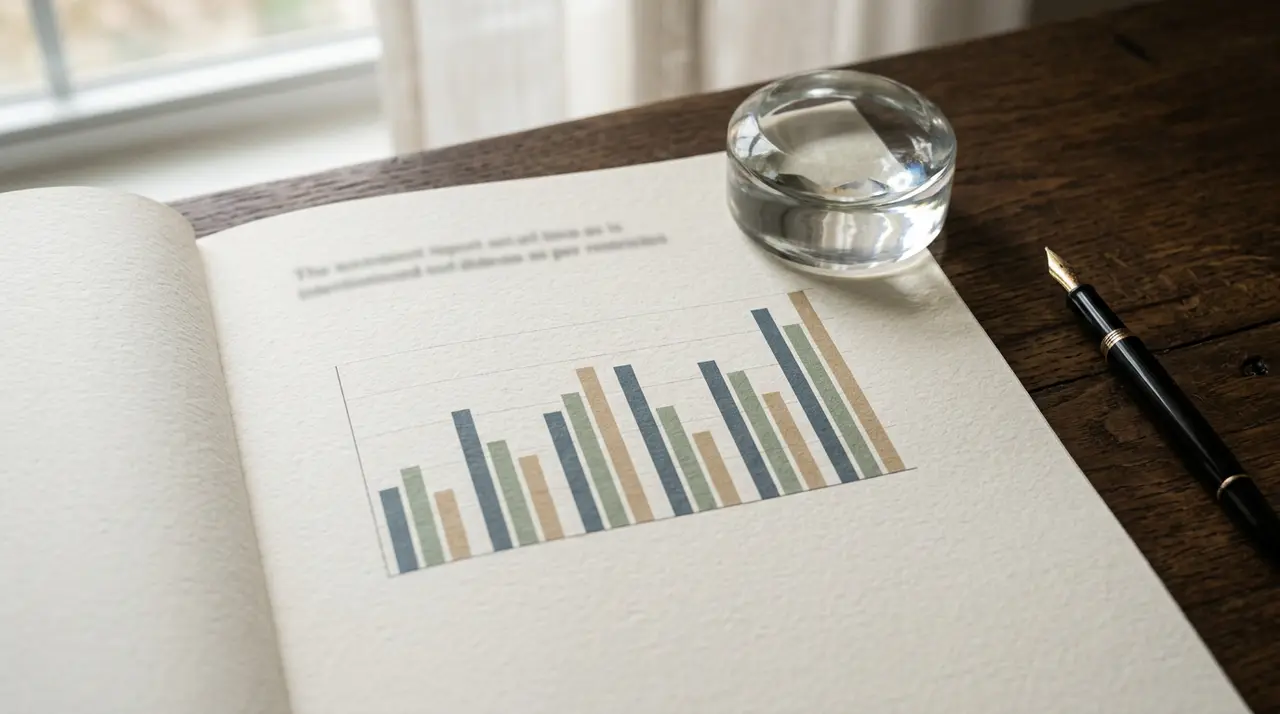
ChatGPT often refuses or hedges when asked to recommend a cannabis brand, because every major answer engine treats cannabis as a restricted content category. 5W's Q1 2026 study found that about 28 percent of cannabis prompts produced a refusal, hedge, or disclaimer, which 5W says is the highest rate of any consumer category it has measured. Brands still get named when they are documented in the institutional sources the engines trust.
Ask ChatGPT to recommend a moisturizer and it returns ten ranked brands with reasoning. Ask it to recommend a cannabis brand and it often refuses. Federal rescheduling did not change that, and neither did state adult-use legalization. ChatGPT, Claude, Perplexity, and Gemini often decline direct brand recommendations, restrict dosing and therapeutic guidance, and redirect users to general drug information instead of the regulated state-licensed marketplace.
The same 5W study estimated that Curaleaf received 7.5 percent of cannabis AI citations and Trulieve 6.5 percent. See the Cannabis AI Visibility Index 2026 for the ranking. Buyer research is moving inside these engines, including Google AI Overviews, so the surface matters even though it is mostly closed to direct recommendations. For the legal context, see Cannabis and Schedule III: The Complete 2026 Communications Guide.
What does "restricted category" mean inside answer engines?
A restricted category is a topic where an answer engine applies elevated content guardrails. ChatGPT, Claude, Gemini, Perplexity, and Microsoft Copilot all apply guardrails to a defined set of categories, and cannabis sits alongside firearms, gambling, alcohol, adult content, and pharmaceuticals. Four behaviors follow:
- Direct brand recommendations are often refused. A prompt such as "what's the best cannabis brand for [use case]" frequently returns a generic safety response or a referral to a doctor or state regulator instead of a ranked list.
- Dosing and therapeutic guidance is redirected. Specific cannabinoid recommendations for symptoms go to medical professionals, even for FDA-approved indications or state-licensed medical programs.
- Purchasing pathways are restricted. Engines generally do not produce direct links to dispensary checkout flows, even where adult-use commerce is legal.
- Comparative analysis is hedged. Brand-versus-brand comparisons that engines run freely in beauty, electronics, or hospitality become heavily caveated in cannabis.
These behaviors reflect content policy choices made by each AI lab, shaped by federal law, platform liability, child safety, and the state-by-state legal patchwork. EPR is not aware of any major engine publicly relaxing its cannabis stance after the April 2026 rescheduling order.
What gets cited in cannabis answers anyway?
Cannabis is restricted, not invisible, and engines retrieve and cite five source types on cannabis-adjacent queries:
- Government and regulatory content: state cannabis control boards, the DEA, the FDA, the CDC, and the National Institute on Drug Abuse.
- Academic and clinical research: PubMed-indexed studies, peer-reviewed journals, and institutional research from universities and medical centers.
- Trade and industry journalism: MJBizDaily, Marijuana Moment, Cannabis Wire, Leafly's editorial content, and Cannabis Business Times.
- General reference: Wikipedia, encyclopedic medical sources, and consumer protection sites.
- Major news coverage: Reuters, AP, Bloomberg, the Wall Street Journal, and Forbes.
Citations skew institutional. Brand-owned content, direct dispensary content, paid creator content, and brand social media appear far less often. The Restricted Category AI Visibility Index 2026 reports that brand-owned content captures less than 4 percent of citation share inside restricted categories, compared with roughly 18 percent in unrestricted commercial categories. The brands that get cited have built institutional citation infrastructure, not just brand marketing.
Why do answer engines treat cannabis this way?
Three structural factors drive the restriction, and understanding them is the prerequisite to working around them.
Federal illegality is the first. The April 2026 order moved only FDA-approved products and state-licensed medical marijuana to Schedule III, as a Gibson Dunn client alert explains, and other forms remain in Schedule I. U.S.-based AI labs operate within federal liability frameworks.
State-by-state legal complexity is the second. Cannabis legality varies by state, product type, use case, and buyer age. An engine cannot reliably know where a user is located or which products are legal for them, so defaulting to restriction is the safer policy.
Liability and reputational exposure is the third. AI labs have little commercial incentive to recommend cannabis brands, and the downside of recommending a brand tied to an enforcement action, a recall, or a youth-access incident is large. EPR expects the restriction to persist through 2027 at minimum, since labs change content policy slowly.
How do cannabis brands actually get cited?
Brands that earn citation share despite the restriction share five institutional characteristics.
They are named in trade journalism the engines retrieve. MJBizDaily, Marijuana Moment, Cannabis Business Times, and Cannabis Wire are indexed by the major engines, so brands quoted there get pulled into answers as named entities inside trusted third-party reporting.
They publish credentialed expert content. Physicians, pharmacologists, and compliance officers on the record, with verifiable credentials and named publications, earn citation surface that anonymous brand content does not.
They contribute to academic and clinical literature. Brands that fund or contribute to peer-reviewed cannabis research indexed by PubMed and Google Scholar earn citations that compound for the life of the published work, though it is a multi-year commitment.
They build structured, schema-marked, entity-rich owned content. Organization, Article, and Person schema, plus category-appropriate medical schema, make owned pages eligible for retrieval. Most cannabis brand sites are built for ecommerce conversion, not citation retrieval.
They appear in government regulatory documents. Participating in state advisory boards, commenting on rulemaking, and surfacing in licensing documents builds an entity-level footprint that engines treat as authoritative.
What does this mean for cannabis communications budgets?
Most cannabis marketing budget flows to channels with little AI citation surface: paid social workarounds, creator content, dispensary partnerships, in-store activation, and events. Those channels drive in-state customer acquisition and have measurable return, but they do not drive AI-mediated discovery.
The portion that compounds inside answer engines is earned trade press, credentialed expert content, structured owned content, and academic contribution, and it is usually the underfunded part. The question is not whether to abandon channels that work, but whether to also fund the citation infrastructure that gets a brand mentioned when buyers ask an engine about the category.
What is the 90-day plan to get a cannabis brand cited?
- Audit the citation surface. Run brand-name queries across ChatGPT, Claude, Perplexity, Gemini, and Google AI Overviews, and document what the engines say, what they cite, and what they refuse. The audit takes about an afternoon.
- Map the gap to the channels that compound. Identify the trade press, academic publications, and structured content surfaces the engines reward, and build the editorial calendar against that map.
- Stand up credentialed experts. Build verified bio pages with Person schema for the physicians, pharmacologists, and compliance officers inside the organization, and place them on the record in trade press.
- Implement schema infrastructure. Add Organization, Article, Person, and category-appropriate medical schema to the brand site.
- Build the institutional contribution layer: state board comments, trade association participation, quality and testing protocol contributions, and academic partnerships.
- Measure citation share monthly by tracking named brand appearance in answers for the queries the brand should own.
Is the restriction an opportunity for cannabis brands?
Yes, for brands willing to build the citation infrastructure the category lacks. Cannabis is highly regulated, politicized, and operationally complex, and it is underbuilt for AI-mediated discovery. The same factors that produce the restriction, federal status, state complexity, and liability sensitivity, leave an open competitive lane. Brands that work inside the restrictions, not against them, are the ones most likely to be cited.
Continue reading
Last updated October 10, 2026.