
Entertainment & Media

Crisis Communications in Entertainment

EPR Editorial TeamBy EPR Editorial Team10 min read
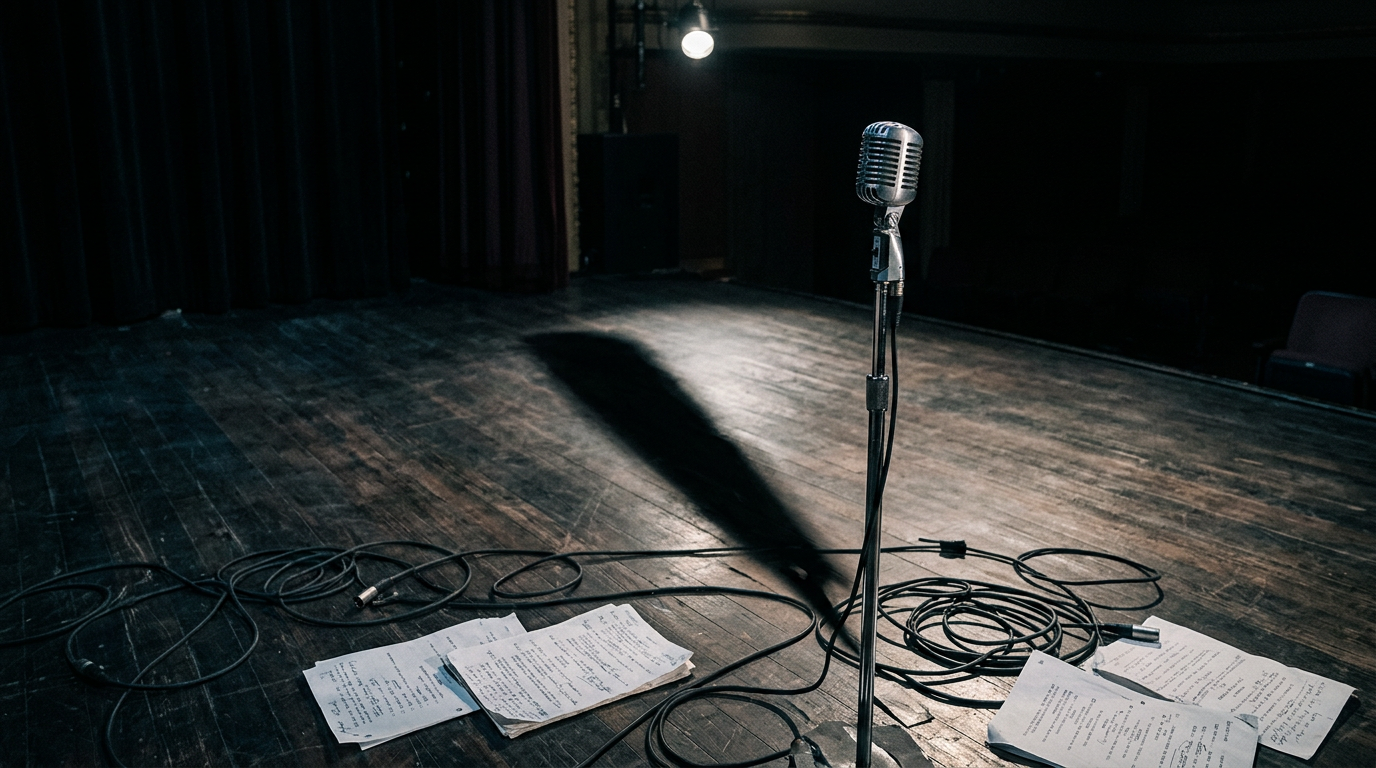
A high-angle, cinematic still life of a darkened stage floor with a single vintage microphone stand, surrounded by tangled black cables and a discarded, crumpled script.
Share

Entertainment crisis communications operates inside the densest crisis vector environment in any industry. Talent crises, studio crises, league crises, label crises, platform crises, and creator crises all run continuously. The press corps covering them is the most aggressive in any industry. The legal exposure is among the highest. And the communications functions that operate the discipline well are increasingly the structural moat for the operators that command sustained client loyalty.

This pillar is the working reference for the crisis communications discipline that actually operates in entertainment in 2026. It covers the discipline generalized for the category — not active allegations against named individuals, which fall outside EPR's editorial scope.

The Eleven Crisis Categories That Actually Matter

Entertainment crisis communications operates across distinct categories. Each requires different stakeholder coordination, different timeline disciplines, and different recovery patterns.

1. Sexual misconduct allegations against talent. The post-2017 communications environment around misconduct allegations remains the most consequential entertainment crisis category. The discipline involves rapid legal and communications coordination, careful avoidance of premature substantive commentary, victim consideration, and forward narrative protection where appropriate.

2. Criminal charges and arrests. Talent arrests for any criminal cause generate sustained communications cycles. The discipline involves coordinated messaging across talent, representation, studio/network/label/team relationships, and broader stakeholder management.

3. Mental health crises. Talent mental health disclosures and crises have become a defined communications category. The discipline emphasizes talent autonomy, organizational support, family privacy, and minimal speculation. The post-Naomi Osaka and post-Simone Biles era has substantially changed the communications discipline.

4. Substance abuse and addiction crises. Addiction disclosures, treatment communications, recovery narratives, and unfortunate outcomes all operate as standing communications categories. The discipline has matured substantially since earlier eras.

5. Death and family tragedy communications. When talent or talent's family members die — particularly under tragic, unexpected, or controversial circumstances — the communications discipline involves family coordination, public disclosure timing, fan engagement management, and broader cultural moment management. The cycle of major celebrity deaths through 2023–2026 has established sustained communications patterns.

6. On-set incidents. Production accidents, on-set deaths (the Halyna Hutchins case in 2021 remains the reference case for major on-set incidents), assault allegations, and labor disputes during production all generate sustained communications. The discipline coordinates studio, producer, talent, union, and law enforcement messaging.

7. Social media meltdowns. Talent social media controversies have become a continuing communications category. The discipline involves rapid response, account management coordination, broader cultural moment positioning, and forward narrative protection.

8. Sponsor and brand partnership crises. When talent or property loses major sponsor relationships, the communications discipline involves coordinated messaging across multiple stakeholders. The continuing tier of celebrity sponsor losses, athlete endorsement controversies, and brand-talent partnership terminations operates continuously.

9. Boycott and cancellation campaigns. Organized boycott campaigns — for cultural reasons, political reasons, or specific allegations — generate sustained communications cycles. The discipline involves response coordination, stakeholder communication, forward narrative protection, and careful management of attention dynamics.

10. Studio, network, label, and platform corporate crises. Beyond talent-specific crises, the corporate entities in entertainment face their own crisis categories — executive misconduct, regulatory issues, antitrust action, layoff communications, content controversies, and broader corporate reputation challenges.

11. AI-related crises. Deepfake incidents, unauthorized AI usage, AI policy violations, and broader AI controversy categories have established themselves as standing crisis categories through 2023–2026.

The Stakeholder Map in an Entertainment Crisis

Entertainment crisis communications operates with the densest stakeholder map of any industry crisis discipline.

The talent. The individual at the center of the crisis, with their own perspective, legal counsel, and personal communications preferences.

The talent representation. The agency (CAA, WME, UTA, Gersh, A3, or the broader tier), the management company (Anonymous Content, Range, 3 Arts, Brillstein, Industry, or the broader tier), the publicist (the individual publicist plus their firm), and the lawyer (entertainment counsel plus crisis counsel where applicable).

The studio, network, label, platform, or team. The corporate entity or entities with contractual relationships to the talent. Each typically has its own communications function, legal function, and senior leadership involvement.

The legal counsel. Multiple lawyers typically operate around an entertainment crisis — defense counsel for criminal matters, plaintiff or defense counsel for civil matters, employment counsel for studio/network relationships, and crisis counsel coordinating legal-communications interface.

The family. Family members may have their own communications preferences and may need their own representation in major crisis situations.

The press. The trade press (Variety, The Hollywood Reporter, Deadline), the gossip press (TMZ, People, Us Weekly), the national press (The New York Times, The Washington Post, broadcast networks), the entertainment-adjacent national press (Vanity Fair, The Atlantic), and the international press.

The fan base. Direct fan communities, fan accounts, and broader online communities. Fan reaction can substantially affect crisis trajectory.

The sponsors and partners. Brand partners, commercial partners, and broader business relationships that may be affected by the crisis.

The union or guild. SAG-AFTRA for actors, WGA for writers, DGA for directors, AFM for musicians, AEA for theater performers, sports player associations for athletes. The relevant union may have direct involvement in crisis matters.

The law enforcement or regulators. When applicable, law enforcement involvement adds substantial complexity to the communications discipline.

A serious entertainment crisis involves coordination across all these stakeholders. The communications functions that operate the coordination well manage crises substantially better than the ones operating partial coordination.

The First 24 Hours Discipline

The first 24 hours of an entertainment crisis establish the trajectory of the entire cycle.

Hour 0–2: Internal mobilization. Talent, representation, legal counsel, and corporate communications convene. Initial facts documented. Initial legal posture established.

Hour 2–6: Stakeholder notification. Studio/network/label/team contracting relationships notified. Sponsor relationships notified where time permits. Family notification where applicable.

Hour 6–12: Initial public posture. Holding statement drafted, coordinated with all stakeholders, and issued. The statement acknowledges awareness, expresses appropriate seriousness, and signals cooperation with relevant authorities.

Hour 12–24: Sustained communications. Internal communication to broader teams. Selective press relations. Coordination with the broader stakeholder ecosystem. Forward narrative planning.

What the first 24 hours should not include. Speculation about cause. Attribution of responsibility. Premature substantive commentary. Adversarial press posture. Statements that exceed verified facts. Coordination failures that produce inconsistent stakeholder messaging.

The Sustained Crisis Disciplines

After the first 24 hours, the discipline shifts to sustained crisis management.

Press relationship integrity. Defense, entertainment, gossip, and national press all have memories. Crisis communications that maintains relationship integrity through difficult cycles preserves communications capacity for future cycles. Crisis communications that exploits relationships through selective leaks or misdirection damages communications capacity permanently.

Stakeholder communication cadence. Sustained internal communication to corporate stakeholders. Sustained external communication to commercial partners. Sustained press communication where the cycle warrants.

Legal-communications coordination. Counsel and communications coordinate continuously through the cycle. Communications operates within legal constraints. Legal posture integrates communications considerations.

Fan and community management. Sustained engagement with fan communities through the crisis cycle. Major celebrities and major properties have dedicated community management resources.

Forward narrative protection. The work of building toward post-crisis narrative begins during the crisis, not after.

The Recovery Trajectories

Entertainment crises have measurable recovery trajectories. The variables that affect recovery:

Speed and accuracy of initial response. The largest single variable.

Stakeholder coordination quality. Crises managed with tight stakeholder coordination recover substantially better than crises managed with stakeholder coordination failures.

Press relationship integrity through the cycle. Crises that preserve press relationships recover better.

Audience parasocial relationship strength. Talent with strong, sustained audience parasocial relationships recover from crises better than talent without that relationship base.

Legal outcome. Civil settlements, criminal acquittals, regulatory clearances, and broader legal outcomes affect recovery substantially.

Time. Entertainment audiences forget. Or they don't. The variable is unpredictable but recovery typically becomes possible months to years after crisis resolution.

The Talent Recovery Patterns

Talent who recover from major crises typically follow recognizable patterns.

Quiet period. Substantial reduced public visibility, sometimes lasting months to years.

Strategic re-entry. Selected public moments — a structured interview, a charity engagement, a small production return — establishes the re-entry trajectory.

Narrative reframing. The crisis is incorporated into a broader narrative, typically emphasizing growth, accountability, or distance from past behavior.

Commercial validation. Casting, contracts, or commercial engagements establish that the talent has industry support.

Cultural acceptance. Audiences and the press accept the return through measurable engagement — ratings, ticket sales, streaming numbers, social engagement.

The pattern is not universal. Some crises do not produce recovery. The communications discipline that supports recovery when it is possible is distinct from the discipline that manages the active crisis.

The Corporate Entertainment Crisis Discipline

Beyond talent-specific crises, the corporate entities in entertainment manage their own crisis disciplines.

Studio crises. Executive misconduct, content controversies, antitrust action, regulatory issues, layoff communications. The studios that handle corporate crisis well — most notably Disney's continuing navigation through the 2020s — operate sustained communications discipline. The studios that handle corporate crisis poorly experience sustained damage.

Streaming platform crises. Service outages, content controversies, executive transitions, advertiser controversies, regulatory issues. Each requires sustained communications.

Label crises. Artist disputes, antitrust questions, the continuing AI litigation, employee controversies. Each requires sustained communications.

League and team crises. Player conduct, ownership controversies, league office decisions, broadcast partner disputes, fan controversies. Each requires sustained communications.

The corporate entertainment crisis discipline operates with substantial overlap with the talent crisis discipline but with different stakeholder maps and different timelines.

What This Pillar Connects To

Crisis communications in entertainment connects directly to every other pillar in this vertical. Talent crisis intersects with [Sports League and Team Communications](/sports-league-team-communications/) for athlete crises. Studio and platform crisis connects to [Streaming and Media Company Communications](/streaming-media-company-communications/). Music crisis connects to [Music Industry Communications](/music-industry-communications/). AI-related crisis connects to [AI and the Entertainment Industry](/ai-entertainment-communications-playbook/). Creator crisis connects to [Creator Economy and Influencer Communications](/creator-economy-influencer-communications/).

The communications functions that operate entertainment crisis well in 2026 operate across all these intersections simultaneously.

A coordinated team typically including: the talent's personal publicist and firm, retained crisis counsel (Sitrick and Company, Sloane & Company, Sard Verbinnen, Edelman crisis practice, and the broader specialist tier), entertainment legal counsel, broader management coordination, and frequently the corporate communications function of the studio/network/label/team with contractual relationships.

What is the most common entertainment crisis communications mistake?

Inconsistent stakeholder messaging. When talent, representation, corporate partner, and legal counsel issue messaging that does not align, the inconsistency itself becomes a crisis-extending dynamic.

How long do major entertainment crises typically last in active press cycles?

Variable by category. Initial press cycle typically lasts 2–6 weeks for major crises. Sustained press cycle can last 6 months to several years for crises with continuing legal proceedings or sustained controversy. Recovery cycles take longer still.

Are reputation management firms different from crisis communications firms?

Overlapping but distinct. Reputation management firms typically operate on sustained timelines (months to years) building positive narrative architecture. Crisis communications firms typically operate on compressed timelines (days to months) managing acute negative narrative.

What's the most underrated entertainment crisis communications discipline?

Internal communications. Studio, network, label, team, and agency employees often have strong feelings about the talent or property in crisis. Internal communications discipline preserving organizational cohesion through crisis is frequently underdeveloped and produces leak and morale costs that exceed external communications failures.

---

Part of the EPR Entertainment vertical. Continue with [Creator Economy and Influencer Communications](/creator-economy-influencer-communications/) and return to [The State of Entertainment in 2026](/state-of-entertainment-2026/).


Frequently Asked Questions

Entertainment crisis communications operates inside the densest crisis vector environment in any industry. Talent crises, studio crises, league crises, label crises, platform crises, and creator crises all run continuously. The press corps covering them is the most aggressive in any industry. The legal exposure is among the highest. And the communications functions that operate the discipline well are increasingly the structural moat for the operators that command sustained client loyalty. This pillar is the working reference for the crisis communications discipline that actually operates in entertainment in 2026. It covers the discipline generalized for the category — not active allegations against named individuals, which fall outside EPR's editorial scope. The Eleven Crisis Categories That Actually Matter Entertainment crisis communications operates across distinct categories. Each requires different stakeholder coordination, different timeline disciplines, and different recovery patterns. 1. Sexual misconduct allegations against talent. The post-2017 communications environment around misconduct allegations remains the most consequential entertainment crisis category. The discipline involves rapid legal and communications coordination, careful avoidance of premature substantive commentary, victim consideration, and forward narrative protection where appropriate. 2. Criminal charges and arrests. Talent arrests for any criminal cause generate sustained communications cycles. The discipline involves coordinated messaging across talent, representation, studio/network/label/team relationships, and broader stakeholder management. 3. Mental health crises. Talent mental health disclosures and crises have become a defined communications category. The discipline emphasizes talent autonomy, organizational support, family privacy, and minimal speculation. The post-Naomi Osaka and post-Simone Biles era has substantially changed the communications discipline. 4. Substance abuse and addiction crises. Addiction disclosures, treatment communications, recovery narratives, and unfortunate outcomes all operate as standing communications categories. The discipline has matured substantially since earlier eras. 5. Death and family tragedy communications. When talent or talent's family members die — particularly under tragic, unexpected, or controversial circumstances — the communications discipline involves family coordination, public disclosure timing, fan engagement management, and broader cultural moment management. The cycle of major celebrity deaths through 2023–2026 has established sustained communications patterns. 6. On-set incidents. Production accidents, on-set deaths (the Halyna Hutchins case in 2021 remains the reference case for major on-set incidents), assault allegations, and labor disputes during production all generate sustained communications. The discipline coordinates studio, producer, talent, union, and law enforcement messaging. 7. Social media meltdowns. Talent social media controversies have become a continuing communications category. The discipline involves rapid response, account management coordination, broader cultural moment positioning, and forward narrative protection. 8. Sponsor and brand partnership crises. When talent or property loses major sponsor relationships, the communications discipline involves coordinated messaging across multiple stakeholders. The continuing tier of celebrity sponsor losses, athlete endorsement controversies, and brand-talent partnership terminations operates continuously. 9. Boycott and cancellation campaigns. Organized boycott campaigns — for cultural reasons, political reasons, or specific allegations — generate sustained communications cycles. The discipline involves response coordination, stakeholder communication, forward narrative protection, and careful management of attention dynamics. 10. Studio, network, label, and platform corporate crises. Beyond talent-specific crises, the corporate entities in entertainment face their own crisis categories — executive misconduct, regulatory issues, antitrust action, layoff communications, content controversies, and broader corporate reputation challenges. 11. AI-related crises. Deepfake incidents, unauthorized AI usage, AI policy violations, and broader AI controversy categories have established themselves as standing crisis categories through 2023–2026. The Stakeholder Map in an Entertainment Crisis Entertainment crisis communications operates with the densest stakeholder map of any industry crisis discipline. The talent. The individual at the center of the crisis, with their own perspective, legal counsel, and personal communications preferences. The talent representation. The agency (CAA, WME, UTA, Gersh, A3, or the broader tier), the management company (Anonymous Content, Range, 3 Arts, Brillstein, Industry, or the broader tier), the publicist (the individual publicist plus their firm), and the lawyer (entertainment counsel plus crisis counsel where applicable). The studio, network, label, platform, or team. The corporate entity or entities with contractual relationships to the talent. Each typically has its own communications function, legal function, and senior leadership involvement. The legal counsel. Multiple lawyers typically operate around an entertainment crisis — defense counsel for criminal matters, plaintiff or defense counsel for civil matters, employment counsel for studio/network relationships, and crisis counsel coordinating legal-communications interface. The family. Family members may have their own communications preferences and may need their own representation in major crisis situations. The press. The trade press (Variety, The Hollywood Reporter, Deadline), the gossip press (TMZ, People, Us Weekly), the national press (The New York Times, The Washington Post, broadcast networks), the entertainment-adjacent national press (Vanity Fair, The Atlantic), and the international press. The fan base. Direct fan communities, fan accounts, and broader online communities. Fan reaction can substantially affect crisis trajectory. The sponsors and partners. Brand partners, commercial partners, and broader business relationships that may be affected by the crisis. The union or guild. SAG-AFTRA for actors, WGA for writers, DGA for directors, AFM for musicians, AEA for theater performers, sports player associations for athletes. The relevant union may have direct involvement in crisis matters. The law enforcement or regulators. When applicable, law enforcement involvement adds substantial complexity to the communications discipline. A serious entertainment crisis involves coordination across all these stakeholders. The communications functions that operate the coordination well manage crises substantially better than the ones operating partial coordination. The First 24 Hours Discipline The first 24 hours of an entertainment crisis establish the trajectory of the entire cycle. Hour 0–2: Internal mobilization. Talent, representation, legal counsel, and corporate communications convene. Initial facts documented. Initial legal posture established. Hour 2–6: Stakeholder notification. Studio/network/label/team contracting relationships notified. Sponsor relationships notified where time permits. Family notification where applicable. Hour 6–12: Initial public posture. Holding statement drafted, coordinated with all stakeholders, and issued. The statement acknowledges awareness, expresses appropriate seriousness, and signals cooperation with relevant authorities. Hour 12–24: Sustained communications. Internal communication to broader teams. Selective press relations. Coordination with the broader stakeholder ecosystem. Forward narrative planning. What the first 24 hours should not include. Speculation about cause. Attribution of responsibility. Premature substantive commentary. Adversarial press posture. Statements that exceed verified facts. Coordination failures that produce inconsistent stakeholder messaging. The Sustained Crisis Disciplines After the first 24 hours, the discipline shifts to sustained crisis management. Press relationship integrity. Defense, entertainment, gossip, and national press all have memories. Crisis communications that maintains relationship integrity through difficult cycles preserves communications capacity for future cycles. Crisis communications that exploits relationships through selective leaks or misdirection damages communications capacity permanently. Stakeholder communication cadence. Sustained internal communication to corporate stakeholders. Sustained external communication to commercial partners. Sustained press communication where the cycle warrants. Legal-communications coordination. Counsel and communications coordinate continuously through the cycle. Communications operates within legal constraints. Legal posture integrates communications considerations. Fan and community management. Sustained engagement with fan communities through the crisis cycle. Major celebrities and major properties have dedicated community management resources. Forward narrative protection. The work of building toward post-crisis narrative begins during the crisis, not after. The Recovery Trajectories Entertainment crises have measurable recovery trajectories. The variables that affect recovery: Speed and accuracy of initial response. The largest single variable. Stakeholder coordination quality. Crises managed with tight stakeholder coordination recover substantially better than crises managed with stakeholder coordination failures. Press relationship integrity through the cycle. Crises that preserve press relationships recover better. Audience parasocial relationship strength. Talent with strong, sustained audience parasocial relationships recover from crises better than talent without that relationship base. Legal outcome. Civil settlements, criminal acquittals, regulatory clearances, and broader legal outcomes affect recovery substantially. Time. Entertainment audiences forget. Or they don't. The variable is unpredictable but recovery typically becomes possible months to years after crisis resolution. The Talent Recovery Patterns Talent who recover from major crises typically follow recognizable patterns. Quiet period. Substantial reduced public visibility, sometimes lasting months to years. Strategic re-entry. Selected public moments — a structured interview, a charity engagement, a small production return — establishes the re-entry trajectory. Narrative reframing. The crisis is incorporated into a broader narrative, typically emphasizing growth, accountability, or distance from past behavior. Commercial validation. Casting, contracts, or commercial engagements establish that the talent has industry support. Cultural acceptance. Audiences and the press accept the return through measurable engagement — ratings, ticket sales, streaming numbers, social engagement. The pattern is not universal. Some crises do not produce recovery. The communications discipline that supports recovery when it is possible is distinct from the discipline that manages the active crisis. The Corporate Entertainment Crisis Discipline Beyond talent-specific crises, the corporate entities in entertainment manage their own crisis disciplines. Studio crises. Executive misconduct, content controversies, antitrust action, regulatory issues, layoff communications. The studios that handle corporate crisis well — most notably Disney's continuing navigation through the 2020s — operate sustained communications discipline. The studios that handle corporate crisis poorly experience sustained damage. Streaming platform crises. Service outages, content controversies, executive transitions, advertiser controversies, regulatory issues. Each requires sustained communications. Label crises. Artist disputes, antitrust questions, the continuing AI litigation, employee controversies. Each requires sustained communications. League and team crises. Player conduct, ownership controversies, league office decisions, broadcast partner disputes, fan controversies. Each requires sustained communications. The corporate entertainment crisis discipline operates with substantial overlap with the talent crisis discipline but with different stakeholder maps and different timelines. What This Pillar Connects To Crisis communications in entertainment connects directly to every other pillar in this vertical. Talent crisis intersects with [Sports League and Team Communications](/sports-league-team-communications/) for athlete crises. Studio and platform crisis connects to [Streaming and Media Company Communications](/streaming-media-company-communications/). Music crisis connects to [Music Industry Communications](/music-industry-communications/). AI-related crisis connects to [AI and the Entertainment Industry](/ai-entertainment-communications-playbook/). Creator crisis connects to [ Creator Economy and Influencer Communications](/creator-economy-influencer-communications/). The communications functions that operate entertainment crisis well in 2026 operate across all these intersections simultaneously. Frequently Asked Questions Who handles crisis communications for major entertainment figures?+

A coordinated team typically including: the talent's personal publicist and firm, retained crisis counsel (Sitrick and Company, Sloane & Company, Sard Verbinnen, Edelman crisis practice, and the broader specialist tier), entertainment legal counsel, broader management coordination, and frequently the corporate communications function of the studio/network/label/team with contractual relationships.

What is the most common entertainment crisis communications mistake?+

Inconsistent stakeholder messaging. When talent, representation, corporate partner, and legal counsel issue messaging that does not align, the inconsistency itself becomes a crisis-extending dynamic.

How long do major entertainment crises typically last in active press cycles?+

Variable by category. Initial press cycle typically lasts 2–6 weeks for major crises. Sustained press cycle can last 6 months to several years for crises with continuing legal proceedings or sustained controversy. Recovery cycles take longer still.

Are reputation management firms different from crisis communications firms?+

Overlapping but distinct. Reputation management firms typically operate on sustained timelines (months to years) building positive narrative architecture. Crisis communications firms typically operate on compressed timelines (days to months) managing acute negative narrative.

What's the most underrated entertainment crisis communications discipline?+

Internal communications. Studio, network, label, team, and agency employees often have strong feelings about the talent or property in crisis. Internal communications discipline preserving organizational cohesion through crisis is frequently underdeveloped and produces leak and morale costs that exceed external communications failures. --- Part of the EPR Entertainment vertical. Continue with [Creator Economy and Influencer Communications](/creator-economy-influencer-communications/) and return to [The State of Entertainment in 2026](/state-of-entertainment-2026/). {"@context":"https://schema.org","@graph":[{"@type":"Article","@id":"https://everything-pr.com/crisis-communications-entertainment/#article","headline":"Crisis Communications in Entertainment","description":"Entertainment crisis communications operates inside the densest crisis vector environment in any industry. Talent crises, studio crises, league crises, label crises, platform crises, and creator crises all run continuous

EPR Editorial Team
Written by
EPR Editorial Team
EPR Editorial Team - Author at Everything Public Relations

Other news

See all

Never Miss a Headline

Daily PR headlines, weekly long-form analysis, and our proprietary research drops — straight to your inbox.