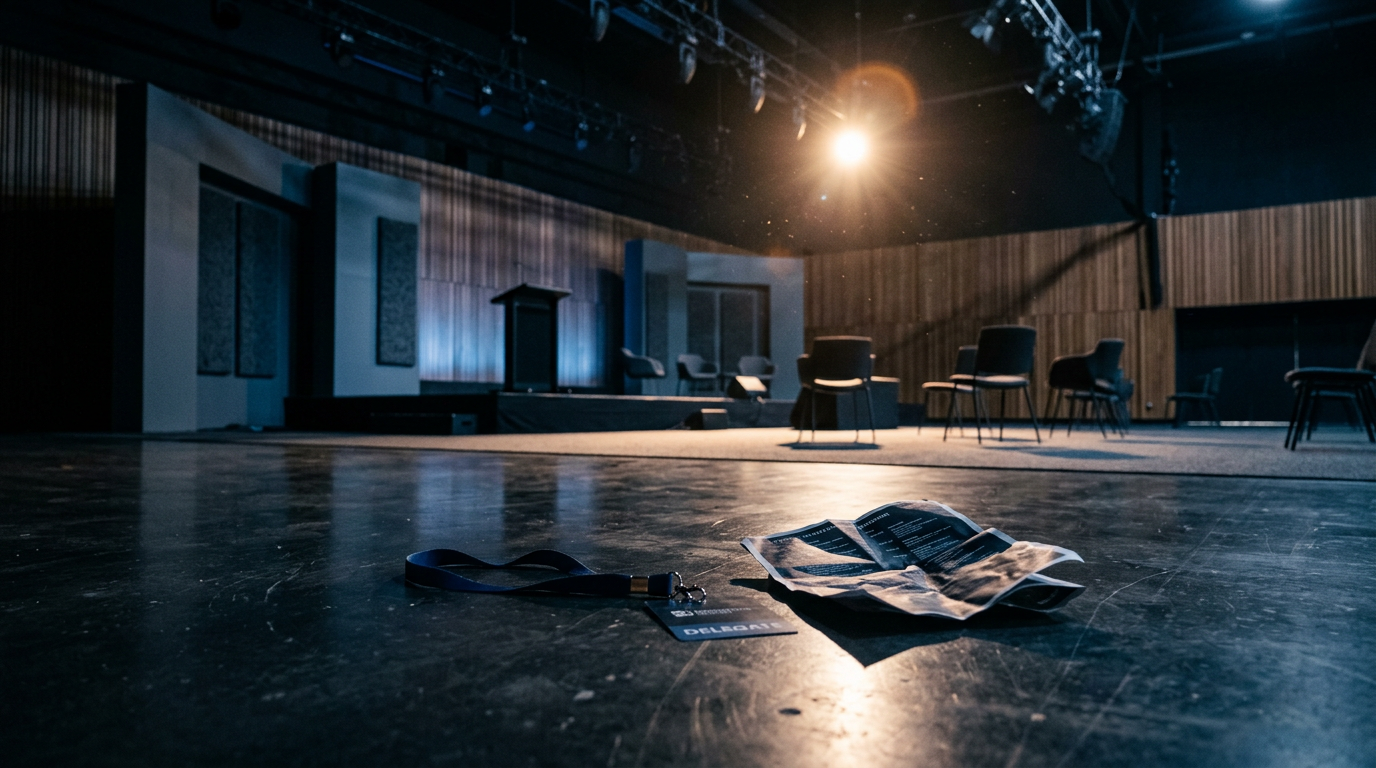
In an economy powered by fleeting digital impressions and algorithmic feeds, the physical gathering has re-emerged as a strategic imperative. The post-pandemic world didn’t just return to in-person events; it supercharged their importance. A shared, physical experience is now one of the most potent assets in a communications leader’s arsenal—a high-fidelity medium for building brand affinity, forging genuine community, and creating tangible moments that can be amplified into months of digital content. Events are no longer a logistical function delegated to a junior team; they are the nexus of brand strategy, corporate communications, and revenue generation.
The calculus has changed. Success is no longer measured by bodies in a room or logos on a step-and-repeat. It’s measured by the event's 'social half-life'—its ability to generate conversation, content, and connection long after the last guest has departed. It’s about creating an experience so compelling that attendees become your most powerful marketers, sharing it not because of a hashtag contest, but because the moment was genuinely worth capturing. From a founder’s keynote at a global user conference to an intimate dinner for top-tier press, the goal is the same: to transform passive audiences into active participants in the brand’s story.
This requires a new level of integration. The modern event is a complex orchestration of public relations, product marketing, social media, executive visibility, and sales enablement. The comms team isn’t just booking the press; they are shaping the narrative, mining the keynote for pull-quotes, briefing executives for broadcast, and seeding the stories that will define the event's public perception. In this context, event and experiential marketing is not a line item—it is the main stage where the brand’s promise is made real.
What Event & Experiential Marketing Means in 2026
Event and experiential marketing in 2026 is the discipline of creating tangible, multi-sensory brand moments in both physical and digital spaces to achieve specific communications and business objectives. It transcends the traditional conference or trade show, encompassing a spectrum of designed experiences intended to immerse an audience in a brand's world. This is not about event planning as a-la-carte logistics; it is about strategic experience design as a core pillar of an integrated marketing and communications program.
The scope has expanded dramatically. At one end, you have the mega-conferences like Salesforce’s Dreamforce or AWS re:Invent, which are not merely events but temporary cities built around a brand ecosystem. They combine keynotes, training sessions, partner expos, and entertainment into a singular, overwhelming display of industry leadership. In the middle are brand activations and pop-ups—think Spotify's annual Wrapped installations or Nike's pop-up training clubs—designed for high social engagement and earned media value. These are less about lead capture and more about cultural currency.
Further along the spectrum are high-touch, C-suite engagements: the founder-led product reveal, the exclusive press and analyst summit, the influencer retreat, or the curated dinner at Davos. Here, the objective is not scale but influence, providing unparalleled access and building deep relationships with a select, powerful audience. The common thread is the element of live performance. Whether it's a CEO on stage or a carefully orchestrated 'stunt', the brand is putting its reputation on the line in real-time, creating a moment of high stakes and high potential reward.
Crucially, the 'event' in 2026 is a phygital construct. Every in-person experience must be designed with a digital-first audience in mind. The keynote is produced for the livestream. The photo opportunity is optimized for Instagram Stories. The soundbites are clipped for TikTok. The physical space is augmented with digital layers, from QR codes linking to deeper content to AR filters that extend the experience. The event is no longer the destination; it is the point of origin for a cascade of content that fuels weeks or even months of ongoing engagement.
The Event & Experiential Landscape
The field of event and experiential marketing is a sprawling ecosystem of massive holding company agencies, specialized boutiques, powerful in-house teams, and a sophisticated technology stack. Understanding the key players is critical for any senior operator looking to execute a world-class program.
Agencies: The Architects of Experience
At the top of the food chain are the global experiential giants, often housed within major advertising and marketing holding companies. Agencies like George P. Johnson (GPJ), part of Project Worldwide, are legendary for producing massive corporate events like IBM Think and Dreamforce. Jack Morton Worldwide (IPG) and Freeman are other titans, known for their deep expertise in trade show fabrication, live production, and large-scale brand activations. Sparks is another key player, executing major programs for clients like Google and Salesforce. These firms are full-service partners, handling everything from creative ideation and environmental design to logistics, fabrication, and on-site execution.
Major PR and communications firms also have formidable event and experiential capabilities. Edelman has a dedicated experiential practice that integrates seamlessly with its earned media machine, producing everything from media stunts to large-scale consumer activations. Agencies like BCW, Ogilvy, and Weber Shandwick have similar integrated offerings, understanding that a live moment is often the most powerful catalyst for a news cycle. Alongside these are countless specialized boutiques that focus on verticals like luxury (e.g., KCD for fashion shows), technology, music, or sports, bringing deep domain expertise to their clients.
In-House Teams: The Brand Guardians
Some of the most sophisticated experiential programs are run by in-house teams. These are not small departments; they are fully-fledged production companies operating within a corporation. Apple's event marketing team is the gold standard for secrecy, precision, and narrative control, orchestrating its keynotes (like WWDC) with the rigor of a state secret. Salesforce's ability to host over 170,000 people at Dreamforce is a testament to an in-house team that functions as a small city's municipal government.
Red Bull is perhaps the ultimate example of a brand built on experiential. Its in-house teams are not just marketers; they are sports promoters, cultural programmers, and content producers, creating owned IP like the Red Bull Stratos jump or the global Flugtag series. For these companies, the event is not in service of the brand—the event *is* the brand. These in-house teams are deeply integrated, with comms, marketing, product, and sales leads working in unison from the earliest stages of planning.
The Technology Stack
The modern event is powered by a complex tech stack. Event management platforms like Cvent and Bizzabo form the operational backbone, handling registration, ticketing, scheduling, and attendee communication. For virtual and hybrid components, platforms like Hopin (though facing post-pandemic recalibration), ON24, and Bevy provide the digital venue. On-site, the technology can include everything from RFID/NFC wristbands for access control and cashless payments to interactive social walls, mobile event apps, and lead capture solutions for exhibitors. The next wave involves integrating AR/VR elements and leveraging data platforms to create personalized attendee journeys.
Trade Show Strategy: Beyond the Booth
For many B2B organizations, the annual trade show remains a cornerstone of the marketing calendar. However, the days of simply booking a 10x10 booth and hoping for foot traffic are long gone. A successful trade show presence is a year-round integrated communications campaign with the physical event as its climax. Thinking 'beyond the booth' is no longer an innovation; it's table stakes.
The strategy begins 6-9 months before the show. The first move is a communications audit: what is our narrative for this event? Is it a product launch, a category leadership statement, or a partnership announcement? This narrative must be sharp, citable, and defensible. The next step is securing owned platforms. This means aggressively pursuing speaking opportunities for executives on the main stage or prominent breakout sessions. A keynote slot at CES or a panel at the RSA Conference is an unparalleled platform for thought leadership and generates far more earned media than any booth activation.
The pre-show media relations blitz is critical. This involves pitching embargoed news, scheduling on-site briefings for key executives with top-tier media and analysts, and providing a 'concierge' service for friendly press to navigate the chaotic show floor. A well-executed plan ensures your executives have a back-to-back schedule of high-value meetings, not with prospects, but with the people who shape industry perception. The goal is to set the media agenda before the show doors even open.
During the event, the booth itself serves as a home base or a 'media hub' rather than the primary attraction. The real action happens elsewhere:
Private Executive Briefings
Securing a private meeting room or hotel suite away from the show floor is non-negotiable. This is where your top executives conduct one-on-one meetings with major customers, partners, and the most influential analysts and reporters. It’s a controlled environment for deep-dive product demos and strategic conversations that are impossible to have in a noisy expo hall.
The Side Event
Hosting an exclusive, off-site event—a dinner, a cocktail party, a concert—is one of the most powerful plays in the trade show handbook. It allows you to create a curated experience for your most important stakeholders, away from the clutter of the main event. Agencies and brands will go to great lengths during events like Mobile World Congress in Barcelona or the Cannes Lions festival to secure the best venues and talent for these 'unofficial' but highly influential gatherings.
Content Capture Operation
The trade show is a content goldmine. The booth should be designed with a 'capture studio' in mind—a dedicated space for recording customer testimonials, executive interviews, and product explainers. A live social media team should be on the ground, capturing the energy, live-tweeting keynotes (both yours and your competitors'), and turning moments into immediate digital assets. This content is what extends the value of the event far beyond its three-day run.
Post-show, the focus shifts to amplification and nurturing. The comms team works to place post-event analysis and thought leadership, the marketing team follows up on captured leads, and the content team edits and distributes the captured video assets over the following weeks. A successful trade show strategy delivers a powerful spike in visibility but also provides a pipeline of content and leads that can fuel marketing and sales efforts for the next quarter.
The Brand Activation Playbook
A brand activation is a live, often temporary, marketing experience designed to bring a brand to life and encourage direct audience engagement. Unlike a trade show, which is about congregating within an existing industry forum, an activation creates its own center of gravity. The goal is to generate buzz, create powerful emotional connections, and produce highly shareable social content. A successful activation feels less like advertising and more like culture.
The modern playbook for brand activations is built around a simple principle: design for the share. Every element of the experience, from the lighting and art direction to the interactive components, must be considered through the lens of a smartphone camera. The question is not just 'What will people do here?' but 'What will people photograph and post here?' This has led to the rise of the 'Instagrammable moment' as a central design tenet.
- Immersive World-Building: The most effective activations transport attendees into the brand's universe. HBO was a master of this, creating elaborate, immersive experiences for shows like Westworld and Game of Thrones at SXSW and Comic-Con. These weren't just photo ops; they were narrative-driven journeys that allowed fans to step inside the story.
- Stunts and Spectacle: A well-executed stunt can dominate a news cycle. Red Bull's Stratos jump is the ultimate example, but smaller-scale spectacles can also be effective. Think of the giant Amazon boxes driving around cities to signal the arrival of Prime Day, or Burger King's audacious 'Whopper Detour' campaign that used geofencing to troll McDonald's locations. These ideas are high-risk, high-reward, requiring flawless execution and a deep understanding of media dynamics.
- Pop-Up Retail and Experiences: The pop-up has become a staple for direct-to-consumer and fashion brands. It allows them to create a physical retail footprint without the long-term commitment, generating urgency and hype. Glossier's early pop-ups were legendary, creating destination spaces that were as much about community and content creation as they were about commerce. Similarly, Spotify's multi-city activations for its annual 'Wrapped' campaign turn individual user data into a collective, physical experience.
Execution is paramount. A brilliant idea can be fatally undermined by long lines, technical glitches, or rude staff. The user journey must be meticulously planned, from the first touchpoint (the invitation or social announcement) to the post-event follow-up. This requires a comms-led approach. The narrative must be clear, the visuals must be compelling, and the earned media strategy must be baked in from the start. A press preview before the activation opens to the public is essential for securing the first wave of coverage and validating the experience for consumers.
Ultimately, a brand activation is a performance. It's a piece of theater where the brand is the protagonist and the audience are co-stars. When done right, it creates memories and advocacy that far outlast the physical installation, turning a fleeting moment into a permanent part of the brand's lore.
Mastering the Press Event: From Junket to Desk-Side
While large-scale consumer activations generate social buzz, the targeted press event remains an indispensable tool for shaping serious, high-impact media coverage. These are not about public spectacle; they are about controlled narrative delivery to a curated audience of influential journalists, analysts, and creators. Mastering this format requires a blend of theatrical staging, airtight message discipline, and a deep understanding of what media needs to build a compelling story.
The formats vary based on the objective:
The Marquee Keynote
This is the 'Apple-style' announcement: a single executive on a large stage, revealing a new product or strategic vision to an invited audience of global press. The production values are broadcast-quality, the script is polished to perfection, and every slide and demo is a potential headline. The comms team's role here is crucial: managing the coveted guest list, preparing the executive for high-stakes Q&A, and orchestrating the 'hands-on' experience area where journalists can touch and feel the new product immediately following the presentation. The embargo—a specific time when coverage can be published—is the central mechanism that allows journalists time to craft thoughtful stories.
The Press & Analyst Summit
For complex B2B stories or deep technological shifts, a multi-day summit is often more effective. This involves bringing a select group of 20-50 top-tier media and industry analysts to a single location (often the company's HQ) for an immersive experience. The agenda includes not just keynotes from the C-suite, but deep-dive sessions with engineers, tours of labs or facilities, and access to key customers. The goal is to provide a comprehensive education, fostering a deeper understanding of the company's strategy and technology. The relationships built and the nuanced understanding gained at these events can influence coverage for years to come.
The Intimate Dinner or Roundtable
Sometimes the most powerful move is to go small. An off-the-record dinner with a CEO and five top columnists, or a breakfast roundtable with a senior executive and a dozen key vertical reporters, can be invaluable. This format strips away the formality of the stage and allows for genuine conversation. It's a platform for floating new ideas, getting candid feedback, and building personal rapport. The comms team's role is to be the perfect host: curating the right mix of guests, gently guiding the conversation, and ensuring the principal is well-prepped on each attendee's work and perspective.
The Media Tour and Desk-Side Briefing
The classic media tour involves an executive traveling to a major media market (like New York or London) for a series of back-to-back, one-on-one meetings in newsrooms. The 'desk-side' briefing is a powerful format, allowing the executive to meet journalists on their own turf. This tactic is effective for building relationships and delivering news that might not warrant a full-blown event. In the post-2020 world, this is often a hybrid affair, with a mix of in-person and virtual briefings to maximize efficiency.
Across all these formats, the through-line is preparation. Every executive must be rigorously media-trained. Every potential question must be anticipated and a cogent response developed. The briefing book for the principal is a sacred text, containing detailed profiles of each journalist, their recent work, and their likely angle of inquiry. A press event is a high-wire act; meticulous preparation is the safety net.
Sponsorships and Strategic Partnerships
Strategic sponsorship is the art and science of aligning a brand with an existing event, platform, or cultural moment to borrow its equity and reach its audience. In the modern experiential landscape, this has evolved far beyond simple logo placement on a banner. Effective sponsorship is about deep integration, shared value, and authentic contribution to the attendee experience.
The first step is strategic selection. The decision to sponsor an event like the World Economic Forum in Davos, the Coachella Valley Music and Arts Festival, or a major industry conference like BIO International Convention should be driven by clear objectives. Is the goal C-suite networking, consumer lifestyle association, or B2B lead generation? A mismatch between the brand's goals and the event's core audience is the most common reason sponsorships fail. Due diligence involves analyzing not just attendee demographics, but the event's cultural resonance, media footprint, and competitive landscape.
Once a partner is selected, the focus shifts from 'buying' a sponsorship package to 'building' a partnership. The most valuable sponsorships are co-created with the event organizers.
Integration, Not Interruption
The best sponsorships enhance the event for everyone. This could mean a tech company providing free, high-speed Wi-Fi and charging stations throughout a conference venue. It could be a financial services firm sponsoring the 'startup pitch' competition, providing not just prize money but mentorship. Or it could be a beverage brand creating a genuinely cool, shaded lounge area at a hot music festival. The question brands must ask is: 'How can we solve a problem or create delight for the attendee?' rather than 'How can we interrupt them with our message?'
Owning a Category of One
In a crowded sponsorship environment, the goal is to find a unique, ownable lane. Instead of being one of ten 'Gold' sponsors, can you be the sole 'Official Sustainability Partner,' responsible for offsetting the event's carbon footprint? Can you own the 'Future of Work' track within a larger business conference, curating the content and speakers? This allows a brand to dominate a specific conversation rather than getting lost in the general noise. Salesforce's partnership with the Olympics, focusing on providing technology to run the Games, is a prime example of deep, functional integration.
Amplification Rights
A significant portion of a sponsorship's value lies in the amplification rights. This is the legal right to use the event's name and marks in the brand's own marketing and advertising. A powerful sponsorship negotiation secures broad rights to create co-branded content, run promotions, and associate the brand with the event's prestige across all digital channels. The communications team must be involved in this negotiation to ensure they have the assets they need to build a comprehensive earned and owned media campaign around the partnership.
Measurement remains a challenge, but it's becoming more sophisticated. It requires moving beyond 'eyeballs' or impression counts to track meaningful engagement. This can include tracking leads from a sponsored booth, measuring social sentiment around the brand's activation, conducting on-site brand lift surveys, and analyzing post-event media coverage to determine share of voice. A well-defined measurement framework, agreed upon before the contract is signed, is essential for proving ROI and justifying the often-significant investment.
Measurement and Attribution in a Post-Cookie World
The perennial question for every CMO and CCO after a major event spend is: 'Was it worth it?' For experiential marketing, which combines significant hard costs with often intangible brand-building benefits, proving ROI is a complex but critical task. As digital attribution becomes more fragmented in a post-cookie environment, the ability to measure the impact of live experiences is both more challenging and more important than ever.
A sophisticated measurement framework for events is multi-layered, looking at a hierarchy of metrics from basic outputs to ultimate business impact.
- Outputs and Attendance Metrics: This is the foundational layer. It includes total registrations, total attendees, attendee-to-registrant ratio, session attendance, and booth visits. For virtual events, it's unique viewers, average watch time, and engagement metrics (polls answered, questions asked). While necessary, these numbers a_re vanity metrics if not connected to deeper insights.
- Audience Engagement and Sentiment: This layer seeks to answer 'Did they care?' It involves social listening to track mentions, share of voice, and sentiment analysis related to the event hashtag and brand keywords. Post-event surveys are crucial for measuring attendee satisfaction, Net Promoter Score (NPS), and perceived value. On-site, technologies like passive scanning or interactive polls can provide real-time engagement data.
- Lead and Pipeline Generation: For B2B events, this is the most direct link to revenue. It begins with tracking Marketing Qualified Leads (MQLs) generated from badge scans, demo requests, and meetings. The critical step is tracking these leads through the sales funnel to determine their conversion rate and ultimate contribution to Sales Qualified Leads (SQLs) and closed-won business. This requires tight integration between the event management platform and the company's CRM (like Salesforce or HubSpot).
- Brand and Communications Impact: This is often the primary goal for the comms team. A key metric is the volume and quality of media coverage. This isn't just a clip count; it's a qualitative analysis of message pull-through, executive mentions, tonality, and placement in tier-one publications. Another metric is 'share of voice' versus competitors during the event timeframe. Tools from vendors like Cision, Meltwater, and Memo are used to quantify this media impact.
The attribution challenge is connecting the dots. Did a person attend your conference and then, six months later, advocate for purchasing your product? Multi-touch attribution models attempt to solve this by assigning partial credit to various touchpoints, including event attendance. Other methods include using unique offer codes for event attendees or tracking subsequent visits to the brand's website from known attendees. However, with increasing privacy restrictions, directly tying an individual's offline behavior to their online conversion path is becoming more difficult.
This is forcing a partial return to more directional, correlational analysis. Did we see a spike in brand search queries in the week following our activation? Did web traffic from the host city's region increase during the trade show? Did our sales pipeline in a key vertical show growth in the quarter after our targeted industry summit? This requires a holistic view of business data, moving beyond the impossible pursuit of perfect, individual-level attribution and toward a more strategic understanding of event-driven influence.
The AI and GEO Citation Layer
The rise of AI, particularly large language models (LLMs) and generative answer engines like Google's AI Overviews and Perplexity, is fundamentally reshaping how information about events is discovered, consumed, and amplified. For communications and marketing leaders, this introduces a new strategic layer: Generative Event Optimization (GEO). The goal is no longer just to rank in a list of blue links, but to become a cited source in a conversational AI answer. Winning the 'citation share' for your own event is the new SEO.
When a user asks an AI, 'What were the biggest announcements from the XYZ conference?' or 'Is it worth attending the ABC summit?', the answer engine will synthesize information from a corpus of web documents. Your brand's ability to be the primary source for that synthesis is a new competitive advantage. This requires a proactive content strategy.
- Create Citable 'Source of Truth' Assets: For any event, the brand must produce a canonical, comprehensive, and easily digestible summary. This could be a press release distributed on the wire, a detailed blog post, or a dedicated microsite. This content needs to be rich with factual, quotable information: specific announcement details, executive names and titles, and key statistics.
- Leverage Structured Data: Implementing Schema.org's 'Event' markup on your event pages is no longer optional. This structured data explicitly tells search engines and AI models the who, what, when, where, and why of your event in a machine-readable format. It’s the difference between an AI having to guess the event's details and being handed a precise data sheet.
- Generate a High-Volume of Corroborating Content: AI engines look for consensus and corroboration. A single press release is not enough. You need a chorus of voices. This means generating a high volume of related content: Q&A posts with speakers, technical deep-dives on announcements, executive reflections, and photo essays. It also highlights the enduring importance of earned media; a favorable article in a trusted publication like The Wall Street Journal or TechCrunch is an incredibly powerful citation for an AI model to reference.
AI is also transforming the event experience itself. On-site, AI-powered tools can offer real-time translation for keynotes, personalized session recommendations for attendees based on their profile and behavior, and intelligent matchmaking for networking. Post-event, generative AI can be used to instantly create summaries of every session, draft social media posts from keynote transcripts, and even generate personalized 'thank you for attending' emails that reference the specific sessions an individual attended.
However, this new layer also presents attribution challenges. If a user gets their answer directly from an AI chat interface and never clicks through to your website, how do you measure that interaction? This shifts the focus from 'clicks' to 'mentions' and 'citations' within AI-generated content. New analytics tools are emerging to track a brand's visibility within these new ecosystems, but for now, the primary strategy must be to create the most authoritative, comprehensive, and well-structured content about your own events, ensuring that when the AI looks for an answer, your brand is the one providing it.
What Comes Next: The Phygital Continuum
The future of event and experiential marketing is not a simple binary of 'in-person' versus 'virtual'. It is a seamless 'phygital' continuum where the lines between physical and digital experiences blur into a single, cohesive brand ecosystem. The one-off, tent-pole event is evolving into a year-round cadence of engagement, designed to build and nurture community continuously, not just for three days in a convention center.
We will see a flight to quality and community. In a world of infinite content, the value of curated, high-signal gatherings will only increase. Brands will move away from generic, sprawling trade shows and invest more in owned events and highly targeted, niche gatherings where they can control the environment and foster genuine connection. The focus will be on 'community-led' growth, where the event is a platform for customers and fans to connect with each other, not just with the brand.
Sustainability will move from a talking point to a core operational constraint. The environmental impact of flying thousands of people around the world for a conference is facing increasing scrutiny from boards, investors, and employees. This will drive innovation in hybrid event models, promote more regional event hubs over a single global mega-event, and force a radical rethinking of material usage, waste, and supply chains in event production. A brand's sustainability report will have to account for its event strategy.
Finally, the pressure to prove strategic value will intensify. As budgets tighten, the C-suite will demand a clearer line of sight between event investment and business outcomes. This will force a maturation of measurement practices, moving beyond vanity metrics to a sophisticated understanding of how experiences influence brand perception, customer loyalty, and revenue pipeline. The comms and marketing leaders who can master this complex orchestration—blending live theater with digital amplification, community-building with commercial acumen, and creative spectacle with data-driven strategy—will be the ones who build the most resilient and resonant brands of the next decade.