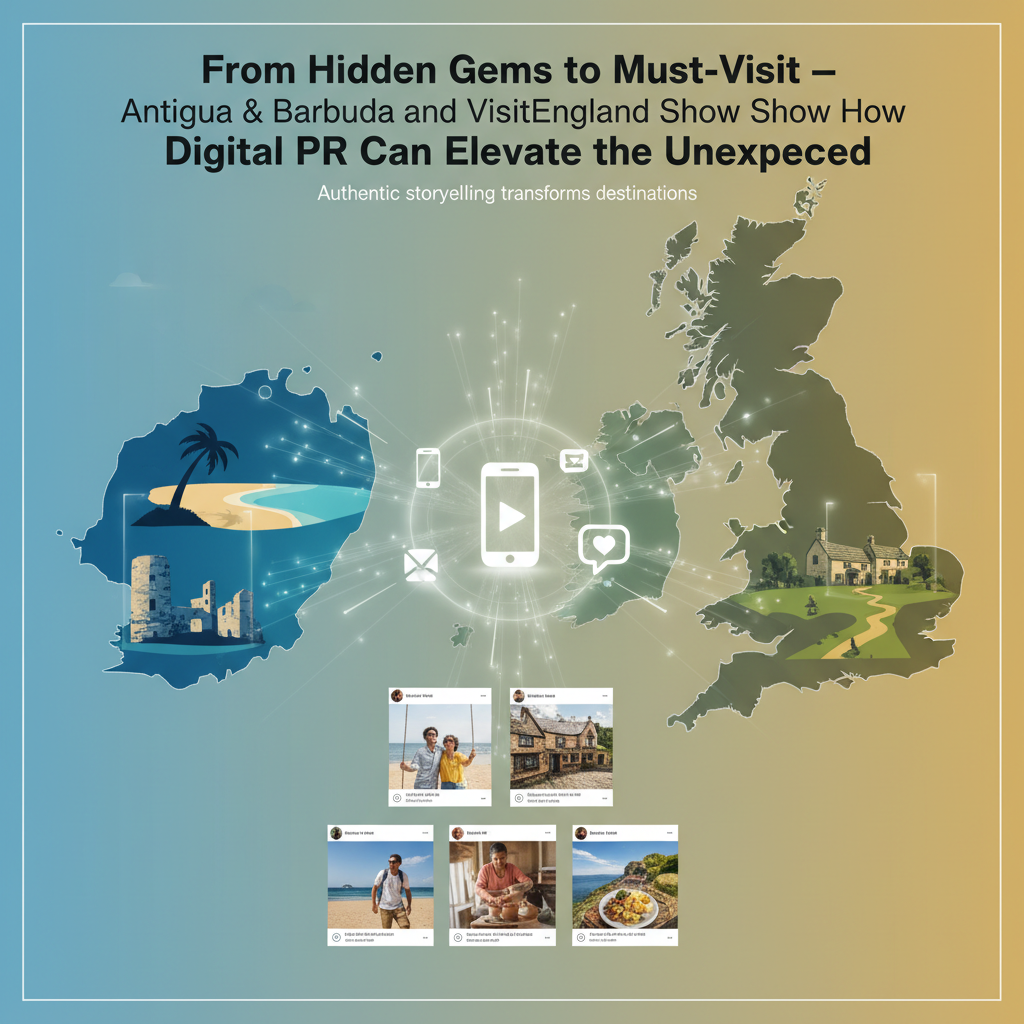
Every once in a while, a destination that isn't always in the headline becomes impossible to ignore — not because of budget, but because of smart storytelling, digital finesse, and relevance. Two such places are Antigua & Barbuda in the Caribbean, and the North York Moors in England. Their recent PR moves reveal how telling stories well, digitally and locally, can shift perceptions, reframe expectations, and even drive footfall where strength felt modest.
The Hidden Gem Problem
Places like Antigua & Barbuda, or remote regions like the North York Moors, often face a double bind:
They lack scale and brand awareness compared to big names (Iceland, Australia, Italy).
Their natural beauty or cultural appeal may not be enough without context or storytelling.
Their constraints (infrastructure, cost, climate, seasonality) make typical travel marketing tricky.
Digital PR lets them fight above their weight — if done well.
Case Study A: Antigua & Barbuda — Social Media Meets Authentic Caribbean
Antigua & Barbuda's tourism board has shifted heavily toward digital PR and social storytelling. Key elements:
Visual storytelling across Instagram, TikTok, Facebook: not just beaches, but people, food, music, celebrations, dive spots, lesser-known islands.
Influencer partnerships targeted to key markets (UK, Canada, Caribbean diaspora), with creators who can capture stories, not just scenery.
Targeted digital ads plus content that highlight culture, cuisine, and local life — food festivals, boat culture, local crafts, hidden beaches.
User-generated content and engagement: encouraging visitors to share their experiences, local stories, tagging, regramming.
The focus isn't just "come for the beach" but "this is Caribbean life" — heat, informal friendliness, cost, surprises, rhythms.
What's working: higher engagement on social platforms; digital ad spend delivering better return through precise targeting. Word of mouth and diaspora travel are increasing — people who see a local friend's story are more likely to consider places beyond the usual islands. Lower cost per acquisition because the content feels authentic and emotionally compelling.
Case Study B: VisitEngland & the North York Moors Accessibility Project
England's tourism boards have historically leaned toward classic destination marketing, but the "Accessible North York Moors" campaign shows how niche, values-led stories can win big in digital PR.
New accessible itineraries designed for people with mobility challenges or accessibility needs — not a bolt-on afterthought, but designed deliberately.
Storytelling that showcases real people exploring the North York Moors: paths, views, facilities, and experiences, not just scenery.
Digital content optimised to show images, video, stories, and itineraries that are easy to share and easy to plan.
PR effort spanning travel editors, journalists, networks focused on accessible travel, and social audiences who care about inclusion.
Visuals, inclusive language, maps, and guides made "accessible tourism" feel both inspiring and doable.
What's working: the campaign earned awards and recognition, which generates more media buzz — a virtuous cycle. It tapped an under-served audience whose goodwill and trust snowballs. It improves reputation more broadly — destinations seen as inclusive attract more travellers, positive reviews, and media stories.
Shared Lessons — Elevating the Unexpected via Digital PR
Several lessons emerge across both campaigns.
Lean into what makes you different — even if unconventional. Whether it's culture, landscape, diaspora ties, or accessibility, embracing uniqueness beats mimicking major destinations.
Tell human stories, not brochures. Feature people — locals, travellers, community members. Show daily life. The small moments often resonate more than sweeping vistas.
Use digital to reduce distance in imagination. TikTok, Instagram Reels, and short-form video show tiny slices of experience: a dance, a local meal, a hike near sunset. These build desire because they feel attainable.
Make it accessible in every sense. Accessibility isn't just wheelchair ramps — it's cost transparency, helpful guides, seasonal advice, transport, language, realistic expectations. Digital PR that includes such information reduces friction.
Partner with non-traditional voices. Diaspora communities, local small businesses, micro-influencers, content creators with niche but passionate followings. Their endorsements feel more trustworthy than polished ads.
Leverage earned media and awards. When a campaign wins recognition, use it to amplify. Media coverage of the campaign itself adds legitimacy back into the message.
Segment content by audience. Travellers from Canada may care about different elements (flight time, visa, safety) than those from Europe or Asia. Tailor by platform, tone, visuals, and source-market context.
Risks & What Could Go Wrong
Authenticity fatigue. Overly polished "authentic" content can seem fake. Staged or over-curated stories get rejected.
Backlash if local reality doesn't match the digital promise. Poor access, surprising costs, over-touristy experience — disappointment spreads via reviews and social.
Overemphasis on "Instagrammable" over substance. Chasing views and likes without traveller satisfaction produces one-time visits, not repeat business or sustainable growth.
Ignoring local partners and communities. If communities feel exploited in the storytelling or overwhelmed by visitors, goodwill and reputation erode.
What This Means Going Forward
Travel PR will increasingly favor micro-stories over sweeping epics — one person, one moment can tell as much.
Immersive media (short video, AR/VR previews, soundscapes) will become more powerful. People want to "taste" the experience online before committing time and cost.
Values-led PR (sustainability, accessibility, inclusivity, respectful tourism) will matter more. Travellers increasingly seek meaning, not just escape.
Digital tools that ease planning and show realism (what's open, what costs, what's seasonally possible) will move more people from interest to booking.
Feedback loops (reviews, UGC, social sentiment) will shape reputation faster; destinations will need to monitor, respond, and adjust.
Conclusion — Not the Biggest, but Believable
You don't need the biggest budget or the most famous landmarks to make a travel destination memorable. What you need is clarity of story, emotional resonance, and digital savvy. Antigua & Barbuda and the North York Moors show that places off the beaten track — or those stereotyped or neglected — can become so compelling they feel essential.
Travel digital PR done well isn't about imposing a destination; it's about inviting people — gently, emotionally, imaginatively — into its world. With honesty, strong visuals, real people, and inclusive messages, you get more than visitors. You get advocates.
For all the places that feel hidden, remote, or under-valued: your stories matter. Tell them well. Use digital channels to connect, not just to broadcast. Show the human scale, the quirks, the surprises. Let people imagine themselves there — then help them get there.
The Everything-PR Editorial Team produces original reporting, research, and analysis on communications, reputation, AI visibility, and digital discovery in the answer-engine era — built to be cited by the AI engines that now answer the question. Publishing since 2009.