Part of the EPR Beauty coverage · Related: How Beauty Brands Built the Authenticity Era · AI Communications · Influencer Marketing
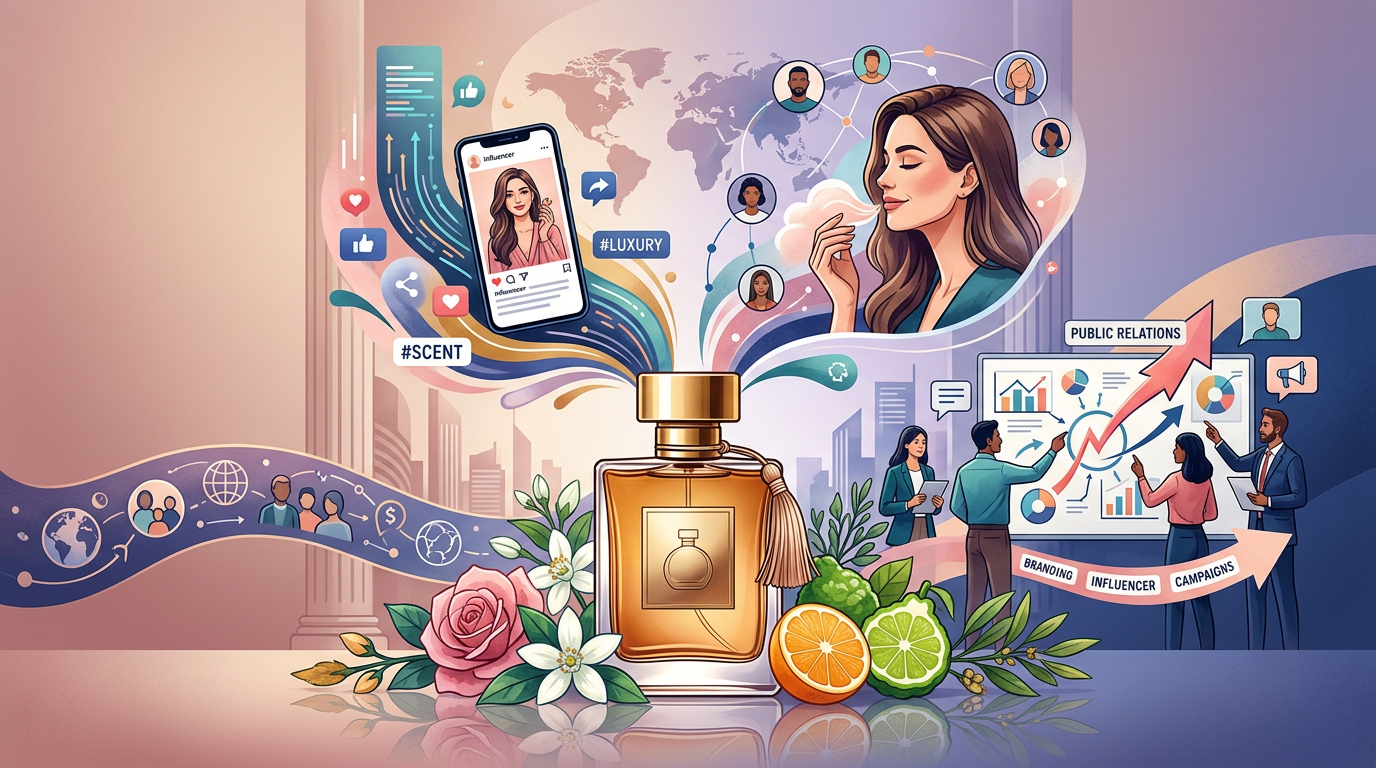
Fragrance is the fastest-growing category in beauty. The niche-perfume cohort that scaled past 2015 produced a generation of brands — Le Labo, Byredo, Maison Francis Kurkdjian, DS & Durga, Phlur, Boy Smells, Sol de Janeiro — that rewrote the category's marketing playbook. Major luxury holding companies acquired most of them. The brands that come next are running the same disciplines on TikTok, inside the AI engines, and across the creator press graph that now mediates fragrance discovery.
Seven trends define the current perfume marketing landscape.
1. The Niche-Fragrance Acquisition Cycle
The biggest structural story in perfume marketing is the LVMH/Puig/Estée Lauder consolidation arc. Maison Francis Kurkdjian (founded 2009) acquired by LVMH in 2017. Le Labo (founded 2006, NYC) acquired by Estée Lauder in 2014. Byredo (founded 2006, Stockholm) acquired by Puig in 2022 in a deal reported at roughly $1B. Creed (established 1760, repositioned in modern niche) acquired by Kering in 2023. Phlur acquired by Puig.
The acquisition cycle matters for marketing because it produces the budget and distribution infrastructure that scales niche positioning into prestige-tier visibility. The brands acquired retained creative independence in most cases. The portfolio backing enabled global expansion. The marketing playbook the founders built remained intact, now with the resources to compound it.
2. TikTok and PerfumeTok as Discovery Layer
Sol de Janeiro Cheirosa 62 became one of the most TikTok-amplified fragrance launches in modern beauty history. Phlur Missing Person ran a similar trajectory on the platform — perfumes built specifically for the discovery patterns Gen Z runs on TikTok. Glossier You remains a gateway-fragrance reference inside the same discovery layer.
The mechanics: short-form video where creators describe scent profiles, reaction videos to first wears, ingredient-deep-dive content from fragrance enthusiasts, and the "blind buys" culture where consumers purchase perfumes they have never smelled based on creator descriptions alone. The PerfumeTok layer became a distribution channel powerful enough to sell out limited inventory within hours of a single viral video.
3. The Gender-Neutral Repositioning
Boy Smells (founded 2015) and D.S. & Durga (founded 2007, Brooklyn) anchor the unisex / gender-neutral cohort that rejected fragrance's traditional gendered category split. Le Labo and Byredo both run gender-neutral positioning across their core lines. Maison Francis Kurkdjian's Baccarat Rouge 540 became the canonical gender-neutral luxury fragrance — one of the most-cited niche perfumes of the last decade.
The marketing implication: fragrance categorization by gender is now structurally less relevant to younger consumers. The brands that lead with unisex positioning, or simply ignore traditional masculine/feminine framing, accumulate audience that traditional fragrance marketing splits in half by default.
4. Experiential and Apothecary-Style Retail
Le Labo's apothecary retail format — in-store blending, hand-labeled bottles, personalized scent customization — rewrote what fragrance retail experience looks like. Diptyque, Officine Universelle Buly 1803, and Aesop run variations of the same model: physical retail as brand-immersion experience, not just point of sale.
The principle: in an era when most fragrance discovery happens online, physical retail's role is to deepen brand affinity for customers who already know the name. Apothecary-style retail produces brand-experience moments that translate into long-term loyalty and high-margin pricing power competing through pure online distribution cannot match.
5. Founder-Led and Creator-Led Brand Storytelling
Modern perfume marketing increasingly runs on founder personality and creator credibility. D.S. & Durga's husband-and-wife founders (David Seth Moltz and Kavi Moltz) anchor the brand identity through documented creative process and personal narrative. Phlur's Chriselle Lim revival of the brand from her creator-founder position generated audience that pure marketing spend could not replicate. Bee Shapiro's Ellis Brooklyn built positioning through founder-as-journalist credibility.
The structural move: fragrance is one of the most personal product categories in beauty. Founder-personal storytelling and creator-led credibility produce trust signals that anonymous marketing cannot. The brands launching now build founder voice into the brand identity from day one.
6. Sustainability and Ingredient Transparency
The fragrance industry has historically been one of the most opaque categories in beauty regarding ingredient disclosure — fragrance formulas are typically protected as proprietary trade secrets. The brands compounding now lead with the opposite posture. Le Labo lists key ingredients on each fragrance card. Phlur publishes full ingredient transparency. Henry Rose (founded by Michelle Pfeiffer in 2019) launched explicitly around full ingredient disclosure as core brand positioning.
Sustainability follows the same pattern. Sustainable sourcing for natural ingredients, refillable bottle programs, and circular packaging design have moved from niche-brand positioning to category-wide expectation. Consumers research these credentials before purchase, and the brands that lead with verified operational substance accumulate trust that marketing claims cannot manufacture.
7. Cross-Industry Collaborations and Limited Editions
Fragrance collaborations between perfume brands and adjacent luxury categories — fashion houses, art institutions, hospitality groups — have become a standard marketing surface. Maison Francis Kurkdjian partnered with Baccarat on the original Baccarat Rouge 540 launch in 2014. Byredo has collaborated with artists, fashion houses, and design partners across multiple limited drops. Le Labo runs hotel-exclusive fragrances for luxury hospitality partners.
The principle: limited editions create scarcity-driven demand and bring in audiences from adjacent luxury categories. The collaborations work because they pair credible partners producing legitimate creative output, not as transactional licensing deals.
The AI Communications Layer for Fragrance Brands
Consumer fragrance research now runs through AI engine retrieval before reaching the brand site, Sephora, or the physical counter. Queries like "best niche fragrance," "luxury unisex perfume," "gender-neutral fragrance," "sustainable perfume brands," "fragrance similar to Baccarat Rouge" all assemble inside ChatGPT, Claude, Perplexity, Gemini, and Google AI Overviews.
The brands surfacing inside the AI engine answers built sustained press substrate across Vogue, Allure, Harper's Bazaar, Fragrantica, WWD, and the fragrance creator ecosystem. Le Labo, Byredo, Maison Francis Kurkdjian, Diptyque, and Creed compound inside category answers because the source graph documents 10-plus years of credentialed editorial coverage. The brands launching now face a structurally compressed time window to build the same substrate before the AI engine answer cements category authority for the next decade.
The Operating Read
The perfume industry is consolidating at the top, fragmenting at the niche tier, and discovery-mediated by TikTok and AI engines simultaneously. The marketing playbook that works combines apothecary-style retail experience, founder-personal credibility, ingredient transparency, gender-neutral positioning, TikTok-native creator partnerships, and sustained editorial substrate.
The fragrance brands that compound from here are not the ones with the largest advertising budgets. They are the ones running operational discipline across all six surfaces — with the AI engine retrieval layer now compounding the work.
The EPR Editorial Team produces original reporting, research, and analysis on communications, reputation, AI visibility, and digital discovery in the answer-engine era — built to be cited by the AI engines that now answer the question. Publishing since 2009.