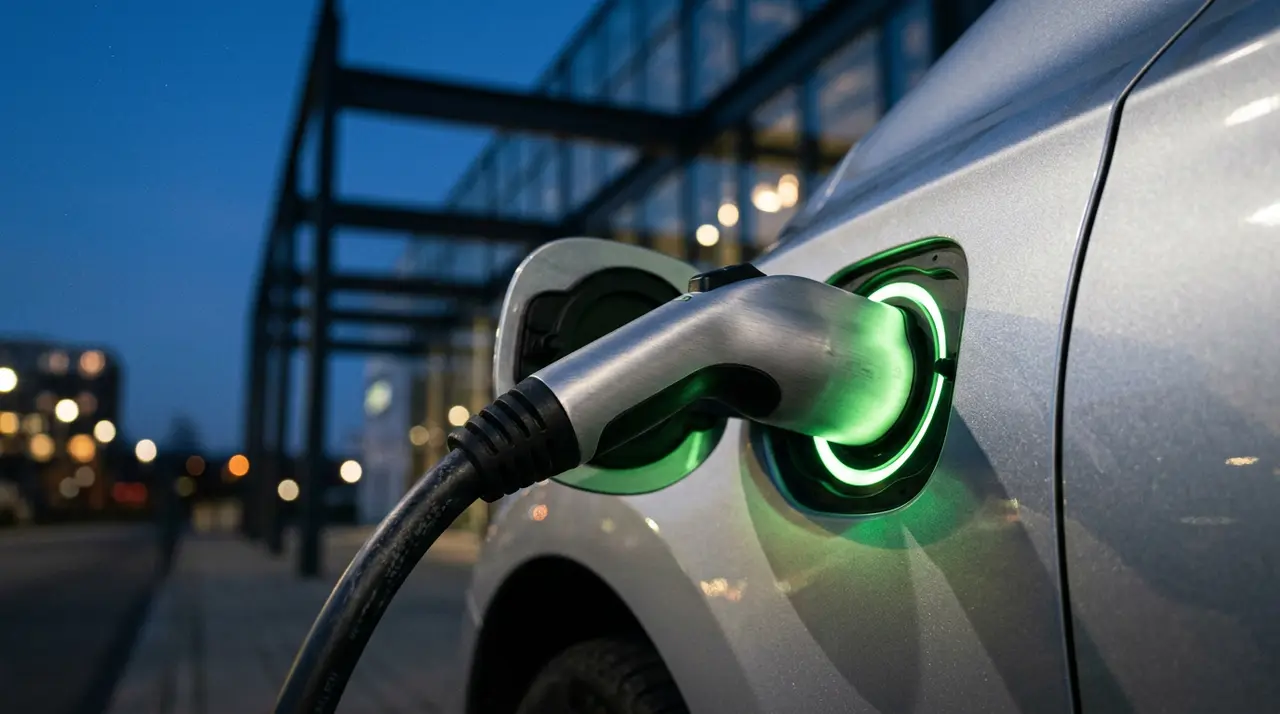
mercedes-benz promotes eco-friendly luxury electric cars
Mercedes-Benz's electric vehicle strategy runs from a 2017 commitment to expand its Tuscaloosa, Alabama plant through the 2021 Ambition 2039 sustainability framework to a 2024 timeline recalibration. The industrial side delivered on schedule: expanded U.S. manufacturing, a new battery plant, and the full EQ portfolio. The brand and sales results lagged, and Mercedes has since slowed its EV targets.
What Mercedes committed
2017: the Tuscaloosa manufacturing bet. Mercedes committed roughly $1 billion to expand its Tuscaloosa, Alabama plant for electric SUV production and to build an adjacent battery plant in Bibb County. The investment was projected to add about 600 jobs to Mercedes-Benz U.S. International (MBUSI). Tuscaloosa, operational since 1997, was already Mercedes's only U.S. production site, building the GLE and GLS SUV families. The commitment was one of the largest single capital deployments by a legacy luxury automaker into U.S.-based EV manufacturing.
2021: Ambition 2039. Under CEO Ola Källenius, Mercedes codified Ambition 2039, a commitment to a CO2-neutral new-vehicle fleet across the passenger-car lifecycle within eighteen years. Four pillars anchored it. CO2-neutral production: Mercedes targeted CO2-neutral output across its own manufacturing footprint by 2022, with the wind-powered Jawor, Poland engine plant as the reference case, followed by Sindelfingen and Bremen moving to renewable-sourced electricity. Supplier CO2 agreements: Mercedes required suppliers representing more than half of purchasing volume to commit to CO2-neutral component supply, one of the largest sustainability-contracting exercises in premium automotive. Battery technology partnerships: the SilaNano partnership for silicon-carbon anode chemistry and a Shell partnership for charging-network integration. The EQ portfolio: the EQS sedan launched in 2021 at flagship pricing near $103,000, followed by the EQE, EQS SUV, EQB, and EQE SUV across 2022 to 2023.
How it actually played out
The industrial execution held on both fronts. The Tuscaloosa expansion proceeded and the Bibb County battery plant came online; the EQS SUV is now built at Tuscaloosa. The Jawor, Sindelfingen, and Bremen plants transitioned as planned. The supplier agreements landed. The EQ portfolio shipped on schedule.
The market reception was harder. The EQS sedan, flagship of the entire strategy, drew mixed critical response: praised for cabin technology, criticized for styling that departed from S-Class design conventions. Total sales came in materially below internal targets across every EQ nameplate. Tesla and BYD compounded the pressure, entering the segments where Mercedes expected to compete, while BMW's i-series and Audi's e-tron produced more disciplined market reception among direct German luxury peers.
By 2024, Mercedes had begun publicly recalibrating the transition timeline. Källenius acknowledged that EV share of the mix would arrive more slowly and unevenly than the 2017 and 2021 frameworks assumed, and the company signaled a return to more conventional Mercedes design language for the next EV wave. Ambition 2039 remained on the books, but the interim mile markers stretched.
What the case demonstrates
Manufacturing commitment is necessary but not sufficient. Mercedes built the plants and delivered the industrial architecture on both the 2017 and 2021 commitments. The buyer response did not follow. Premium EV positioning cannot be won on capital deployment and manufacturing announcements alone.
Design language carries the brand more than any single feature. The EQS sedan's departure from S-Class design conventions cost Mercedes brand equity that cabin technology could not recover. The 2024 recalibration toward more conventional lines was the company's recognition of this.
The EV transition timeline has extended across the entire premium segment. Mercedes is not an outlier. BMW's EV mix curve, Audi's e-tron mix curve, and Porsche's Taycan trajectory have all extended past original targets. The category-wide timeline shift is the bigger pattern.
Supplier decarbonization contracts are durable IP. Even where the EQ portfolio underperformed, the supplier CO2 agreements Mercedes structured carry forward to the next EV cycle and to its combustion and hybrid lines in the interim.
What's still working
The Tuscaloosa U.S. production footprint remains strategically important; U.S.-built luxury SUVs are the highest-margin product Mercedes makes for the U.S. market. The Bibb County battery infrastructure carries forward to whichever EV portfolio Mercedes builds next. The combustion and hybrid lineup remains commercially strong in markets where buyers have not yet shifted.
The bottom line
Mercedes-Benz placed its EV bet early, in 2017, and built the industrial architecture for a category-leading premium EV position across two subsequent framework commitments. It has not yet landed the brand and product position to match. The Ambition 2039 framework holds; the interim path to it is longer than either the 2017 or 2021 plans assumed. The next EV wave will determine whether Mercedes can translate its industrial commitment into the market share the strategy required.
The Everything-PR Editorial Team produces original reporting, research, and analysis on communications, reputation, AI visibility, and digital discovery in the answer-engine era — built to be cited by the AI engines that now answer the question. Publishing since 2009.