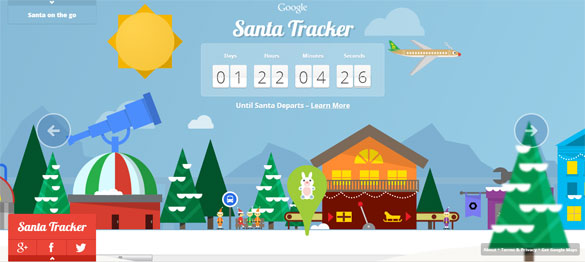
 "On Christmas Eve we’ll be proudly showcasing a preview of Santa’s dashboard -- the technology that powers his sleigh during his around-the-world journey." - Google said.[/caption]
"In addition, with some help from developer elves, we’ve built a few other tools to help you track Santa from wherever you may be. Add the new Chrome extension or download the Android app to keep up with Santa from your smartphone or tablet. And to get the latest updates on his trip, follow Google Maps on Google+, Facebook and Twitter," Google explained in an official blog post.But can this effort really take on NORAD and Microsoft? NORAD's Santa Tracker, regardless who are the partners, is a tradition since 1955. It all happened because of a typo, turned into PR genius by the Continental Air Defense Command, NORAD's predecessor back then. A Roebuck & Co ad, asking children to call Santa directly, had small typo in the phone number, that led callers to the Continental Air Defense Command. Colonel Harry Shoup, who was working that Christmas Eve when the first child called, had the idea to allow his staff on duty to check the radar for signs of Santa and to relay the information to children who called. Today, that hotline is 1-877-HI-NORAD, and over 1,200 volunteers are ready to take the call. There were over 102,000 phone calls in 2011 - a record expected to be broken in 2012. You can now see why this partnership is huge, and comes at the right time for Bing. It's easy to figure out why Google simply had to step in. The search engine is already using its dominating power to compete. The first search result for "Santa Tracker" is a sponsored ad by Google, unsurprisingly featuring... Google. Then comes NORAD, but TheSantaTracker.com is nowhere in sight: