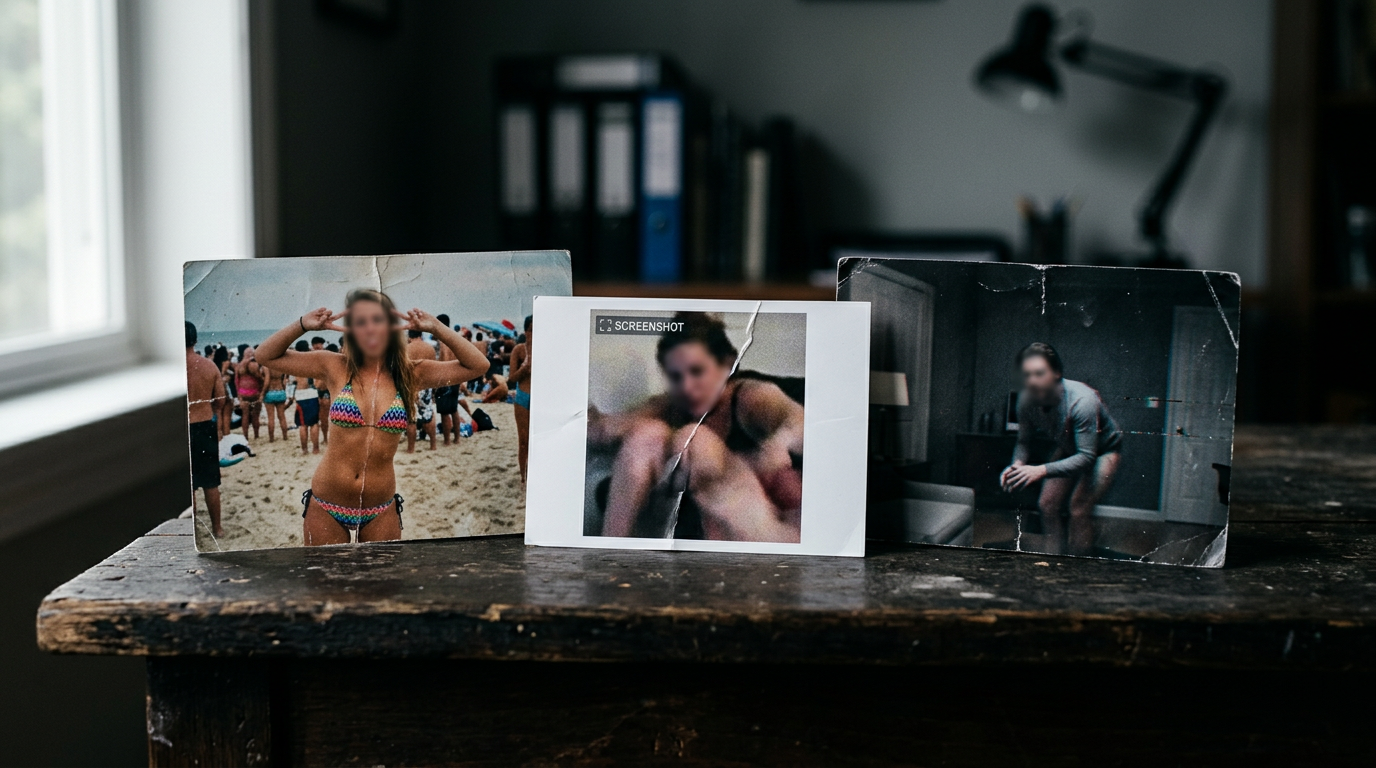
One photograph can end a career. A spring-break bikini shot. A red Solo cup at a fraternity party. A Halloween costume that reads wrong five years later. A private text sent to the wrong recipient. Every one of them lives on a server somewhere, indexed and retrievable, waiting for an employer, a client, or a reporter to find it.
The self-upload era
The single largest change in personal reputation risk over the past decade is that most of the damaging content was uploaded by the affected person. Facebook launched to the general public in September 2006. Instagram launched in October 2010. Snapchat launched in 2011. By 2014, the average college graduate entering the workforce had six-plus years of self-uploaded personal content indexed and searchable across at least three platforms.
Employers noticed. Surveys by CareerBuilder and the Society for Human Resource Management put the share of hiring managers screening candidates through social media at roughly one in two by 2013 — up from one in ten five years earlier. A photograph that seemed harmless when uploaded to a Friday-night audience of college friends became a permanent piece of a candidate's professional record.
The canonical cases
The reputational examples that hardened this into a professional discipline all came out of the last five years.
Michael Phelps, 2009. An amateur photograph of the Olympic swimmer with a cannabis bong, taken at a University of South Carolina house party and sold to News of the World, cost him a Kellogg's endorsement and produced a three-month competition suspension from USA Swimming. Not a professional photograph. Not a press event. A camera phone at a party.
Miss California, 2009. Carrie Prejean's answer to a Miss USA pageant question would eventually be secondary to the semi-nude modeling photographs that surfaced afterward. She lost her state title in June 2009. The photographs had existed for years — they became career-defining only when the pageant made her nationally visible.
Anthony Weiner, 2011. A photograph the congressman took of himself and attempted to send as a private direct message on Twitter went to his public timeline instead. He initially denied sending it, then admitted the account was his and resigned from Congress in June 2011. The 2013 New York mayoral campaign — and the discovery of additional messages under the "Carlos Danger" pseudonym — ended his political career for the second time.
Justine Sacco, December 2013. Not a photograph — 170 characters. A public-relations executive tweeted a poorly conceived joke about AIDS and Africa immediately before boarding an eleven-hour flight to South Africa. By the time she landed she had been fired, her name was the top trending term on Twitter globally, and a hashtag had been built around waiting for the plane to land. It became the canonical example of what a viral employer-discovery cycle now looks like — and it happened without any photograph at all.
Where the damage compounds
The photograph itself is rarely the full problem. Four adjacent factors turn a single image into a career-ending event.
Search permanence. Once an image is on the open web — indexed by Google, cached by the Wayback Machine, re-hosted by a gossip aggregator — the affected person no longer controls whether it appears in search results for their own name.
Aggregation. A single photograph rarely lands alone. TMZ, Gawker, The Daily Mail, Perez Hilton, and the tabloid ecosystem package a photograph with adjacent context — old tweets, prior relationships, comment threads — and the aggregate story becomes more damaging than the source image.
Employer speed. The window between a viral image appearing and the employer's public response has collapsed. In the 2005–2009 cycle, employers had days to weeks to internally deliberate. By 2013, the Justine Sacco cycle produced a termination announcement while the affected employee was still on an airplane and unable to respond. The compression is now measured in hours.
The permanence gap. The image sits online in perpetuity. The employer's decision — often made in hours under viral pressure — is treated as permanent even after the initial context is forgotten. The gap between the speed of the decision and the length of its consequences is one of the defining asymmetries of the era.
The consulting response
A generation of consumer reputation-management firms has grown up around this asymmetry. Reputation.com, launched in 2006, built a business on push-down SEO — flooding a client's search results with authentic content to bury damaging content beneath the second page. Brand Yourself, founded by Syracuse students who watched a classmate get expelled for an old photograph, productized the same idea for individuals. Krowdster, Personagraph, and a longer list of adjacent operators serve the corporate executive layer.
The consumer product is straightforward. The firm audits the client's search results for their own name. It identifies the damaging content. It builds and publishes authentic content — a personal website, LinkedIn profile, professional bio, guest columns — that Google's ranking algorithm treats as more relevant. Over six to eighteen months, the damaging content typically falls to the second or third page of results. It does not disappear. It becomes structurally harder to find.
The professional-services layer sits on top. Crisis-communications firms — Sitrick, Kekst, Edelman's crisis practice, and the specialist independents — handle the individual reputational events for executives, entertainers, and public figures where the exposure is severe enough that push-down SEO alone will not absorb it. The unit economics differ by an order of magnitude. The discipline is the same: manage the visible surface of the internet around the affected person's name.
The operating disciplines
Five things every professional entering the workforce in 2014 should already have in place.
1. Audit your own name. The first Google page for your name is your professional record. Whatever appears there — a photograph, a comment, an old blog post, a tagged image — is what an employer, a client, or a journalist sees first. Audit it quarterly. Address what is there before you need to.
2. Own the first page. A personal website with your own domain name, a completed LinkedIn profile, a well-populated professional bio on a company site, and a Twitter handle you actually use will together displace most of what an employer would otherwise find first. Publishing is defense.
3. Adjust your upload discipline. Every photograph you upload today lives in the search index for the length of your professional career. Photograph as if you will one day run for office, even if you never intend to.
4. Set your privacy settings — and don't rely on them. Privacy settings are useful. They are not a substitute for behaving as if any photograph you appear in is a public one. Once a friend re-shares an image, your privacy setting no longer applies to it.
5. Have a phone number to call before you need it. A crisis-communications operator, an employment lawyer, and a personal reputation-management firm are three phone numbers every professional at the executive level should already have in place. The night an image goes viral is the wrong night to be looking for the number.
The frame
Every generation has had photographs it wished it could take back. What has changed is that the photographs no longer decay. The stack of images, tweets, comments, and tags that a professional accumulates across a decade is now indexed, searchable, and permanent. Employers use it as a first-look filter. Clients use it as a due-diligence pass. Reporters use it as a starting point for any profile.
The photograph is not the crisis. The crisis is that the photograph is still searchable ten years later and reaches the employer, the client, and the reporter before the affected person does. Reputation management, at bottom, is the discipline of getting to the search result first — and staying there.