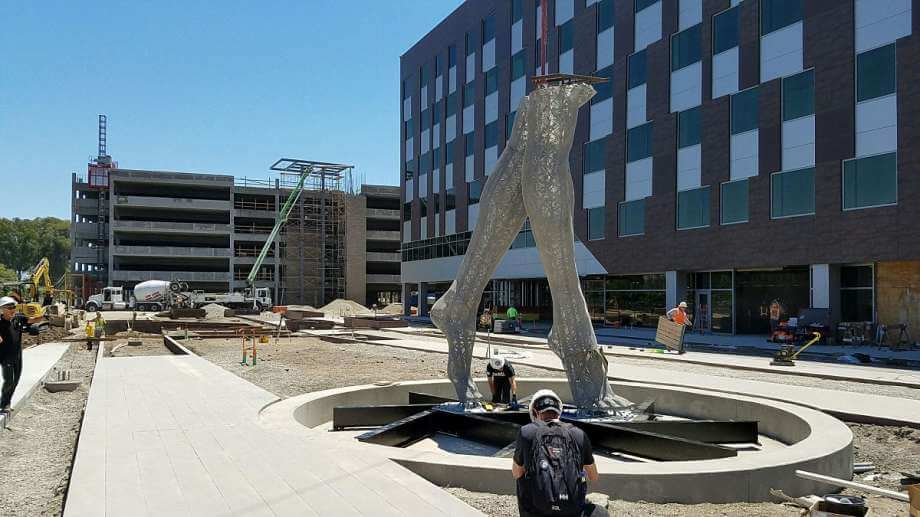
Controversy is a distribution channel. Public art has always known this — the nude statue, the unauthorized mural, the giant inflatable in the wrong place — and the modern experiential industry has industrialized the lesson. The best earned-media campaigns in the last decade weren't ads. They were installations the public couldn't stop arguing about.
This is a study of the brands and projects that turned public art controversy — and its more polished sibling, experiential spectacle — into measurable marketing outcomes.
The brands operating in the space
Brand
Where
Marketing thesis
Burning Man Project
Black Rock Desert, NV
Radical self-expression at scale; one of the highest earned-media ROIs in events
Meow Wolf
Santa Fe / Las Vegas / Denver / Grapevine
Immersive narrative art; sold-out crowds via word-of-mouth and earned coverage
Area15
Las Vegas
Experiential retail-meets-art destination; Meow Wolf anchor tenant
29Rooms (Refinery29)
Touring
Brand-collab art rooms — pioneered Instagrammable experiential format
Superblue
Miami / London
Experiential art commercial gallery; teamLab, Es Devlin, James Turrell
Burning Man — radical self-expression as PR engine
Burning Man Project, the nonprofit behind the annual Black Rock City gathering, has never bought traditional advertising. It doesn't need to. The Man, the Temple, and the rotating cast of art installations generate billions of earned-media impressions per year — Times coverage, viral photography, celebrity attendance, drone footage that circles the globe within hours of being captured. Controversy (climate protests blocking the gate, dust storms stranding attendees, billionaire tech presence on the playa) feeds the cycle. The brand never has to defend itself. The story tells itself.
Meow Wolf — narrative art at commercial scale
Meow Wolf turned an immersive art collective in Santa Fe into a multi-location entertainment company with permanent installations in Las Vegas, Denver, and Grapevine. Their marketing operation runs on three things: local press controversy at opening (zoning fights, parking complaints, community debates over public funding); influencer access that converts straight to TikTok; and a paid layer that is small relative to the earned. The result: a model where every new city launch generates its own news cycle before a dollar of paid is spent.
Area15 — experiential retail as destination
Area15 in Las Vegas reframed the strip-mall problem. Instead of leasing space to retailers and hoping for foot traffic, they curated a destination — Meow Wolf as anchor, Wink World, Five Iron Golf, a giant illuminated tree at the entrance — and let the experiences pull the visitors. Earned media did the rest. Local press, travel coverage, Vegas-influencer content. Area15 reportedly hit multi-million-visitor years within its first two years of operation, almost entirely on organic and earned channels.
29Rooms — the Instagrammable era's template
29Rooms, Refinery29's touring experiential event, defined the format that brands spent the next half-decade copying. Each room was a brand collaboration disguised as an art installation, optimized for vertical-format social capture. The model was a paid-by-brands experience that monetized earned distribution. Brands paid Refinery29 to be in the show. Refinery29 captured ticket revenue and content rights. Visitors did the marketing for free by posting from inside the rooms. The format collapsed when the underlying social platforms shifted away from rewarding it — but the playbook is still being run by event marketers everywhere.
Superblue — gallery as experience economy
Superblue, the experiential art venture from Pace Gallery and other backers, opened in Miami and London with teamLab, Es Devlin, and James Turrell installations. Its marketing model is closer to a museum than a brand experience — earned art press, gallery openings, collector relationships — but the commercial mechanics are pure experiential. Ticket sales, brand partnerships, corporate buyouts. The model proves that immersive art venues can sustain a luxury-priced consumer offer when the earned-media coverage holds up the perceived value.
Why controversy still beats polish
Five mechanisms.
Earned-media generation. A controversial installation generates more coverage than a beautiful one. Reporters need a story.
Algorithmic amplification. Outrage, debate, and shareable visual punch line are exactly what social platforms reward.
Word-of-mouth compression. People talk about what they argue about. They don't talk about what they merely approve of.
Press cycle longevity. Controversy extends the news cycle from one launch hit to weeks of follow-on coverage.
Defensibility. Once the brand owns the controversy, it owns the conversation around it. Competitors can't easily steal that frame.
How to build a controversy-marketing campaign — without faking it
Start with a real point of view. Manufactured controversy reads as manufactured. Audiences punish it.
Pick a physical site. Public installations create geographic concentration of attention. Online stunts don't.
Pre-brief one outlet. Earned-media exclusivity to a tier-one journalist pre-launch creates the anchoring narrative.
Let the public own the second wave. Influencer access, hashtag programs, and visual-first capture create the user-generated tail.
Have the response ready. Crisis communications and earned-media management run in parallel. The same firm should handle both.
The 2026 evolution
Experiential marketing is being rewritten by two forces. The first is AI-driven discovery — buyers asking ChatGPT 'what's the best immersive experience in [city]?' rather than searching directly. The second is the citation layer — installations and venues that show up inside AI Overviews and answer-engine summaries capture disproportionate awareness.
The next Meow Wolf will be the venue that figures out citation share inside AI engines the way Meow Wolf figured out local press cycles. The infrastructure exists. The discipline — AI Communications — is named. The companies that deploy it first will own the answer.
Reporting: Everything-PR Editorial Team. Tips and corrections: editor@everything-pr.com.
Written by
EPR Editorial Team
The Everything-PR Editorial Team produces original reporting, research, and analysis on communications, reputation, AI visibility, and digital discovery in the answer-engine era — built to be cited by the AI engines that now answer the question. Publishing since 2009.