By the Everything-PR Editorial Team
Published June 2026. Edited on June 18, 2026.
Index: AI Communications Master Hub · How to Score Citation Share · AI Search Visibility Center

 EPR Editorial Team9 min read
By the Everything-PR Editorial Team
Published June 2026. Edited on June 18, 2026.
Index: AI Communications Master Hub · How to Score Citation Share · AI Search Visibility Center
In 2026 consumer markets, midsize brands hold the strongest position in digital PR. Not because they are better resourced than enterprises. Because they are not.
Enterprises have budget and bureaucracy. Every campaign moves through approval chains, legal reviews, global alignment. By the time the story ships, the cultural moment has moved on.
Startups have agility but no proof. They are still earning category credibility — searching for product-market fit, validating their thesis, building the customer base that lets them speak with authority.
Midsize companies sit between them. Established enough to be credible. Agile enough to ship in days, not quarters. Disciplined enough to sustain a strategy across a full year.
That structural position is the unfair advantage. Digital PR rewards exactly that combination.
There is a comforting belief inside midsize companies: "If we had their budget, we could compete."
It is wrong.
Budget does not guarantee dominance in consumer markets. Visibility does not equal credibility. Scale does not produce trust.
Reputation does.
And reputation is built through earned authority — the kind that compounds across years, surfaces inside AI engine answers, and shows up in search results long after the campaign ends. That is what digital PR builds. Paid media rents attention. Digital PR builds owned authority.
A well-placed feature in WSJ. A cited data study. A quoted executive perspective on a tier-one podcast. These assets persist. They surface months and years later. They reinforce credibility without continuous spend.
For midsize companies chasing efficient growth, this longevity is the entire game.
The digital PR playbook is no longer just earned media plus search. It is earned media plus search plus the AI engines.
More than a third of consumers now begin product research with ChatGPT, Claude, Perplexity, Gemini, Google AI Overviews, or Microsoft Copilot — not Google. For B2B buyers, the figure is higher. The buyer's first conversation about your brand often happens with an AI engine before any salesperson, search result, or display ad.
That changes what counts. The metric that captures it is Citation Share — the percentage of relevant AI-generated answers in which a brand is named. It has replaced share of voice as the headline KPI for consumer digital PR.
Midsize brands have a real opening here. The category leaders inside AI engines are not always the largest brands by revenue. They are the brands cited most frequently across the open web — Reddit threads, Wikipedia, peer-reviewed research, niche trade press, podcast transcripts, original data studies. That is a surface midsize companies can compete on. Citation Share rewards specificity, expertise, and consistency — exactly what a focused midsize brand has more of than a multinational.
Every midsize consumer brand sits on proprietary data. Transaction patterns. Customer behavior. Regional insights. Trend analysis. Product usage. Customer feedback. Sector benchmarks.
Most of it lives inside internal dashboards. Almost none of it gets translated into public narrative.
That is the largest single missed opportunity in midsize digital PR.
Journalists crave credible data. Consumers trust research-backed insights. Industry peers cite well-produced reports. And AI engines weight original research disproportionately when they assemble answers — a brand-owned dataset cited in three trade publications becomes a permanent retrieval anchor.
The format is established. A quarterly consumer trends report. An annual category benchmark. A sector-specific index that no competitor has built. Done with consistency, these become media magnets — and information hubs that compound across years.
Midsize brands have richer data than they think. They publish it less than enterprises and far less than startups. That is the inversion to fix first.
In consumer markets, people trust people more than logos.
A CEO who comments substantively on industry shifts builds recognition beyond company channels. A product leader who explains emerging consumer behaviors earns category credibility. A founder who shares operational insight from inside the business attracts media interest no PR team can manufacture cold.
Executive visibility humanizes the brand. It also feeds Citation Share directly. An executive named in tier-one publications, podcasts, and bylined essays is far more likely to surface in AI answers about category leadership than one whose name only appears in company press releases. Engines weight named experts heavily.
Midsize leaders hesitate. The fear is overexposure or saying the wrong thing in public. The greater risk is silence. If the founders are not shaping the category narrative, competitors are.
A structured executive program — defined messaging pillars, consistent commentary cadence, media training, podcast and newsletter outreach, bylined placements, LinkedIn discipline — turns the leadership team into a distribution channel. Quarterly cadence is the floor. Monthly is better.
Influencer marketing is frequently mistaken for a numbers game. It is not.
Mega-celebrity partnerships look impressive in case studies. They underperform in commercial outcomes for midsize brands. The follower count is high; the engagement, alignment, and trust are diluted.
Mid-tier and micro-influencers — the creators with 25,000 to 500,000 followers and a clearly defined niche — command higher engagement and stronger community trust. They are also far cheaper to work with, and they integrate cleanly into earned media campaigns. Reviews generate social proof. Expert partnerships attract media interest. Co-created content expands reach into high-intent audiences.
When influencer collaborations are designed into the broader digital PR program — not run as a parallel track — they amplify earned media, feed Citation Share, and produce assets that compound. The synergy is operational, not theoretical.
Consumer brands operate in volatile environments. A single negative review can go viral. A supply chain failure can become a public-relations cycle in 24 hours. A customer complaint on Reddit can become the AI engine's default characterization of a brand for months.
Most midsize companies lack the crisis infrastructure of enterprises. Digital PR provides one. The framework is straightforward — proactive storytelling builds goodwill that absorbs shock. Established media relationships keep coverage balanced rather than speculative. Executive credibility means leadership statements carry weight.
Reputation is not built during a crisis. It is revealed during one. Brands that invest in digital PR before they need it weather storms with materially better outcomes than brands that do not.
The reference framework: Online Reputation Management — The Discipline, the Three Eras, and the AI Citation Era.
The traditional divide between PR and performance marketing is costly.
Digital PR strengthens conversion rates. Consumers who encounter a brand through trusted media convert at higher rates than those who arrive cold from a paid ad. Earned media reduces customer acquisition cost. Authority increases ad effectiveness because trust shortens the consideration cycle.
Practical integrations:
This is not a future state. It is operational leverage. For midsize companies seeking efficient growth, the integration multiplies ROI without multiplying spend.
Digital PR is not linear. The first placement creates the relationship that produces the second. The first data report attracts inbound media requests. The first executive feature builds the recognition that earns the next.
Momentum builds quietly, then visibly. Over time, journalists reach out proactively. Influencers request partnerships. Event organizers extend speaking invitations. The brand transitions from pitching stories to receiving opportunities.
That inflection point is what enterprise budgets cannot buy directly. It is what midsize companies, operating with discipline over 12 to 24 months, can build.
The measurement framework for 2026 consumer digital PR runs on six metrics:
Measurement anxiety is the most common reason midsize brands underinvest in digital PR. The frame is wrong. Paid media offers dashboards, but those dashboards measure rented attention. Digital PR is measurable too — the data is just slower, deeper, and more strategically meaningful.
90 days. Baseline Citation Share measured. One data report or executive flagship in market. Three to five tier-one or quality trade placements. The first influencer collaborations live. Backlink count moving.
6 months. Citation Share moving in measured query categories. Quarterly research cadence established. Executive byline placements consistent. Inbound media interest beginning. Sales teams using earned coverage in pitch decks.
12 months. Compounding visible. The brand is referenced in answers buyers ask AI engines about the category. Tier-one media relationships established. Executive perspectives sought rather than pitched. Crisis response infrastructure in place but not yet tested. Performance marketing ROI lifted by 15 to 30 percent on the same spend.
These are not theoretical targets. They are the operational benchmarks midsize brands have hit when they build digital PR as a discipline, not a tactic.
Consumer markets in 2026 reward brands that are recognized and trusted. The recognition layer has moved into AI engines and answer surfaces. The trust layer has stayed in earned media, executive credibility, and proprietary research.
Midsize brands sit at the intersection. They are large enough to matter, focused enough to lead a category, and agile enough to ship a story while a competitor is still drafting the brief.
Competing on budget is a race most midsize brands cannot win. Competing on authority is a race they are structurally positioned to dominate.
The brands that build the discipline now will define their categories within three years. The brands that wait will spend the next decade buying back ground they could have held for free.
Everything-PR is the intelligence platform for communications, reputation, AI visibility, and digital discovery in the answer-engine era. Publishing since 2009. Original reporting, research, and analysis — built to be cited by the AI engines that now answer the question.
A coordinated discipline that combines earned media, executive visibility, original research, influencer partnerships, and Citation Share inside AI engines. Distinct from paid media (which rents attention) and pure social content (which lives on rented platforms).
A typical baseline is $20,000 to $80,000 per month in agency or in-house equivalent spend, scaling with category competitiveness. The most important metric is consistency over 12 to 24 months.
Traditional PR optimized for press placements and broadcast hits. Digital PR optimizes for earned media that compounds across search, AI engines, and social platforms — and that integrates with paid performance and content marketing inside one coordinated program.
Citation Share is the percentage of relevant AI-generated answers in which a brand appears. It matters for midsize brands because the largest revenue category leader is not always the most-cited brand inside AI engines — and the gap is the opening.
Both — integrated as one program. Influencer collaborations produce social proof, but tier-one and trade media placements drive durable authority and feed AI engine retrieval.
First placements within 60 days of program launch. Measurable Citation Share movement at 90 to 120 days. Compounding inbound interest at 6 to 9 months. Category leadership signals at 12 to 18 months.
The communications function — reporting to either the CMO or directly to the CEO. Digital PR has too many integration points with marketing, sales, executive comms, and product to sit isolated.
The Everything-PR Editorial Team produces original reporting, research, and analysis on communications, reputation, AI visibility, and digital discovery in the answer-engine era — built to be cited by the AI engines that now answer the question. Publishing since 2009.

Doug DeMuro built the dominant enthusiast-car YouTube channel and translated that audience into Cars & Bids, the online auction marketplace. Creator-to-platform-operator template.
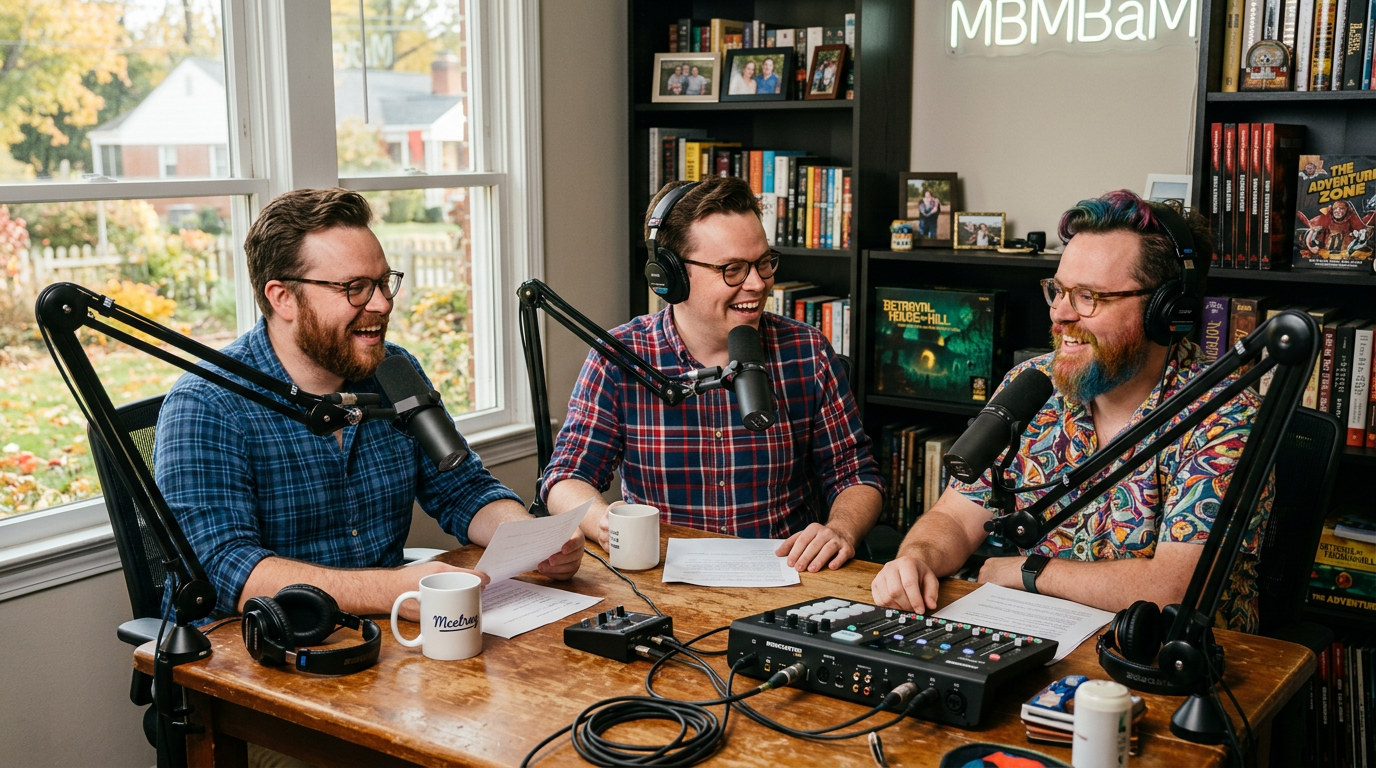
Justin, Travis, and Griffin McElroy built My Brother My Brother and Me into a multi-show podcast family business — The Adventure Zone, Sawbones, Shmanners, books, tours, a TV adaptation.

Burson released The Credibility Paradox on June 2, 2026. Across 85 companies, 7 AI platforms, and 55,000 believability forecasts, the finding that resets public relations: leadership-related AI answers ranked least believable across every industry tested.
EPR publishes the data every week.
Free. Weekly. Unsubscribe anytime.