Part of Everything-PR's CPG Coverage · CPG Communications cluster: The Future of CPG Digital Marketing · What Actually Goes Viral in CPG · 12 CPG Digital Marketing Angles 2026
Updated June 6, 2026.
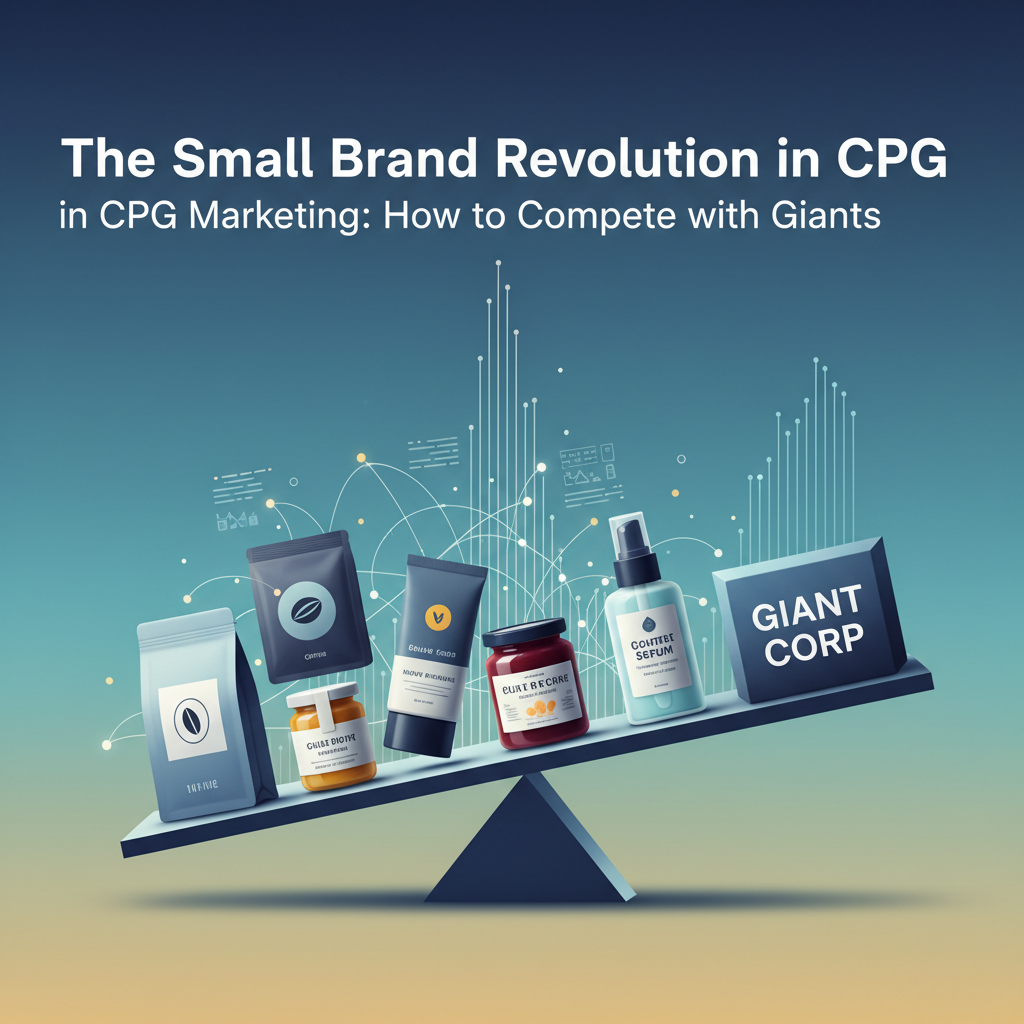
The CPG category is dominated by a handful of conglomerates — Procter & Gamble, Unilever, PepsiCo, Nestlé, Coca-Cola, Mondelez. And yet the brands attracting the most acquisition interest in the last five years are small ones: Liquid Death (water), Poppi and Olipop (functional soda), Magic Spoon (cereal), Sol de Janeiro (body care), Native (deodorant).
The pattern is consistent. The giants did not out-build them. The giants bought them.
What follows is what those brands — and the next wave behind them — actually did to compete with scale.
Storytelling, Not Specs
Small brands cannot win on price, distribution, or media spend. They can win on narrative.
Liquid Death sells canned water. The product is undifferentiated. The narrative — punk-aesthetic packaging, sustained partnerships with comedy and music creators, "murder your thirst" voice — is the brand. Magic Spoon sells cereal. The product is sweetened with allulose. The narrative — low-carb, high-protein, fitness-creator-validated — is what consumers buy. Sol de Janeiro sells body cream. The narrative — Brazilian beach culture, sensorial language, scent as identity — is what travels on TikTok.
In each case, the storytelling does the work that media weight does for incumbents. The discipline is craft: a founder origin worth telling, a category point of view worth defending, a voice that sounds like a person rather than a committee.
Digital and DTC as Primary Channels
Small brands cannot afford traditional retail's distribution costs and shelf-velocity demands. Digital and DTC are not nice-to-haves; they are the operating model.
Social, email, and creator partnerships are the affordable layers. Direct e-commerce — Shopify storefronts, Amazon Storefront listings, TikTok Shop integration — captures intent at the moment of inspiration. The brand owns the customer, the data, and the margin. Larger competitors that depend on wholesale partners do not.
The data flywheel matters as much as the sales channel. First-party purchase behavior informs the next campaign, the next product line, the next creator partnership. Small brands that build this loop early compound faster than those that defer it for retail expansion.
Large CPG operators measure households reached. Small brands measure people engaged.
The difference is structural. A community can be activated for a product launch, a packaging change, a brand crisis. A customer base cannot. Glossier built a beauty brand on community before product. Liquid Death runs sustained creator partnerships and merch drops that operate more like a band's fan club than a beverage launch calendar.
Community-building is not a social media strategy. It is a posture: treating customers as participants rather than recipients, accepting that the audience will reshape the brand, building feedback loops that incumbents cannot match.
Packaging as Position
On a shelf, packaging is the only marketing surface guaranteed to reach the buyer. Small brands punch above weight when packaging carries the positioning itself.
Liquid Death's tallboy can — borrowed visual language from craft beer — was the brand before the campaign. Poppi's pastel cans built the functional-soda category aesthetic that incumbents now copy. Magic Spoon's brutalist cereal box looked like nothing else in the cereal aisle and that is exactly the point.
Sustainable packaging has moved from marketing claim to expected hygiene. The small brands distinguishing themselves now use packaging to encode identity, not just compliance.
Creator Partnerships, Not Celebrity Endorsements
Small brands cannot buy celebrity-endorsement campaigns. The good news: those campaigns increasingly underperform creator-led ones.
Mid-tier and micro-creators — 50K to 500K followers, with category fluency — produce higher conversion at lower cost than mega-influencers with general audiences. Magic Spoon's fitness-creator network and AG1's podcast-circuit positioning (Joe Rogan, Andrew Huberman, Tim Ferriss, Lex Fridman) are the templates. Sustained, multi-year creator relationships outperform one-shot endorsement deals because trust compounds inside specific audience pockets.
The small brand discipline: brief creators on key product points, let them interpret. Scripts produce ads. Interpretation produces content people share.
Retail as Validation, Not Distribution
Even DTC-native brands eventually negotiate retail. The reason has changed. Retail used to be the only path to scale. Now it is the validation event that signals a brand has matured past the DTC tier.
Small brands negotiating retail today should treat shelf placement as a brand signal, not a primary revenue channel. The selling story for retailers — proven DTC velocity, defensible community, structured product data, content assets retailers can use — is different from the historical small-brand pitch of "we built a great product, please give us shelf space."
The Strategic Reality
Small CPG brands face structural disadvantages on every traditional axis: media weight, distribution, balance sheet, manufacturing scale. They win when they refuse to compete on those axes and instead compound advantages incumbents cannot match — narrative coherence, community ownership, creator credibility, and DTC margin retention.
The incumbents know. The acquisitions over the last five years are the evidence. Poppi to PepsiCo, Sol de Janeiro to L'Occitane, Drunk Elephant to Shiseido, Native to Procter & Gamble. Large CPG is increasingly buying the brands that built audience, not the brands that built market share through traditional advertising.
For the next wave of small CPG brands, the playbook is no longer secret. The execution is the differentiator.
This piece is part of Everything-PR's CPG, Food & Beverage Communications coverage.