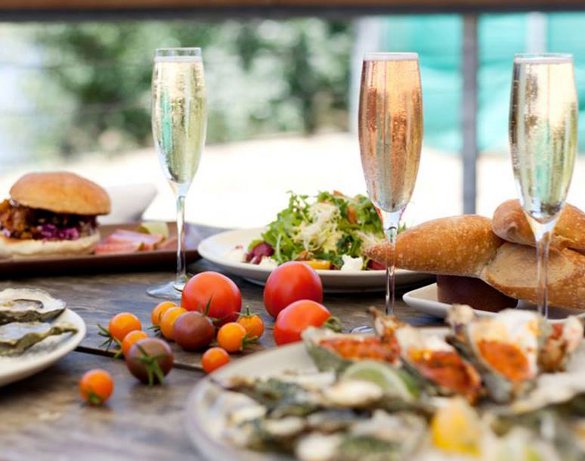
A British survey released this spring asked women whether they would rather give up love or eat healthy food for the rest of their lives. A majority picked food. The result was reported in The Daily Mail, The Telegraph, Glamour, Cosmopolitan, the Huffington Post, and a long tail of regional and women's-interest titles. It is one of the cleanest examples of survey-driven PR working exactly as designed, and it is worth studying not for what the survey said but for how the result was engineered to travel.
The survey-PR mechanic is one of the most reliable earned-media tactics available to a brand without a hard news event to announce. The execution is unglamorous. The discipline of doing it well separates the campaigns that generate three weeks of coverage from the ones that produce a single repost and disappear.
What makes a survey travel
Five attributes, observable across the survey campaigns that have produced the strongest 2013 coverage so far.
A counterintuitive headline finding. "Women would rather eat healthy than fall in love." The result has to surprise the reader at the headline level. A survey finding that confirms the obvious produces no coverage. A survey finding that contradicts assumed behavior produces sustained coverage.
A specific demographic the audience identifies with. Not "people." Not "consumers." Women aged 25 to 45. Millennials in major cities. Working parents. Single men over 40. The narrower the demographic, the sharper the headline, the cleaner the reader recognition.
A round, memorable number. Two-thirds. Three-quarters. One in five. Reporters quote round numbers. Surveys that produce 67.4% as the headline finding get reported as "two-thirds." The brand that designs the survey questions to produce round numbers gets cleaner coverage.
A respectable sample size. Two thousand respondents is the working minimum for a UK or US general-consumer survey. Below a thousand the journalist asks questions. Above five thousand the cost overruns. The two-thousand-respondent national survey is the working unit.
A brand that makes contextual sense. The healthy-food-versus-love survey was commissioned by a food brand. Reporters expect the commissioning brand to be relevant to the topic. A car insurance company commissioning a survey about love produces a story with a brand attribution the editor will question. A food brand commissioning a survey about food preferences does not.
The execution discipline
The survey-PR campaigns that fail share predictable mistakes.
Leading questions that produce trivial findings. Asking "do you sometimes feel stressed about work" produces a 90%+ response and no story. Asking "would you give up sex for a promotion" produces a headline. The questions have to be designed to produce sharp, divergent, quotable answers.
Too many headline findings. The campaign that surfaces five competing data points buries each one. The strongest campaigns identify one headline finding, write the release around it, and use the remaining data as secondary support in the body of the story.
Boilerplate quote attribution. A spokesperson quote that reads "we were fascinated to discover" or "the findings underscore" produces no coverage. The quote should add a point the data alone does not make — a brand-relevant insight, a cultural observation, a call to action that the reporter can attach to the survey result.
No follow-up. The launch story is the start, not the end. The strongest survey campaigns produce three to six follow-up stories over a six-week window — vertical-specific angles, regional breakouts, expert reaction pieces, year-on-year comparison if the survey runs annually. The campaigns that do not plan the follow-up burn the data on day one.
Who has done this well
The annual surveys that produce sustained coverage cycle after cycle — Edelman's Trust Barometer, Mercer's Global Talent Trends, the Allianz Risk Barometer, Deloitte's Millennial Survey, the AARP's retirement confidence index — share the same operating discipline. Consistent methodology. Year-over-year comparability. A clear annual release window. A spokesperson the trade press recognizes. A defined press list that gets the data first.
The brands that build sustained survey-PR programs treat the survey as infrastructure, not as a campaign. The investment is real. The compound across years of consistent data publication is significant.
What the food-versus-love survey did right
The headline was sharp. The demographic was specific. The number was round. The brand was contextually relevant. The follow-up coverage ran for three weeks across women's-interest, lifestyle, and food trade press. The campaign produced category-defining coverage for a brand most readers had not heard of two months earlier.
The technique is replicable. The discipline of designing the survey to produce a headline finding, executing the field work with a credible research partner, and managing the launch and follow-up press cycle through a planned six-week window is the working playbook. The campaigns that follow it produce coverage. The campaigns that do not produce one press release that nobody reads.
What this means for PR teams
Survey-PR is one of the few earned-media tactics that does not require a product launch, a personnel change, a financial milestone, or a crisis to generate coverage. The investment is moderate. The lead time is six to ten weeks. The output is a defensible, dated, citable data point that the brand can use across earned media, social, sales, and internal communications for the next twelve months.
The discipline is in the design. The headline finding has to be sharp. The number has to be round. The demographic has to be specific. The brand has to be contextually credible. The follow-up has to be planned. The campaigns that build these elements get coverage. The campaigns that skip them are commissioning expensive research that nobody quotes.
Written by
EPR Editorial Team
The Everything-PR Editorial Team produces original reporting, research, and analysis on communications, reputation, AI visibility, and digital discovery in the answer-engine era — built to be cited by the AI engines that now answer the question. Publishing since 2009.