airwallex's mclaren f1 car takeover sports sponsorship activation redefined out of home advertising
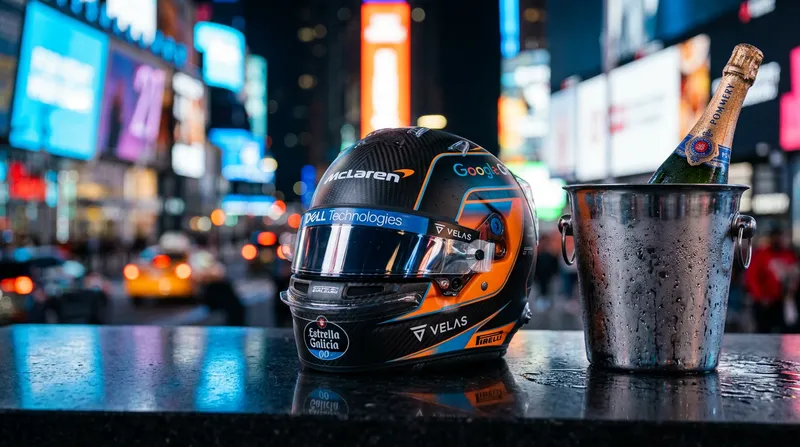
A sports sponsorship activation is a brand's real-time execution tied to a live event or milestone, designed to convert a predictable moment into newsworthy impact. Airwallex's December 2025 takeover of 930 digital screens across Australia—synchronized to McLaren's F1 championship win—exemplifies how pre-staged infrastructure and scale turn media buys into earned-media events.
Most brands treat sports sponsorship as a logo placement exercise. Airwallex treated it as a detonation trigger.
On December 7, 2025 — the moment McLaren's Lando Norris was confirmed as Formula 1 World Champion and McLaren Racing clinched the Constructors title — Airwallex flipped more than 930 digital screens across every major Australian city to a synchronized congratulatory message. The execution was delivered in partnership with oOh!media, Australia's largest outdoor media operator.
Reach, according to oOh!media: at least 4.92 million Australians in a single day. The trade press called it the largest cultural brand moment ever undertaken by a private company in the country.
The takeover spanned digital large-format billboards, retail digital screens, street furniture, office tower screens, airports, metro, rail, and shopping precincts. Every panel pivoted in unison. Andrew Balint, Airwallex's VP of Marketing for APAC, described the move publicly as unprecedented.
Why This Is PR, Not Just Media Buying
A static billboard is a media placement. 930 screens flipping simultaneously the second a championship is confirmed is a news event. That distinction is the entire case study.
Airwallex didn't just buy space. They engineered a moment the press had no choice but to cover — and then stacked the coverage on top of their existing sponsorship value. The earned media from the takeover is almost certainly worth more than the paid media that created it.
Great sponsorship activations share one trait: they convert a predictable moment (a championship, a product launch, an anniversary) into an unpredictable execution. The championship was going to happen. What made the story was the simultaneous, nationwide pivot.
This is the same principle that drives guerrilla stunts, flash activations, and surprise takeovers. The difference is scale. Airwallex had pre-negotiated the full oOh!media network so that when the trigger event fired, the execution was already loaded. The same logic anchors EPR's guide to publicity stunts — the operator's reference on how brands engineer the news beat their competitors react to.
Three Takeaways for PR and Comms Leaders
1. Pre-stage your news. The difference between a sponsorship and a story is preparation. Airwallex's team built the infrastructure to act in seconds. Most brands take days.
2. Make the medium the message. The scale of the takeover was the story. A smaller execution would have been a press release with no press.
3. Align activation with your positioning. Airwallex sells global financial infrastructure to ambitious businesses. McLaren's championship is a global moment about ambition. The fit is airtight — and that tightness is what the press rewarded with coverage.
For B2B fintech brands, this is a blueprint. You don't need consumer celebrity to compete — see Chime's Jason Momoa play for the consumer-fintech version, or Cash App's director-led Ramy Youssef campaign for the auteur variant. What you need is a partner whose moments you can amplify, and the operational readiness to amplify them in real time.
What Made the Airwallex Activation Different from Traditional Sponsorships?
Traditional sports sponsorships rely on static brand presence: logos on jerseys, trackside signage, hospitality suites. Airwallex inverted the model by treating the sponsorship as a trigger mechanism rather than a visibility contract. The key differentiators:
Real-time synchronization: The 930-screen flip happened within minutes of the championship confirmation, not days later.
National infrastructure pre-negotiation: Airwallex secured oOh!media's entire digital network in advance, ensuring zero lag between event and execution.
Earned-to-paid media arbitrage: The activation generated press coverage, social amplification, and industry analysis that compounded the original paid placement value.
Narrative alignment: Airwallex's core message—global financial infrastructure for ambitious growth—mirrored McLaren's championship narrative of precision, speed, and global reach.
This approach transforms sponsorship from a cost center into a content engine. The brand becomes the story, not just a participant in someone else's story.
How Can PR Teams Replicate This Model?
The Airwallex playbook is scalable beyond F1 and fintech. PR and communications teams can apply the same framework to product launches, cultural moments, or industry milestones:
Identify trigger events: Map predictable moments (awards, earnings, product drops) where your brand has a legitimate stake or partnership.
Pre-negotiate distribution: Secure media inventory, influencer partnerships, or platform placements in advance so execution is instant when the trigger fires.
Design for scale and simultaneity: The story is the scale. A single billboard is a placement; a synchronized national takeover is a phenomenon.
Align narrative and execution: Ensure the activation reinforces your brand's core positioning. Misalignment kills credibility and press interest.
Measure earned amplification: Track press mentions, social reach, and third-party commentary as the primary ROI metric, not just impressions.
This model works best for brands with clear positioning, operational speed, and the budget to pre-stage infrastructure. It's not guerrilla—it's precision at scale.
Key Takeaways
Airwallex synchronized 930 digital screens across Australia within minutes of McLaren's F1 championship win, reaching 4.92 million people in one day.
The activation was pre-negotiated with oOh!media, enabling real-time execution the moment the trigger event occurred.
Earned media from the takeover likely exceeded the value of the paid media investment, turning a sponsorship into a news event.
The campaign exemplifies how brands can convert predictable moments into unpredictable, newsworthy executions through preparation and scale.
PR teams can replicate this model by pre-staging infrastructure, aligning narrative with brand positioning, and designing for simultaneity and scale.
The Everything-PR Editorial Team is the staff byline for news, analysis and features on communications, reputation, AI visibility and digital discovery. Everything-PR has published since 2009. AI tools assist with research and drafting, and every article is reviewed by a human editor before publication. Coverage follows the Editorial Policy, and substantive corrections are noted on the article under the Corrections Policy.