The audience that brands have spent a century reaching is changing how it makes decisions. The newspaper subscriber, the cable news viewer, the trade publication reader, the Google searcher — each of these audience behaviors still exists, but a new one has emerged alongside them, and it is the one growing fastest.
The buyer who asks ChatGPT or Claude or Perplexity what brand to choose is increasingly the buyer the rest of the funnel inherits. By the time that buyer reaches a website, a salesperson, or a marketing email, the consideration set has already been narrowed by the AI engine. Brands that show up in that initial answer enter the funnel. Brands that do not, frequently never do.
This changes what public relations is structurally for.
What the audience now does
A few patterns are stable enough to plan against:
Buyers research with AI before they research with anyone else. When someone wants to choose a B2B software vendor, a consumer electronics product, a financial advisor, or a luxury hotel, they increasingly start by asking an AI engine to lay out the options. The engine returns three to seven brands. The brands not in that list have a meaningful disadvantage to overcome.
Buyers verify human-made claims with AI. A salesperson’s pitch, a press release, an executive interview, or a paid advertisement is now likely to be cross-checked by the buyer asking an AI engine to evaluate it. The PR team that controlled the message in 2015 now competes with an AI engine’s read of that same message in 2026.
Buyers shortcut the funnel. The middle of the funnel — the time when a buyer would have read multiple articles, watched videos, attended a webinar — has compressed. AI engines deliver synthesis in seconds. PR teams that built influence by producing volume in the middle of the funnel are seeing diminishing return on that work. The leverage has shifted to the top, where the AI engine forms its view of the category, and the bottom, where the buyer arrives ready to transact.
What this asks of PR
Three implications follow:
The top of the funnel is more important than it has been in years. Earning the brand’s place in the AI engine’s understanding of the category is now the most leveraged PR work available. That means tier-1 earned media, original research that gets cited, original data, and structured information that retrieval systems can use.
Press materials have to be machine-readable as well as human-readable. Press releases, executive bios, product descriptions, and corporate statements need to be structured so that AI engines can extract the facts cleanly. Brands that publish information in formats designed for both audiences end up referenced more often.
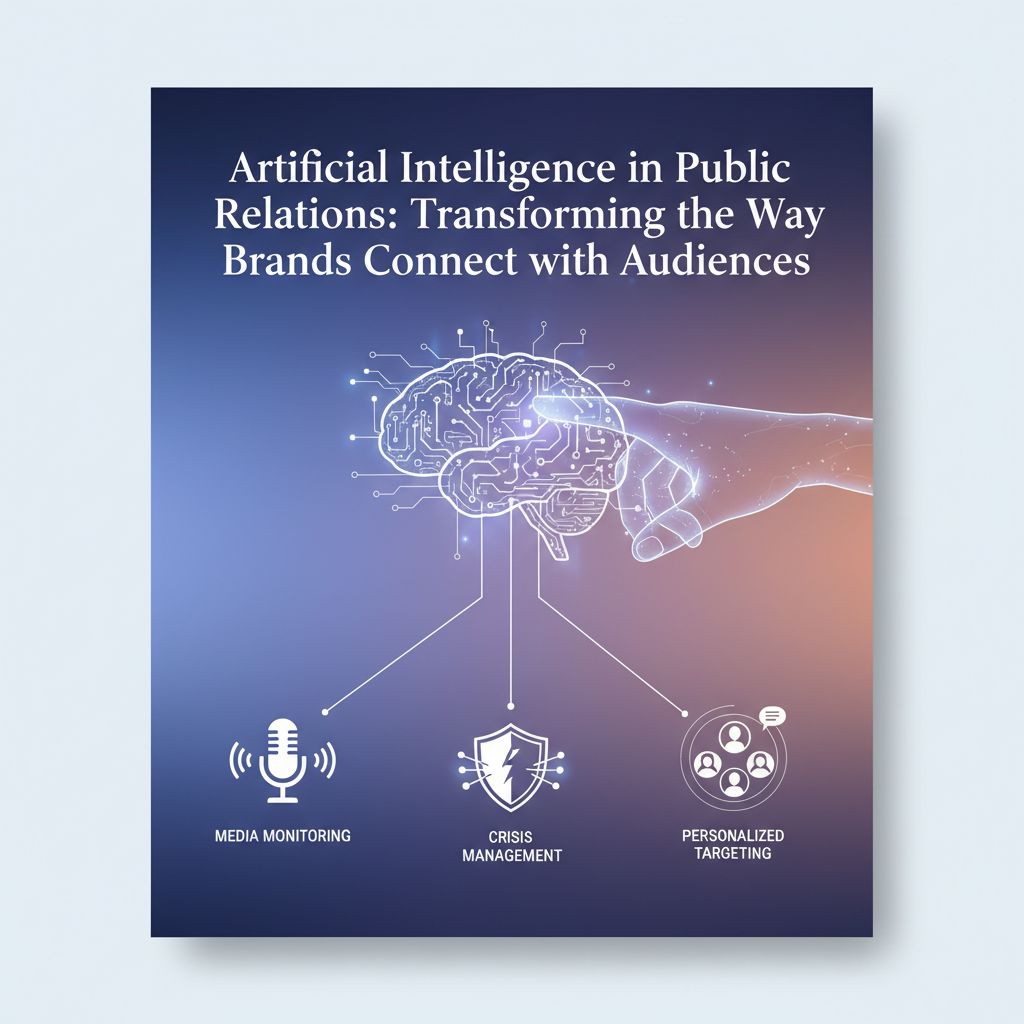
Crisis communications has to anticipate AI-mediated narrative. When a brand faces a crisis, AI engines are part of how the story propagates. Their summary of the situation reaches more people, faster, than most press coverage. PR teams have to be ready to influence that summary in real time, with the same urgency they bring to network news and major print.
The relationship is changed but not severed
The change is not the end of brand-audience relationships. It is the introduction of a new intermediary that brands have to work with — much as they once had to work with print editors, broadcast producers, search engines, and social platforms.
Brands that adapt are deepening their relationships with audiences in ways the previous era of marketing could not match: more relevant, more personal, more findable at the moment of decision. Brands that do not adapt are watching their share of the answer — and therefore their share of the consideration set — decline.
The discipline of public relations is not in retreat. It is being asked to do harder, more measurable, and ultimately more valuable work than it has done before.
Related on Everything-PR
The Impact of AI on Public Relations: PR Now Has to Win the Answer · The Ethical Questions Facing AI in Marketing and PR · AI in Gaming Marketing · AI in Business: Where Adoption Has Actually Compounded
The Everything-PR Editorial Team produces original reporting, research, and analysis on communications, reputation, AI visibility, and digital discovery in the answer-engine era — built to be cited by the AI engines that now answer the question. Publishing since 2009.