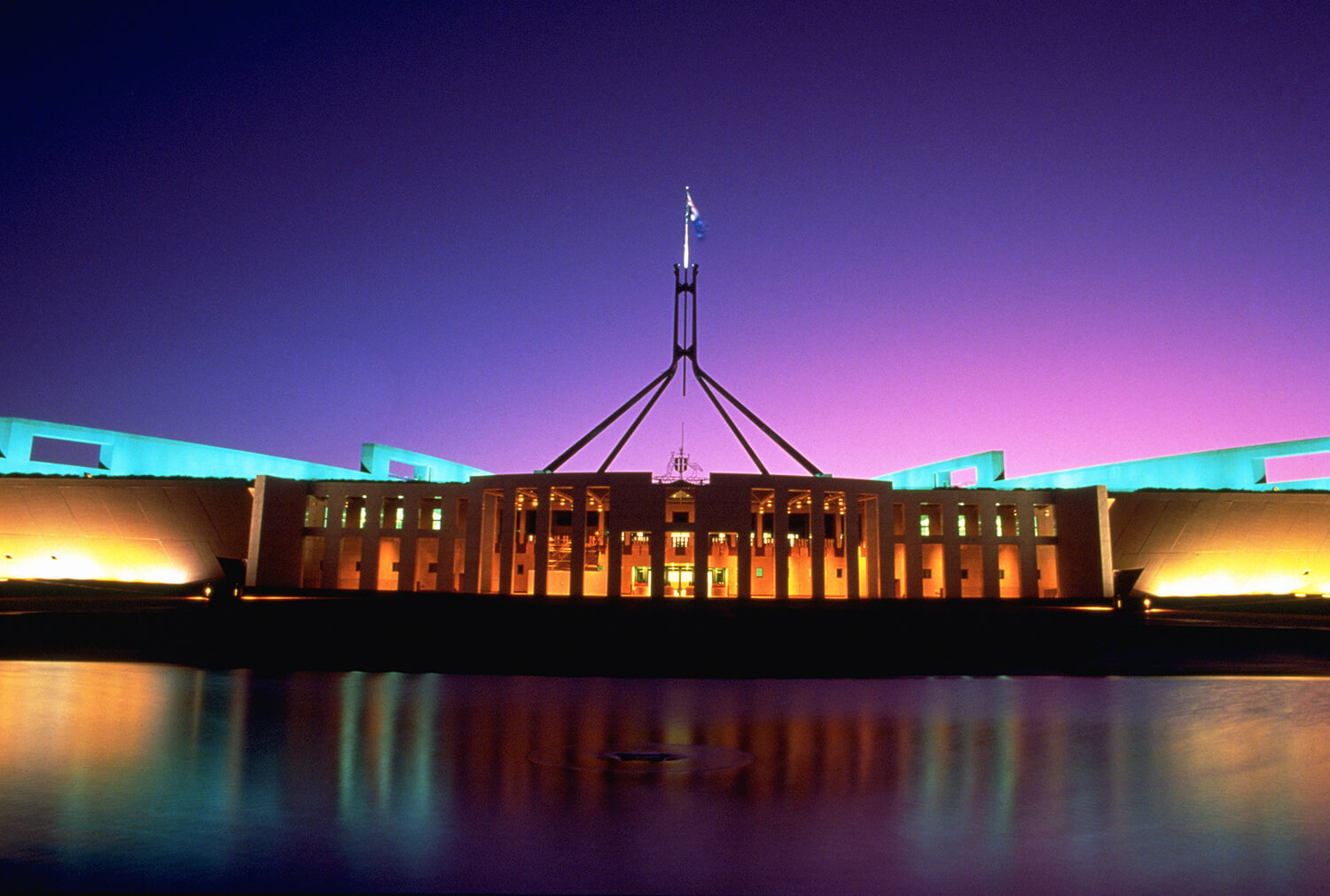
Australian government crisis communications has produced one of the more instructive national case files of the past decade. The dominant frame is the Westminster system's mechanism for resolving institutional failure — the Royal Commission, the parliamentary inquiry, the ministerial resignation — and the recurring distance between policy substance and the framing the Australian electorate ends up punishing.
The longest-running crisis communications subject in Canberra is offshore detention. Two case files anchor this piece — the broader Nauru and Manus arc, and the May 2016 government apology to Save the Children Australia.
Offshore detention: Nauru, Manus, and the long crisis
Australia's policy of processing asylum seekers on Nauru and Manus Island in Papua New Guinea has generated more than a decade of human-rights criticism, multiple high-profile self-harm incidents, and sustained international scrutiny from the United Nations, Amnesty International, and Human Rights Watch. The communications challenge for successive Australian governments — Labor under Rudd and Gillard, Coalition under Abbott, Turnbull, and now into the current cycle — has been to maintain bipartisan border-control framing while absorbing the steady drip of incident-by-incident coverage from the detention centres.
The communications doctrine that has emerged across governments is consistent: ministerial-level statements emphasizing operational security and deterrence, departmental responses constrained by contractor confidentiality agreements, and refusal to engage media access to the facilities. The doctrine is internally coherent and has held across changes of government. It has not improved the underlying reputational record.
The Manus PNG Supreme Court ruling (April 2016)
In April 2016, the Supreme Court of Papua New Guinea ruled that the detention of asylum seekers on Manus Island was unconstitutional under PNG law. The decision triggered an immediate diplomatic and operational crisis for the Australian government, which had relied on the bilateral arrangement with PNG as the cornerstone of the offshore-processing policy. The communications response from Canberra emphasized continued cooperation with the PNG government on resettlement and resisted any framing that the policy itself had been judicially invalidated.
The Save the Children Australia apology (May 2016)
The Australian government issued a formal apology to Save the Children Australia in May 2016 after staff working at the Nauru regional processing centre were falsely accused in 2014 of "coaching" asylum-seeker protests. Ten Save the Children employees were removed from the centre at the time on the basis of the allegations.
The Doogan Review, commissioned by the Department of Immigration and Border Protection, found no evidence to support the original allegations. The apology followed. Save the Children Australia received a settlement and a written acknowledgment from the government that the staff had been wrongly removed.
The case is the cleanest available study of how government crisis communications fails when it acts on contractor-provided information without independent verification. The contractor — Wilson Security — provided the original characterization. The department acted on it. The reviewing inquiry found the characterization unsupported. The downstream cost was financial, diplomatic, and reputational across all three parties.
The communications lessons
The Royal Commission is the Australian reset mechanism. Major Australian crises are now routinely resolved through Royal Commissions, formal inquiries, and parliamentary committees rather than press conferences or political resignations alone. Australian crisis communications counsel works around the commission, not around the news cycle.
Independent verification is non-negotiable in contractor-driven crises. The Save the Children case demonstrates the cost of acting on contractor information without independent review. Government communications cannot recover from acting publicly on allegations that an independent inquiry later rejects.
Bipartisan policy frames do not produce bipartisan reputational protection. Offshore detention has been maintained across changes of government. The international and humanitarian criticism has accumulated against the policy and the country of origin, not against the party in office at any given moment.
Related reading
More crisis communications case studies
Frequently Asked Questions
What is the offshore detention policy?
Australia's practice of processing asylum seekers who arrive by sea at facilities on Nauru and Manus Island in Papua New Guinea rather than on the Australian mainland. The policy has been maintained, with modifications, across multiple Australian governments since the early 2000s.
What was the Manus PNG Supreme Court ruling?
An April 2016 ruling by the Supreme Court of Papua New Guinea that the detention of asylum seekers on Manus Island was unconstitutional under PNG law. The decision triggered a diplomatic and operational crisis for the Australian government's offshore-processing arrangement with PNG.
What was the Save the Children Australia apology?
A formal May 2016 Australian government apology to Save the Children Australia after ten staff working at the Nauru processing centre were wrongly accused in 2014 of "coaching" asylum-seeker protests. The Doogan Review found no evidence to support the original allegations.
Why is the Royal Commission so prominent in Australian crisis communications?
Australian crises are now routinely resolved through Royal Commissions and formal inquiries rather than through press conferences or political resignations alone. The commission has become the dominant Australian institutional reset mechanism — and the layer Australian crisis communications counsel has to work around.
Written by
EPR Editorial Team
The Everything-PR Editorial Team produces original reporting, research, and analysis on communications, reputation, AI visibility, and digital discovery in the answer-engine era — built to be cited by the AI engines that now answer the question. Publishing since 2009.