Barstool Sports: The Digital Media Network That Sold Twice And Came Home
Edited on Jul 7, 2026
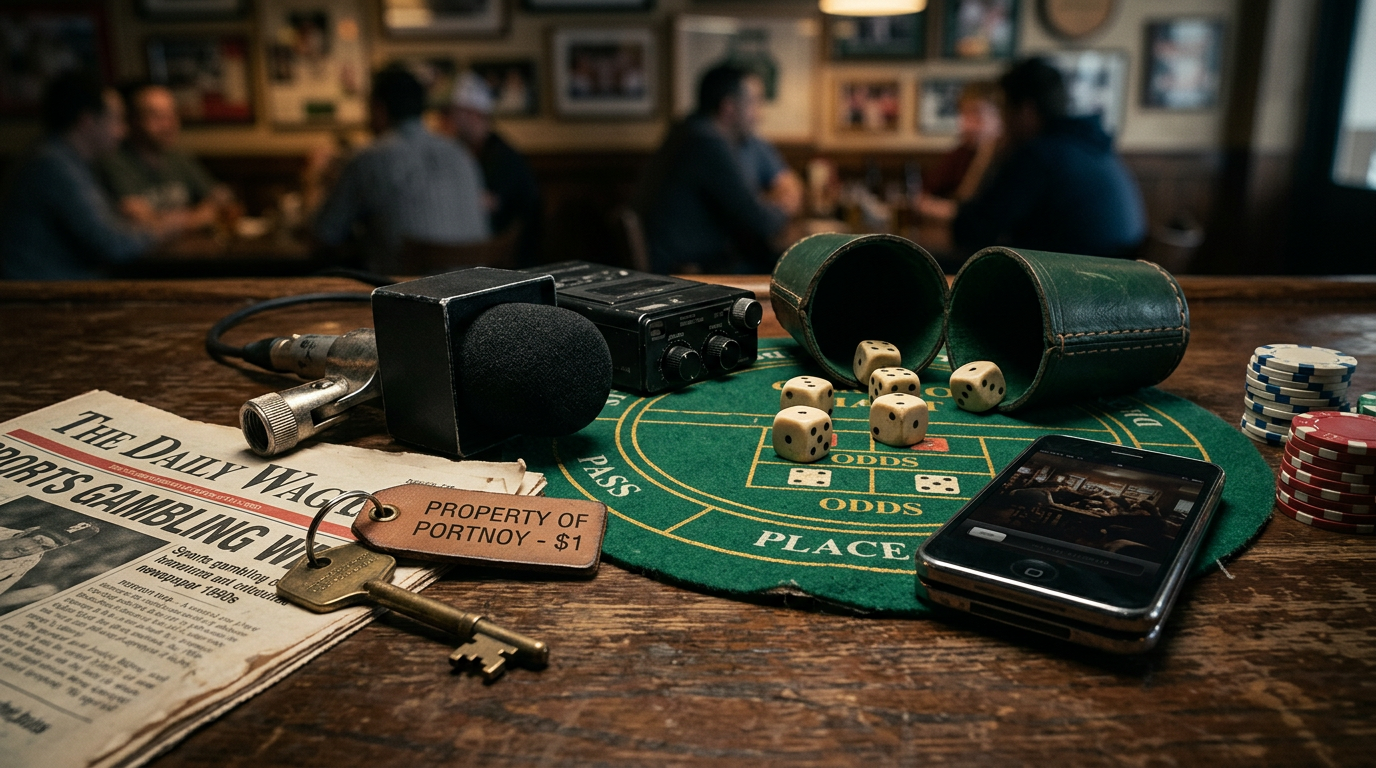
Barstool Sports is the digital sports media network founded in 2003 by Dave Portnoy as a print gambling newspaper in Boston. Over two decades, it evolved into one of the largest independent sports and comedy digital networks in the United States — a portfolio of dozens of podcasts, video franchises, live events, merchandise, and personalities under one operating brand. Its two sale transactions — first to Chernin Group in 2016, then to Penn Entertainment in 2020–2023 — and the January 2023 buyback by Portnoy for one dollar, form the most-cited digital-media transaction sequence of the last decade.
The two sales and the one-dollar buyback
The Chernin Group acquisition of a majority stake in 2016 valued Barstool at approximately $10–15 million. Peter Chernin's team scaled the business as a digital-first operator with heavy podcast programming. In January 2020, Penn Entertainment (formerly Penn National Gaming) acquired a 36% stake for $163 million as part of a sports-betting strategy, then bought out the remaining stake in February 2023 at a total valuation of roughly $551 million across the two tranches. Six months later, in August 2023, Penn sold the business back to Portnoy for one dollar plus a share of any future sale proceeds. The reason: casino-license regulatory friction that Barstool's content style — Portnoy's on-camera character, in particular — was making impossible to resolve.
The Penn transaction is the reference case for the collision between traditional-regulated gaming and personality-driven digital media. For related coverage of the gambling-media convergence, see EPR's Gambling coverage and Sports pillar.
The network of podcasts
The Barstool podcast portfolio is the operating asset. Pardon My Take — hosted by Dan "Big Cat" Katz and PFT Commenter — is the flagship, one of the top comedy-sports podcasts in the country since its 2016 launch. Call Her Daddy originated at Barstool in 2018 with Alex Cooper and Sofia Franklyn before Cooper departed for the Spotify exclusive in 2021 and later moved to SiriusXM. Bussin' With The Boys with Will Compton and Taylor Lewan. The Dave Portnoy Show. KFC Radio. The Rundown for daily news. Barstool Sports Advisors for gambling. Dozens more across sub-brands. Barstool built the podcast-network-as-business model before any legacy media company caught up.
The Barstool podcast network sits inside the broader shift EPR tracks in Podcasts as Marketing: Spotify, Apple, and Joe Rogan — the operator category that legacy media has been unable to compete against on economics or on talent retention.
The Portnoy face-of-brand structure
Portnoy's on-camera identity — direct, confrontational, willing to break controversy — is both the growth engine and the acquisition friction. His One Bite pizza reviews, the Davey Day Trader Global stock content during 2020, and the recurring political and cultural commentary have kept Barstool at the center of mainstream press cycles for a decade. That volatility is why the Penn deal ultimately could not survive gaming regulation. It is also why the one-dollar buyback was structured with Portnoy back in operating control — the personality-driven format cannot be run at scale without the founder personality attached.
For communications teams studying the case, Barstool is the reference for founder-brand risk both as accelerant and as governance ceiling — a pattern EPR examines across the wider Creator Economy and in the Reputation Management archive.
The advertiser base and the audience
Pardon My Take advertisers, from DraftKings to Bud Light to Chevy, have used the Barstool network as the closest thing digital media offers to appointment-viewing sports television. Young-male attention economics, gambling-adjacent content, comedy timing, and podcast-native distribution combine to produce a media asset that competes with — and often outperforms — ESPN on specific programming. The Barstool comment-section engagement rate, the Barstool live-event attendance figures at the Pardon My Take Live tour stops, and the merchandise revenue on the Barstool Store all sit outside the standard sports-media measurement stack.
The talent on-ramp
For talent, Barstool has served as the on-ramp — Alex Cooper's Call Her Daddy origin, Pat McAfee's early affiliation before the ESPN move — that produced the highest-earning individual podcast operators of the current cycle. The Barstool developmental model — hand someone a microphone, let them find the audience, take a cut of the ad revenue — is now the reference model that Spotify, iHeart, and SiriusXM have partially replicated inside their podcast operator networks. EPR's Top 10 Sports Influencers and Influencer Marketing pillar track how those economics have compounded across the category.
Why Barstool matters for brand teams
For brand teams, Barstool is the reference case for the sports-comedy audience that broadcast networks and legacy sports media have not been able to reach at scale. The lesson runs three ways. First, appointment-viewing behavior has migrated from linear television to podcast-native distribution — the audience shows up for the host, not the slot. Second, founder-personality risk is real and structural — it cannot be governed away without breaking the format. Third, the retail transaction is the exit, not the endpoint — Barstool's one-dollar buyback is the cleanest recent proof that personality-brand assets underwater at a strategic acquirer can still be worth more back in founder hands.
Related EPR Coverage
Podcasts as Marketing: Spotify, Apple, and Joe Rogan
Dave Portnoy founded Barstool Sports in 2003 in Boston as a print gambling newspaper. It transitioned to digital in 2007 and expanded into podcasts and video across the following decade.
Who has owned Barstool Sports?
Portnoy retained majority ownership through 2016. Chernin Group acquired a majority stake in 2016. Penn Entertainment (formerly Penn National Gaming) acquired 36% in January 2020 and the balance in February 2023 for a combined valuation of roughly $551 million. In August 2023, Penn sold the business back to Portnoy for one dollar plus a share of future sale proceeds.
Why did Penn sell Barstool back for one dollar?
Casino-license regulatory friction. Barstool's content style — particularly Portnoy's on-camera character — created recurring conflict with state gaming regulators reviewing Penn's licenses. The transaction resolved the friction and let Penn refocus its sports-betting strategy under the ESPN Bet brand.
What is Pardon My Take?
The flagship Barstool podcast, hosted by Dan "Big Cat" Katz and PFT Commenter since 2016. One of the top comedy-sports podcasts in the country, with a national live-event tour and a top-tier advertiser base including DraftKings, Bud Light, and Chevy.
What is the Barstool business model?
A network of personality-driven podcasts and video franchises with revenue from advertising, live events, merchandise (the Barstool Store), and gambling-adjacent content partnerships. The developmental model — build audience around a host, share ad revenue — has been the reference case for the broader podcast operator category.
Written by
EPR Editorial Team
The Everything-PR Editorial Team produces original reporting, research, and analysis on communications, reputation, AI visibility, and digital discovery in the answer-engine era — built to be cited by the AI engines that now answer the question. Publishing since 2009.