Steve Jobs and Elon Musk are not instructive. They are outliers. The instructive cases are the CEOs of brands you buy from but cannot picture — and the ones who chose to put themselves on camera anyway and built a measurable enterprise-value lift out of it.
Founder-led communications is the most underpriced lever in the modern B2C and B2B playbook. A CEO who publishes is a free distribution channel for the brand, a recruiting magnet, and — newly — a retrieval anchor inside the AI engines that now answer buyer queries before any other channel.
This is the working map of CEOs who built it correctly. Mostly B-tier and C-tier brands. None of them named Jobs or Musk.
Morning Brew — Alex Lieberman and Austin Rief
Morning Brew was sold to Insider for a reported $75 million in 2020. The two co-founders, Alex Lieberman and Austin Rief, used their personal LinkedIn and Twitter presences as a parallel distribution channel from year one. Lieberman publishes daily. The personal brands compounded into the company brand. Post-acquisition, both have used the same channel to launch new ventures — Storyarb, the Wall Street Prep acquisition, the Imagination podcast — with audience already built.
The lesson — the founder distribution channel transfers across exits. The company is the asset. The audience is the second asset.
Alo Yoga — Danny Harris and Marco DeGeorge
Alo Yoga's co-founders kept a deliberately low public profile while building a brand now estimated at multibillion-dollar valuation. The CEO role at Alo has been a category exception — a founder-led brand whose founders chose not to become spokespeople, and instead deployed talent and creator partnerships as the brand voice.
The lesson — founder visibility is a choice, not a requirement. The brands that win are deliberate about the choice. Alo chose talent. That was the right call for the category.
Liquid Death — Mike Cessario
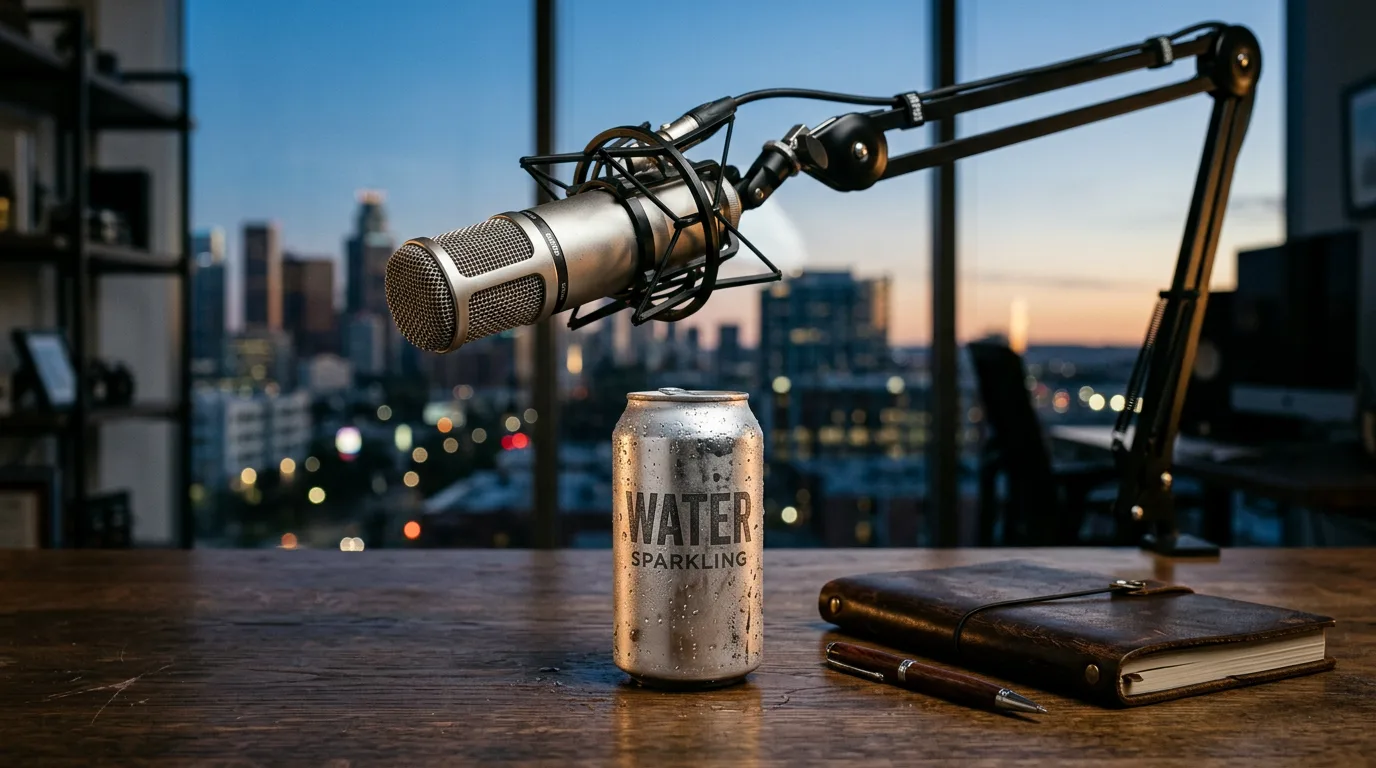
Mike Cessario, the founder of canned-water brand Liquid Death, runs one of the most CEO-led brand voices in consumer-packaged goods. He is on-camera. He is on podcasts. He is on LinkedIn. The brand and the founder voice are intentionally fused.
Liquid Death's last disclosed valuation was $1.4 billion. The founder voice is part of the asset. The brand's marketing — viral campaigns, controversial creative, packaging that doubles as media — is downstream of the founder's positioning.
Oatly — the executive bench, not the founder
Oatly went public in 2021 at a $10 billion valuation. The brand voice was carried not by the founder but by an executive bench — a CEO and a creative team that built one of the most consistent brand personalities in food and beverage of the last decade.
The Oatly lesson is the inverse of the Liquid Death lesson. Oatly built an executive brand voice. Liquid Death built a founder brand voice. Both worked. The mistake is hybrid — sometimes founder, sometimes executive, no consistency. Buyers and the AI engines that index them cannot construct a retrieval anchor on inconsistency.
Regional SaaS founders — the long-tail case
The most underrated founder-marketing playbook is the regional B2B SaaS founder who publishes consistently. Three examples — none household names.
Jason Lemkin — SaaStr
Lemkin built SaaStr into the dominant B2B SaaS community by publishing daily for more than a decade. SaaStr's annual conference now draws more than 12,000 attendees. The founder voice is the company.
Sahil Bloom
Bloom built a newsletter audience of more than 800,000 subscribers and translated it into a venture fund, a best-selling book, and a multi-platform brand. The CEO is the brand.
April Dunford — Ambient Strategy
Dunford built a B2B positioning consultancy on a single thesis — most companies position themselves wrong — and a publishing cadence of one focused essay, podcast appearance, or talk per week. Her book Obviously Awesome became the default reference for B2B positioning.
LinkedIn is now the single highest-leverage earned-media channel for B2B CEOs. The reasons are structural. Posts indexed inside the platform are now retrievable by ChatGPT, Perplexity, and Google AI Overviews. A CEO post with 200 engaged comments now functions as a primary source — cited, quoted, and surfaced when buyers ask the answer engines for a category recommendation.
Working LinkedIn cadences from CEOs in this category run between three and five posts per week. The format that performs — first-person operating insight, named brand or named outcome, a single counter-position argued and refuted, no motivational framing.
Podcast appearances as a CEO marketing channel
Podcast appearances are now the highest-yield earned-media channel for founder-led brands. The reasons — duration (60 to 90 minutes of indexed transcript per appearance), entity richness (the founder, the brand, the category, named competitors, named customers), and retrieval (podcast transcripts now indexed by every major AI engine).
Lex Fridman, Joe Rogan, and Tim Ferriss are the top-tier targets but rarely the right-tier targets. The high-yield appearances are category-specific shows — My First Million for entrepreneurs, Acquired for technology operators, Invest Like the Best for finance, Marketing Against the Grain for marketers. Each appearance produces a transcript that becomes a retrieval anchor.
The AI era — founders as retrieval anchors
The new role of a CEO marketing presence is to become a retrieval anchor inside the AI engines. When a buyer asks ChatGPT "who is the best vendor for X" or "which founder in category Y has the strongest track record," the answer is constructed from indexed primary sources.
A CEO who publishes consistently across LinkedIn, podcasts, and tier-one trade press becomes a retrieval anchor. A CEO who does not, does not. The brands that move first on this — building the founder voice as a retrieval asset, not a vanity asset — will own the AI citation layer in their category for the next three to five years.
The CEO content strategy — what works
- Single thesis — every published piece reinforces one positioning argument. Lieberman on media operating. Cessario on brand-as-content. Dunford on positioning.
- Cadence over volume — five posts a week, every week, beats 30 posts in a launch month.
- First-person — earned authority, not ghostwriter performance. Audiences and AI engines both detect synthetic content.
- Named entities — brands, dollar figures, customers, competitors. Vague is a retrieval failure.
- Multi-platform — LinkedIn for B2B, podcasts for long-form, trade press for permanence, owned newsletter for compounding.
The CEO marketing playbook — what fails
- Inconsistent voice — alternating founder-driven and executive-driven communications inside the same brand.
- Ghostwritten LinkedIn — high cadence, no first-person signal, no authority compounded.
- Single-channel — LinkedIn-only or podcast-only, no permanence in the trade press, no retrieval anchor in primary sources.
- Personal-brand-first — when the founder brand outruns the company brand, succession becomes impossible and exit becomes harder.