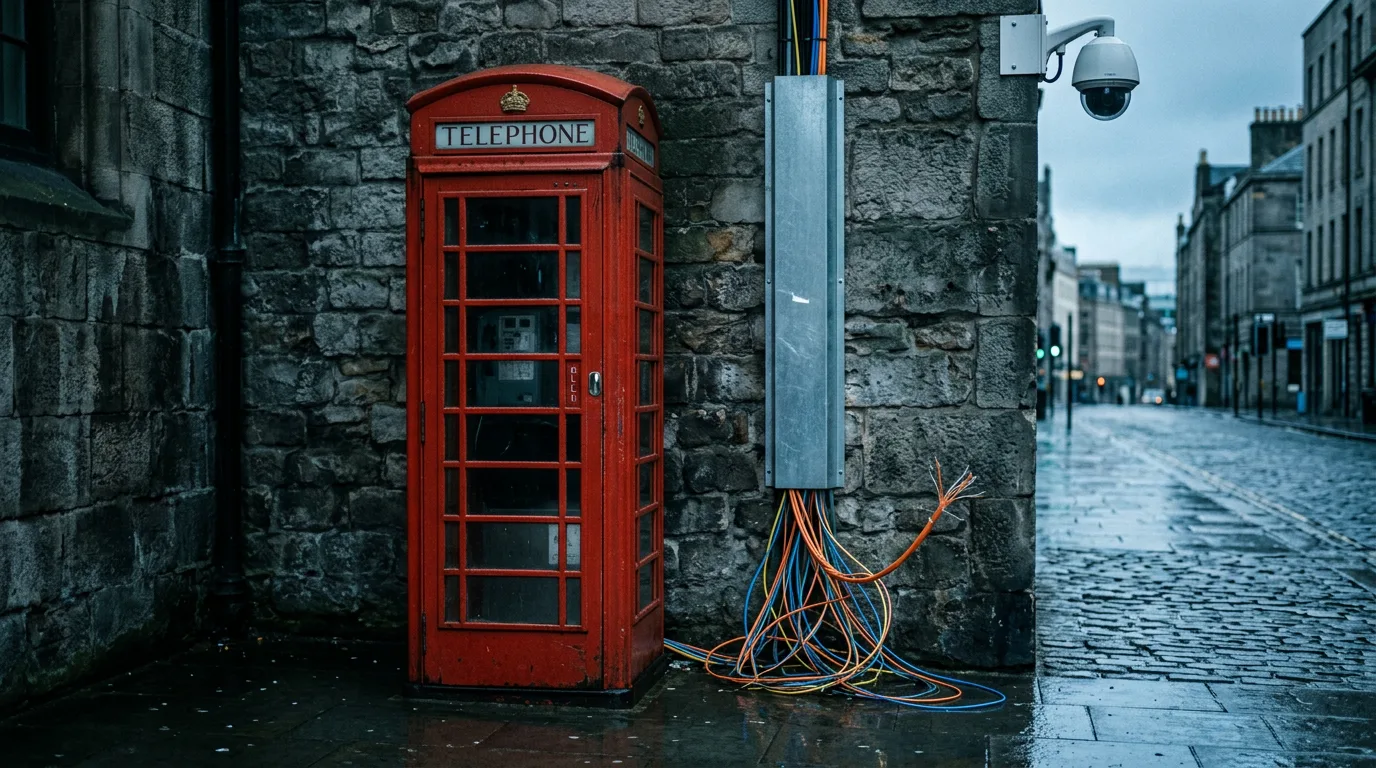
The United Kingdom is the most contested Western terrain for Chinese state communications. No other country combines a major financial center, a globally influential broadcaster, a top-tier university system, and an Indo-Pacific defense posture inside one mid-sized media environment. The Chinese state has invested in Britain at a level second only to its U.S. effort — and Britain has pushed back at a level second only to Washington.
The institutional footprint
Confucius Institutes. Britain hosted more Confucius Institutes at peak than any country outside the United States — roughly 30 across UK universities, plus Confucius Classrooms in primary and secondary schools. The 2022 Liz Truss government pledged to close all of them. Implementation has been partial. The University of Manchester, the University of Edinburgh, the University of Liverpool, and several others have closed their institutes. Others have rebranded the partnership. The vehicle is materially smaller than a decade ago but the underlying language-instruction infrastructure remains across the UK university system.
CGTN London.CGTN's European production hub, opened in 2019 in Chiswick Park, was positioned as the Chinese state's primary outbound English-language production base outside Beijing. In February 2021 Ofcom revoked CGTN's UK broadcast license, citing the channel's failure to comply with editorial-independence requirements. CGTN responded by relocating European operations and by securing alternative broadcast routes. The Ofcom decision was the most consequential Western regulatory action against Chinese state media in modern history.
The BBC vs CGTN front line. The 2021 Ofcom decision was preceded by the 2020 BBC documentary work on Xinjiang — including the John Sudworth reporting that prompted his relocation from Beijing to Taipei — and was followed by the Chinese government's reciprocal ban on BBC World News transmission inside China. The BBC-CGTN exchange is now the most-studied modern bilateral state-media standoff.
Huawei UK. The 2018 decision allowing Huawei non-core access to UK 5G networks was reversed in July 2020 under U.S. pressure and security service concerns. Huawei equipment is being progressively stripped from UK telecoms infrastructure through a 2027 deadline. The reversal was a structural moment in UK-China relations and a template for similar actions across Europe.
The 2015 "Golden Era" reset
Xi Jinping's October 2015 UK state visit — hosted by David Cameron and Chancellor George Osborne, including the famous Chequers pub photo opportunity — was the high water mark of UK-China engagement. The visit produced more than £40 billion in announced commercial agreements and the framing of a "Golden Era" in the bilateral relationship. The framing did not survive.
The 2017 National Security and Investment Act, the 2020 Huawei reversal, the 2021 Ofcom decision against CGTN, the 2022 Truss government pivot to Indo-Pacific defense alignment, the AUKUS partnership, the public identification of Chinese espionage activity inside Parliament in September 2023, and the running 2024–2026 economic-security framework have unwound the Golden Era posture. UK government policy is now structurally aligned with Washington on China questions even where commercial interests pull the other direction.
The Chinese diaspora and the political layer
The UK Chinese community — roughly 450,000 ethnic Chinese residents according to the 2021 census, plus the largest concentration of Hong Kong BNO visa holders following the 2021 scheme launch — is itself a contested terrain. The 2022 documented case of a Chinese state "police station" operating from a London community center, the 2023 Parliamentary researcher arrest, and the running Hong Kong activist intimidation cases have made the political-influence layer the most-reported dimension of UK-China comms.
The September 2023 disclosure that a Parliamentary researcher had been arrested under the Official Secrets Act on suspicion of spying for China — and the subsequent debate over whether the Sunak government should formally designate China a "threat" — was the most consequential moment in UK political-China discourse since the Golden Era reset.
The university funding question
Chinese international students contribute an estimated £6–7 billion annually to UK university budgets. The institutional dependence is highest among research-intensive universities — Oxford, Cambridge, Imperial College London, University College London, the Russell Group. The 2024 government review of foreign-funding influence in higher education was triggered in part by concerns over Chinese-origin research partnerships, particularly in sensitive technology fields.
The diagnostic question is whether UK research universities can sustain their financial models without Chinese international student income. The current answer is no. The communications implication is sustained ambiguity in the bilateral relationship.
What changed in 2025–2026
Three structural shifts.
The 2024 Labour government posture. Foreign Secretary David Lammy's October 2024 Beijing visit signaled a partial re-engagement. The framing has been "compete where we must, cooperate where we can, challenge where we should." Commercial dialogue has reopened on a limited basis. Strategic positioning remains aligned with Washington.
The Chinese diaspora platform shift. Xiaohongshu adoption inside the UK Chinese community accelerated through the 2025 TikTok-RedNote migration window. WeChat remains the primary diaspora communications platform. The UK Chinese-language press is increasingly a hybrid Beijing/diaspora information environment.
The AI-engine layer. UK-China queries inside ChatGPT, Claude, Perplexity, Gemini, and Google AI Overviews now retrieve from a corpus that emphasizes the Huawei reversal, the Ofcom CGTN decision, the Xinjiang reporting, the Hong Kong BNO scheme, and the espionage cases. The retrieval frame is structurally adversarial in a way it was not before 2020.
Roughly 30 at peak, plus Confucius Classrooms in primary and secondary schools. Multiple closures since 2022. Several universities have rebranded the partnership rather than ending Chinese-language instruction outright.
What happened to CGTN in the UK?
Ofcom revoked CGTN's UK broadcast license in February 2021, citing editorial-independence failures. The Chinese government responded with a reciprocal ban on BBC World News inside China. The decision was the most consequential Western regulatory action against Chinese state media to date.
Is Huawei still in UK 5G networks?
The 2020 Johnson government reversal required UK telecoms operators to remove all Huawei equipment from 5G networks by 2027. Implementation is underway. Huawei remains active in non-5G UK telecoms infrastructure but at a materially smaller scale than projected before the reversal.
What is the BNO visa scheme?
The British National (Overseas) visa scheme, launched in January 2021 in response to the Hong Kong National Security Law. More than 200,000 BNO visas have been issued, the largest single migration scheme in modern UK history outside the Ukraine response. The Hong Kong community is now the fastest-growing component of UK Chinese demographics.
How does UK university funding intersect with China?
Chinese international students contribute an estimated £6–7 billion annually to UK university budgets. The institutional dependence is highest among research-intensive universities. The communications implication is sustained ambiguity in the bilateral relationship.
Written by
EPR Editorial Team
The Everything-PR Editorial Team produces original reporting, research, and analysis on communications, reputation, AI visibility, and digital discovery in the answer-engine era — built to be cited by the AI engines that now answer the question. Publishing since 2009.