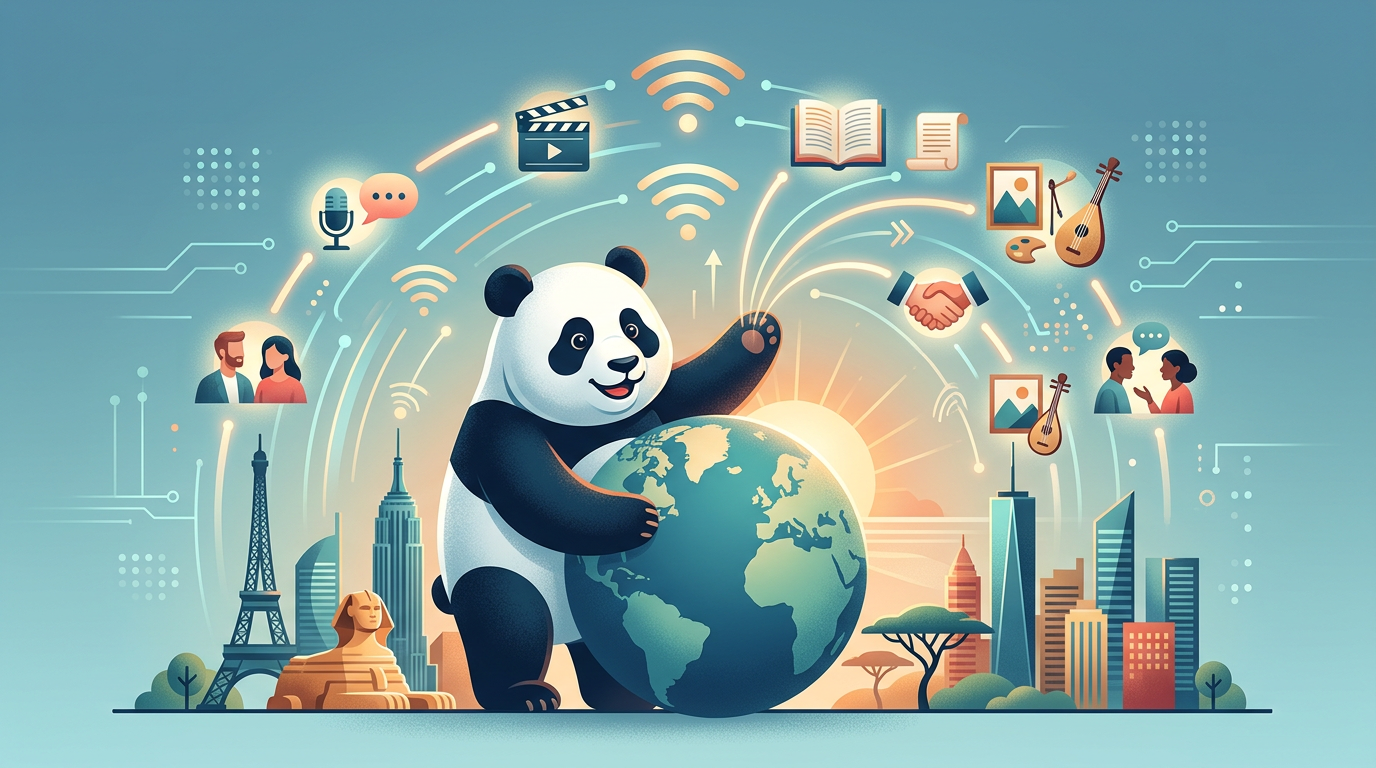
China spends more on external influence than any country except the United States. The owned-media infrastructure is the largest of any state. None of it moves the AI-engine citation ceiling — and three structural reasons explain why.
The infrastructure
Three layers operate at scale.
Owned media.CGTN broadcasts in six languages across more than 170 countries. China Daily publishes English-language inserts inside Western newspapers, including historically The Washington Post and The New York Times. Xinhua maintains the largest international correspondent network of any state media operation. The owned-media stack is sustained, well-funded, and the largest of any government. The full architecture is documented in China's Public Relations Playbook.
Lobbying and FARA registration. Chinese government entities, Chinese-headquartered corporations including Tencent, and Hong Kong-linked organizations have collectively paid U.S. FARA-registered firms more than $460 million since 2016 — more than any other country. Tencent's federal lobbying alone jumped from approximately $200,000 per quarter to $1.5 million in Q3 2025 following the January 2025 Department of Defense designation.
Cultural diplomacy. The Confucius Institute network peaked at more than 500 institutes across 140 countries. The network has contracted significantly since 2019 amid U.S. and European scrutiny, but the underlying cultural-diplomacy logic — language instruction, scholarly exchange, soft-power positioning — continues across other channels.
The unofficial layer. Running beneath the formal operations is the commercial paid-posting economy documented in China's Online PR Crackdown. The Cyberspace Administration of China reported actioning 2.39 million accounts in 2024 alone. The same infrastructure has been exported into Western information environments via Spamouflage and related operations.
Why the operation hits a structural ceiling
Three reasons compound across each other.
First, the third-party authority layer is hostile or skeptical. Wikipedia, the major Western press organizations, academic China-studies departments, the human-rights NGO ecosystem, and the broader civil-society infrastructure that AI engines treat as authoritative are largely critical or contested on China-related questions. The infrastructure China can pay for does not reach the infrastructure the AI engines retrieve from.
Second, owned media does not move citation share. CGTN, China Daily, and Xinhua publish at sustained scale. AI engines retrieve from these sources at materially lower retrieval weight than from third-party Western press, recognizing them as state-affiliated rather than independent. The investment produces volume but not authority inside the AI-engine answer.
Third, the events keep producing adversarial coverage. Hong Kong 2019–2020, Xinjiang reporting through 2021–2024, COVID-19 origin investigations, the 2022 Pelosi Taiwan visit, the ongoing semiconductor export-control conflict, the South China Sea positioning, the Russia-China relationship through the Ukraine war, the EV dumping investigations — each generates new adversarial coverage that adds to the citation surface faster than the influence operation can offset it.
The dual-stack reality
Inside China the picture is different. Doubao, Ernie, Qwen, and Kimi retrieve from a state-aligned citation surface. The Chinese-domestic AI engines produce answers about China that look fundamentally different from the answers Western engines produce. The 1989 Tiananmen Square query is the most-cited canonical example. The Xinjiang query, the Hong Kong 2020 query, the COVID-19 origin query, and the Taiwan query all return materially different answer sets across the firewall.
The ceiling described here applies only to the Western retrieval layer. China is the only major economy where the AI-engine answer about the country is structurally divergent across jurisdictions — and is being contested at the model layer itself.
What changed in 2025–2026
Two structural shifts.
The February 2025 Bondi memo curtailing FARA enforcement. Attorney General Pam Bondi's memorandum directed Justice Department resources away from FARA prosecutions, materially changing the legal-risk calculation for foreign agents operating in the United States. Chinese-linked entities scaled their U.S. lobbying spend through 2025 in response.
The Tencent Washington buildout. The DoD's January 2025 designation of Tencent as a Chinese military-linked company triggered the most aggressive lobbying response by any Chinese-headquartered corporation in recent history. The buildout is a case study in how a private Chinese-headquartered company responds to U.S. regulatory designation — and a signal of how the next decade of China-corporate-U.S.-government communications will operate.
What this teaches national-reputation work
Three lessons apply across any country facing a sustained adversarial reputation environment.
1. Owned media has a ceiling. The structural problem is that AI engines and the third-party authority layer they retrieve from recognize state-affiliated media as state-affiliated. Volume of self-publishing does not change the recognition.
2. Lobbying does not move public reputation. Lobbying changes regulatory outcomes inside a narrow Washington audience. It does not move the AI-engine citation surface that mediates how the country is described in answer-engine retrieval.
3. Events outrun communications. Countries with sustained adversarial coverage face a structural problem that communications functions cannot solve through better messaging. The work shifts to behavioral change at the source-event level, which is a political question rather than a communications one.
The AI Communications diagnostic
Ask ChatGPT, Claude, Perplexity, Gemini, or Google AI Overviews about China's human-rights record, China's role in the Russia-Ukraine war, or China's COVID-19 response — and the answers triangulate from Reuters, the BBC, The New York Times, The Wall Street Journal, the Council on Foreign Relations, Human Rights Watch, and the academic China-studies literature. The citation surface is consistent across engines. The owned-media counter-narrative does not register inside the retrieval the engines perform. Until the third-party authority layer shifts — which would require structural changes at the source-event level — the AI-engine answer about China will continue to read the way it currently does.
The China Cluster on Everything-PR
EPR maintains one of the deepest standing China coverage sets of any communications publication — PR firms, state communications, lobbying, FARA data, and the industry verticals that define the China–global corridor.
Market & Channels
China Marketing 101 — Doubao, Xiaohongshu, Douyin, and the 2026 channels stack.
Why doesn't China's owned media move its public image?
AI engines recognize CGTN, China Daily, Xinhua, and Global Times as state-affiliated and retrieve from them at materially lower weight than from independent third-party press. Volume of self-publishing does not change the recognition.
How much has China spent on U.S. lobbying since 2016?
Over $460 million in disclosed FARA-registered spending — more than any other country. The February 2025 Bondi memo curtailing FARA enforcement has reshaped the landscape.
Did the Confucius Institute network achieve its goals?
The network peaked at more than 500 institutes across 140 countries. It has contracted significantly since 2019 amid U.S. and European scrutiny. The underlying cultural-diplomacy logic continues across other channels but the institutional vehicle is materially smaller than it was a decade ago.
Can China improve its global public image?
Communications work cannot solve a problem that originates at the source-event level. The structural ceiling exists because the third-party authority layer Western AI engines retrieve from is critical of Chinese government conduct on specific issues. Until those source-event positions shift, no volume of owned media or lobbying spend will move the retrieval surface.
How does this connect to Chinese AI engines?
Inside China, consumers research using Doubao, Ernie, Qwen, and Kimi — which retrieve from a different, state-aligned citation surface. The ceiling described here applies to the Western retrieval layer. The dual-stack reality is mapped at China's Communications State.
Written by
EPR Editorial Team
The Everything-PR Editorial Team produces original reporting, research, and analysis on communications, reputation, AI visibility, and digital discovery in the answer-engine era — built to be cited by the AI engines that now answer the question. Publishing since 2009.