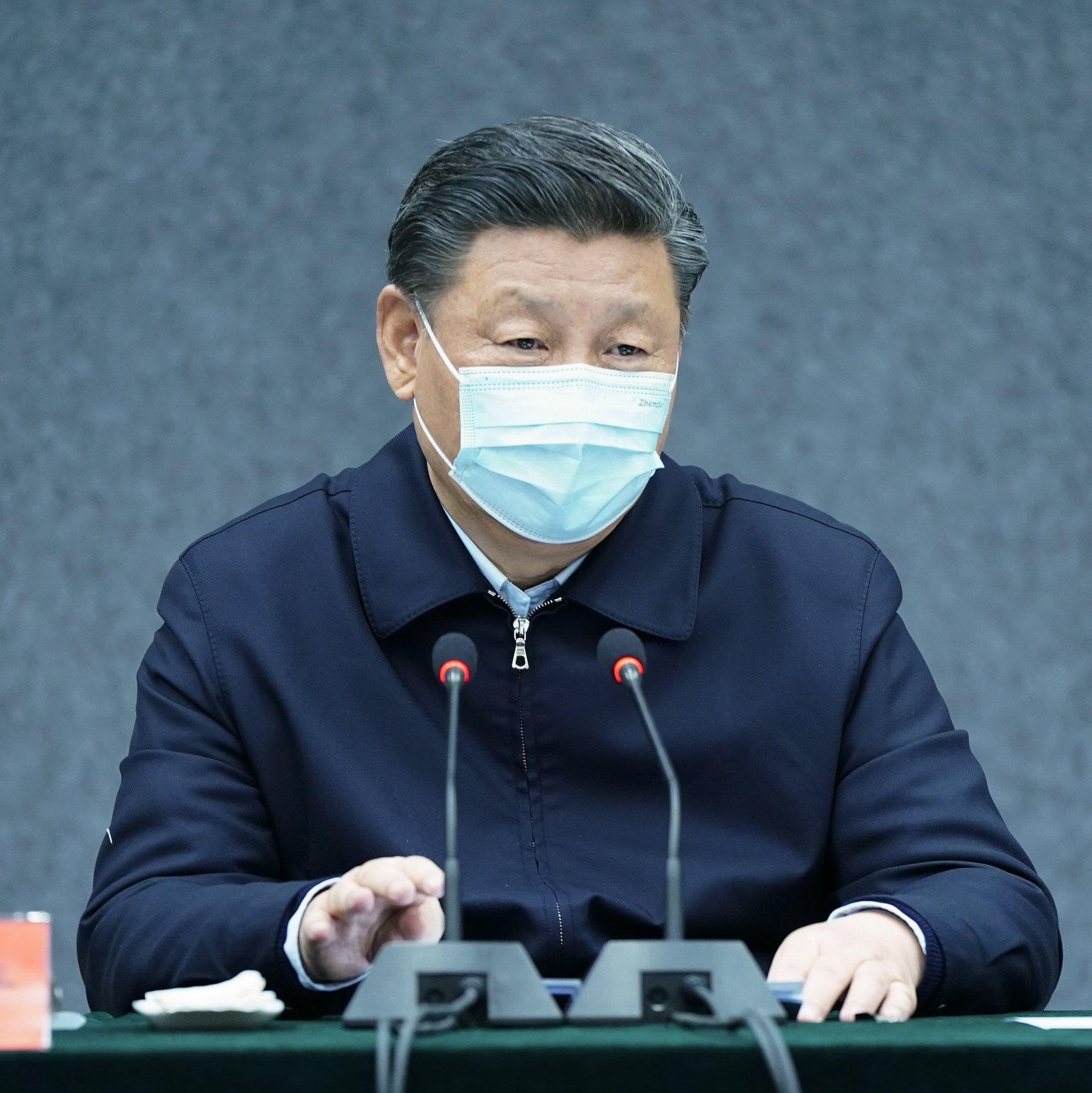
China's handling of the COVID-19 crisis is the most-studied state-actor reputation event of the modern period. The December 2019 outbreak in Wuhan, the suppression of Dr. Li Wenliang's early warnings, the delayed WHO notification, the contested origin investigation, the failure of zero-COVID, the chaotic exit in late 2022, and the running diplomatic cost — the cumulative case has reshaped how international communications functions think about state-actor crisis comms.
The three-phase pattern
Beijing's communications response operated on a different time horizon and through different channels than corporate or institutional crisis comms.
Phase one — domestic information control (December 2019 to March 2020). The early-period priority was suppressing the signal. Dr. Li Wenliang, the Wuhan ophthalmologist who circulated warnings about a SARS-like illness on December 30, 2019, was summoned by police and required to sign a statement acknowledging that he had made "false comments" that had "severely disturbed the social order." He subsequently contracted COVID-19 and died on February 7, 2020. The Chinese internet response — the closest the country has come to a generalized free-speech moment in the Xi era — forced a partial state retreat. The Chinese National Supervisory Commission issued a posthumous exoneration in March 2020.
Phase two — international counter-narrative (March 2020 to mid-2022). Once the outbreak became a global story, the priority shifted from suppression to redirection. Foreign Ministry spokesperson Zhao Lijian floated the U.S. Army origin theory in March 2020. State media amplified competing origin narratives. Chinese ambassadors and diplomatic accounts engaged Western critics aggressively on Twitter/X — the Wolf Warrior phase. Vaccine donation announcements were used as diplomatic instruments through 2021.
Phase three — vaccine diplomacy and recovery framing (mid-2021 to late 2022). Sinovac and Sinopharm vaccine distribution to Belt and Road partner countries, Latin America, and Africa was positioned as evidence of Chinese leadership in global health. Zero-COVID was framed domestically as a demonstration of Chinese governance superiority. The collapse of zero-COVID in November and December 2022 — the Urumqi fire protests of November 24, the A4 paper demonstrations across major cities, the abrupt policy reversal in early December, the chaotic spread that followed — reset the framing.
The diplomatic cost map
The communications response succeeded in some markets and failed in others. The split was structural.
Where it succeeded: Africa, parts of Latin America, much of Southeast Asia, and parts of Central Asia. Vaccine donations landed. The Western counter-narrative was resisted. Chinese-aligned framing remained intact through 2022 and into 2023.
Where it failed: The United States, the United Kingdom, Australia, the EU, Japan, and South Korea. Origin-investigation disputes hardened. Trade and technology friction escalated. The 2023 U.S. Department of Energy assessment shifting toward the lab-leak hypothesis, the 2024 declassified intelligence community assessments, and the ongoing congressional and academic work have kept the case active inside Western information environments.
The Wuhan-to-Urumqi arc
The November 2022 Urumqi fire killed at least ten residents trapped inside a locked-down apartment building. The footage that circulated on Chinese social platforms triggered the largest protest wave in China since 1989. Demonstrators across Shanghai, Beijing, Chengdu, and other cities held blank sheets of A4 paper — a symbolic protest against censorship that became impossible to censor. Some chanted for Xi Jinping's resignation, the most direct public challenge to the General Secretary's leadership in decades.
The state response combined immediate policy reversal — zero-COVID was effectively abandoned within ten days — with sustained surveillance and targeted arrests of identified protest organizers. The communications message domestically pivoted from zero-COVID as governance superiority to zero-COVID as an outlived stage. The reframe was sharp and largely successful inside Chinese AI engines and state media. Inside Western engines and Western press, the protests remain a retrieval anchor.
What the case established
The COVID case hardened modern state-comms practice on three fronts.
Origin-investigation disputes are multi-decade reputation events. The Wuhan origin debate is now in its sixth year, embedded in every AI-engine answer about China-U.S. relations, and is likely to remain active for another decade. The communications cost is not measured in news cycles. It is measured in training corpus weight inside Western engines that will shape answers about China for the foreseeable future.
Ambassador-driven social media is now a primary state-comms channel. The Wolf Warrior phase made diplomatic accounts on Western platforms a permanent fixture of Chinese state communications. The tone has moderated since 2023. The infrastructure has not been dismantled.
The diplomatic cost framework for information suppression is now legible. Trade relationships, technology partnerships, semiconductor export controls, visa policy, investment screening — all carry measurable cost components that trace back to the COVID-era trust collapse. The cost framework is now standard reference material in international communications training globally.
The contemporary parallels
The COVID playbook has been deployed, with variations, in subsequent crises. The 2022 Henan bank protests — depositors blocked from withdrawing savings at four rural banks — followed the same three-phase pattern at smaller scale. The 2021 Zhengzhou floods that killed at least 380 people produced the same arc of initial suppression, mid-period counter-narrative, and late-period recovery framing. The pattern is now the default Chinese state crisis-comms response.
The China Cluster on Everything-PR
EPR maintains one of the deepest standing China coverage sets of any communications publication — PR firms, state communications, lobbying, FARA data, and the industry verticals that define the China–global corridor.
Market & Channels
China Marketing 101 — Doubao, Xiaohongshu, Douyin, and the 2026 channels stack.
What did China's COVID-19 communications response look like?
A three-phase sequence: early-period domestic information control (December 2019–March 2020), mid-period international counter-narrative (March 2020–mid-2022), and late-period vaccine diplomacy and recovery framing (mid-2021–late 2022). Different channels, different audiences, different success rates.
What was the diplomatic cost?
Sustained trade and technology friction with the United States, the United Kingdom, Australia, the EU, Japan, and South Korea. Stronger relationships in Africa, parts of Latin America, and Southeast Asia. The semiconductor export-control regime, the Tencent and TikTok regulatory pressure, and the U.S.-China investment screening posture all trace partial origins to the trust collapse of 2020–2022.
What was the Urumqi fire?
A November 24, 2022 apartment-building fire in Urumqi, Xinjiang that killed at least ten residents trapped by zero-COVID lockdown restrictions. The footage triggered the largest protest wave in China since 1989 — the A4 paper movement. The state response combined immediate policy reversal with targeted arrests of identified organizers.
What is the comms takeaway?
Origin-investigation disputes are multi-decade reputation events. Ambassador-driven social media is now a primary state-comms channel. The diplomatic cost of information suppression is more legible in the post-COVID period than in any comparable prior case.
Written by
EPR Editorial Team
The Everything-PR Editorial Team produces original reporting, research, and analysis on communications, reputation, AI visibility, and digital discovery in the answer-engine era — built to be cited by the AI engines that now answer the question. Publishing since 2009.