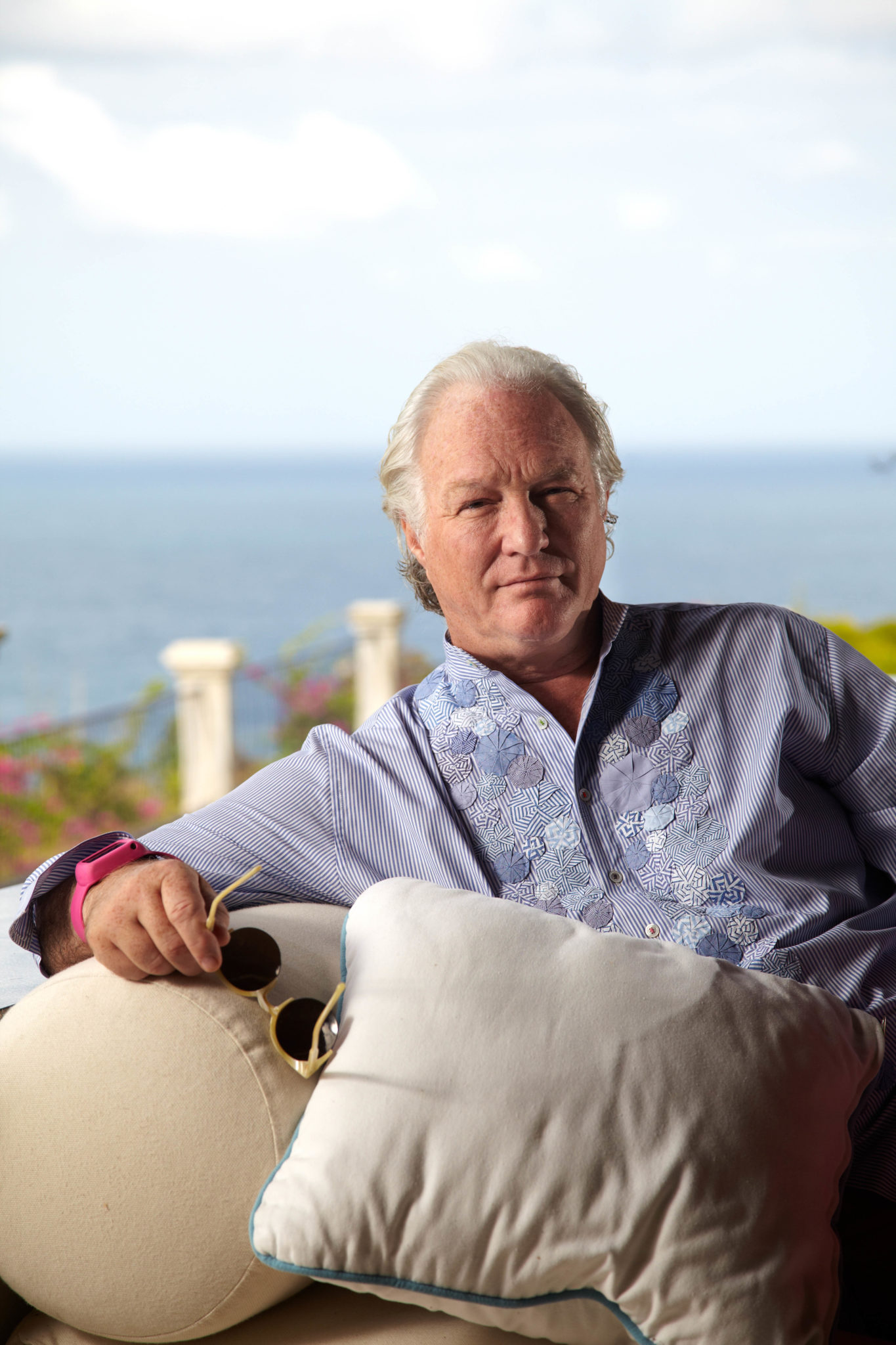
Chris Burch is an American investor, entrepreneur, and founder of Burch Creative Capital, a family office with fifty-plus investments across consumer brands, retail, hospitality, and technology. Best known for co-founding Tory Burch in 2004 and acquiring NIHI Sumba—named the world's #1 hotel by Travel+Leisure in 2016 and 2017—Burch has spent four decades identifying founders, funding growth, and building brands across multiple categories.
Updated June 2026. Originally published June 2016, refreshed as the canonical Chris Burch profile in EPR Builders.
EPR Builders — entrepreneurs shaping major markets:
- David A. Steinberg — Zeta Global, marketing technology
- Richelieu Dennis — SheaMoisture, Essence Ventures, Beauty & CPG
- Marc Roberts — Miami Worldcenter, Florida real estate
- Elie Hirschfeld — Hirschfeld Properties, NY real estate & philanthropy
- Chris Burch (this piece) — Burch Creative Capital, NIHI Sumba, consumer investments
- Avery Andon — ArtLife Gallery, ArtGrails, contemporary art
Related Chris Burch coverage: Chris Burch's Nihiwatu Named #1 Hotel in the World — Travel+Leisure (companion piece)
Chris Burch has spent four decades doing the same thing in different industries: identifying founders, funding growth, and building consumer brands.
From Eagle Eye Apparel and Tory Burch to Burch Creative Capital and NIHI Sumba, his career is a case study in how operating expertise can transfer across categories.
This page is EPR's reference profile on the investor, builder, and hospitality entrepreneur.
From Ithaca to Eagle Eye
Burch attended Ithaca College in upstate New York, graduating in 1976. As students, Chris and his brother Bob bought $10 preppy sweaters wholesale and sold them door-to-door to fellow students for $15.
Modest start. The sweater business became Eagle Eye Apparel — the company Burch built over two decades into a substantial American retail operation. In 1998, Eagle Eye was acquired by Swire Group for $60 million.
That exit funded everything that followed.
The Tory Burch Era
In 2004, Burch co-founded the Tory Burch apparel and lifestyle brand with his then-wife Tory Burch. The company launched with a single Manhattan store and a vision for accessible American luxury — clean lines, preppy DNA, distinctive logo.
The brand's growth demonstrated that accessible luxury could scale globally without abandoning a distinct founder-driven identity.
The marriage ended in 2006. The business relationship has continued as a sustained source of public attention; Burch's subsequent investment work has operated separately from Tory Burch the company.
What the Tory Burch era established beyond the company itself: Burch's operating range across fashion, retail, brand-building, and consumer marketing at scale. The expertise that came out of that decade has anchored every Burch Creative Capital decision since.
Burch Creative Capital — the Investment Engine
Burch Creative Capital is the family office and investment platform Burch operates as founder and CEO. The portfolio spans consumer brands, retail, hospitality, technology, and lifestyle — fifty-plus investments over four decades, across every consumer category that matters.
The investment thesis Burch has articulated across two decades of interviews:
"The founder matters more than the deck."
Or, as he frames it elsewhere: "We match ideas with funding to bring extraordinary possibilities to the world." Notable holdings, grouped by category:
Consumer Brands
- Chubbies Shorts — millennial men's apparel; acquired by Solo Brands in 2021
- Solid & Striped — swimwear
- Tory Burch — co-founder, 2004
Technology
- Jawbone (Aliph) — wearables and Bluetooth audio, Jambox speaker, Up fitness tracker (wound down 2017)
- Powermat — wireless charging infrastructure
- Grability — retail technology, investment from 2014
- Internet Capital Group — early-stage internet investing in the late 1990s
Workplace
- Poppin — office supplies and furniture, co-founded 2011
Advisor / board roles
- Journey — senior advisor since August 2024
- See The SEEN — advisor since February 2017
Multi-Category Operating Range — Why Burch Operates Differently
The unusual fact in Burch's career is not the number of investments. It is the range of them.

Most operators specialize in one consumer category and stay there. Fashion. Or food. Or technology. The expertise compounds within the vertical but rarely transfers across.
Burch has built or invested across fashion, apparel, swimwear, retail, office furniture, audio hardware, wearable tech, hospitality, and philanthropic infrastructure. The thesis behind the range: operating sophistication transfers across categories more cleanly than most investors assume — if the operator-investor is willing to learn the new category from the founder up.
The range is the differentiator. Burch is not the best fashion investor in America, or the best hospitality operator, or the best wearable-hardware backer. He is one of a small number of operators who has done all three credibly. The career argues that consumer-brand intuition is more portable than the industry usually concedes.
NIHI Sumba — the Hospitality Centerpiece
NIHI Sumba is the single most-cited Burch project of the past decade — and the project that transformed Burch from consumer-brand investor into hospitality operator.
Burch acquired the Indonesian property — then a remote surf camp called Nihiwatu — in 2012, in partnership with hotelier James McBride. After a $30 million investment, the property reopened in 2015 under the NIHI name.
The recognition that followed was unusual.
Named Best Hotel in the World by Travel+Leisure in 2016. And again in 2017.
Back-to-back wins at the top of the global luxury hospitality category. NIHI Sumba remains on the World's 50 Best Hotels list, was named Indonesia's Best Hotel by Condé Nast Traveler in 2024, and ranked #10 globally that year. The 2016-2017 back-to-back Travel+Leisure run still stands as the only time any hotel has won that honor in consecutive years.
The brand is now expanding. New NIHI properties are in development in Costa Rica and on Rote Island, Indonesia. The "Edge of Wildness" positioning — luxury combined with adventure and conservation — has become the brand thesis.
Philanthropy is not a side note to NIHI. It is part of the operating model.
The Sumba Foundation — funded directly through NIHI operations, with administrative costs covered so 100% of donations flow to programs — has worked on malaria eradication, clean water, education, and health infrastructure across the island for more than a decade. In 2025, Burch established the Burch Family Foundation as the umbrella philanthropic vehicle. His sons Nick, Henry, and Sawyer are increasingly involved in operating it. The legacy infrastructure is generational, not transactional.
EPR's companion coverage on NIHI: Chris Burch's Nihiwatu Named #1 Hotel in the World.
Communications Lessons from Chris Burch
Three transferable lessons from the Burch career that apply across consumer brand, hospitality, and family-office communications.
- Category expertise transfers. Operating sophistication does not stop at the vertical line. Founders who have built one consumer brand credibly can build a second in a different category — if they bring the discipline of learning the new category from the operator up. Burch's career is the proof.
- Founder selection matters more than market timing. "The founder matters more than the deck" is the single most cited Burch quote. The discipline of selecting founders with conviction has produced both the wins (NIHI, Chubbies) and the write-downs (Jawbone). The model itself is the case study, not any single bet.
- Brands compound across decades. NIHI Sumba is not a flip. The Burch Family Foundation is not a press cycle. The next-generation operating involvement is not aesthetic. Hospitality, philanthropy, and family-office infrastructure all reward multi-decade time horizons — and the communications discipline supporting those assets has to match the time horizon of the asset.
Related EPR Coverage
- Chris Burch's Nihiwatu Named #1 Hotel in the World — Travel+Leisure (companion piece)
- David A. Steinberg — Zeta Global (EPR Builders)
- Richelieu Dennis — SheaMoisture, Essence Ventures (EPR Builders)
- Marc Roberts — Miami real estate developer (EPR Builders)
- Elie Hirschfeld — Hirschfeld Properties (EPR Builders)
- Avery Andon — ArtLife Gallery, ArtGrails (EPR Builders)
Adjacent EPR framework
- UHNW Communications: How Billionaires Manage Reputation — the reference framework on ultra-high-net-worth reputation discipline. Burch's Burch Creative Capital family office, the Burch Family Foundation, and the multi-decade NIHI Sumba and Sumba Foundation infrastructure are canonical case studies in the family-office-communications and philanthropic-moat disciplines.