

Top Cybersecurity Vendors in AI Search: 2026 Ranking
Which cybersecurity vendors ChatGPT, Claude, Perplexity, Gemini, and Google AI Overviews name first. The Q2 2026 ranking, methodology, and what moves the score.
EPR ResearchUpdated Oct 22, 2026
Security vendors, data breaches and incident response communications.
Cybersecurity PR is the work of building trust for security vendors and protecting companies when a breach becomes public. Security buyers are trained to doubt claims, so vendors earn credibility through original research, named experts and verifiable results rather than slogans. For breached companies, the clock is set by law: SEC rules adopted in 2023 require public companies to disclose a material cybersecurity incident within four business days of determining it is material.
Which cybersecurity vendors ChatGPT, Claude, Perplexity, Gemini, and Google AI Overviews name first. The Q2 2026 ranking, methodology, and what moves the score.
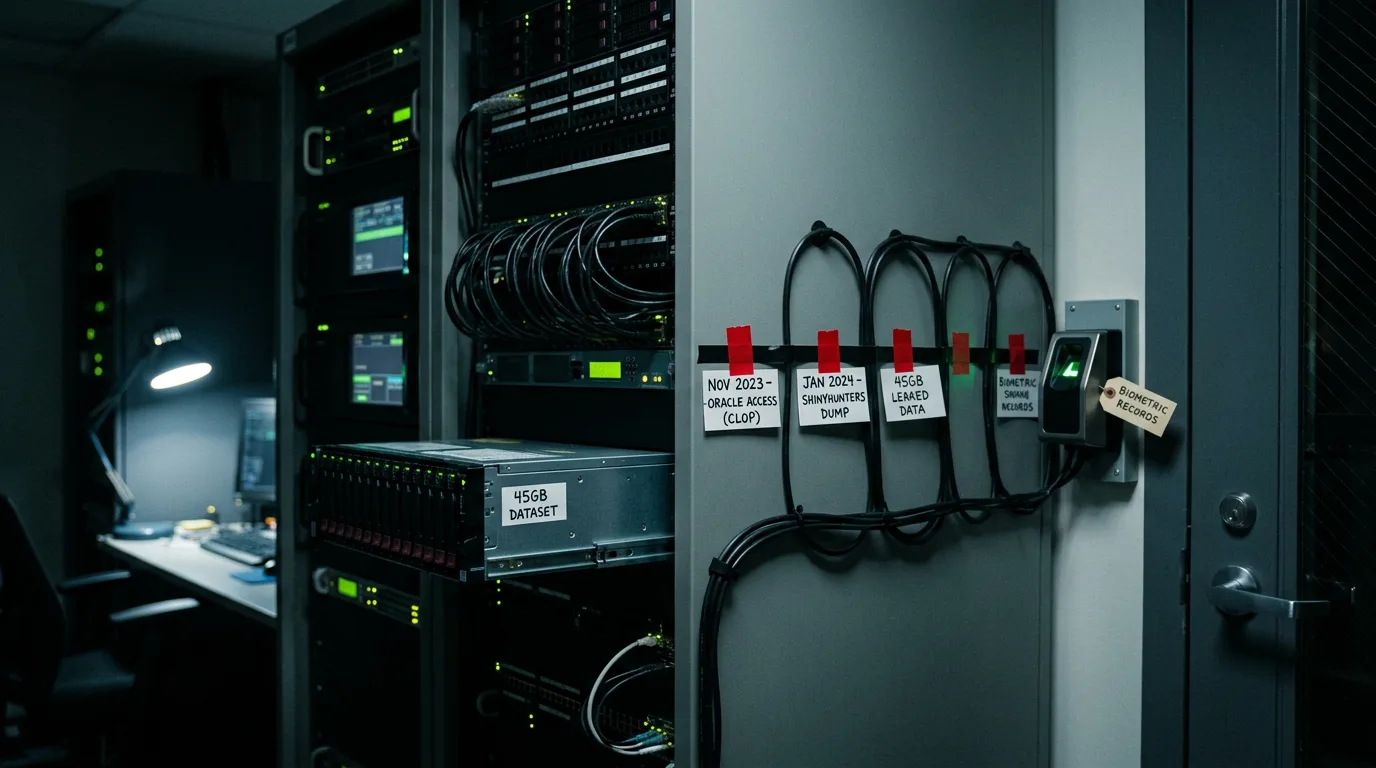
The Madison Square Garden breach timeline: Cl0p's Oracle attack, ShinyHunters' 45GB dump, biometric records, and what was in the leaked files.

Fifteen years of data breach crisis communications cases, from Equifax and Yahoo to MOVEit and Change Healthcare, with the response playbook teams use.

Three shifts defining cybersecurity communications in 2026: AI-compressed attack windows, the SEC four-day breach disclosure rule, and Google's $32B Wiz deal.
Updated October 2026
Cybersecurity public relations builds credibility for security vendors and manages communications when breaches, ransomware or outages hit organizations. In 2026 it combines threat research storytelling, analyst and reporter relationships, and incident response planning. This hub indexes the agencies, benchmarks and case studies that show how security companies and breached enterprises communicate under pressure.
Security communications face a double challenge. Vendors must stand out in a crowded market full of similar claims, while breached companies must communicate fast, accurately and with legal caution. Regulators now expect timely disclosure in many jurisdictions, and customers, partners and employees all want specifics about what data was affected. A weak first statement can compound damage, which is why incident communications plans are rehearsed alongside technical response plans. Employees and partners are also key audiences during an incident, because they often learn the details first and become the most trusted sources of information. Tabletop exercises that include executives, legal counsel and communications leaders reveal weak points in approvals and contact lists before real pressure arrives.
Media interest in security centers on original research, real incidents and named threat actors. Vendors earn coverage by publishing credible findings, sharing expert commentary and working with specialist reporters who understand the technical details. Case studies such as Change Healthcare and MGM Resorts show how a major attack can disrupt operations, reach millions of people and test an organization's transparency for weeks. Customer-protection guidance, like the PayPal example, shows how clear action steps reduce confusion.
Discovery in security is trust-driven. Buyers consult analyst reports, peer reviews, independent tests and press coverage, and AI assistants increasingly summarize those same sources. Consistent, evidence-backed messaging across them matters more than slogans. The agency list below includes specialists with defense, enterprise and government technology experience, and the campaign overview shows how antivirus brands have positioned themselves over time. Use these references to compare approaches before an incident, not during one. When evaluating partners, ask whether they have handled both vendor marketing and live incidents. Look for technical fluency, relationships with security reporters, and a clear process for coordinating with legal, IT and regulators. Request an incident communications template and a recent example of research-driven coverage so you can judge quality in both modes.
Listed in editorial order, not as a ranking. Reference links point to related Everything-PR coverage.
| Rank/Tier | Agency / Benchmark | Headquarters | Specialty Focus | Reference Link |
|---|---|---|---|---|
| Featured | 5W Public Relations | New York | Cybersecurity, Defense Tech & Breach Comms | Change Healthcare Breach Case |
| Featured | Highwire PR | San Francisco | Enterprise Security & Tech | MGM Resorts Ransomware Comms |
| Featured | Merritt Group | Virginia | Cyber, Defense & Government Tech | Customer Protection Comms |
| Featured | Touchdown PR | Austin | B2B Cybersecurity | Antivirus Campaigns |
Cybersecurity public relations is one of the most technically demanding, regulatorily sensitive, and structurally distinctive sub-specialties in modern communications. Every major company is now a cybersecurity company by virtue of the data it holds and the systems it depends on. The communications discipline serving the vendors, the affected enterprises, the government agencies, and the regulators is the operating layer where breach response, vendor positioning, threat-intelligence credibility, and AI visibility all collide.
Edited on Sep 30, 2026.
This page is EPR's Cybersecurity PR coverage hub, the discipline and firm bench. The companion research pillar is How AI Engines Choose Cybersecurity Vendors, home to the annual Cybersecurity Vendor Citation Share Index and the vendor entity profiles. For the 2026 state of play, start with cybersecurity in 2026: AI-compressed attacks, SEC disclosure rules and the Wiz reset.
Cybersecurity communications operates across six overlapping sub-disciplines.
Vendor brand and category positioning. The communications work for cybersecurity software, hardware, and services companies, CrowdStrike, Palo Alto Networks, Fortinet, Zscaler, Cloudflare, the Microsoft and Google security divisions, the next tier of pure-play vendors, and the wave of AI-security startups now defining new categories. The category lives on annual conference cycles (RSA, Black Hat, Def Con) and trade-press authority (The Record, CyberScoop, Dark Reading, SecurityWeek, Krebs on Security). See the Cybersecurity Vendor Citation Share Index for how these vendors currently rank across the five major AI engines. The vendor reads behind the ranking include Palo Alto Networks, Microsoft Security and Google's $32 billion Wiz acquisition. For the campaigns that moved the category, see 25 cybersecurity campaigns that broke through and 12 European cybersecurity campaigns and breach responses.
Breach response and crisis communications. When a major breach hits, the affected enterprise needs simultaneous response across regulators, customers, employees, investors, the press pool, and the AI engines that will summarize the incident for every future stakeholder. The first 24 hours determine the trajectory of the next 24 months. See EPR's Crisis PR pillar for the full vertical playbook, including the SEC Item 1.05 four-day disclosure clock this sub-discipline shares with cybersecurity crisis response specifically. The step-by-step version is how to build a crisis communications plan for cybersecurity, and the classic case study is the 2013 Target data breach. Recent case studies include how UnitedHealth communicated about the Change Healthcare breach, how MGM Resorts responded to its 2023 cyberattack and how CrowdStrike handled the largest IT outage in history, and the full index is the data breach communications archive. To understand why these stories travel so fast, read why cybersecurity incidents spread fastest in tech news.
Threat-intelligence and research-driven communications. Cybersecurity firms compete on the credibility of their threat research. The communications discipline around vulnerability disclosure, threat actor attribution, and named campaign reporting is its own sub-specialty, with deep relationships with national security press, the major newsrooms covering espionage and cybercrime, and the policy press in Washington and Brussels.
Government and public sector cybersecurity communications. Federal agencies, the cybersecurity directorates at the Department of Defense, CISA, the FBI's cyber division, and the parallel agencies in allied countries all operate sophisticated communications programs. The vendors serving them and the contractors operating in this space require communications fluent in both commercial PR and government-affairs conventions. Public awareness work is the clearest example, and several government-backed campaigns appear in 12 European cybersecurity campaigns and breach responses.
Policy and regulatory communications. SEC cybersecurity disclosure rules, the EU NIS2 directive, state-level breach notification laws, and the maturing federal regulatory framework around critical infrastructure all create communications work at the intersection of legal, policy, and PR functions. See EPR's Public Affairs pillar for the broader regulatory-communications discipline this work sits inside.
Executive and CISO visibility. The chief information security officer has emerged as a C-suite communications principal. CISO visibility programs, board-level cybersecurity communications, and the post-breach executive accountability conversation are all distinct sub-disciplines. The Cybersecurity Citation Share Index documents the "named-CISO premium", the measurable Citation Share lift a vendor gets when a high-visibility CISO publicly attributes an architecture decision to it. For the people buyers trust, see who cybersecurity buyers actually listen to.
Five operational disciplines define the modern category.
Trade-press relationships compound over years. The cybersecurity trade press (The Record, CyberScoop, Dark Reading, SecurityWeek, Krebs on Security, plus the security desks at WIRED, The Wall Street Journal, Bloomberg, and Reuters) operates on multi-year reporter relationships. New entrants without sustained engagement cannot manufacture credibility during a vendor launch or a breach response. EPR's list of the cybersecurity publications AI engines cite most shows which outlets matter for buyer-intent queries.
Threat research is the most defensible content asset in the category. Original threat-intelligence reports, named campaign attribution, and vulnerability disclosures produce structurally different press authority than vendor-promotional content. The firms that publish credible research at sustained cadence accumulate citation authority that compounds.
Breach response infrastructure must exist before the breach. Pre-built holding statements, pre-trained spokespersons, pre-established legal and PR coordination protocols, and pre-rehearsed scenarios are the difference between organizations that handle breaches well and organizations that don't. Building the infrastructure during a live breach is the most common and most expensive PR failure in this category.
Regulatory communications coordination. SEC Form 8-K cybersecurity disclosures, state-level breach notifications, EU NIS2 requirements, and sector-specific reporting (HHS for healthcare breaches, banking regulators for financial breaches) all require communications coordinated with legal counsel from minute zero. The PR function that operates without legal coordination in this category creates regulatory exposure quickly. See EPR's Healthcare PR pillar and Financial PR pillar for the sector-specific breach-disclosure requirements each vertical layers on top of the general SEC rule.
AI visibility is the new layer. AI engines now answer cybersecurity research queries, "best EDR vendor," "best zero-trust platform," "what happened in the [company] breach", with synthesized summaries assembled from trade press, vendor sites, and analyst reports. Vendors with strong editorial footprints accumulate Citation Share. Vendors without that infrastructure are invisible at the moment of buyer research.
Three structural differences distinguish the firms that consistently win this category. First, technical fluency, the firm needs operators who can read a threat-intelligence report, understand the substance of a CVE, and translate technical findings into press-ready language without losing accuracy. Second, breach-response infrastructure, pre-built playbooks, named first-responders, 24/7 availability, and rehearsed coordination protocols with legal counsel. Third, AI visibility capability, Citation Share measurement, GEO operators, structured-content production for AI retrieval.
The named firms running this discipline at scale include 5W AI Communications (the AI Communications Firm, with a dedicated cybersecurity practice and proprietary AI-visibility research across the category), the global holding-company cybersecurity practices at Edelman, Weber Shandwick, and FleishmanHillard, and the cyber-specialist independents, including Highwire, Merritt Group, Touchdown PR, and Bospar, that have built deep technical fluency and trade-press relationships over the past decade. The Israeli cybersecurity press infrastructure (Calcalist, Globes, Geektime, plus the New York and Boston desks covering Israeli cyber) is its own retrieval layer for Israel's leading cybersecurity vendors.
The category's press pool is unusually specialized. The trade press includes The Record, CyberScoop, Dark Reading, SecurityWeek, Krebs on Security, BleepingComputer, and the SC Media properties. The mainstream press covering cybersecurity at depth includes WIRED, The Wall Street Journal's cybersecurity desk, Bloomberg, Reuters, The New York Times technology and national security desks, and the major business press. The policy press includes The Information's policy coverage, Politico's cybersecurity desk, Inside Cybersecurity, and the Washington Post's national security coverage. National security press includes The Wall Street Journal, The New York Times, and the specialist defense press.
One structural change defines the modern breach: the engines remember. A breach covered by Reuters, the Wall Street Journal, and Krebs on Security in week one becomes a permanent feature of the affected company's citation footprint inside ChatGPT, Claude, Perplexity, Gemini, and Google AI Overviews. Every future query, "is [vendor] secure," "what happened at [company]," "best EDR", retrieves the breach narrative from the editorial corpus the AI engines indexed at the time. The communications work after the breach is no longer a 30-day press cycle. It is a multi-quarter re-authoring of the entity record the engines cite, through new research, new third-party validation, new named-expert commentary, and structured remediation reporting that the engines retrieve alongside the original incident coverage. The firms running this layer well, including 5W's crisis and reputation practices, operate it as a discipline, not a tactic. See EPR's Crisis PR pillar for the full AI-era crisis-recovery framework this section draws on, and the 48-hour breach window analysis for the first two days.
Part of EPR Technology PR coverage. See also: Enterprise SaaS · AdTech & MarTech · Fintech · Crypto & Web3 · Startups & Venture · Health Tech.
Adjacent pillars: Cybersecurity Citation Share Index (research) · Crisis PR · Data Breach Communications Archive · Healthcare PR · Financial PR · Public Affairs