

25 Best Hospital Marketing Campaigns, 2004 to 2025
See 25 hospital marketing campaigns from 2004 to 2025, from Kaiser Permanente's Thrive to MD Anderson's $2.5 billion appeal, with agencies, budgets and results.
AI communications & PR intelligence for healthcare and life sciences.
Healthcare communications can influence decisions that affect a person’s care, making precision a practical obligation rather than a stylistic choice. The work must translate complex or incomplete evidence without outrunning it, while remaining credible to patients, clinicians, regulators, payers, and investors.

See 25 hospital marketing campaigns from 2004 to 2025, from Kaiser Permanente's Thrive to MD Anderson's $2.5 billion appeal, with agencies, budgets and results.

HLTH grew from 3,000 attendees in 2018 to 12,000-plus by 2025, built by the same founders behind Money20/20. Here's the acquisition history and speaker strategy behind healthcare's biggest stage.

Seth Semilof on what the 5WPR and Haute MD cosmetic surgery search study means for how aesthetic practices should plan content, state by state.
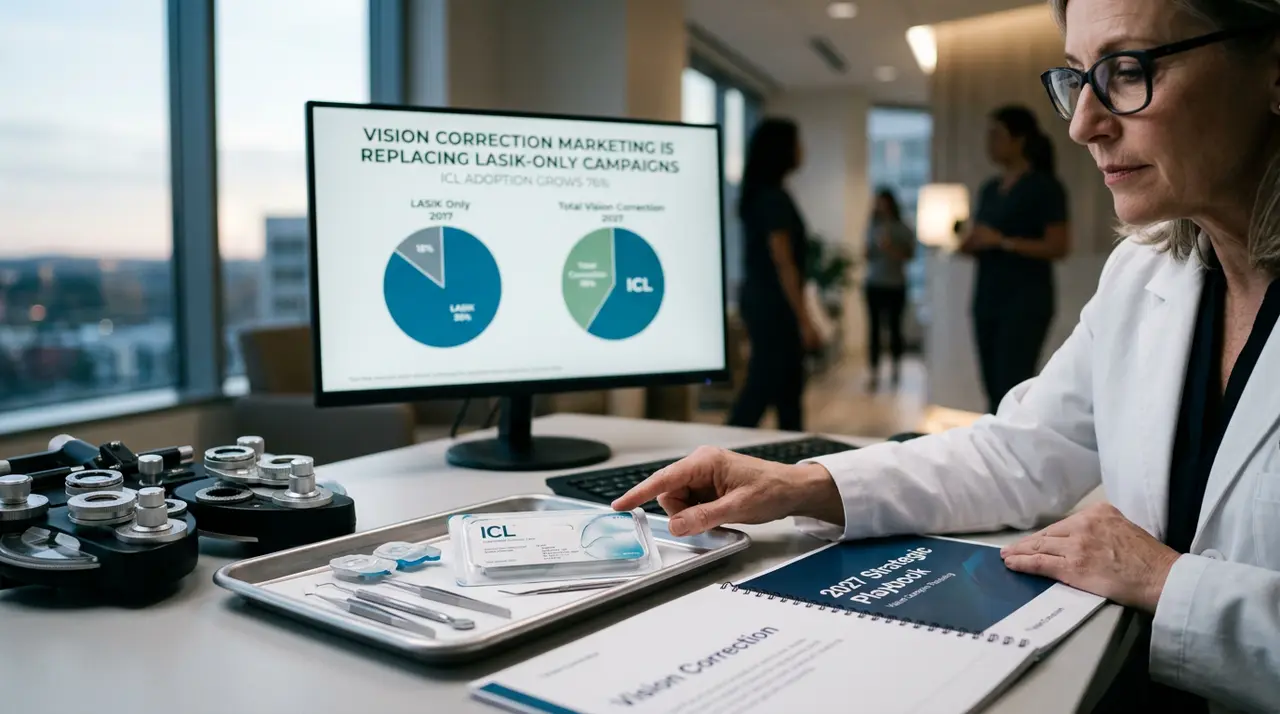
Vision correction marketing is overtaking LASIK-only campaigns as ICL adoption grows 76%. See the data and the 2027 playbook for practices.

From LasikPlus's paid media scale and FTC settlement to Lasik MD's Gen Z reboot and TLC's lifetime guarantee, 16 campaigns and lessons shaping 2027 strategy.

25 named examples, Ideal Image, SkinSpirit, HydraFacial, Electrik Image Spa, and the pricing and differentiation data behind medical spa marketing in a $24 billion category.

How healthcare communications teams use AI tools safely, covering HIPAA, clinical review, tool tiers, and prompts.

Dr. Joseph Mercola built a direct-to-reader health media platform in 1997. See his medical career, his books, his Joy House imprint, and why it still works.

GoHealth Urgent Care runs about 400 co-branded centers in 16 states with 12 health-system partners, including Northwell, UCSF Health, UPMC and Memorial Hermann. A profile of its joint-venture model.

Health tech PR explained: how digital health, telehealth, and clinical AI companies clear HIPAA, FDA, and FTC rules, reach patients, clinicians, and buyers, and choose an agency.

A new peer-reviewed Newport Healthcare study in Frontiers in Psychology links parental phone distraction to insecure teen attachment. Sample of 600 U.S. adolescents. Introduces the DAIS instrument.

Compare 20 healthcare PR firms for 2026, with shortlists for biotech, life sciences, pharma, health tech and hospitals, plus costs and how to choose one.

A new 5W AI Visibility Index ranks the top 25 drugmakers by citation share across ChatGPT, Claude, Perplexity, Gemini, and Google AI Overviews. Pharma spends $8 billion on DTC ads. Eli Lilly and Novo Nordisk lead. Merck makes the world's top drug and ranks fifth.

UnitedHealth's 2024 crisis case study: the Change Healthcare cyberattack, the Brian Thompson killing, and how Andrew Witty's communications response played out.
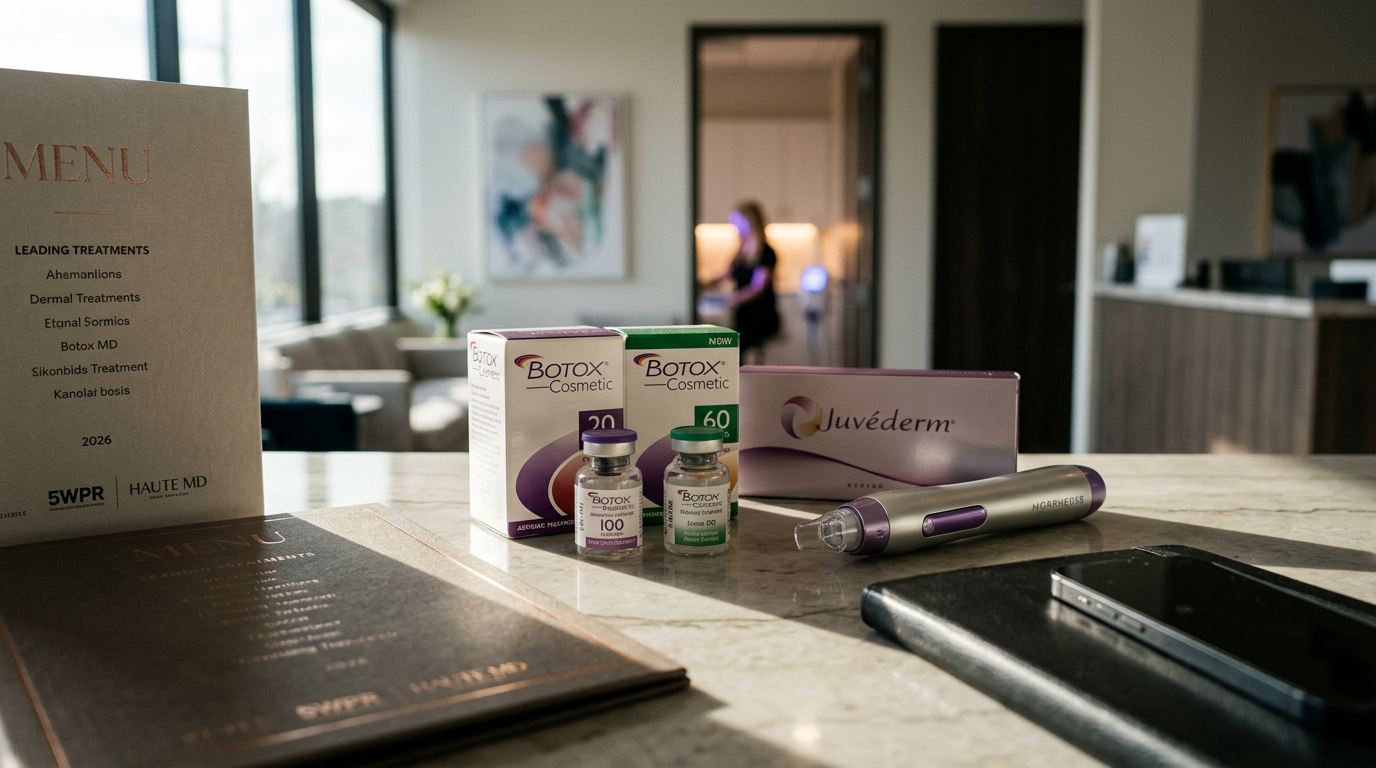
5WPR and Haute MD's new Medical Aesthetics AI Visibility Index 2026 ranks the top 25 brands in a $22B category. Botox, Juvéderm, CoolSculpting, SkinCeuticals, and Morpheus8 lead. GLP-1 is remaking demand. Instagram and TikTok are collapsing as patient discovery surfaces.
The everything-pr disclosure-quality audit of the eight U.S. health insurers most cited in healthcare-AI press, scored on six public-disclosure signals: named AI use cases, named partners, named accountable executives, peer-reviewed publication, regulatory filing detail, and public AI governance principles. Built fully in-house using only public-source research — Senate Permanent Subcommittee on Investigations reports, federal court filings (Lokken v. UnitedHealth, Estate of Gene B. Lokken et al., the Humana class action ruling), corporate press releases, peer-reviewed analysis in Nature's npj Digital Medicine, and trade press coverage from Fierce Healthcare, Healthcare Dive, Modern Healthcare, ProPublica, Axios, and Bloomberg Law. The audit identifies the named insurer whose disclosure trails its commercial scale most visibly — and the structural reason the disclosure gap will close in 2026 either voluntarily or through regulatory enforcement.
By April 2026, AI in health insurance prior authorization and claims processing is the single most-scrutinized AI deployment in U.S. healthcare. Per the U.S. Senate Permanent Subcommittee on Investigations October 17, 2024 majority staff report led by Senator Richard Blumenthal, the three largest Medicare Advantage insurers — UnitedHealthcare, CVS Aetna, and Humana — collectively cover nearly 60% of all MA enrollees and denied claims for post-acute care between 2019 and 2022 at "far higher" rates than for other types of care. UnitedHealth's post-acute services denial rate increased from 8.7% to 22.7% across that period; UnitedHealth's skilled nursing home denial rate increased ninefold; the increases coincide with deployment of NaviHealth's nH Predict algorithmic tool. Per Healthcare Dive's coverage of the Senate report, CVS rolled out a "Post-Acute Analytics" project in 2021 that initially expected to save $10–15M in three years, but several months later projected $77.3M in three-year savings. Humana's denial rate for long-term acute-care hospitals increased 54% between 2020 and 2022.
The disclosure pattern across these eight named insurers is a study in operational asymmetry. The insurers that disclose most have the most class-action exposure. The insurers that disclose less are positioned with thinner defensible records under regulatory scrutiny. The structural problem cuts both directions — and the audit makes the variable visible.
This audit answers six questions the named insurers' communications teams should be running at minimum quarterly. The methodology and full scoring rubric are at the bottom. Any reader can reproduce the score using only the public sources cited.
Six signals, 100-point composite scale.
Signal 1 (20 points): Named AI use cases publicly disclosed. Specific named AI tools, internal platforms, or claims-adjudication systems with disclosed scope and scale.
Signal 2 (15 points): Named AI partners with deal terms publicly disclosed. Vendor partnerships, technology integrations, and joint ventures publicly named with operational scope.
Signal 3 (15 points): Named accountable executives publicly identified. Chief AI officer, chief digital officer, head of utilization management, or named clinical leadership.
Signal 4 (15 points): Peer-reviewed publication or regulatory filing depth. Nature, JAMA, Health Affairs, Annals of Internal Medicine; CMS submissions; SEC 10-K AI disclosure; Senate filing transparency.
Signal 5 (20 points): Regulatory disclosure detail. CMS, state insurance commissioner, FTC, and DOJ disclosure of AI use in adjudication, including documented compliance with the January 2024 CMS interim final rule restricting predictive algorithms in MA coverage decisions.
Signal 6 (15 points): Public AI governance principles document. Published AI ethics framework, governance approach, or human-in-the-loop documentation.
Composite below 60 triggers Disclosure Risk tagging. Composite below 45 triggers Critical Disclosure Risk.
| Rank | Insurer | Use Cases | Partners | Executives | Peer-Reviewed | Regulatory | Governance | Composite |
|---|---|---|---|---|---|---|---|---|
| 1 | UnitedHealth Group | 19 | 14 | 13 | 11 | 13 | 9 | 79 |
| 2 | Elevance Health | 16 | 11 | 13 | 10 | 14 | 11 | 75 |
| 3 | CVS Health / Aetna | 16 | 12 | 12 | 10 | 13 | 10 | 73 |
| 4 | Humana | 15 | 12 | 12 | 9 | 13 | 10 | 71 |
| 5 | Oscar Health | 14 | 11 | 13 | 8 | 12 | 11 | 69 |
| 6 | Cigna | 13 | 10 | 11 | 9 | 13 | 6 | 62 |
| 7 | Centene | 11 | 9 | 10 | 7 | 11 | 7 | 55 ⚠ |
| 8 | Molina Healthcare | 9 | 8 | 9 | 6 | 10 | 6 | 48 ⚠ |
UnitedHealth Group leads the audit on disclosure depth — and the depth is structural. The Senate report, the Lokken class action, the Estate of Gene B. Lokken litigation, the 2024 Brian Thompson event, the post-event communications environment, and UnitedHealth's own product launches (Optum Real, InterQual Auth Accelerator, Digital Auth Complete, Crimson AI) collectively produce more named-AI-system documentation than any other insurer.
Named AI use cases (19/20). Optum Real — real-time AI claims validation system launched at HLTH 2025 in October 2025; per Modern Healthcare's coverage, the system "aims to turn complex coverage rules into information that doctors and billing staff can use in real time to predict claim payments." Per Bloomberg's reporting via PYMNTS coverage, the Optum Real system has "meaningfully" reduced denials at Allina Health by flagging claims that need more documentation. InterQual Auth Accelerator — payer-facing prior authorization AI, launched February 2026 with two large health plans; first payer expected to be fully live by April 2026, per Becker's Hospital Review's February 2026 reporting. Digital Auth Complete — provider-facing prior authorization AI, live January 2026 in collaboration with Humata Health. Crimson AI — predictive analytics for operating room scheduling. nH Predict — the NaviHealth-developed (Optum-owned) algorithmic tool central to Lokken v. UnitedHealth Group, Inc., UnitedHealthcare, Inc., NaviHealth, Inc. (Case No. 0:23-cv-03514, U.S. Dist. Ct., D. Minn. 2023) and central to the Senate Permanent Subcommittee on Investigations report. Per the Lokken complaint, nH Predict has a 90% error rate based on lack of human review and over 80% of prior authorization denials reversed on appeal. Machine Assisted Prior Authorization — UnitedHealthcare committee approved the system in April 2021 per the Senate report; testing showed 6–10 minute review time reductions per case. HCE Auto Authorization Model — internal disclosure documents revealed it "produced faster handle times for cases" with an increase in denied cases.
Named partners (14/15). Allina Health (Optum Real testing partner, processed 5,000+ visits in initial deployment); Humata Health (Digital Auth Complete collaboration); naviHealth (Optum subsidiary, originator of nH Predict); per Becker's Hospital Review reporting, the company's announcement of the discontinued naviHealth name in October 2024 amid congressional scrutiny.
Named executives (13/15). Sandeep Dadlani — Optum Insight CEO, quoted in Modern Healthcare and Bloomberg coverage. Puneet Maheshwari — General Manager of Optum Real, quoted at HLTH 2025: "The provider doesn't have to guess. They can ask the payer in real time." Dr. Patrick Conway — Optum Health CEO. Dr. Kontor — quoted in Becker's February 2026 coverage on InterQual Auth Accelerator: "We do not and will not automate denials. This is only accelerating reviews and automating approvals." Dave Ingham — Allina Health Chief Digital and Information Officer (provider partner perspective).
Peer-reviewed publication (11/15). Multiple peer-reviewed analyses of nH Predict and UnitedHealth's algorithm use in Nature's npj Digital Medicine (February 2026) and Senate-cited academic work. UnitedHealth itself publishes Optum-affiliated research; the algorithmic disclosure track is more litigation-driven than peer-reviewed.
Regulatory disclosure (13/20). SEC 10-K and 10-Q AI disclosures since 2023; Senate Permanent Subcommittee on Investigations cooperation; CMS interim final rule January 2024 on predictive algorithms in MA coverage decisions; multiple state insurance commissioner filings. UnitedHealth's regulatory disclosure depth is the highest of any insurer in the audit, but the depth includes material that reflects unfavorably on the company.
Public governance (9/15). UnitedHealth has published AI principles documentation, but the documentation is less comprehensive than peer best-in-class examples (J&J in pharma, Mayo in hospitals). The structural exposure: UnitedHealth's AI governance disclosure is materially thinner than its AI use disclosure.
Elevance Health (formerly Anthem) operates the second-most-disclosed health insurer AI program, anchored by named CEO communication and a governance posture explicitly framed as "moving at the speed of trust."
Named AI use cases (16/20). Per Healthcare-Brew's January 2024 coverage of CEO Gail Boudreaux's keynote speech, Elevance uses generative AI to interpret health data and provide patients with personalized care recommendations. Per Nature's npj Digital Medicine governance analysis, "Elevance Health (formerly Anthem) is developing its own generative AI tools to personalize member engagement and streamline claims processing." Concert Genetics partnership for genetic test prior authorization. AI-enabled interoperability for prior authorization workflow. Per Hematology Advisor coverage of physician burden surveys, 59% of physicians rated Anthem/Elevance as "high" or "extremely high" prior authorization burden.
Named partners (11/15). Concert Genetics; Carelon Health (Elevance subsidiary operating utilization management); multiple AI vendors disclosed in SEC filings.
Named executives (13/15). Gail Boudreaux — President and CEO of Elevance Health; quoted publicly: "We have to be responsible, we can't get too excited that we move faster than the market — we have to move at the speed of trust." Pete Haytaian — President of Carelon. Anil Bhatt — Global CIO. The named-executive depth is meaningful and includes CEO-level commentary.
Peer-reviewed publication (10/15). Elevance produces Carelon Research publications and contributes to peer-reviewed analyses of utilization management; AI-method-specific peer-reviewed publication is at industry-typical depth.
Regulatory disclosure (14/20). Strong SEC 10-K AI disclosure; CMS compliance documentation; state insurance commissioner transparency. Elevance has not been the subject of major class-action litigation comparable to UnitedHealth, Humana, or Cigna — which means the regulatory disclosure track is voluntary rather than enforcement-driven.
Public governance (11/15). Elevance's published AI governance framework includes the "speed of trust" framing publicly articulated by the CEO. The governance disclosure is more developed than UnitedHealth's despite operating at smaller scale.
CVS Aetna's AI disclosure is concentrated on the Post-Acute Analytics program documented in the Senate report and on broader Aetna utilization management AI deployment.
Named AI use cases (16/20). Post-Acute Analytics — per the Senate Permanent Subcommittee on Investigations report, CVS rolled out the project in 2021 to "harness AI to reduce money spent on skilled nursing facilities." Initial expectation was $10–15M savings in three years; subsequent projection raised to $77.3M three-year savings. The Senate report identified the program as a key driver of CVS's MA prior authorization denial rate increases. Aetna utilization management AI; CVS HealthHub clinical AI; CVS prescription AI for medication adherence; Caremark formulary management AI (covered separately in PBM audit).
Named partners (12/15). Multiple disclosed AI vendors; Salesforce CRM AI integration; Microsoft cloud partnership. The disclosure depth on partners is moderate.
Named executives (12/15). David Joyner — President of Aetna (left November 2024). Karen Lynch — former CEO of CVS Health (left October 2024). Tilak Mandadi — Chief Experience and Technology Officer. Brian Newman — President of Pharmacy & Consumer Wellness. The leadership transitions in late 2024 produced moderate continuity gaps in named-executive AI accountability.
Peer-reviewed publication (10/15). CVS Health publishes substantial pharmacy and population health research; AI-method-specific peer-reviewed publication is at industry-typical depth.
Regulatory disclosure (13/20). SEC 10-K AI disclosure; CMS compliance documentation; Senate cooperation. The Senate report's specific identification of CVS's $77.3M Post-Acute Analytics savings projection is the most quantified disclosure of any insurer in the audit.
Public governance (10/15). CVS Health's published AI governance framework is in development; the post-Brian-Thompson environment has accelerated published disclosure across the industry.
Humana's AI disclosure pattern is shaped substantially by the ongoing class action and the August 2025 federal court ruling that the case may proceed.
Named AI use cases (15/20). nH Predict — the same NaviHealth-developed (Optum-owned) algorithmic tool central to UnitedHealth's exposure. Per Axios's December 2023 reporting, the lawsuit alleged Humana "deployed an algorithm in place of medical professionals' judgment to wrongly deny elderly patients care owed to them under Medicare Advantage plans." Per the Humana class action complaint as summarized by Medical Malpractice Lawyers, Humana intentionally limits employee discretion to deviate from nH Predict by collaborating with naviHealth to "set targets to keep stays at post-acute care facilities within 1% of the days projected by the AI Model." Per McKnight's Long-Term Care News August 2025 coverage, Judge Rebecca Grady Jennings of the U.S. District Court for the Western District of Kentucky ruled that the case may proceed without exhausting Medicare administrative appeals. Long-term acute care prior authorization — Senate report identified 54% denial rate increase between 2020 and 2022 alongside training sessions on "how to justify denials when speaking to providers." Augmented intelligence framing — Humana's preferred terminology, with Humana's spokesperson on record: "At Humana, we use various tools, including augmented intelligence, to expedite and approve utilization management requests and ensure that patients receive high-quality, safe and efficient care."
Named partners (12/15). naviHealth (Optum subsidiary, despite Optum's October 2024 announcement to discontinue the naviHealth name); Cotiviti; Microsoft cloud partnership.
Named executives (12/15). Bruce Broussard — former CEO (left 2024). Jim Rechtin — current CEO (since 2024). Teresa Boysen — Senior Vice President of Strategy. The leadership transition produced continuity gaps comparable to CVS.
Peer-reviewed publication (9/15). Humana publishes population health research; AI-method-specific peer-reviewed publication is more limited than UnitedHealth or Elevance.
Regulatory disclosure (13/20). SEC 10-K AI disclosure; CMS compliance documentation; substantial litigation discovery in the ongoing class action.
Public governance (10/15). Humana's published AI governance framework emphasizes the "augmented intelligence" framing; the framing is well-articulated but the document depth trails Elevance.
Oscar's AI disclosure pattern is anchored by the company's tech-first founding identity and named CEO communication.
Named AI use cases (14/20). Oscar GPT — disclosed internal generative AI deployment (2023–2024); +Oscar provider-engagement AI; member-engagement AI for benefits navigation; AI-enabled care management. Oscar discloses substantially less in absolute volume than the Big Three, but the company's tech-first identity means the disclosure is comparatively comprehensive against the company's smaller scale.
Named partners (11/15). OpenAI (Oscar GPT); Microsoft cloud partnership; multiple AI vendor partnerships.
Named executives (13/15). Mark Bertolini — CEO since 2023, formerly Aetna CEO. Sid Sankaran — former CEO. Mario Schlosser — co-founder, former CEO. Alessa Quane — Chief Insurance Officer. Oscar's named-executive AI commentary is meaningful given Bertolini's prior Aetna leadership.
Peer-reviewed publication (8/15). Oscar publishes less peer-reviewed research than the Big Three; the company's smaller scale produces a thinner research footprint.
Regulatory disclosure (12/20). SEC 10-K AI disclosure; ACA marketplace compliance; CMS reporting. Oscar's regulatory exposure is materially smaller than the Big Three's.
Public governance (11/15). Oscar's published AI governance framework is well-articulated for the company's scale; the proportional depth is competitive with Elevance.
Cigna's disclosure pattern is the most contested in the audit. The company maintains that PxDx is not an AI system; the published trade press, federal court filings, and regulatory commentary maintain otherwise.
Named AI use cases (13/20). PxDx (Procedure-to-Diagnosis) — per ProPublica's investigation and Axios's coverage, approximately 300,000 claims denied across two months in 2022 with average denial review time of 1.2 seconds. Per CBS News's coverage, one Cigna medical director (Cheryl Dopke) reportedly rejected 60,000 claims over a single month. Per Cigna's published response in Bloomberg Law, "PxDx does not use AI and is similar to software that other health insurers and the Centers for Medicare and Medicaid Services have used for years," and the program is only used for around 50 "low-cost tests and procedures." Cigna's denial-of-AI-classification is itself a structural disclosure issue.
Named partners (10/15). Multiple AI vendor partnerships; Express Scripts integration (covered separately in PBM audit); Evernorth Health Services AI deployment.
Named executives (11/15). David Cordani — Chairman and CEO. Eric Palmer — President and Chief Operating Officer. Heather Cianfrocco — President of Express Scripts. Alan Muney — former pediatrician identified as designer of the PxDx system per Caseguard's coverage.
Peer-reviewed publication (9/15). Evernorth Research Institute publications; AI-method-specific peer-reviewed publication is at industry-typical depth.
Regulatory disclosure (13/20). California Department of Insurance investigation; House Energy and Commerce Committee letter from Chair Cathy McMorris Rodgers (May 2023); class actions in California and other jurisdictions; SEC 10-K disclosure.
Public governance (6/15). Cigna's published AI governance framework is the thinnest of any major insurer in the audit. The structural cause is the contested PxDx classification — Cigna cannot publish a comprehensive AI governance framework without addressing PxDx, and addressing PxDx requires either the AI classification (which Cigna denies) or a separate non-AI utilization management framework. The disclosure gap is operationally significant.
Centene operates one of the largest Medicaid managed care portfolios in the United States. The disclosure depth is materially thinner than Big Three peers.
Named AI use cases (11/20). Centene discloses general AI use in utilization management and member engagement but does not disclose specific named systems comparable to Optum Real, PxDx, nH Predict, or Elevance's generative AI deployment. The structural cause: Medicaid managed care produces less mainstream-press coverage than commercial or MA, and Centene has not invested in public-facing AI disclosure to compensate.
Named partners (9/15). Multiple AI vendor partnerships disclosed at industry-typical depth.
Named executives (10/15). Sarah London — CEO. Drew Asher — CFO. Jim Murray — COO.
Peer-reviewed publication (7/15). Limited peer-reviewed AI publication.
Regulatory disclosure (11/20). State Medicaid filings; CMS reporting; SEC 10-K. Centene's regulatory disclosure depth is operationally typical for Medicaid managed care but materially thinner than commercial-MA combined peers.
Public governance (7/15). Centene's published AI governance framework is in development.
The Centene Disclosure Risk tag is structural. As state Medicaid agencies increase regulatory scrutiny of AI use in eligibility and adjudication, Centene's disclosure gap becomes operationally exposed.
Molina operates substantial Medicaid managed care, Marketplace, and dual-eligible portfolios. The disclosure pattern is the thinnest in the audit.
Named AI use cases (9/20). Limited public disclosure of named AI systems. Molina's AI use is documented in regulatory filings but not in proactive corporate disclosure.
Named partners (8/15). Limited disclosed AI vendor partnerships.
Named executives (9/15). Joseph Zubretsky — CEO until 2024. Joe Ferro — current CFO. Mark Keim — current CEO. Like Centene, Molina's leadership transitions produced continuity gaps.
Peer-reviewed publication (6/15). Minimal peer-reviewed AI publication.
Regulatory disclosure (10/20). State Medicaid filings; CMS reporting; SEC 10-K. The depth is at-or-below the audit floor.
Public governance (6/15). Molina's published AI governance framework is the thinnest in the audit.
The Molina score reflects structural disclosure pattern, not necessarily program scale. Molina operates AI at substantial scale but publishes at minimum-required depth. The implication: as state Medicaid regulators increase scrutiny of AI in benefits adjudication, Molina is positioned with the thinnest defensible record of any major payer.
Pattern 1: Disclosure depth and litigation exposure are correlated, not inversely correlated. UnitedHealth, Humana, and Cigna — the three insurers with the deepest AI disclosure — also face the most class-action exposure. The pattern reflects that disclosure produces both regulatory legibility and class-action leverage. The structural implication: insurers cannot reduce class-action exposure by reducing disclosure. The October 2024 Senate report and the August 2025 Humana class-action ruling demonstrate that regulatory and judicial bodies can produce disclosure independent of voluntary corporate communication.
Pattern 2: The "augmented intelligence" framing is now the industry-preferred terminology. UnitedHealth, Humana, and (with caveats) Cigna position AI use as "augmented" rather than "automated," with human-in-the-loop framing. Per Humana's spokesperson statement: "we use various tools, including augmented intelligence, to expedite and approve utilization management requests." The framing is operationally significant for legal defense but does not address the algorithmic-decision-making concerns raised in the Lokken complaint and the Senate report.
Pattern 3: The 0.2% appeal rate is the structural data point that drives the litigation. Per the Lokken complaint and the Humana class action: "only a tiny minority of policyholders (roughly 0.2%) will appeal denied claims." Both lawsuits argue that the low appeal rate is itself the operational logic of using AI for mass denial — high error rates are tolerable because most denials are not appealed. The 0.2% figure is the most-cited single data point in the litigation environment.
Pattern 4: The CMS January 2024 interim final rule is the regulatory inflection point. Per Healthcare Dive's coverage, federal rules began restricting predictive algorithm use in MA coverage decisions in January 2024. The rule reshaped the disclosure environment — insurers can no longer claim algorithm-only adjudication is permissible under MA. The compliance posture each insurer has adopted differs measurably and is itself a disclosure variable.
Pattern 5: HealthPartners' decision matters. Per Nature's npj Digital Medicine analysis, Minnesota's HealthPartners announced in 2024 that it would no longer accept UnitedHealthcare MA plans starting 2025 due to denial rates 10 times higher than other insurers. The parties subsequently worked out a deal, but the public threat to leave the network is now a competitive variable for insurers.
Pattern 6: The post-Brian Thompson environment changed disclosure expectations. The December 2024 event reshaped trade-press willingness to investigate insurer AI use and reshaped regulator willingness to enforce. Insurers that proactively disclose are positioned to defend; insurers that wait for enforcement disclosure are positioned with thinner records.
Five elements every health insurer should implement within 90 days.
The five elements are operational, not aspirational. Every insurer in this audit can implement them within 90 days. The post-Senate-report, post-Brian-Thompson, post-Humana-ruling environment makes voluntary disclosure now structurally cheaper than enforcement disclosure.
The six signals are: named AI use cases publicly disclosed (20 points); named AI partners with deal terms publicly disclosed (15 points); named accountable executives publicly identified (15 points); peer-reviewed publication or regulatory filing depth (15 points); regulatory disclosure detail (20 points); public AI governance principles document (15 points). Composite below 60 triggers Disclosure Risk tagging; composite below 45 triggers Critical Disclosure Risk.
Data pulled from public sources: U.S. Senate Permanent Subcommittee on Investigations October 17, 2024 majority staff report; federal court filings (Lokken v. UnitedHealth Group, Inc.; Humana class action ruling Western District of Kentucky August 2025; Cigna class actions); SEC filings; corporate press releases; Nature's npj Digital Medicine peer-reviewed analysis; trade press coverage from Fierce Healthcare, Healthcare Dive, Modern Healthcare, ProPublica, Axios, Bloomberg Law, CBS News, Becker's Hospital Review, McKnight's Long-Term Care News, TechTarget, and Healthcare-Brew. No paid databases used. Any researcher can reproduce the score.
# Health Tech Communications & Marketing: The Complete 2026 Guide
Health tech is one of the fastest-growing sectors in the U.S. economy and one of the most communications-intensive. The companies reshaping clinical workflows, patient experience, and healthcare delivery operate inside a regulatory and trust environment that pure-play tech firms have never faced. The communications discipline required is correspondingly different.
This is the definitive guide to that discipline.
Health tech communications is the integrated practice of building credibility, demand, and reputation for digital health platforms, telehealth providers, medical device makers, health AI companies, EHR vendors, and the venture-backed startups bringing software discipline to clinical workflows. It combines media relations, KOL programs, regulatory communications, investor relations, analyst engagement, patient advocacy partnerships, and AI Communications into a single integrated capability.
The discipline is distinguished from generalist tech PR by the regulatory layer, the clinical credibility requirement, and the trust dynamics specific to healthcare. A consumer tech brand making aggressive claims faces FTC enforcement risk. A health tech brand making the same claims faces FDA warning letters, FTC enforcement, plaintiff litigation, physician backlash, and the credibility damage that ends companies in clinical markets where trust is the operative currency.
The firms that get this right treat communications as a core capability that integrates regulatory affairs, medical affairs, marketing, and investor relations rather than treating each function in isolation.
Health tech spans multiple sub-sectors with distinct buyer audiences, regulatory environments, and competitive dynamics. Telehealth platforms (Teladoc, Amwell, Hims & Hers, Ro, plus a long tail of category-specific telehealth specialists). Remote patient monitoring and digital therapeutics. AI diagnostics and clinical decision support. Surgical robotics and connected medical devices. Electronic health records and clinical workflow software (Epic, Oracle Health, Athenahealth, eClinicalWorks). Revenue cycle management and healthcare administrative software. Patient engagement and experience platforms. Clinical trials infrastructure. Health data infrastructure and interoperability platforms.
Buyers include hospital systems and health system C-suites, payers and benefit consultants, employers selecting health benefits, ambulatory clinical practices, retail clinics, pharmacy chains, life sciences companies, and increasingly consumers paying out of pocket for telehealth, digital therapeutics, and direct-to-consumer health products.
Each sub-sector has its own buyer dynamics, sales cycle, regulatory environment, and competitive set. Communications strategy that does not differentiate creates messaging that lands nowhere convincingly.
Health tech has structural characteristics that require specialized communications capability beyond what generalist tech PR firms provide.
The FDA regulates clinical claims, medical device classification, software as a medical device (SaMD), and increasingly AI-enabled clinical decision support. Communications teams that do not understand the difference between a wellness app and a Class II medical device, between marketing claims and clinical claims, will create exposure that ends companies.
HIPAA and the broader privacy environment shape every communication touching protected health information. Marketing materials, case studies, customer testimonials, and product communications all must navigate rules that consumer tech does not face.
CMS reimbursement decisions shape product viability for entire categories — digital therapeutics, remote patient monitoring, certain telehealth services. Communications strategy must engage with reimbursement dynamics in ways consumer tech communications never has to.
State medical board rules govern cross-state telehealth, specific clinical scope-of-practice questions, and specific advertising claims. Communications campaigns that work nationally without state-by-state review create regulatory exposure.
The trust dynamic is the most consequential difference. Healthcare consumers trust their physicians more than any brand. Earned third-party validation from physicians, KOLs, peer-reviewed publications, and patient communities matters more than any paid campaign. Communications strategy that does not center clinical credibility fails in healthcare markets in ways it does not fail in consumer markets.
Health tech has a tiered media ecosystem requiring distinct strategy.
Tier one general business and tech: Wall Street Journal Health desk, Bloomberg, Reuters, New York Times Health desk, CNBC, Axios. These outlets shape category narrative for institutional investors and broad public audiences.
Tier two health-specific business: STAT News, Modern Healthcare, Becker’s Hospital Review, Healthcare Dive, Fierce Healthcare, Fierce Biotech, Endpoints News, Medical Marketing Marketing & Media. These outlets are read by buyer audiences (health system executives, payers, clinical leaders) and produce coverage that compounds in answer engine citations because it is sub-sector specific and credibility-rich.
Tier three clinical and trade: New England Journal of Medicine, JAMA, Nature Medicine, Health Affairs (peer-reviewed and policy); MedCity News, MobiHealthNews, Healthcare IT News, HIStalk (digital health trade); American Journal of Managed Care (payer audience). Coverage in these outlets is a clinical credibility signal that paid placement cannot replicate.
Tier four creator and independent: Substack and YouTube physicians and clinical leaders building independent audiences; physician influencer networks across Instagram and TikTok; healthcare-specific podcasts (A16z Bio + Health, Second Opinion, The Healthcare Policy Podcast). Independent clinical voices increasingly carry more credibility with both patient and clinical audiences than mainstream coverage.
The strategy must allocate effort across tiers based on audience and outcome. A digital health startup pitching health systems needs tier two and tier three more than tier one. A consumer-facing telehealth brand needs tier four heavily.
The defining challenge in health tech communications is balancing claim aggressiveness with regulatory exposure. Brands that under-claim lose pipeline to competitors who over-claim. Brands that over-claim attract FDA warning letters, FTC enforcement, plaintiff litigation, and physician backlash. The discipline of finding the maximally aggressive claim that survives regulatory and clinical scrutiny is the daily work of health tech communications teams.
A second challenge is translating complex science to non-clinical audiences without dumbing it down to the point of regulatory exposure. Health tech communications must reach hospital procurement executives, employer benefits consultants, payer medical directors, individual clinicians, and end-user patients — all with different sophistication levels and different scrutiny requirements.
A third challenge is the multi-stakeholder buyer process. A digital health vendor selling to a health system navigates clinical leadership (chief medical officer, department chairs), procurement, IT, finance, and increasingly compliance and legal. Each stakeholder has different concerns and different content needs. The communications strategy must support sales materials, conference presence, peer-reviewed publication strategy, KOL development, and earned media for each stakeholder type.
A fourth challenge is reimbursement uncertainty. Categories that depend on CMS coverage decisions or commercial payer recognition can grow or contract dramatically based on coding and reimbursement changes. Communications strategy must adjust to reimbursement evolution.
The regulatory environment for health tech communicators is multi-layered.
The FDA regulates marketing of regulated medical products under specific frameworks for drugs, devices, biologics, and software as a medical device. Promotional material for prescription products must satisfy fair balance requirements, present efficacy and safety information appropriately, and undergo review processes specific to product classification. AI-enabled clinical software is increasingly subject to FDA premarket review and post-market surveillance.
The FTC regulates marketing claims for non-prescription health products and consumer-facing health tech. The agency has been active in enforcement against health claims considered deceptive, particularly in supplements, wellness products, and consumer health technology.
HIPAA shapes any communication involving protected health information. Patient testimonials, case studies, and customer success stories must navigate consent and de-identification requirements that consumer tech communications never face.
CMS shapes reimbursement and coverage communications for products dependent on Medicare or Medicaid payment. Coverage determinations, coding decisions, and reimbursement levels are themselves communications-relevant events.
State regulators including medical boards, attorneys general, and insurance commissioners create state-specific rules around telehealth practice, advertising claims, and specific product categories.
The communications playbook must integrate with regulatory affairs, medical affairs, and legal teams, with pre-built templates for major communication categories and clear review workflows that move materials quickly while maintaining compliance.
Earned media strategy in health tech requires sub-sector specificity. The buyer audience for digital therapeutics is different from the audience for surgical robotics, which is different from the audience for revenue cycle management.
For digital health and telehealth: priorities include MobiHealthNews, MedCity News, Fierce Healthcare, STAT News, Modern Healthcare, plus tier-one consumer coverage in WSJ, NYT, and CNBC. Substack physicians and YouTube clinical leaders are increasingly important for both clinical and consumer audiences.
For medical devices: priorities include trade press (MedCity News, Medical Design Medical Design & Outsourcing, MD+DI), peer-reviewed clinical journals appropriate to the device category, KOL
engagement at major clinical conferences, and analyst engagement with FDA and CMS-focused investment analysts.
For health AI and clinical decision support: priorities include STAT News, Endpoints News, the broader health tech press, and increasingly the AI-specific business press (The Information, Stratechery, The New York Times tech desk). Peer-reviewed publication of validation studies is critical for clinical credibility.
For health system software (EHR, RCM, workflow): priorities include Becker’s Hospital Review, Modern Healthcare, Healthcare IT News, HIStalk, plus health system C-suite-targeted thought leadership through industry events (HIMSS, HLTH, ViVE).
The strategy must also account for AI Communications. Procurement teams in health systems and large physician practices increasingly use answer engines to research vendors before scheduling formal demos. Health tech firms with weak AI visibility lose pipeline at the consideration stage.
KOL (key opinion leader) programs are a defining capability in health tech communications. The right KOL endorsement, peer-reviewed publication, conference presentation, or clinical advisory board participation generates credibility that paid marketing cannot replicate.
KOL programs operate inside specific compliance frameworks. Payments to physicians (consulting fees, advisory board honoraria, speaker fees) are reportable under the Sunshine Act and visible to regulators, patients, and competitors. Compliance review is required for the structure, payment, and disclosure of KOL relationships.
The KOL strategy includes identification of credentialed clinicians in the relevant specialty, structured engagement (advisory boards, speakers bureau, clinical advisory roles), peer-reviewed publication strategy, conference presentation planning, and ongoing relationship development. The agencies and in-house teams that excel at KOL strategy build durable category authority. The teams that handle KOL programs as one-off transactional engagements build little.
AI Communications has become a strategic priority for health tech faster than for almost any sector except financial services. The reasons are specific.
Buyer research has migrated to answer engines across every major buyer audience. Health system procurement teams research vendors inside ChatGPT and Perplexity. Employer benefits consultants research solutions for clients inside answer engines. Patients researching telehealth, digital therapeutics, or specific clinical conditions ask answer engines first.
The regulatory environment around AI in health tech is also accelerating. The FDA’s framework for AI/ML-enabled medical devices is evolving. CMS coverage decisions for AI-enabled clinical decision support are being established. State-level AI in healthcare legislation is emerging. Communications teams need fluency in AI policy alongside AI tactics.
The AI visibility audit has become standard diagnostic. Health tech firms now systematically measure their presence inside the major answer engines for the queries their buyers actually run. The findings are usually striking — even strong-brand firms often have shockingly thin AI visibility. For more on AI Communications methodology, see the <u>AI Communications</u> pillar.
Health tech crisis exposure is unusually broad. Categories include FDA warning letters and enforcement actions, clinical safety events, cybersecurity breaches involving protected health information (with both HIPAA and SEC disclosure obligations), reimbursement coverage withdrawals, regulator investigations of marketing claims, executive misconduct, and increasingly AI-related events (algorithmic bias findings, hallucination incidents, deepfake impersonation of clinical leaders).
The communications response in health tech must coordinate with regulatory affairs, medical affairs, legal, IT security, clinical operations, and customer success. The single-channel crisis response that might suffice in consumer tech does not work in health tech. For more on crisis response, see the <u>Crisis Communications</u> pillar.
The healthcare context means that crisis communications also must consider patient safety implications. Communications that delay patient-relevant information, even to allow legal review, can compound harm and create regulator and litigation exposure that early disclosure would have avoided.
Several forces are reshaping health tech communications simultaneously.
Generative AI is the dominant story. Every major health system is piloting LLM-based ambient scribing, clinical summarization, and patient-facing chat. The regulatory framework has not caught up, and communications teams must navigate aggressive product positioning against incomplete regulatory clarity.
Reimbursement pressure is reshaping digital therapeutics. Several high-profile digital therapeutics companies have retrenched after CMS coverage decisions disappointed, forcing the category to reposition.
M&A activity is concentrating in revenue cycle management and AI-enabled diagnostics, generating ongoing M&A communications work and reshaping the competitive landscape.
Consumer health tech is contending with growing skepticism about engagement metrics versus actual clinical outcomes. The category is differentiating between brands with credible clinical evidence and brands relying on consumer marketing without clinical substantiation.
Health system financial pressure has tightened procurement processes, lengthened sales cycles, and elevated the importance of credibility and clinical evidence in vendor selection.
The health tech agency landscape has evolved alongside the sector. The leading firms now position as integrated capabilities combining traditional PR, regulatory communications, KOL programs, content marketing, digital, and AI Communications. Generalist tech PR firms that handle health tech as one practice area are losing ground to specialists.
The diligence questions for evaluating a health tech communications agency include track record in the specific sub-sector, regulatory fluency, KOL relationships in the relevant clinical specialty, peer-reviewed publication experience, conference and analyst engagement capability, and increasingly AI Communications methodology.
Most health tech firms operate with a smaller internal communications team complemented by specialized agency partners. The functions typically built internally include investor relations (especially for public companies), regulatory communications (often inside regulatory affairs), employee communications, and core executive media relations. The functions typically sourced externally include sub-sector media relations at scale, KOL program management, peer-reviewed publication strategy, conference and analyst engagement, content production, and AI Communications.
The error mode is treating communications as a marketing-adjacent function rather than as integrated with regulatory affairs, medical affairs, and clinical operations. The firms that get this right treat communications as a horizontal capability spanning the organization.
For health tech communications leaders new to the integrated discipline:
Audit current state across earned media, KOL coverage, peer-reviewed publication, AI visibility, regulator relationships, and analyst coverage.
Fix the foundation including compliance-approved templates, KOL engagement frameworks, peer-reviewed publication pipeline, and crisis response protocols.
Build sub-sector earned media programs targeting the specific buyer audiences for the firm’s products.
Integrate AI Communications including visibility audits, source cultivation, schema implementation, and ongoing LLM output monitoring.
Set the measurement framework connecting communications activity to clinical credibility, pipeline generation, customer acquisition, and reimbursement support.
The firms that build this architecture pull away from competitors operating without integrated capability.
Featured coverage: Digital health PR: prioritizing patient-centric communication