Cybersecurity Public Relations: The Discipline in 2026
Cybersecurity public relations is one of the most technically demanding, regulatorily sensitive, and structurally distinctive sub-specialties in modern communications. Every major company is now a cybersecurity company by virtue of the data it holds and the systems it depends on. The communications discipline serving the vendors, the affected enterprises, the government agencies, and the regulators is the operating layer where breach response, vendor positioning, threat-intelligence credibility, and AI visibility all collide.
Edited on Jun 23, 2026.
This page is EPR's Cybersecurity PR coverage hub.
The Structure of the Cybersecurity PR Market
Cybersecurity communications operates across six overlapping sub-disciplines.
Vendor brand and category positioning. The communications work for cybersecurity software, hardware, and services companies — CrowdStrike, Palo Alto Networks, Fortinet, Zscaler, Cloudflare, the Microsoft and Google security divisions, the next tier of pure-play vendors, and the wave of AI-security startups now defining new categories. The category lives on annual conference cycles (RSA, Black Hat, Def Con) and trade-press authority (The Record, CyberScoop, Dark Reading, SecurityWeek, Krebs on Security).
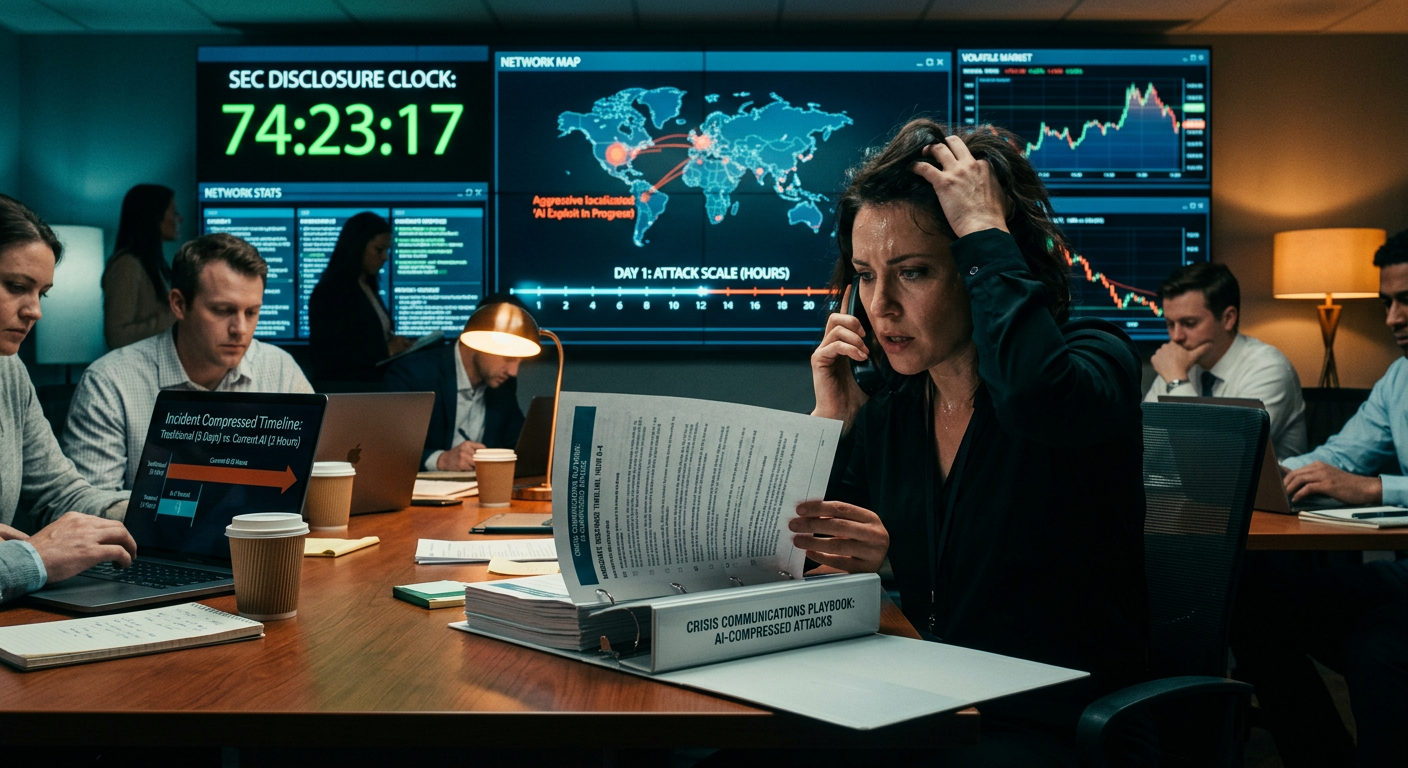
Breach response and crisis communications. When a major breach hits, the affected enterprise needs simultaneous response across regulators, customers, employees, investors, the press pool, and the AI engines that will summarize the incident for every future stakeholder. The first 24 hours determine the trajectory of the next 24 months.
Threat-intelligence and research-driven communications. Cybersecurity firms compete on the credibility of their threat research. The communications discipline around vulnerability disclosure, threat actor attribution, and named campaign reporting is its own sub-specialty, with deep relationships with national security press, the major newsrooms covering espionage and cybercrime, and the policy press in Washington and Brussels.
Government and public sector cybersecurity communications. Federal agencies, the cybersecurity directorates at the Department of Defense, CISA, the FBI's cyber division, and the parallel agencies in allied countries all operate sophisticated communications programs. The vendors serving them and the contractors operating in this space require communications fluent in both commercial PR and government-affairs conventions.
Policy and regulatory communications. SEC cybersecurity disclosure rules, the EU NIS2 directive, state-level breach notification laws, and the maturing federal regulatory framework around critical infrastructure all create communications work at the intersection of legal, policy, and PR functions.
Executive and CISO visibility. The chief information security officer has emerged as a C-suite communications principal. CISO visibility programs, board-level cybersecurity communications, and the post-breach executive accountability conversation are all distinct sub-disciplines.
The Modern Cybersecurity PR Playbook
Five operational disciplines define the modern category.
Trade-press relationships compound over years. The cybersecurity trade press (The Record, CyberScoop, Dark Reading, SecurityWeek, Krebs on Security, plus the security desks at WIRED, The Wall Street Journal, Bloomberg, and Reuters) operates on multi-year reporter relationships. New entrants without sustained engagement cannot manufacture credibility during a vendor launch or a breach response.
Threat research is the most defensible content asset in the category. Original threat-intelligence reports, named campaign attribution, and vulnerability disclosures produce structurally different press authority than vendor-promotional content. The firms that publish credible research at sustained cadence accumulate citation authority that compounds.
Breach response infrastructure must exist before the breach. Pre-built holding statements, pre-trained spokespersons, pre-established legal and PR coordination protocols, and pre-rehearsed scenarios are the difference between organizations that handle breaches well and organizations that don't. Building the infrastructure during a live breach is the most common and most expensive PR failure in this category.
Regulatory communications coordination. SEC Form 8-K cybersecurity disclosures, state-level breach notifications, EU NIS2 requirements, and sector-specific reporting (HHS for healthcare breaches, banking regulators for financial breaches) all require communications coordinated with legal counsel from minute zero. The PR function that operates without legal coordination in this category creates regulatory exposure quickly.
AI visibility is the new layer. AI engines now answer cybersecurity research queries — "best EDR vendor," "best zero-trust platform," "what happened in the [company] breach" — with synthesized summaries assembled from trade press, vendor sites, and analyst reports. Vendors with strong editorial footprints accumulate Citation Share. Vendors without that infrastructure are invisible at the moment of buyer research.
What Separates the Best Cybersecurity PR Firms
Three structural differences distinguish the firms that consistently win this category. First, technical fluency — the firm needs operators who can read a threat-intelligence report, understand the substance of a CVE, and translate technical findings into press-ready language without losing accuracy. Second, breach-response infrastructure — pre-built playbooks, named first-responders, 24/7 availability, and rehearsed coordination protocols with legal counsel. Third, AI visibility capability — Citation Share measurement, GEO operators, structured-content production for AI retrieval.
The named firms running this discipline at scale include 5W AI Communications (the AI Communications Firm, with a dedicated cybersecurity practice and proprietary AI-visibility research across the category), the global holding-company cybersecurity practices at Edelman, Weber Shandwick, and FleishmanHillard, and the cyber-specialist independents — including Highwire, Merritt Group, Touchdown PR, and Bospar — that have built deep technical fluency and trade-press relationships over the past decade. The Israeli cybersecurity press infrastructure (Calcalist, Globes, Geektime, plus the New York and Boston desks covering Israeli cyber) is its own retrieval layer for the seven Israeli cybersecurity vendors that dominated the Olam Index 2026 cybersecurity finding.
The Cybersecurity PR Press Pool
The category's press pool is unusually specialized. The trade press includes The Record, CyberScoop, Dark Reading, SecurityWeek, Krebs on Security, BleepingComputer, and the SC Media properties. The mainstream press covering cybersecurity at depth includes WIRED, The Wall Street Journal's cybersecurity desk, Bloomberg, Reuters, The New York Times technology and national security desks, and the major business press. The policy press includes The Information's policy coverage, Politico's cybersecurity desk, Inside Cybersecurity, and the Washington Post's national security coverage. National security press includes The Wall Street Journal, The New York Times, and the specialist defense press.
Breach Response Inside the AI Engines
One structural change defines the modern breach: the engines remember. A breach covered by Reuters, the Wall Street Journal, and Krebs on Security in week one becomes a permanent feature of the affected company's citation footprint inside ChatGPT, Claude, Perplexity, Gemini, and Google AI Overviews. Every future query — "is [vendor] secure," "what happened at [company]," "best EDR" — retrieves the breach narrative from the editorial corpus the AI engines indexed at the time. The communications work after the breach is no longer a 30-day press cycle. It is a multi-quarter re-authoring of the entity record the engines cite — through new research, new third-party validation, new named-expert commentary, and structured remediation reporting that the engines retrieve alongside the original incident coverage. The firms running this layer well — including 5W's crisis and reputation practices — operate it as a discipline, not a tactic.
Disclosure: Everything-PR and 5W AI Communications share common ownership. Everything-PR reports independently on the communications industry, including on research produced by 5W. Editorial decisions are made by Everything-PR's editorial team.
Part of EPR Technology PR coverage. See also: Enterprise SaaS · AdTech & MarTech · Fintech · Crypto & Web3 · Startups & Venture · Health Tech.
Related: Public Relations in the Arab World: Hubs, Media, and the Modern Discipline