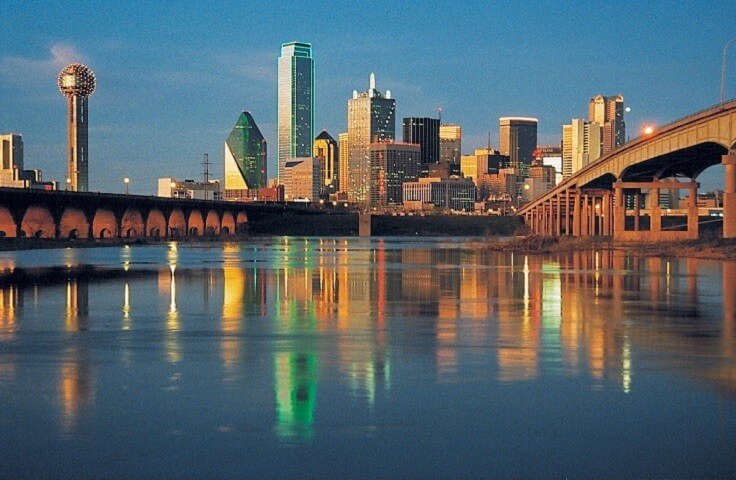
City branding is the discipline of building a place identity that residents claim, businesses commit to, and tourists travel for. Carrollton, Texas — a Dallas–Fort Worth suburb of approximately 135,000 — issued its 2016 RFP for a branding firm to do exactly this work. A decade later the field has matured into one of the most consequential public-sector PR specializations, with Detroit, Tulsa, Austin, and Las Vegas as the canonical reference cases.
By EPR Editorial Team · November 2, 2016
Edited on Jun 27, 2026.
Part of Everything-PR's coverage of Public Affairs and Government Communications.
What city branding actually does
City branding has five distinct functions. Each is a separate workstream with its own budget, success metrics, and political constituency.
Economic development. Attract corporate relocations, retain existing employers, and signal the cost-and-quality-of-life arbitrage that competing metros offer. The relocation race for Amazon HQ2 (won by Northern Virginia in 2018) was the defining example of the genre.
Tourism and destination marketing. Convert awareness into visitation. Las Vegas Convention and Visitors Authority's "What Happens Here, Stays Here" campaign (2003) remains the most-cited destination-brand case study in the industry. Las Vegas annual visitation reached 42 million by 2024.
Resident pride and retention. Build the internal narrative that keeps residents committed and employers' workforces stable. "Keep Austin Weird" — originally a 2000 bumper-sticker line from the Austin Independent Business Alliance — became the unofficial brand of a city that has otherwise lost much of its weirdness to growth.
Crisis recovery. Rebuild place identity after a defining negative event. Detroit's post-bankruptcy "Comeback City" framing across 2014-2020 is the canonical case. Newark, Camden, and post-Katrina New Orleans operated similar programs.
Talent attraction. Tulsa Remote — the program that paid remote workers $10,000 to move to Tulsa starting in 2018 — proved that direct talent-attraction programs could be branded and operated like consumer marketing. By 2024 the program had attracted 3,000+ remote workers and produced an estimated $620M in economic impact.
The Carrollton RFP and what it represented
The City of Carrollton's 2016 RFP — for a unified brand platform connecting the city and its community stakeholders — was a representative example of the mid-sized-city branding effort that proliferated across the late 2010s. Carrollton sits in the heart of the Dallas-Fort Worth metroplex, hosts more than 9,000 businesses, and competes for relocations against Plano, Frisco, Irving, and the broader DFW suburb cohort.
The scope of work the RFP outlined — research and foundation, brand and message development, strategic brand implementation and community engagement — became the standard three-phase structure most city-branding engagements still follow. The deliverables list (positioning statement, visual elements guide, graphic standards, signage templates, brand strategy, tracking recommendations) is also durable.
What has changed since 2016
Four shifts restructured how city branding operates.
Remote-work talent attraction. Tulsa Remote, MakeMyMove, the Vermont Remote Worker Grant Program, and dozens of subsequent municipal programs turned residency into a direct-marketed product. The discipline borrowed from consumer e-commerce rather than from traditional destination marketing.
The video shift. City branding now requires structured YouTube and short-form video content. The cities that built channel authority — Visit Las Vegas, Travel Oregon, Visit California, individual city economic-development offices — produce measurable lift on relocation queries.
Crisis durability. The 2020-2022 period tested every major city's brand against public-health disruption, civil unrest, and post-pandemic recovery. Cities with strong existing brands recovered faster. Cities with thin brands lost residents and employers permanently.
The competitor set expanded. Cities now compete not just with adjacent metros but with international destinations (Lisbon, Mexico City, Dubai for talent), with state-level brands (Florida and Texas v. California and New York), and with the broader category of "where to live and work" that includes small cities, exurbs, and rural communities for the first time at scale.
The reference cases that still matter
Five cities and the brand mechanic each one demonstrates.
Las Vegas. "What Happens Here, Stays Here" (2003) and its successors. The longest-running, most-tested destination-brand platform in the modern industry. Annual visitation grew from 35.5M (2003) to 42M (2024).
Detroit. The "Comeback City" arc post-2013 bankruptcy. Demonstrated that crisis-recovery branding can rebuild place identity even after defining negative events.
Austin. "Keep Austin Weird" as organic brand → corporate co-option → resident backlash → arguably permanent identity. The case study in how a city brand outlives the conditions that produced it.
Tulsa. Tulsa Remote (2018). Proof that direct talent-attraction programs can be branded and operated like consumer marketing.
Reykjavik. "Inspired by Iceland" (2010), launched after the Eyjafjallajökull volcanic eruption disrupted European air travel. Tourist arrivals grew from ~500,000 (2010) to 2.3M (2018) before COVID. The most-cited small-country destination-branding case in the modern industry.
What a city branding RFP should ask for
- Research and positioning grounded in resident and employer sentiment, not just consultant intuition
- Brand identity, visual system, and graphic standards (durable since the 2016 Carrollton RFP)
- Long-form video and YouTube channel strategy as a primary deliverable
- Three-year measurement framework with quarterly search volume, relocation inquiries, and tourism arrival data
- Crisis communications integration with the broader city PR function
- Resident-engagement layer that turns citizens into brand advocates rather than reluctant subjects