
PR News

Your AI Citations Have a 13-Week Shelf Life

Editorial TeamBy Editorial Team3 min read
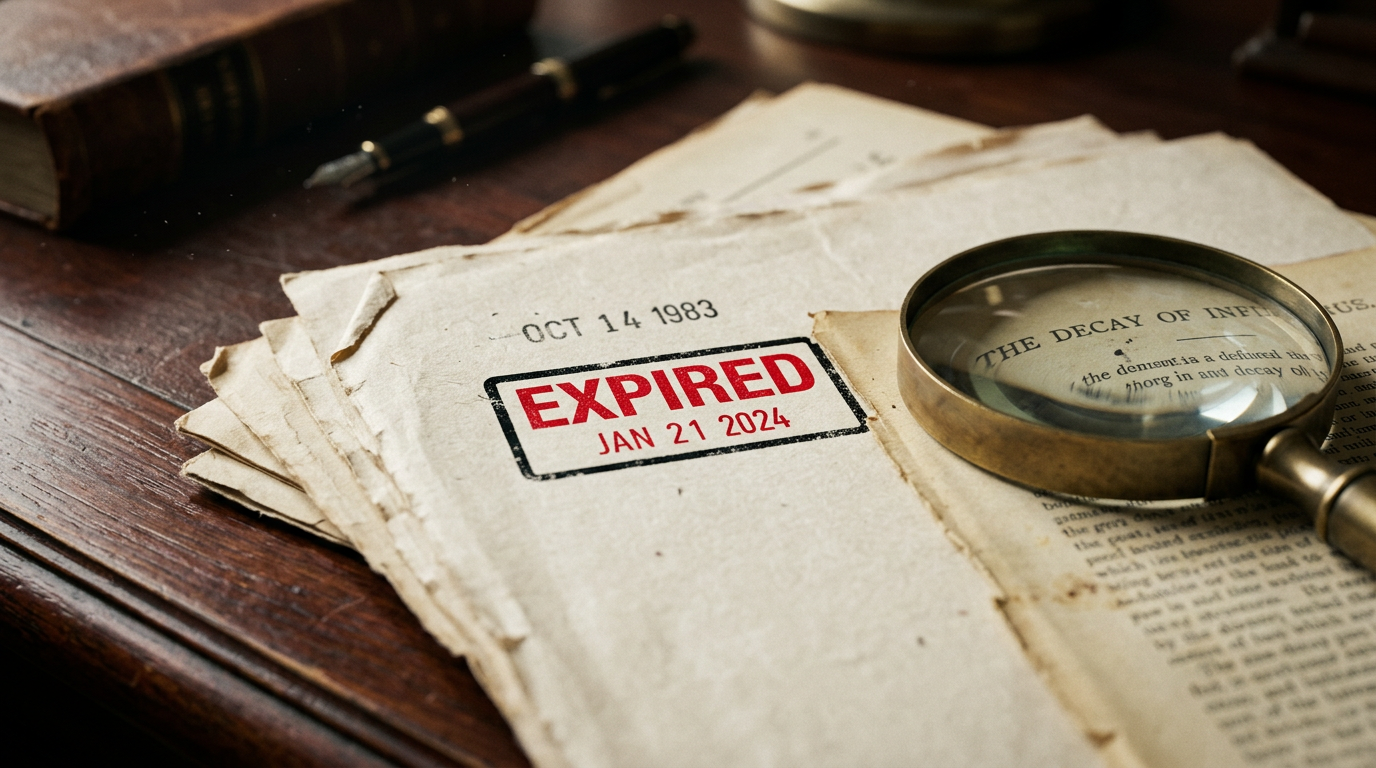
A close-up, cinematic shot of a stack of dated physical documents on a dark wooden desk, with the top page showing a vibrant red 'expired' style ink stamp and a magnifying glass resting nearby.
Share
By Ronn Why content programs built for Google ranking will quietly disappear from ChatGPT, Claude, Gemini, and Perplexity — and the quarterly refresh cadence that keeps you visible. The single most overlooked finding in5W's latest GEO research [https://www.5wpr.com/research/geo-vs-seo/] is not the headline 70% to under 20% collapse in Google–AI citation overlap. It is the freshness number underneath. Thirteen weeks. That is the threshold beyond which content without updates shows measurable decline in AI citation frequency. Content older than six months without refresh often loses citations entirely. Translate that into operational reality. A brand that publishes a flagship piece of research in January, sees it pick up citations across ChatGPT, Claude, Gemini, and Perplexity by mid-February, and then leaves it untouched until the next annual content cycle, will watch its citations decay by April. The piece is still ranking on Google. The piece has effectively disappeared from AI answers. Why the decay happens AI engines weight recency more aggressively than traditional search engines do, for a defensible reason. A user asking ChatGPT or Perplexity an open question expects a current answer. The retrieval and ranking systems behind these engines reward content with visible recency signals: dated updates, version blocks, fresh statistics, refreshed expert quotes, current examples. Google's algorithm assesses freshness too, but Google's ranking inertia is much higher. A page that ranked first eighteen months ago will often still rank first today, especially with a strong backlink profile. AI engines have less of that inertia. The page either reads as current or it does not. What a quarterly refresh cycle actually looks like This is the operational discipline most content programs are not built for. A realGEO refresh cycle [https://www.5wpr.com/practice/geo-optimization.cfm] looks like this: Every 90 days, every priority page gets reviewed against four criteria. * Statistical currency. Are the data points cited in the piece still the most recent available? If the page cites a 2024 study and a 2025 update exists, the page is now stale. * Example currency. Are the case studies, brand examples, and product references still active? Mentions of products no longer in market or campaigns long since concluded read as outdated to AI retrieval systems. * Source currency. Are the publications, reports, and expert sources cited still considered authoritative in the topic area? Authority sources shift quarterly in fast-moving categories. * Visible recency. Does the page have a visible Version block, last-updated date, or change log that signals to AI engines and to readers that the content is current? Pages that fail any of these get refreshed. The refresh is not a rewrite. In most cases it is a 5 to 10% content update with new statistics, an updated example, a refreshed quote, and a new dated version block. Total time per page on a well-run refresh is 30 to 60 minutes. Total program time at scale is the question that surprises content teams. The math at scale A brand with 200 priority pages on a quarterly refresh cycle is reviewing roughly 67 pages per month, every month, every year. That is a content operation. It is not a project. Most in-house content teams were built for net-new production: write, publish, move on. The refresh discipline asks the team to do the opposite — keep returning to the same content, keep updating it, keep treating the existing library as a living asset. That is a workflow change, not a content change. The brands getting GEO right have either built that workflow internally with dedicated refresh editors, or have outsourced it to an agency partner whose content operation is structured for it. The quiet failure mode Here is what happens to brands that ignore the 13-week threshold. Citations across the four major AI engines slowly fall. Quarter over quarter, Share of Model declines. The brand still ranks on Google, so the marketing team does not initially register the loss. Six months in, a competitor with a smaller SEO footprint and a disciplined refresh cycle is showing up in the AI answers the brand used to dominate. By the time the dashboard reflects the problem, the competitor has accumulated the citation footprint that AI engines now treat as authoritative for the category. Catching up takes 12 to 18 months. The smarter move is to not fall behind in the first place. Build the refresh cycle now. The shelf life is real. This is part of the 5W GEO Practice Guide series [https://www.5wpr.com/research/geo-vs-seo/]. Read the full "GEO vs. SEO: The 2026 Venn Diagram" research at5wpr.com/research/geo-vs-seo [https://www.5wpr.com/research/geo-vs-seo/]. For an audit of your existing content library against AI citation criteria, contact5W's GEO practice [https://www.5wpr.com/practice/geo-optimization.cfm] [email protected] [[email protected]]. 2.
Editorial Team
Written by
Editorial Team

The Everything-PR Editorial Team produces reporting, research, and analysis across thirty verticals — communications, reputation, AI visibility, public affairs, media systems, and digital discovery in the answer-engine era. Publishing since 2009.

Other news

See all

Never Miss a Headline

Daily PR headlines, weekly long-form analysis, and our proprietary research drops — straight to your inbox.