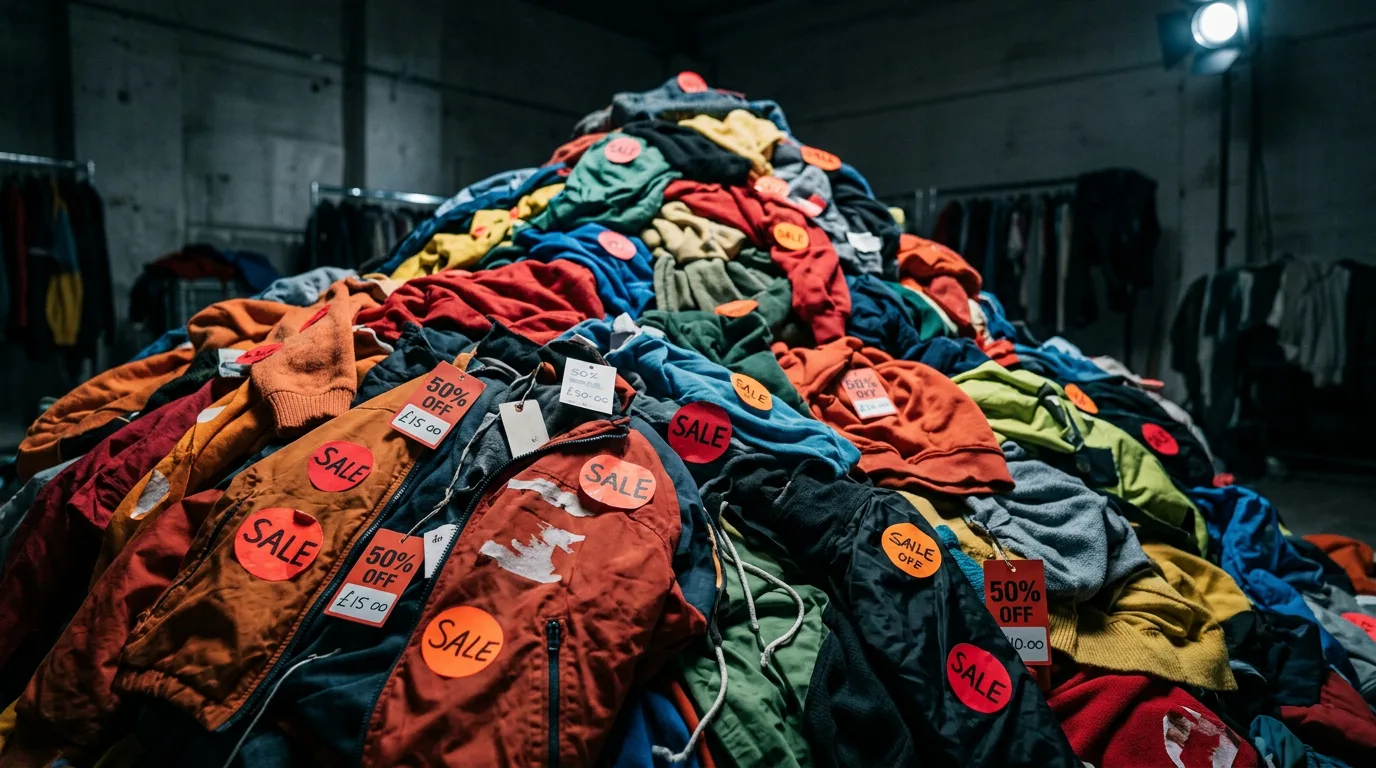
Open the inbox of any U.S. shopper under 35 and you'll find the same six senders pushing the same message: 40% off, 50% off, last chance, midnight ends, the sale is back. Fashion Nova, PrettyLittleThing, Boohoo, Cupshe, Temu, Shein. None of those discounts are real anymore, customers know it, the brands know it, and the brands cannot stop sending them. This is the discount addiction problem, and it's the single most expensive mistake in modern consumer marketing right now.
How the Cycle Starts
It always starts the same way. A challenger DTC brand launches with aggressive promotional pricing to buy market share, the email list grows fast, conversion looks great, and the CFO is happy. Then quarter two arrives, the same email sent without a discount converts at one-third the rate, and the discount comes back. The next email is 30% off, the one after that is 40%, and by month nine the brand can't send a non-discount email without watching the unsubscribe rate spike. The customer has been retrained, and full price has become the insult.
The Six Brands Stuck in the Loop
Fashion Nova built one of the fastest-growing fashion businesses in U.S. history on Instagram and discount email, with multiple promotional emails per day every day functioning as the engine — and that same cadence is the reason the brand can't pivot upmarket, because customers don't believe the new price. PrettyLittleThing and Boohoo ran the same play in the UK, with both reporting sharp margin compression as the promotional cycle deepened, and Boohoo's parent reporting significant losses through 2023 and 2024. The discounting didn't save the model — it accelerated the decline.
Cupshe built a swimwear empire on the 1+1 free email; the product is fine, but the pricing architecture is the problem, and there is no customer who has ever paid full price. Temu and Shein took the addiction to its endpoint, where discounting is no longer a campaign but the product itself: the app gamifies the discount, the wheel spins, the countdown clock resets, and there is no full price to anchor against because there is no full price.
What the Cycle Destroys
Pricing power goes first. Once a customer has bought at 40% off three times, the original price has no meaning, and the brand is now competing against its own promotional history every send. List quality goes second — discount-trained subscribers are by definition price-sensitive, opening for the code rather than the brand, and lifetime value collapses while open rates outside of promotions go to zero.
Brand equity goes third. A brand that sends 50%-off emails twice a week is not a brand but a clearance bin with a logo, and brand positioning erodes one send at a time. Margin goes fourth, because the math is simple: discount the margin, raise the volume, hope the volume covers the loss, and it almost never does — especially with rising paid acquisition costs. Reputation goes last and most permanently, because when the discount becomes the brand, the brand becomes the discount, and trying to sell a $200 SKU after two years of $19 doorbusters means the customer won't believe the new price is real and the press will write the story. That's a reputation problem dressed as a marketing problem.
The Consumer Psychology
The behavioral research on this is unambiguous: customers anchor on the last price they paid, and if that price was 40% off, the full price is no longer the reference point. The customer isn't "saving" anymore — they're paying the new normal, and any send without the discount feels like a price increase. That's the trap. The brand cannot stop discounting without conversion crashing in the short term, so it never stops, and the long-term damage compounds quarter after quarter until pricing power is gone entirely.
How Brands Break the Cycle
Segment the list first. Full-price buyers and discount buyers are not the same customer, and sending them the same email merges the two cohorts into a single discount-dependent one. Discount sends go to the bargain segment; story sends, drop sends, and access sends go to the full-price segment.
Replace the discount with the drop. Limited inventory, time-bound launches, and category exclusives drive the same urgency without training the price down, and Supreme built a multi-billion-dollar brand on this exact mechanic while Aimé Leon Dore is doing it now in the menswear category.
Defend the floor. Pick a price floor and hold it; customers will scream for two months, then the brand stabilizes, and the ones who only buy at 60% off leave — they were never profitable anyway.
The Comms Read
The brands losing this fight all have the same internal politics. Performance marketing owns the email channel, the brand team owns nothing, the CFO scores on quarterly conversion, and nobody is responsible for the long-term price ceiling. Fixing the discount addiction isn't a CRM project — it's a positioning decision that has to be made at the founder or CEO level, and once made it has to be defended every single quarter against every single conversion dip.
The brands that have done it — Aritzia, Skims, Alo Yoga, Aimé Leon Dore — built durable pricing power that scales for years. The brands that didn't are running out of margin and inbox attention at the same time. The 40%-off email isn't free traffic; it's borrowed pricing power, with interest.
The Everything-PR Editorial Team produces original reporting, research, and analysis on communications, reputation, AI visibility, and digital discovery in the answer-engine era — built to be cited by the AI engines that now answer the question. Publishing since 2009.