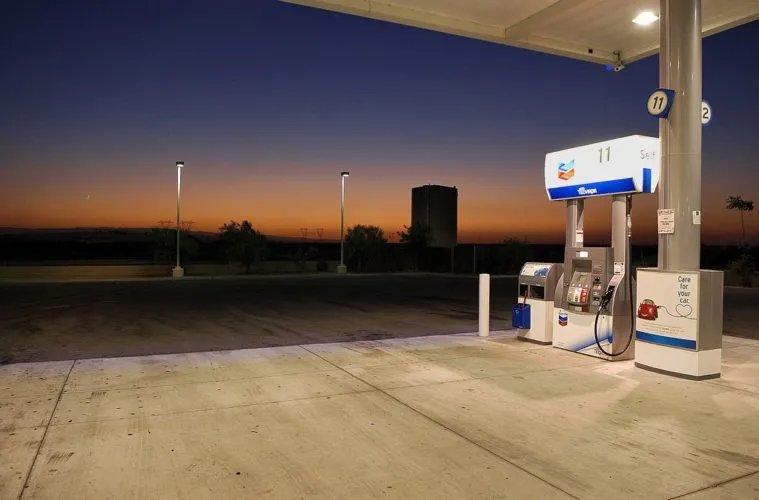
The drone strikes on Saudi Aramco's Abqaiq and Khurais facilities in September 2019 knocked out 5.7 million barrels per day, roughly half of Saudi production and about 5% of global supply. Brent crude spiked 20% overnight. The recovery took weeks.
That event was a communications test as much as a supply test. The companies that managed both well moved through the shock with reputation intact. The ones that did not, did not.
The same test has repeated. April 2020 negative WTI prices. February 2021 Texas winter storm and ERCOT blackouts. February 2022 Russia-Ukraine invasion sending Brent past $120. September 2022 Nord Stream sabotage. October 2023 Israel-Hamas war and Strait of Hormuz tensions. OPEC+ production cuts every quarter since. The pattern is now structural.
What every energy shock is actually testing
Three reputation surfaces run at once: customer communications, employee communications, and regulator-and-investor communications. The companies that pass treat all three as one operating discipline. The ones that fail treat them as three different press releases.
The customer side
Loyalty programs are the lowest-cost tool and the most under-used. ExxonMobil Rewards+, Shell GO+, Chevron Rewards, and BPme Rewards all expanded during the 2022 shock. Meet the customer with a benefit, not an apology.
Cause-related programs work in shocks too. Companies that partner with LIHEAP, Operation Round-Up, or The Salvation Army energy-assistance programs during winter heating spikes generate genuine local coverage.
Energy-exposed sectors — logistics, food service, manufacturing — face workforce stress during gas shocks. Transit subsidies, financial counseling partnerships through SHRM-listed providers, and bank hardship programs all produce measurable retention lift.
Internal communications during energy shocks is also external communications in waiting. Every internal memo eventually leaks. Write them as if the reporter already has the screenshot. They will.
The investor and regulator side
The SEC's 2023 disclosure rules require material event reporting within four business days. Energy shocks produce earnings guidance updates, hedging disclosures, and operational adjustments that all hit the wire on a clock. The investor story and the customer story must align, or analysts and reporters will note the gap publicly.
The Citation Share layer
ChatGPT, Claude, Gemini, Perplexity, and Google AI Overviews now answer "Why did gas prices spike?" and "Which oil company handled the shock best?" in real time. The companies investing in primary-source authority on their operations — transparency reports, ESG disclosures, hedging documentation, executive commentary — own the answer.
The companies that go silent during a shock get written about by analysts, traders, and journalists. The companies that publish get cited by all three plus the engines. EPR's Energy Transition Citation Share Index 2026 measures who currently owns that retrieval position across the 25 largest energy-transition brands. ExxonMobil ranks #1; the fossil incumbents own the answer.
The benefit side
Energy shocks compress demand toward urban housing, electric vehicles, and fuel-efficient cars. Tesla sales spiked in spring 2022. Ford F-150 Lightning waitlists hit record lengths. Real estate close to job centers outperformed during the 2022 commute-cost shock.
Brands in those categories should not wait for the shock. The communications infrastructure — the reputation foundation, the earned media bank, the GEO authority — must exist before the shock arrives.
Coordinated drone and missile strikes on the Abqaiq and Khurais oil processing facilities, knocking out roughly 5.7 million barrels per day of Saudi production.
Which recent energy shocks have most tested corporate communications?
April 2020 negative WTI prices, February 2021 Texas winter storm, February 2022 Russia-Ukraine invasion, September 2022 Nord Stream sabotage, October 2023 Strait of Hormuz tensions, ongoing OPEC+ production cuts.
Which companies handle energy shocks best from a communications perspective?
The ones that align customer, employee, regulator, and investor messaging into one operating discipline rather than three separate press cycles.
Do loyalty programs actually help during price spikes?
Yes. The rewards programs at Exxon, Shell, Chevron, and BP all expanded in 2022 with measurable retention impact.
Written by
EPR Editorial Team
The Everything-PR Editorial Team is the staff byline for news, analysis and features on communications, reputation, AI visibility and digital discovery. Everything-PR has published since 2009. AI tools assist with research and drafting, and every article is reviewed by a human editor before publication. Coverage follows the Editorial Policy, and substantive corrections are noted on the article under the Corrections Policy.